For entrepreneurs exploring POS Reseller Revenue Calculator, the revenue math is more compelling than most realize. Every POS company claims their partner program is the best. We're going to show you the actual math.
This is not a glossy brochure full of vague promises about "generous commissions" and "industry-leading support." This is a financial model. We are going to walk through every revenue stream available to a KwickOS partner, assign real numbers to each one, and show you exactly what a portfolio of 10, 25, 50, 100, and 200 merchants produces in monthly and annual income.
Then we are going to compare those numbers against what you would earn selling Toast, Square, and Clover — and explain why the gap is so large.
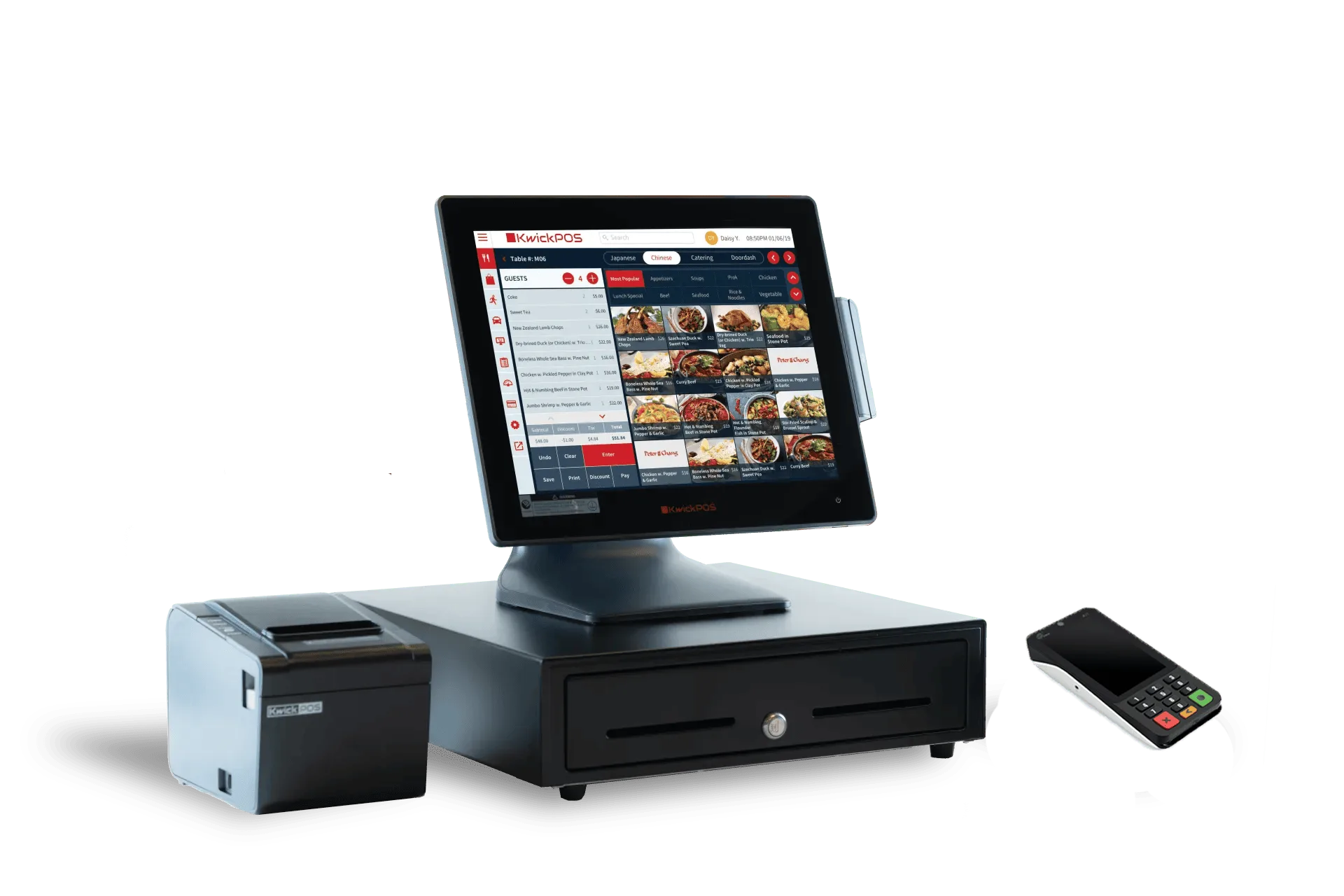
The Five Revenue Streams of a KwickOS Partner
Most POS reseller programs give you one or two ways to earn. KwickOS provides five distinct revenue streams that compound on every single merchant you deploy. Let's break each one down with specific numbers.
Revenue Stream 1: Payment Processing Residuals (The Foundation)
This is the revenue stream that separates serious POS agents from everyone else. Processing residuals are monthly, recurring, and directly tied to your merchants' card volume. They are also the stream that most POS companies try to take from you.
KwickOS is processor-agnostic. That means your merchants use your processing — Fiserv, TSYS, Worldpay, or any independent ISO. You set the rates. You earn the spread. KwickOS never touches your processing revenue. You keep 100% of it.
Here is the math for an average restaurant merchant:
Agent residual at 10 basis points (0.10%): $35,000 × 0.001 = $35/month
Agent residual at 15 basis points (0.15%): $35,000 × 0.0015 = $52.50/month
Agent residual at 20 basis points (0.20%): $35,000 × 0.002 = $70/month
The range of $35 to $70 per merchant per month reflects what a well-structured processing deal looks like. Experienced agents who negotiate strong buy rates with their processor can routinely hit the upper end. New agents typically start around 10-15 basis points and optimize upward as their volume grows and they gain leverage with processors.
Revenue Stream 2: Software/SaaS Residuals (Monthly Recurring)
Every KwickOS merchant pays a monthly software subscription for the platform. As a partner, you earn a recurring residual on this subscription for the life of the account. This is separate from and additive to your processing residuals.
KwickOS software residuals for partners typically range from $15 to $40 per merchant per month, depending on the plan tier the merchant selects and your partner level. A restaurant running KwickOS with online ordering, KDS, and loyalty is on a higher tier than a small retail shop running basic POS — and your residual reflects that.
For this analysis, we will use a conservative $25/month average software residual across a mixed portfolio of merchants.
Revenue Stream 3: Hardware Markup (One-Time)
KwickOS runs on commercial Android hardware — POS terminals, kitchen display systems, customer-facing displays, self-service kiosks, and receipt printers. Partners purchase hardware at wholesale cost and sell to merchants at retail pricing.
Typical hardware margins per deployment:
| Hardware Package | Wholesale Cost | Retail Price | Your Margin |
|---|---|---|---|
| Basic POS (1 terminal + printer) | $450 | $700-800 | $250-350 |
| Restaurant Standard (2 terminals + KDS + printer) | $1,100 | $1,600-1,900 | $500-800 |
| Full Service (3 terminals + 2 KDS + kiosk + printers) | $2,400 | $3,500-4,200 | $1,100-1,800 |
For our revenue model, we will use $600 average hardware margin per deployment — a blended average across single-terminal retail setups and multi-station restaurant installations.
Revenue Stream 4: Installation and Training Fees (One-Time)
Merchants expect professional installation, menu programming, and staff training. This is billable work that you control entirely. KwickOS provides the training materials and remote support — you deliver the on-site experience and charge accordingly.
Market rates for POS installation and training:
- Basic setup (retail, small cafe): $200-400
- Standard restaurant (menu build, staff training, 2-3 hours on-site): $500-800
- Complex deployment (multi-station, online ordering integration, kiosk configuration): $1,000-1,500
We will use $500 average installation fee for the revenue model.
Revenue Stream 5: Add-On Module Upgrades (Recurring + One-Time)
This is where the KwickOS ecosystem creates revenue opportunities that single-product POS systems cannot match. The KwickOS platform includes optional modules that solve additional business problems — each one an upsell opportunity:
- KwickSign — Digital signage for menu boards and promotions. Monthly subscription upsell.
- KwickPhone — AI phone ordering. Monthly subscription upsell with per-call fees.
- KwickPhoto — Professional food photography service. One-time fee per shoot.
- KwickMenu — Online menu and ordering platform. Included in higher tiers, upsell on basic.
- KwickTracker — Delivery driver tracking. Monthly subscription upsell.
- KwickPay — Integrated payment terminal. Hardware and processing upsell.
Conservatively, 30-40% of merchants will purchase at least one add-on module within the first year. We will model an average of $10/month in add-on residuals across the portfolio (accounting for the merchants who buy nothing and those who buy multiple modules).
The Revenue Model: 10 to 200 Merchants
Now let's assemble the full picture. The table below uses our conservative mid-range assumptions:
- Processing residual: $52.50/month per merchant (15 basis points on $35K volume)
- Software residual: $25/month per merchant
- Add-on residuals: $10/month per merchant
- Hardware margin: $600 one-time per merchant
- Installation fee: $500 one-time per merchant
| Merchants | Processing Residual | Software Residual | Add-On Residual | Total Monthly Recurring | Total Annual Recurring |
|---|---|---|---|---|---|
| 10 | $525 | $250 | $100 | $875 | $10,500 |
| 25 | $1,313 | $625 | $250 | $2,188 | $26,250 |
| 50 | $2,625 | $1,250 | $500 | $4,375 | $52,500 |
| 100 | $5,250 | $2,500 | $1,000 | $8,750 | $105,000 |
| 200 | $10,500 | $5,000 | $2,000 | $17,500 | $210,000 |
And the one-time revenue that lands as you build that portfolio:
| Merchants | Hardware Margins | Installation Fees | Total One-Time Revenue |
|---|---|---|---|
| 10 | $6,000 | $5,000 | $11,000 |
| 25 | $15,000 | $12,500 | $27,500 |
| 50 | $30,000 | $25,000 | $55,000 |
| 100 | $60,000 | $50,000 | $110,000 |
| 200 | $120,000 | $100,000 | $220,000 |
100-Merchant Portfolio
100-Merchant First-Year Total
These numbers use the conservative 15 basis point assumption. At 20 basis points — achievable by agents who negotiate strong processor buy rates — the 100-merchant recurring jumps to $10,500/month or $126,000 annually.
Now Let's Compare: What Would You Earn Selling Toast, Square, or Clover?
The revenue model above only works if you partner with a processor-agnostic POS. Here is what happens with the alternatives.
| Factor | KwickOS | Toast | Square | Clover |
|---|---|---|---|---|
| Processing residual | 100% yours | $0 — Toast keeps it all | $0 — no reseller program | Partial — Fiserv controls rates |
| Software residual | Yes, recurring | Small referral bonus | None | Varies by distributor |
| Hardware margin | Full markup control | Toast controls pricing | Consumer hardware, no margin | Limited margin |
| Processor choice | Any processor | Toast only | Square only | Fiserv only |
| You own the merchant? | Yes | No — Toast owns the relationship | No | Partially — Fiserv can reassign |
| Industries supported | Restaurant, retail, beauty/spa, grocery | Restaurant only | General (limited features) | Restaurant + retail |
| Multi-language support | English, Chinese, Spanish | English | English | English |
Toast: The Processing Trap
Toast's partner program offers a referral bonus — typically a one-time payment of $500-1,500 per merchant, depending on deal size and partner tier. On the surface, $1,000 for a referral sounds reasonable. But compare it to the KwickOS model.
100 merchants × $1,000 referral bonus = $100,000 total (one-time, done)
KwickOS partner scenario (100 merchants):
Year 1: $105,000 recurring + $110,000 one-time = $215,000
Year 2: $105,000 recurring (no new sales needed) = $105,000
Year 3: $105,000 recurring = $105,000
3-Year Total: $425,000
With Toast, you earned $100,000 and then it stopped. With KwickOS, you earned $425,000 over three years — and the recurring revenue continues indefinitely. That is 4.25x more revenue from the same 100 merchants, and the gap widens every year.
Toast also requires merchants to use Toast processing at 2.49% + $0.15 per transaction for card-present. Your merchants are locked in. If they want to switch processors to save money, they have to switch their entire POS system. That creates resentment, and resentment creates churn — which means your referral bonuses were earned on merchants who may not stay.
Square: No Partner Program at All
Square does not have a reseller or agent program. You cannot earn processing residuals, software residuals, or hardware margins by selling Square. If you recommend Square to a merchant, your compensation is zero. Square is a consumer-grade product that competes on brand recognition and simplicity, not on partner economics.
Clover: Partial Residuals, Structural Risk
Clover (owned by Fiserv) does allow agents to earn processing residuals, which makes it the closest competitor to the KwickOS model. However, there are significant structural differences:
- Fiserv controls the processing relationship. Your residuals flow through Fiserv's agent program. Fiserv can change terms, adjust splits, or reassign accounts. You are a sub-agent, not the agent of record.
- Clover's processing fees are not competitive. Fiserv's standard pricing is 2.3% + $0.10 for card-present. Merchants know this is high. They churn to cheaper options, and you lose the residual when they leave.
- High merchant attrition. Clover's monthly churn rate is among the highest in the POS industry because merchants feel locked into expensive processing. When the merchant leaves Clover, your residual goes to zero.
- Limited industry coverage. Clover serves restaurants and general retail. It has no specialized features for beauty/spa, no AI phone ordering, and no digital signage platform.
The Multi-Industry Multiplier: 4x Your Addressable Market
Here is the factor that most POS agents overlook when evaluating partner programs: how many industries can you sell into?
If you sell Toast, you sell to restaurants. Period. If a retail store, a hair salon, or a grocery market asks for a POS recommendation, you have nothing to offer them. You either lose the deal or refer it to another vendor who earns the revenue instead of you.
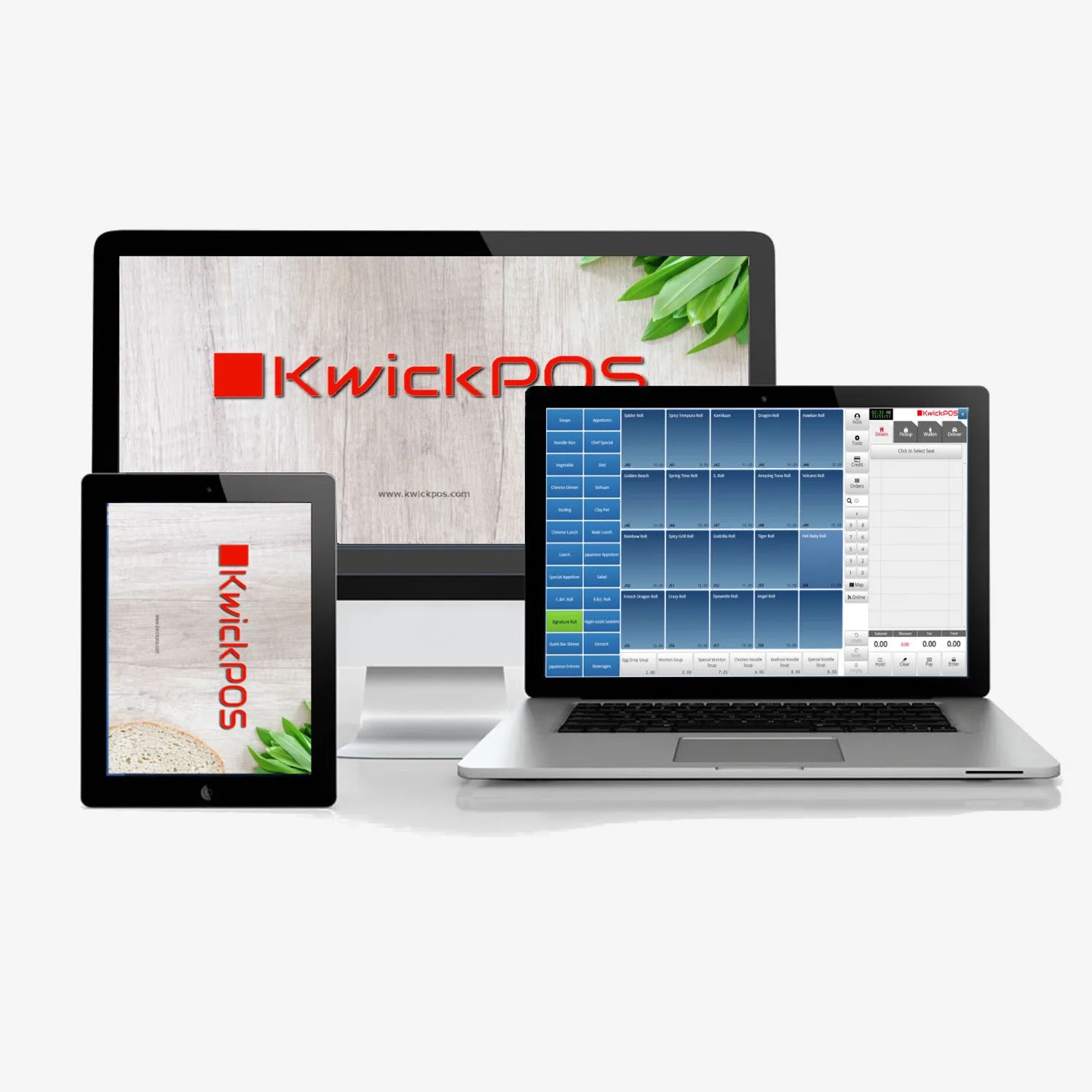
KwickOS is a unified business operating system that serves four distinct verticals:
| Industry | Key KwickOS Features | Average Monthly Card Volume | Your Processing Residual (15 bps) |
|---|---|---|---|
| Restaurants | POS, KDS, online ordering, KwickPhone AI phone orders, delivery tracking | $35,000 | $52.50/mo |
| Retail | POS, inventory management, barcode scanning, purchase orders, e-commerce | $28,000 | $42.00/mo |
| Beauty & Spa | POS, appointment scheduling, client profiles, loyalty, retail inventory | $18,000 | $27.00/mo |
| Grocery & Specialty | POS, scale integration, inventory, EBT support, vendor management | $45,000 | $67.50/mo |
One platform to learn. One set of training materials. One support team. Four industries to sell into.
Think about what this means for your prospecting. You are walking down a commercial street. The restaurant on the corner is a prospect. The boutique next door is a prospect. The nail salon across the street is a prospect. The grocery market at the end of the block is a prospect. With Toast, only the restaurant was in play. With KwickOS, the entire street is your territory.
Processing Residual Range: Conservative to Aggressive
The tables above used 15 basis points as the mid-range estimate. Here is what the 100-merchant portfolio looks like across the full basis point spectrum, so you can model your own scenario:
| Basis Points | Per Merchant/Month | 100 Merchants/Month | 100 Merchants/Year | + Software & Add-Ons | Total Annual Recurring |
|---|---|---|---|---|---|
| 10 bps (0.10%) | $35.00 | $3,500 | $42,000 | $42,000 | $84,000 |
| 12 bps (0.12%) | $42.00 | $4,200 | $50,400 | $42,000 | $92,400 |
| 15 bps (0.15%) | $52.50 | $5,250 | $63,000 | $42,000 | $105,000 |
| 18 bps (0.18%) | $63.00 | $6,300 | $75,600 | $42,000 | $117,600 |
| 20 bps (0.20%) | $70.00 | $7,000 | $84,000 | $42,000 | $126,000 |
The "+Software & Add-Ons" column is fixed at $35/month per merchant ($25 software + $10 add-ons = $35 × 100 × 12 = $42,000). The processing residual is the variable that scales with your negotiation skill, processor relationship, and merchant volume.
Year-Over-Year Compounding: The Portfolio Effect
What makes POS reselling so powerful as a business model is the compounding effect. You are not starting from zero each year. Every merchant you deployed last year still pays you this year — and you are adding new merchants on top.
Here is a 3-year projection for an agent who deploys 3 new merchants per month (very achievable in multi-industry selling):
| Year | New Merchants | Total Portfolio | Monthly Recurring (EOY) | Annual Recurring | One-Time Revenue | Total Annual Income |
|---|---|---|---|---|---|---|
| Year 1 | 36 | 36 | $3,150 | $22,050* | $39,600 | $61,650 |
| Year 2 | 36 | 72 | $6,300 | $60,638* | $39,600 | $100,238 |
| Year 3 | 36 | 108 | $9,450 | $99,225* | $39,600 | $138,825 |
*Annual recurring reflects the ramp — merchants added in January generate 12 months of residuals, merchants added in December generate 1 month. Year 2 and 3 include the full carry-over from previous years' merchants. Assumes 5% annual merchant attrition.
By the end of Year 3, this agent has $9,450 in monthly recurring income from a portfolio built by deploying just 3 merchants per month. Year 4 recurring — without signing a single new merchant — would be approximately $108,000. The portfolio pays you whether you work or not.
Getting Started as a KwickOS Partner
KwickOS built its partner program specifically to remove the barriers that prevent agents from getting started quickly and closing their first deals fast. Here is what you receive on day one:
Free Demo Hardware Kit
Qualified partners receive a complimentary POS hardware kit — terminal, receipt printer, and accessories — for live demonstrations. No upfront investment required. Show merchants the actual system running in their environment, not a slide deck.
Dedicated Partner Success Manager
You are assigned a single point of contact who knows your portfolio, your territory, and your goals. Your partner success manager handles escalations, provides competitive intelligence, and helps you structure deals. This is not a generic support queue — it is a named individual invested in your success.
24/7 Multilingual Support
KwickOS provides round-the-clock technical support in English, Chinese, and Spanish. If your merchant base includes Chinese-speaking restaurant owners or Spanish-speaking business owners, KwickOS is the only POS platform that supports them in their native language. This is a major competitive differentiator in diverse metropolitan markets.
7-10 Day Merchant Onboarding
From signed agreement to live system, KwickOS targets a 7-10 day deployment window. Menu programming, hardware configuration, payment integration, and staff training are all handled within this timeline. Fast onboarding means faster time to revenue for you and less disruption for the merchant.
Sales Tools and Training Materials
You receive ready-to-use sales collateral: industry-specific feature sheets, competitive comparison decks, ROI calculators, and proposal templates. Training videos and documentation cover every module in the platform. You will not be left guessing how to position or demo the product.
Run the Numbers for Yourself
Request a partner consultation and we will build a custom revenue model based on your territory, your processor rates, and your target industries. Free demo hardware kit included for qualified partners.
Apply to the Partner ProgramWho Succeeds as a KwickOS Partner?
The partner program is designed for several profiles, each with different strengths:
- Payment processing agents and ISOs — Already have merchant relationships and processor connections. KwickOS gives you a modern POS to bundle with your processing. Your merchants get a better system, and you lock in the processing relationship with a platform they love.
- IT consultants and managed service providers — Already serve small businesses with technology needs. Adding KwickOS to your offering creates a new recurring revenue stream and deepens client relationships.
- Restaurant and retail consultants — Already advise business owners on operations. Recommending and deploying KwickOS turns free advice into paid partnerships.
- Current POS resellers frustrated with Toast/Clover — Tired of losing processing residuals to Toast or getting squeezed by Fiserv on Clover. Transitioning to KwickOS lets you keep 100% of processing on every new deal.
Frequently Asked Questions
Do I need POS experience to become a partner?
No. KwickOS provides complete training on the platform, and your partner success manager will support your first several deployments hands-on. Many successful partners come from payment processing, IT services, or business consulting backgrounds with no prior POS sales experience.
What is the minimum commitment?
There is no minimum merchant commitment and no monthly fees to participate in the partner program. You earn on what you deploy. KwickOS's incentive is aligned with yours — the more merchants you bring on, the more both of us grow.
Can I keep my existing processor relationships?
Absolutely. That is the entire point of processor-agnostic architecture. You place merchants with whichever processor gives you the best buy rate and residual split. KwickOS integrates with all major processors including Fiserv, TSYS/Global Payments, Worldpay, Elavon, and independent ISOs.
What about merchant support after deployment?
KwickOS handles tier-1 and tier-2 technical support directly — 24/7, in English, Chinese, and Spanish. Your merchants call KwickOS support for software issues, and you remain the relationship owner for account management, upgrades, and processing matters. You are not a help desk.
The Bottom Line
Let's step back and look at the complete picture for a 100-merchant portfolio over three years:

| Revenue Category | Year 1 | Year 2 | Year 3 | 3-Year Total |
|---|---|---|---|---|
| Processing residuals (15 bps) | $63,000 | $63,000 | $63,000 | $189,000 |
| Software residuals | $30,000 | $30,000 | $30,000 | $90,000 |
| Add-on residuals | $12,000 | $12,000 | $12,000 | $36,000 |
| Hardware margins (Year 1 only) | $60,000 | $0 | $0 | $60,000 |
| Installation fees (Year 1 only) | $50,000 | $0 | $0 | $50,000 |
| Total | $215,000 | $105,000 | $105,000 | $425,000 |
Four hundred and twenty-five thousand dollars from 100 merchants over three years. And the recurring portion — $315,000 — continues into Year 4, Year 5, and beyond, for as long as those merchants stay on the platform.
Compare that to the Toast referral model at $100,000 total for those same 100 merchants, with zero recurring income after the bonus is paid. The difference is $325,000 over three years. At 200 merchants, the gap is $650,000.
The question isn't whether you can make money with KwickOS. The question is how much money you're leaving on the table by staying with a POS company that competes with you for processing.
Ready to See the Real Numbers?
Apply for the KwickOS partner program. We will build a revenue projection based on your specific territory, processor, and target industries. Qualified partners receive a free demo hardware kit to start closing deals immediately.
Become a KwickOS Partner