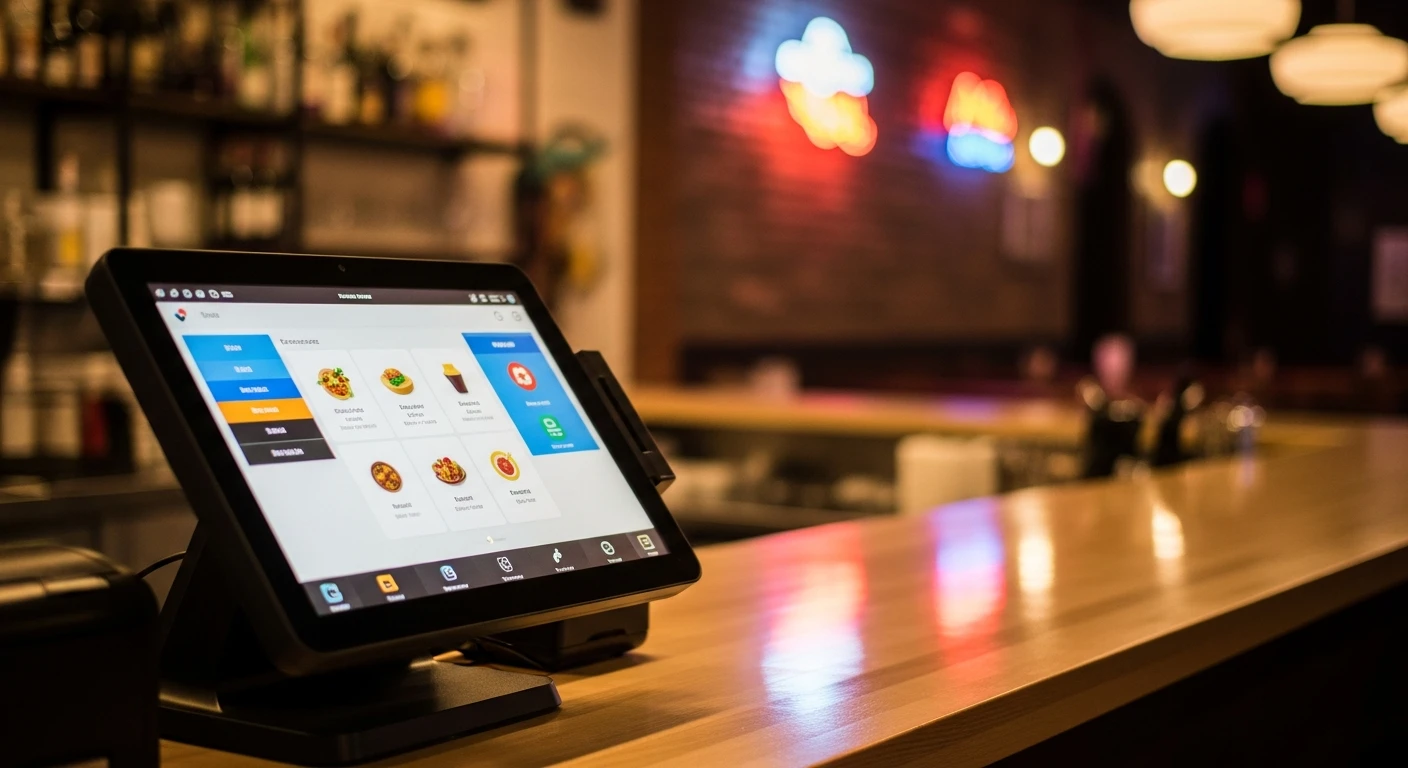
Keep Austin Weird, Keep Your POS Open requires understanding the local market, regulations, and customer expectations in Austin. Something unusual happened in Austin's restaurant industry between 2020 and 2025. While many American cities saw net restaurant closures during the pandemic and its aftermath, Austin experienced a restaurant boom. Population growth — Austin was the fastest-growing large metro in America for three consecutive years — brought both demand and talent. Chefs relocated from New York, Los Angeles, and Chicago. Concepts that would have been considered risky in other markets found immediate audiences in Austin. Food trucks that started on South Congress evolved into brick-and-mortar restaurants on East 6th Street, which expanded into second and third locations in South Lamar and the Domain.
And nearly every one of those new restaurants made the same technology decision: they signed up for Toast.
I do not say this to disparage Toast. They built an impressive sales machine and they got to Austin early. But the consequence of that early dominance is that there are now thousands of Austin restaurant operators who are locked into processing contracts they cannot escape, paying rates they cannot negotiate, running on a system that goes down when their internet goes down. And every single one of them represents an opportunity for a POS reseller who can offer something better.
Austin by the Numbers: A Reseller's Market Analysis
The Austin-Round Rock metro area has approximately 5,800 restaurants, up from 4,200 in 2020. That is a 38% increase in five years — a growth rate that outpaces every comparable metro in the country. But the numbers tell an even more interesting story when you dig into the segments:
- Food trucks and trailers: Austin has over 1,200 licensed food trucks, the second-highest count in the nation behind Los Angeles. Many use Square or basic tablet POS. These operators represent an entry-level reseller opportunity — lower card volumes but high placement velocity.
- Fast-casual: The dominant growth segment. Concepts like Torchy's Tacos, Valentina's Tex Mex BBQ, and dozens of independent operations. Monthly card volumes of $30,000-$60,000.
- Full-service and fine dining: The Rainey Street and East 6th Street corridors have become nationally recognized dining destinations. Monthly card volumes of $60,000-$150,000. These are high-value reseller targets.
- Asian cuisine corridor: North Austin's Chinatown Center and the surrounding area along North Lamar house a growing concentration of Chinese, Korean, Vietnamese, and Thai restaurants. Multilingual POS is not optional here — it is a requirement.
The Food Truck Factor: Austin's Unique Reseller Entry Point
Most POS resellers ignore food trucks. The card volumes are lower, the operations are simpler, and the operators are often perceived as temporary. This is a mistake in Austin, and here is why.
Austin's food truck operators are not hobbyists. Many of them are professional chefs testing concepts before committing to brick-and-mortar leases. When a food truck operator on South First Street does $15,000/month in card volume and then opens a restaurant doing $50,000/month, the reseller who placed the food truck POS gets first call on the restaurant installation. And when that restaurant opens a second location, the reseller is already embedded.
KwickOS is uniquely suited for this trajectory because it scales. The same platform that runs a single food truck terminal scales to a multi-location restaurant group with KDS, online ordering, delivery management, and digital signage. The food truck operator does not need to rip and replace when they grow. They just add modules. And the reseller does not need to re-sell — they just expand the existing account.
This is how you build a portfolio in Austin: start with the food trucks and trailers, deliver excellent technology, and ride the growth wave as those operators build restaurant empires.
Why "Keep Austin Weird" Means "Keep Your POS Open"
Austin's restaurant culture prizes independence. The "Keep Austin Weird" ethos is not just a bumper sticker — it is a business philosophy. Austin restaurant owners resist standardization, distrust corporate vendors, and place enormous value on maintaining control over their operations.
This cultural reality creates a natural alignment with processor-agnostic POS technology. When you tell an Austin restaurant owner that Toast controls their payment processing and sets their rates with no negotiation, that feels like exactly the kind of corporate control they moved to Austin to escape. When you tell them that KwickOS lets them choose any processor, negotiate their own rates, and switch processors without changing POS systems, that resonates with the independence they value.
I have watched this conversation play out in cities across America, and it works particularly well in Austin because the cultural context amplifies the message. You are not just offering a better POS deal — you are offering freedom. And freedom is Austin's brand.
The Revenue Opportunity: Austin-Specific Numbers
Let me walk through the math specific to the Austin market.
The average Austin restaurant processes approximately $42,000 per month in card transactions. This is slightly above the national average, driven by Austin's higher-than-average ticket sizes and the city's strong cash-to-card shift. At a 0.15% residual rate, each merchant generates approximately $63 per month in residual income for the reseller.
Here is what a realistic first year looks like for a full-time KwickOS reseller in Austin:
| Quarter | Placements | Active Merchants (End of Quarter) | Monthly Residual |
|---|---|---|---|
| Q1 | 25 | 24 | $1,512 |
| Q2 | 30 | 52 | $3,276 |
| Q3 | 30 | 79 | $4,977 |
| Q4 | 35 | 110 | $6,930 |
Year 1 total residual income: approximately $47,000. By the end of Month 24, with continued placement at 10+ merchants per month, monthly residual income exceeds $10,000. Annual run-rate: $127,000+. And unlike one-time commission models, this income continues and compounds even if you take a month off.
The Compounding Effect with Multi-Location Groups
Austin's restaurant scene increasingly operates on a multi-concept, multi-location model. Groups like the McGuire Moorman Lambert hospitality group, the Hai Hospitality group, and dozens of smaller operators run two to ten locations each. Landing one location in a group often leads to the entire portfolio — and a single group with five locations at $42,000 average monthly volume generates $315/month in residual income. That is one client relationship producing nearly $3,800 per year.
The Three-Tier Partnership Model
KwickOS structures its reseller program in three tiers, and the right entry point depends on your background:
Referral Partner. You identify opportunities and make introductions. KwickOS handles everything else — the demo, the sale, the installation, the support. You earn a referral fee and, if you have a processing relationship, the processing residuals. This works well for Austin-based commercial real estate brokers (who see new restaurant leases daily), restaurant supply companies, and food industry consultants.
Active Reseller. You own the sales process. You demo KwickOS, close deals, and manage merchant relationships. KwickOS handles the technical work — the 7-10 day implementation timeline, the on-site installation (typically 1-3 hours), and the staff training (1-2 hours). You earn full processing residuals and higher margins. This is the tier where most full-time POS resellers operate.
Full Partner. You build a KwickOS dealership in the Austin market. You recruit sub-agents, build a sales team, provide first-line support, and establish a brand presence. You receive the highest commission structures, territory considerations, and enterprise marketing support. This is for established technology companies entering the POS space or experienced POS organizations looking for a processor-agnostic platform.
The Technology Advantages You Sell in Austin
Austin's restaurant operators are tech-savvy. Many have backgrounds in the technology industry — Austin is, after all, home to Dell, Oracle, Tesla, and thousands of startups. These operators understand technology and they ask technical questions. Here are the KwickOS features that resonate most strongly in the Austin market:
Hybrid Local + Cloud Architecture
Austin's internet infrastructure is generally reliable, but the city experiences power and connectivity issues during severe weather. KwickOS processes transactions locally at 1ms latency — compared to 20ms for cloud-only systems like Toast and Square. When internet drops, KwickOS keeps processing. For a restaurant doing $2,000/hour during Friday dinner service, even 30 minutes of downtime costs $1,000 in lost revenue. KwickOS eliminates that risk entirely.
Online Ordering Without the 30% Commission
Austin restaurants are heavily dependent on delivery and online ordering, driven by the city's traffic congestion and suburban sprawl. KwickMenu — KwickOS's built-in online ordering module — provides commission-free online ordering with delivery management through KwickDriver at a flat $2 fee plus $6.99 per 5 miles. Compare that to DoorDash's 15-25% commission on every order. For a restaurant doing $10,000/month in delivery, that is a savings of $1,500 to $2,500 per month. This is not a feature pitch — it is a P&L argument that closes deals.
Self-Ordering Kiosks for the Fast-Casual Boom
Austin's fast-casual segment is growing faster than any other category. These restaurants need self-ordering technology to manage peak volumes without proportionally increasing labor. KwickOS supports iPad-based self-ordering stations — as demonstrated by Rockin' Rolls Sushi Express, which deployed 49 iPad self-ordering stations across 3 locations, reducing serving time and improving order accuracy. For Austin's fast-casual operators, the kiosk pitch is often the entry point to a full KwickOS sale.
Case Studies That Close Austin Deals
Crafty Crab Seafood: 19 Stores, 152 Terminals
When Austin restaurant owners ask whether KwickOS can handle a multi-location operation, Crafty Crab is the proof point. Nineteen locations with one-click menu synchronization, customized KDS configurations for their complex seafood bag orders, and centralized reporting across the entire chain. The operational complexity Crafty Crab manages on KwickOS exceeds anything a typical Austin restaurant group would require — which means the platform is more than capable.
T. Jin China Diner: 15 Stores, 75 Terminals
For Austin operators who value remote monitoring and multi-location visibility, T. Jin demonstrates KwickOS's real-time dashboard. Fifteen stores visible from a single screen — live sales, void tracking, labor metrics, and inventory alerts. The owner does not need to be on-site to know exactly what is happening at every location.
Tiger Sugar: Kiosk-First Operations
Tiger Sugar International Dessert — 2 stores, 2 kiosks — shows how KwickOS handles the minimal-step personalization workflow that bubble tea and specialty beverage shops require. Austin has a dense concentration of boba and specialty coffee operations, and the Tiger Sugar deployment is directly relevant to that audience.
Getting Started in Austin
Austin's restaurant market has a few characteristics that shape your reseller strategy:
The festival calendar drives urgency. SXSW in March, ACL Fest in October, and dozens of smaller events create seasonal spikes where restaurants need their technology to perform flawlessly. Timing your sales outreach 60-90 days before major festivals lets you position KwickOS as preparation for peak volume.
The brunch economy is real. Austin's brunch culture generates enormous weekend morning volume. Restaurants that appear modest based on their weeknight traffic may process $15,000-$20,000 on a single Saturday morning. Make sure your card volume estimates account for this phenomenon.
The Asian restaurant corridor is underserved. North Austin's Asian restaurant community — centered around Chinatown Center on North Lamar — is growing rapidly and desperately needs multilingual POS technology. KwickOS's native Chinese, English, and Spanish support gives you an immediate competitive advantage that no other major POS platform can match.
Austin is growing, its restaurants are multiplying, and its operators are smart enough to know when they are being overcharged on processing. The KwickOS reseller opportunity is straightforward: offer a better platform, let merchants keep their processing freedom, and build a residual income stream that compounds month after month.
Ready to explore the opportunity? Visit our partner page or call (888) 355-6996 to talk with our reseller team.
Your Secret Selling Weapon: Gift Cards, Loyalty & Points — Included Free
Here is what closes deals for KwickOS resellers: when a merchant asks "what about gift cards?" or "do you have a loyalty program?" — you say "It is included. No extra monthly fee." Watch their face when they realize Toast charges $75/month and Square charges $45/month for the same thing.
Why This Matters for Your Sales Pitch
Gift cards and loyalty programs are the features merchants ask about but competitors charge extra for. This is your competitive advantage in every demo:
- Gift card program — physical cards + e-gift cards, multi-location balance sync. Sell it as "your own Starbucks card" for their business
- Points system — automatic point earning on every transaction. Customers come back more often, spend more each visit
- Membership tiers — VIP programs, subscription models, exclusive pricing. Perfect upsell for restaurants, salons, and coffee shops
- CRM integration — customer purchase history, preferences, birthday tracking, SMS/email marketing all from one screen
The Math That Closes Deals
Toast loyalty add-on: $75/month = $900/year. Square loyalty: $45/month = $540/year. KwickOS: $0 extra. Over a 3-year contract, that is $1,620-2,700 your merchant saves — just on loyalty and gift cards. Add payment processing freedom savings ($6,000+/year) and you are showing $8,000+ in annual savings. That is an easy yes.