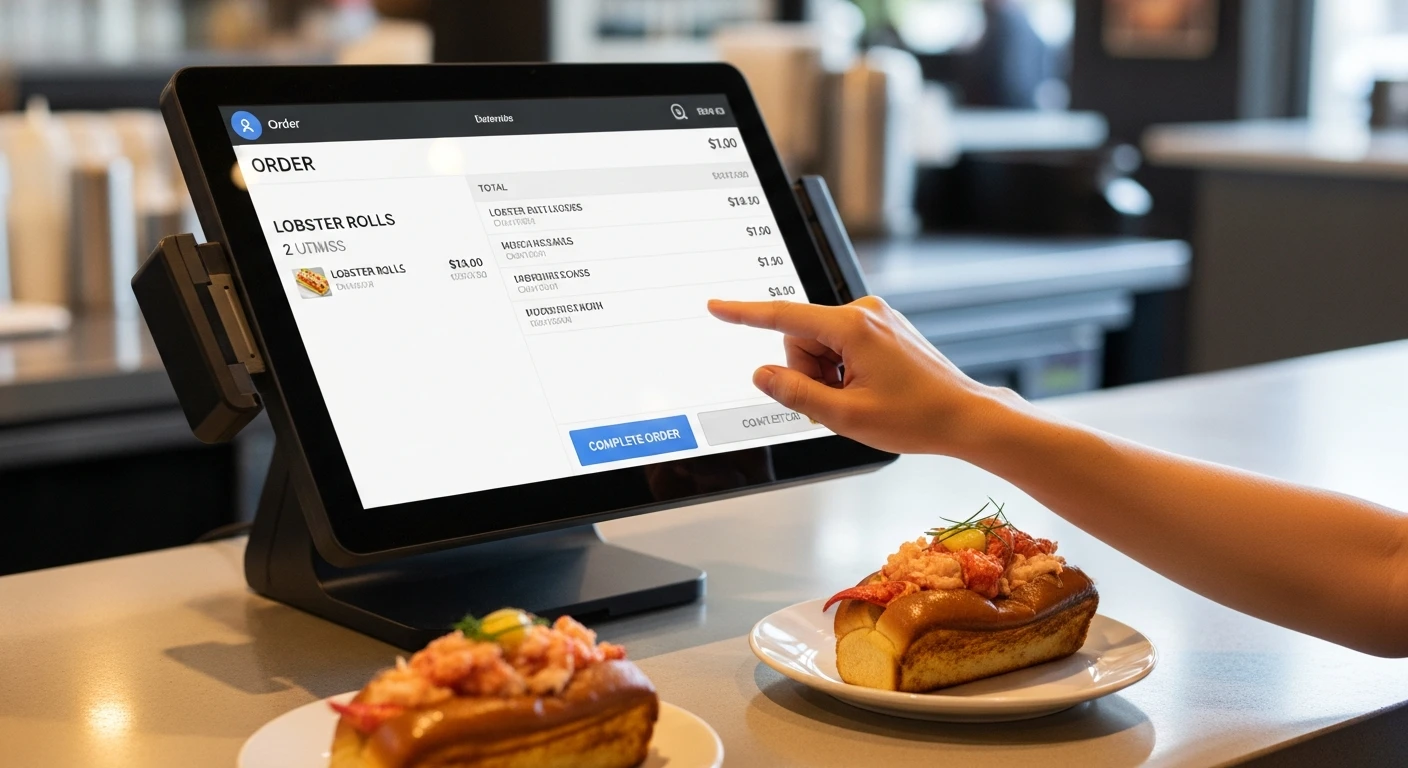
Lobster Rolls and Locked-In Contracts requires understanding the local market, regulations, and customer expectations in Boston. I recently spoke with a restaurant owner in the North End who was processing $65,000 per month through his POS provider's built-in payment system. He was paying an effective rate of 3.1%. He did not know that his rate was 3.1% because his POS provider's statements are structured to obscure the effective rate. When I showed him that interchange-plus pricing through an independent processor would bring his effective rate to approximately 2.35%, his face changed. That is a difference of $487.50 per month — $5,850 per year — walking straight out of his restaurant and into his POS provider's pocket.
That conversation, multiplied across Boston's 3,100+ restaurants, is the KwickOS reseller opportunity. And Boston, with its density of high-volume restaurants, its financially literate operators, and its deep tradition of independent ownership, is one of the best cities in America to build this business.
Boston's Restaurant Economy: Dense, Expensive, and Underserved
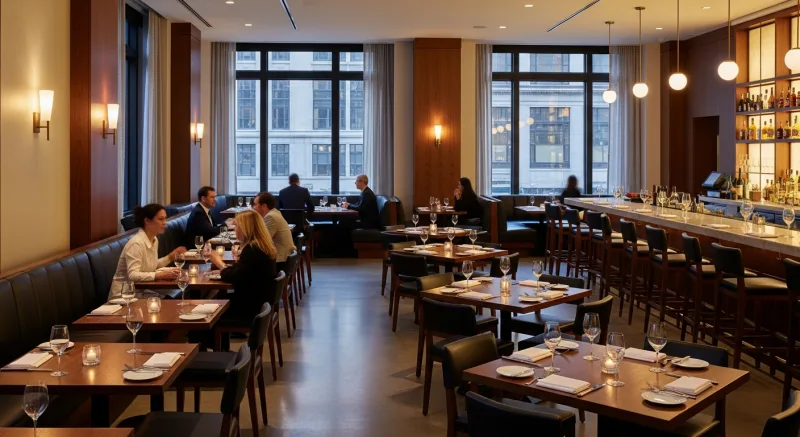
Boston's relationship with food is complicated and deeply personal. The city that gave America baked beans, New England clam chowder, and the lobster roll is now also a city where Michelin-starred restaurants compete for attention with innovative Chinatown dim sum houses, Cambridge molecular gastronomy labs, and Somerville's astonishingly diverse immigrant food corridor along Broadway.
The numbers tell a compelling story for POS resellers:
- 3,100+ restaurants in Boston proper, with 8,000+ across the metro area
- Average monthly card volume: $48,000 — significantly above the national average, driven by high menu prices and Boston's almost-cashless consumer behavior
- Average ticket size: $38 for full-service restaurants (national average: $28)
- Restaurant density: One of the highest in America — more restaurants per square mile than any city outside Manhattan
That $48,000 average monthly card volume is critical for the reseller math. At 0.15% residual, each Boston merchant generates approximately $72 per month in processing residuals — 20% above the national average. Ten placements per month in Boston compound faster than ten placements per month in most other markets.
The Neighborhood Playbook: Where to Sell in Boston
Boston is a city of neighborhoods, and each one presents a different reseller opportunity. The most successful POS resellers in any city develop neighborhood-level expertise rather than trying to cover everything at once.
The North End: High Volume, Traditional Operators
Boston's Little Italy is one of the densest restaurant corridors in America. More than 80 restaurants operate in roughly ten square blocks. These are predominantly Italian restaurants — many family-owned for generations — processing significant card volume, especially on weekends and during tourist season. The North End restaurant owner values relationships and personal service above all else. Cold calling does not work here. You need an introduction, ideally from another North End restaurant owner. One successful placement can cascade through the entire neighborhood via word of mouth.
Chinatown: The Multilingual Imperative
Boston's Chinatown, centered around Beach Street and Harrison Avenue, is home to approximately 70 restaurants. The dominant need is multilingual POS capability — Chinese-speaking owners, English-speaking front-of-house staff, and increasingly, Spanish-speaking kitchen staff. KwickOS's native trilingual support (English, Chinese, Spanish) is not a nice-to-have here — it is a deal-breaker requirement. No other major POS platform offers this level of multilingual support, giving you an unassailable competitive advantage in this corridor.
Cambridge and Somerville: Tech-Savvy Operators
Across the Charles River, Cambridge and Somerville house a restaurant scene driven by the university economy (Harvard, MIT, Tufts) and the tech industry. Restaurant operators here are younger, more tech-literate, and more likely to ask detailed questions about API integrations, data exports, and cloud architecture. They appreciate KwickOS's hybrid local+cloud model not because they fear internet outages, but because they understand that 1ms local latency fundamentally improves the user experience compared to 20ms cloud round-trips. These are operators who think in terms of system architecture, and KwickOS's Linux-based, web-native design resonates with that mindset.
The Seaport District: New Construction, New Opportunities
Boston's Seaport District has added more restaurant square footage in the past five years than any other neighborhood. New restaurants need POS systems from day one, and the Seaport demographic is young, affluent, and card-dominant. These restaurants launch at high volume and need systems that can handle it from the first day. Getting into the Seaport's restaurant pipeline — through relationships with restaurant designers, general contractors, and commercial real estate brokers — gives you access to new installations before competitors even know the restaurant exists.
The Financial Case: Boston-Specific Revenue Projections
Because Boston's average card volume is higher than the national average, the residual math is particularly attractive:
- Average monthly card volume per merchant: $48,000
- Residual rate: 0.15%
- Per-merchant monthly residual: $72
- 10 placements/month, 2% monthly attrition
Month 12 portfolio: ~107 active merchants generating $7,704/month in residuals
Month 24 portfolio: ~196 active merchants generating $14,112/month in residuals
Year 2 annual residual income: $143,000+
That is not a typo. Boston's above-average card volumes push the two-year residual income above the $127K national average. And because Boston restaurants have strong survival rates — the city's restaurant failure rate is actually below the national average, driven by high barriers to entry that filter out undercapitalized operators — your portfolio attrition is likely lower than the 2% assumption, making the real numbers even better.
The Three Partnership Tiers
Tier 1: Referral Partner. Ideal for Boston-based commercial real estate brokers, restaurant consultants, kitchen equipment suppliers, and hospitality attorneys who encounter restaurant operators regularly. You identify the opportunity, KwickOS handles the rest. You earn referral fees and keep any processing residuals from your own processor relationship.
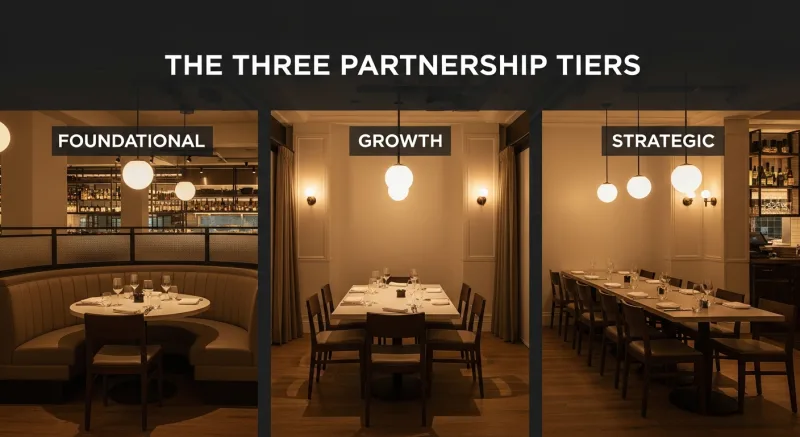
Tier 2: Active Reseller. You run the sales process using KwickOS demo equipment and sales materials. You close the deal and manage the ongoing relationship. KwickOS provides the 7-10 day implementation, 1-3 hour installation, and 1-2 hour staff training. You earn full processing residuals. This is the primary track for career POS resellers.
Tier 3: Full Partner. You build a KwickOS operation in the Boston metro area, potentially with sub-agents covering different neighborhoods. You handle sales, participate in installations, provide first-line support. You receive the highest residual splits and territory advantages. Best for established IT services companies or payment processing organizations entering the POS space.
Beating Toast in Boston: The Competitive Playbook
Toast is headquartered in Boston. Their offices are in the Seaport District. Their sales team is large, local, and aggressive. This is their home turf.
And that is exactly why the opportunity is so good.
Toast has saturated the Boston market with their own-processing model. They have been here since 2012. Thousands of Boston restaurants are on Toast. And thousands of those restaurants are now three, four, five years into their Toast relationship — long enough to realize that the processing rates they are paying are not competitive, that they cannot negotiate them, and that switching would require replacing their entire POS infrastructure.
Your pitch is not "KwickOS is better than Toast." Your pitch is "KwickOS gives you back the processing freedom that Toast took away." That is a fundamentally different conversation, and it resonates deeply with Boston's fiercely independent restaurant operators.
Here are the specific competitive advantages to emphasize in Boston:
- Processor choice. Toast locks merchants into Toast Payments. KwickOS integrates with every major processor. The merchant chooses.
- Offline capability. Boston's older buildings, particularly in the North End and Back Bay, have notoriously unreliable internet. KwickOS's local processing ensures no downtime during connectivity issues.
- No hardware lock-in. KwickOS runs on standard Linux hardware. Toast requires Toast-branded terminals. If a terminal breaks on a Friday night, a KwickOS merchant can run on any available device. A Toast merchant waits for a Toast replacement.
- Fingerprint authentication. Employee time theft costs Boston restaurants an estimated $180 million annually. KwickOS's 1:N fingerprint verification eliminates buddy punching and unauthorized access. Toast has no fingerprint capability.
Real Deployments That Prove the Platform
Crafty Crab: 19 Locations, 152 Terminals
When a Boston restaurant group asks "Can KwickOS handle multi-location operations?" the answer is 19 locations with one-click menu sync and customized KDS for complex order workflows. Crafty Crab's deployment demonstrates enterprise-grade capability that exceeds what any Boston restaurant group would require.
T. Jin China Diner: 15 Stores, Remote Monitoring
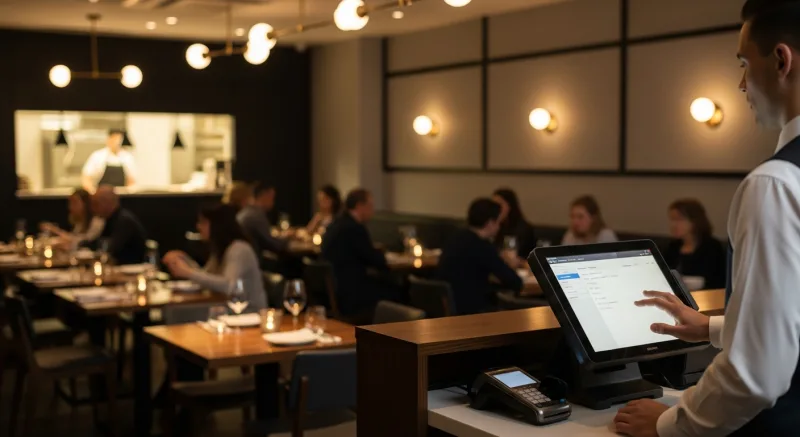
For the Chinatown and Allston restaurant communities, T. Jin's 15-location deployment with real-time remote monitoring across all stores demonstrates exactly the kind of multilingual, multi-location management that Asian restaurant groups need. Seventy-five terminals, real-time sales visibility, and the peace of mind that comes from knowing every location is performing — accessible from any device, anywhere.
Haidilao: 600+ Locations, Global Scale
Boston's restaurant owners respect scale. When Haidilao — one of the world's largest restaurant chains — chose KwickOS for U.S. operations, it validated the platform at a level that no amount of marketing could achieve. If the technology handles Haidilao's volume and complexity, it can handle a 3-location group in the South End.
The Seasonal Advantage You Cannot Ignore
Boston's restaurant economy has a pronounced seasonal pattern that smart resellers exploit. The prime selling season runs from January through April — after the holiday rush, before the summer tourist season. Restaurant owners have time to evaluate technology during this window, and they are motivated by year-end financial reviews that often reveal how much they overspent on processing in the prior year.
The tourist season (May through October) brings a 30-40% volume increase for restaurants in the North End, Seaport, Faneuil Hall, and Back Bay. Placing a merchant in February and watching their card volume spike in June means your residual income from that single placement increases by 30-40% for five months of the year. Boston's seasonality actually amplifies the residual model.
Nor'easters and winter storms present another, more tactical advantage. When a blizzard knocks out internet across the city — as happens several times each winter — cloud-only POS systems go down. KwickOS keeps processing. If you time your sales outreach to the week after a major storm, every restaurant owner in the city has a fresh, visceral memory of what happens when their POS depends on an internet connection. That is the moment to have the conversation about hybrid local+cloud architecture.
Start Building in Boston
Boston is not an easy market. It is competitive, expensive, and relationship-driven. But for those exact reasons, it rewards resellers who invest in the market properly. The restaurant operators here are smart, the card volumes are high, and the need for processor-agnostic technology is enormous and growing.
The math works. The technology is proven across 5,000+ merchants nationwide. KwickOS handles the installation, training, and 24/7 multilingual support. You build the relationships and the residual portfolio.
Explore the KwickOS Partner Program or call (888) 355-6996 to discuss the Boston opportunity with our team.
Your Secret Selling Weapon: Gift Cards, Loyalty & Points — Included Free
Here is what closes deals for KwickOS resellers: when a merchant asks "what about gift cards?" or "do you have a loyalty program?" — you say "It is included. No extra monthly fee." Watch their face when they realize Toast charges $75/month and Square charges $45/month for the same thing.
Why This Matters for Your Sales Pitch
Gift cards and loyalty programs are the features merchants ask about but competitors charge extra for. This is your competitive advantage in every demo:
- Gift card program — physical cards + e-gift cards, multi-location balance sync. Sell it as "your own Starbucks card" for their business
- Points system — automatic point earning on every transaction. Customers come back more often, spend more each visit
- Membership tiers — VIP programs, subscription models, exclusive pricing. Perfect upsell for restaurants, salons, and coffee shops
- CRM integration — customer purchase history, preferences, birthday tracking, SMS/email marketing all from one screen
The Math That Closes Deals
Toast loyalty add-on: $75/month = $900/year. Square loyalty: $45/month = $540/year. KwickOS: $0 extra. Over a 3-year contract, that is $1,620-2,700 your merchant saves — just on loyalty and gift cards. Add payment processing freedom savings ($6,000+/year) and you are showing $8,000+ in annual savings. That is an easy yes.