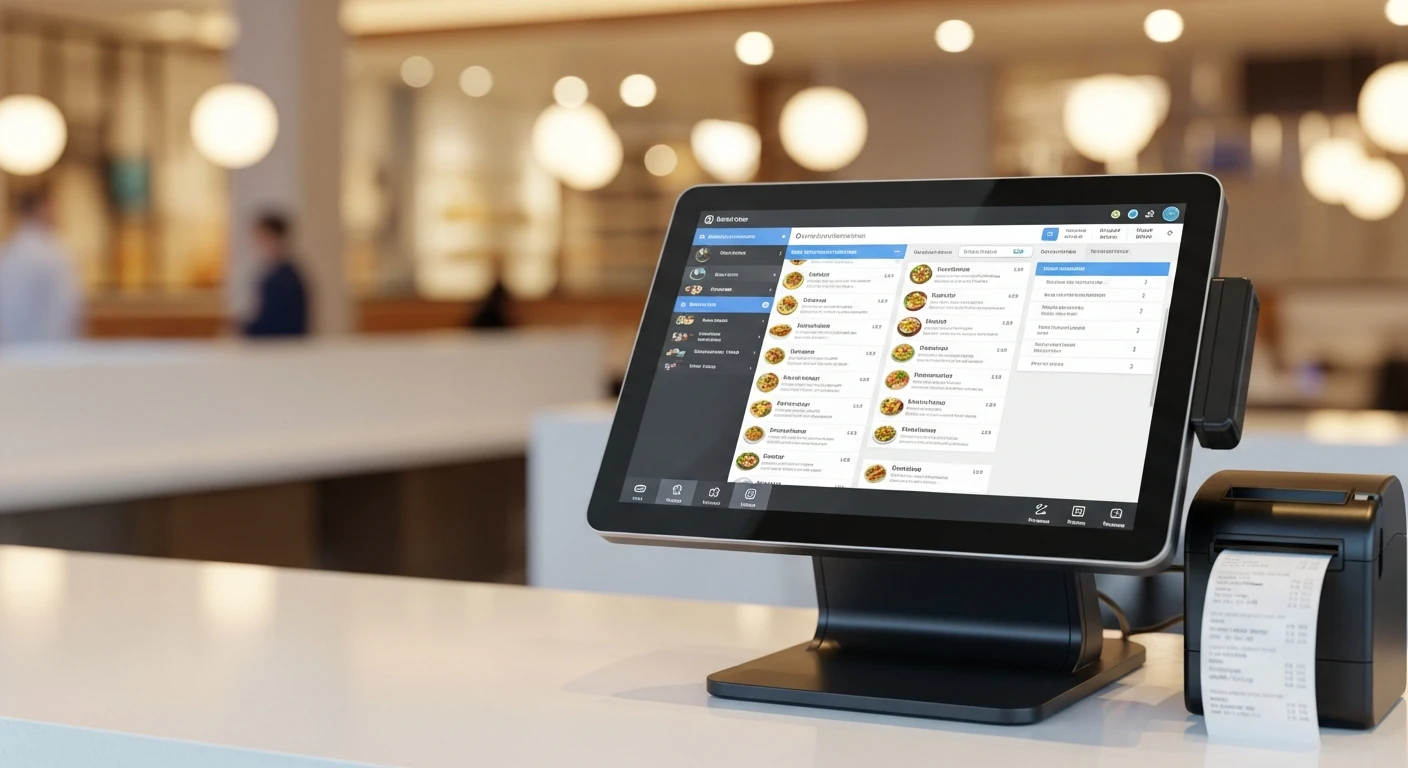
I have been in the POS industry for thirty years and the restaurant industry for twenty. I have seen markets that are saturated with modern technology and markets that are still running on legacy systems held together with duct tape and prayer. Atlanta falls somewhere in between — and that in-between space is exactly where the biggest reseller opportunities live.
The city has a restaurant scene that most outsiders underestimate. They think of Atlanta as peach cobbler and fried chicken, and sure, those traditions run deep. But modern Atlanta is a city where a James Beard Award-winning chef operates next door to a family-run Korean barbecue spot in Duluth, which sits ten minutes from a Buford Highway strip mall housing some of the best Vietnamese pho in the country. The culinary diversity is staggering, and every single one of those restaurants needs technology that works for their specific operation.
That is the reseller opportunity. And for reasons I will lay out in this article, Atlanta in 2026 might be the single best city in the Southeast to build a POS reseller business.
The Atlanta Restaurant Landscape: A Market in Transition
Atlanta's food and beverage industry generates over $14 billion annually across the metro area. The city proper has roughly 4,200 restaurants, but the greater metro — stretching from Marietta to Decatur, from Alpharetta to College Park — pushes that number past 12,000. For a POS reseller, the addressable market is enormous.
But what makes Atlanta particularly interesting is the composition of that market. Unlike New York or San Francisco, where restaurant technology adoption is already high, Atlanta's restaurant scene includes a massive segment of independent operators who are still running on first-generation cloud POS systems — or worse, on legacy terminals that should have been replaced years ago.
Buckhead and Midtown: The High-Volume Targets
The Buckhead restaurant corridor along Peachtree Road and Lenox Road represents some of the highest per-ticket dining in the Southeast. Restaurants here process $80,000 to $150,000 monthly in card volume. For a reseller earning 0.15% on processing, a single Buckhead fine dining placement could generate $120 to $225 per month in residual income. That is a single merchant.
Midtown's restaurant row along Crescent Avenue and 10th Street skews younger and more casual, but the volume is still significant. Brunch culture alone drives enormous weekend card volume at spots that might otherwise look like modest operations.
Buford Highway: The International Corridor
Buford Highway is one of the most important restaurant corridors in the American South. Stretching from Chamblee through Doraville and into unincorporated DeKalb County, this six-mile strip houses hundreds of restaurants serving cuisine from Korea, Vietnam, China, Mexico, El Salvador, Ethiopia, and dozens of other countries.
These restaurants have a technology need that most POS companies cannot serve: multilingual capability. A Korean restaurant where the owner speaks limited English, the kitchen staff speaks Spanish, and the customers order in English needs a POS system that handles all three languages seamlessly. KwickOS does this natively — English, Chinese, and Spanish are built in, and the interface can be switched per-user. For a reseller working the Buford Highway corridor, this is your competitive weapon. Toast does not offer this. Square does not offer this. Clover does not offer this.
The Westside and Beltline Boom
Atlanta's Westside — anchored by the Beltline development — has become one of the fastest-growing restaurant districts in the country. Ponce City Market, Krog Street Market, and the surrounding neighborhoods have added hundreds of food concepts in the past five years. Many of these are fast-casual or counter-service operations with high transaction counts and moderate ticket sizes.
The Beltline corridor restaurants share a common challenge: they need a POS system that handles high-speed counter service during peak hours but also supports online ordering, third-party delivery integration, and sophisticated inventory management. KwickOS delivers all of this on a single platform. And because it runs on Linux — not Windows — the hardware costs are lower, which matters for a fast-casual operator working on thin margins.
Why Atlanta Restaurants Are Ripe for a POS Upgrade
There are three structural factors making Atlanta a particularly strong reseller market in 2026:
1. The Toast Saturation Problem
Toast entered the Atlanta market aggressively in 2021-2022. They placed hundreds of restaurants on their platform, often with subsidized hardware and aggressive sales tactics. Three years later, many of those restaurants are discovering the hidden cost of "free" — they are locked into Toast Payments, paying processing rates that are 20-40 basis points above what they could get on the open market, and they cannot leave without replacing their entire POS system.
These merchants are not happy. They feel trapped. And they represent a massive opportunity for a reseller offering a processor-agnostic alternative. When you tell an Atlanta restaurant owner that KwickOS lets them choose their own payment processor — and keep their processing relationship if they already have one — that is a conversation closer. I have seen it happen hundreds of times with our 5,000+ merchants nationwide.
2. The Atlanta Hawks Effect
This is an analogy, not a sports reference. When the Atlanta Hawks renovated State Farm Arena in 2018, they did not just upgrade the seats. They reimagined the entire concession and food service model, bringing in local restaurant partners and modern ordering technology. That mentality — treating food service as a technology problem, not just a hospitality problem — has permeated the Atlanta restaurant culture. Owners are more tech-aware than they were five years ago. They understand what a modern POS should do. They just need someone to show them what is available beyond Toast and Square.
3. Georgia's Business-Friendly Climate
Georgia has no state-level restrictions on credit card surcharging (as of 2025), which means merchants have full flexibility in how they pass along processing costs. This makes the processor-agnostic model even more valuable, because a reseller can help merchants optimize their processing setup in ways that are not possible in states with surcharging restrictions. Furthermore, Georgia's relatively low cost of doing business means restaurants survive longer, which means lower attrition for your processing portfolio.
The KwickOS Reseller Model: How It Works in Atlanta
Here is the fundamental difference between selling KwickOS and selling Toast, Square, or Clover as a reseller: with KwickOS, you own the processing relationship. With the others, they own it.
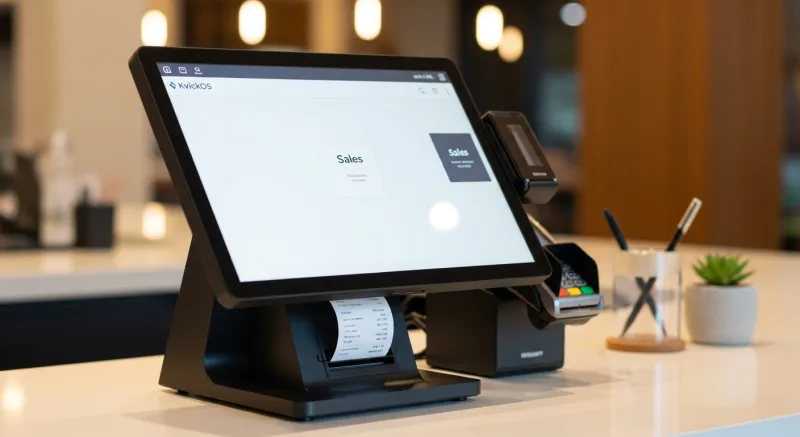
KwickOS is processor-agnostic. Our POS integrates with every major payment processor — First Data, TSYS, Global Payments, Worldpay, Elavon, Heartland, and dozens more. When you place a merchant on KwickOS, you choose the processor. You negotiate the rate. You earn the residual on every card swipe for the life of that merchant. KwickOS never touches that revenue stream.
The Revenue Math for Atlanta
Let me lay out the numbers using Atlanta-specific assumptions:
- Average Atlanta restaurant monthly card volume: $40,000 (this is conservative; Buckhead restaurants average much higher)
- Your residual rate: 0.15% of card volume
- Per-merchant monthly residual: $60
- Your placement rate: 10 merchants per month (very achievable in a metro with 12,000+ restaurants)
After 12 months at that pace, you have approximately 107 active merchants (accounting for 2% monthly attrition) generating over $6,400 per month in residual income. After 24 months, you are north of $10,000 per month. This is passive, recurring revenue that continues whether you are actively selling or not.
Compare this to the Toast model, where you receive a one-time bonus of $500 to $2,000 per placement and then nothing. At 10 placements per month, the Toast reseller earns $120,000 in Year 1. The KwickOS reseller earns $43,000 in Year 1. But by Year 2, the KwickOS reseller's cumulative income has surpassed the Toast reseller's — and the gap widens every month after that.
Three Ways to Partner
KwickOS offers three tiers of partnership, and the right one depends on where you are in your career:
Tier 1: Referral Partner. You identify restaurants that need a POS upgrade. You make the introduction to KwickOS. We handle the sales conversation, the installation, the training, and the ongoing support. You earn a referral fee and, if you have a processing relationship, you keep the processing residuals. This is ideal for commercial real estate agents, restaurant consultants, and food industry professionals who encounter restaurants regularly but do not want to become full-time POS salespeople.
Tier 2: Active Reseller. You conduct the sales process yourself using KwickOS marketing materials and demo systems. You present the product, close the deal, and hand off to our installation team. We handle the 7-10 day implementation, the 1-3 hour on-site installation, and the 1-2 hour staff training. You manage the relationship and earn full processing residuals. This is the sweet spot for most full-time POS resellers.
Tier 3: Full Partner. You operate as an independent KwickOS dealership in the Atlanta market. You handle sales, participate in installations, provide first-line support, and build a brand identity around the KwickOS platform. In exchange, you earn the highest residual splits and have access to enterprise-level marketing support. This is for established companies with existing teams and infrastructure.
Case Studies: How KwickOS Performs in Multi-Location Operations
Atlanta has a particular concentration of multi-location restaurant groups — from the Buckhead Life Restaurant Group to the countless family-owned chains operating three to fifteen locations across the metro. These multi-unit operators are among the most valuable reseller targets because they multiply your per-merchant residual across an entire portfolio.
Crafty Crab Seafood: 19 Locations, 152 Terminals
Crafty Crab is the kind of account that transforms a reseller's income. Nineteen locations operating 152 KwickOS terminals. The key capability that won this account was one-click menu synchronization — the ability to update a menu item at headquarters and push it to all 19 locations simultaneously. Crafty Crab also required customized KDS (Kitchen Display System) configurations to handle their complex seafood bag orders with extensive customization. Legacy POS systems could not handle this. KwickOS could.
For a reseller, an account like Crafty Crab at $40,000 average monthly card volume per location would generate approximately $1,140 per month in processing residuals across all 19 locations. That is $13,680 per year from a single client relationship.
T. Jin China Diner: 15 Stores, 75 Terminals
T. Jin demonstrates a different value proposition — real-time remote monitoring. With 15 locations spread across a wide geography, the ownership needed the ability to see live sales data, void activity, and operational metrics from any location, at any time, from any device. KwickOS's cloud dashboard provides this while maintaining the speed advantages of local processing (1ms latency versus 20ms for cloud-only systems). When the internet goes down at one location, that location keeps processing transactions. The data syncs when connectivity returns.
Haidilao Hot Pot: 600+ Locations Worldwide
While Haidilao's scale is far beyond a typical Atlanta restaurant, their choice of KwickOS for U.S. operations demonstrates the platform's enterprise capability. If the technology works for a global chain processing millions in monthly volume, it can certainly handle an Atlanta restaurant group with three to fifteen locations. That credibility matters in the sales conversation.
The Atlanta Competitive Landscape for Resellers
Let me be direct about what you are up against in Atlanta. Toast has a strong presence here. They have a local sales office, local reps, and local installation teams. SpotOn has made inroads in the full-service segment. Square dominates the coffee shop and fast-casual space. Clover has distribution through the bank channel.
But none of them are processor-agnostic. That is your opening.
Here is how the competitive conversation typically plays out in Atlanta:
Restaurant owner says: "I'm paying 2.99% on Toast Payments and I can't negotiate it."
You say: "With KwickOS, you choose your own processor. I can get you interchange-plus pricing at 2.3% to 2.5%. That saves you $3,000 to $6,000 per year, and you're never locked into a processing contract."
That conversation resonates with every restaurant owner who has felt trapped by their current POS provider's processing terms. And in Atlanta, there are thousands of them.
How to Start: Your First 90 Days as a KwickOS Reseller in Atlanta
If you are considering the KwickOS reseller opportunity in Atlanta, here is a practical roadmap for your first three months:

Days 1-30: Foundation. Complete KwickOS product training (available online). Identify your target neighborhoods — I would start with Buford Highway for the multilingual advantage, then expand to Buckhead for high-volume accounts. Set up your processing relationship if you do not already have one. Order your demo hardware.
Days 31-60: First Placements. Focus on restaurants you already know. Every POS sale starts with a relationship, and Atlanta is a relationship city. Join the Georgia Restaurant Association. Attend Atlanta Food & Wine Festival events. Get into the Buford Highway restaurant community through local Korean, Chinese, and Vietnamese business associations. Target 5-8 placements in your second month.
Days 61-90: Scale. Refine your pitch based on what resonated in your first placements. Build a referral pipeline from satisfied customers. Begin prospecting multi-location groups — even landing one two-location operator doubles your per-placement efficiency. Target 10+ placements per month from this point forward.
The Offline Advantage: Why It Matters in Atlanta
Atlanta's summer thunderstorms are legendary. When a storm knocks out internet at a restaurant — which happens regularly during the June-September storm season — a cloud-only POS system goes down. Transactions cannot be processed. Orders cannot be taken. Revenue stops.
KwickOS uses a hybrid local-plus-cloud architecture. All transaction processing happens locally at 1ms latency. The cloud provides backup, remote access, and multi-location management. But when the internet drops, the local system keeps running. Every transaction is processed, stored locally, and synced to the cloud when connectivity returns. For an Atlanta restaurant during peak dinner service in the middle of a summer thunderstorm, this is not a feature — it is survival.
This is another selling point that no Toast or Square reseller can match, because those platforms are entirely cloud-dependent.
The Fingerprint Factor
Atlanta's restaurant workforce is large, mobile, and — in the casual and fast-food segments — high-turnover. Employee time theft is a persistent issue. KwickOS supports 1:N fingerprint identification, meaning an employee simply places their finger on the scanner and the system identifies them from the entire employee database. No codes to share, no buddy punching, no unauthorized discounts.
Toast does not support fingerprint authentication at all. When you demonstrate this capability to an Atlanta restaurant owner who has been dealing with time theft and unauthorized voids, it is often the single feature that closes the deal.
Your Move
Atlanta's restaurant market is large, diverse, underserved by processor-agnostic technology, and growing. The reseller opportunity is real and quantifiable: 10 merchants per month at $40,000 average card volume at 0.15% residual builds to $127,000+ annually within 24 months. KwickOS handles the installation, the training, the 24/7 support, and the technology. You handle the relationships.
If you are ready to explore the KwickOS reseller program in Atlanta — or if you want to see the revenue math applied to your specific situation — visit our partner page or call us directly at (888) 355-6996.
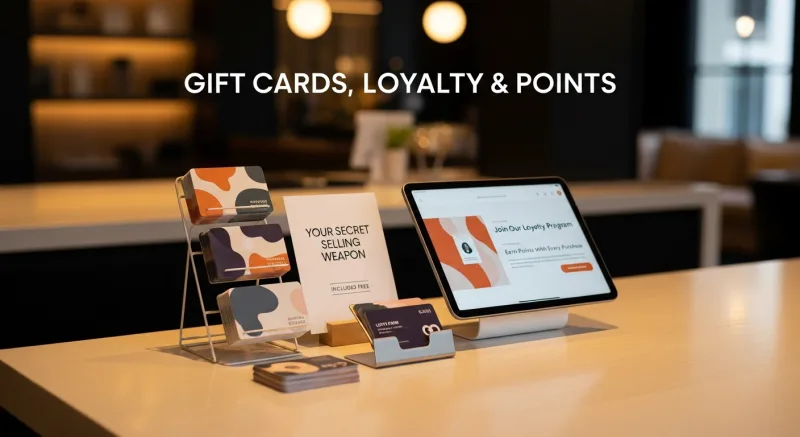
Your Secret Selling Weapon: Gift Cards, Loyalty & Points — Included Free
Here is what closes deals for KwickOS resellers: when a merchant asks "what about gift cards?" or "do you have a loyalty program?" — you say "It is included. No extra monthly fee." Watch their face when they realize Toast charges $75/month and Square charges $45/month for the same thing.
Why This Matters for Your Sales Pitch
Gift cards and loyalty programs are the features merchants ask about but competitors charge extra for. This is your competitive advantage in every demo:
- Gift card program — physical cards + e-gift cards, multi-location balance sync. Sell it as "your own Starbucks card" for their business
- Points system — automatic point earning on every transaction. Customers come back more often, spend more each visit
- Membership tiers — VIP programs, subscription models, exclusive pricing. Perfect upsell for restaurants, salons, and coffee shops
- CRM integration — customer purchase history, preferences, birthday tracking, SMS/email marketing all from one screen
The Math That Closes Deals
Toast loyalty add-on: $75/month = $900/year. Square loyalty: $45/month = $540/year. KwickOS: $0 extra. Over a 3-year contract, that is $1,620-2,700 your merchant saves — just on loyalty and gift cards. Add payment processing freedom savings ($6,000+/year) and you are showing $8,000+ in annual savings. That is an easy yes.