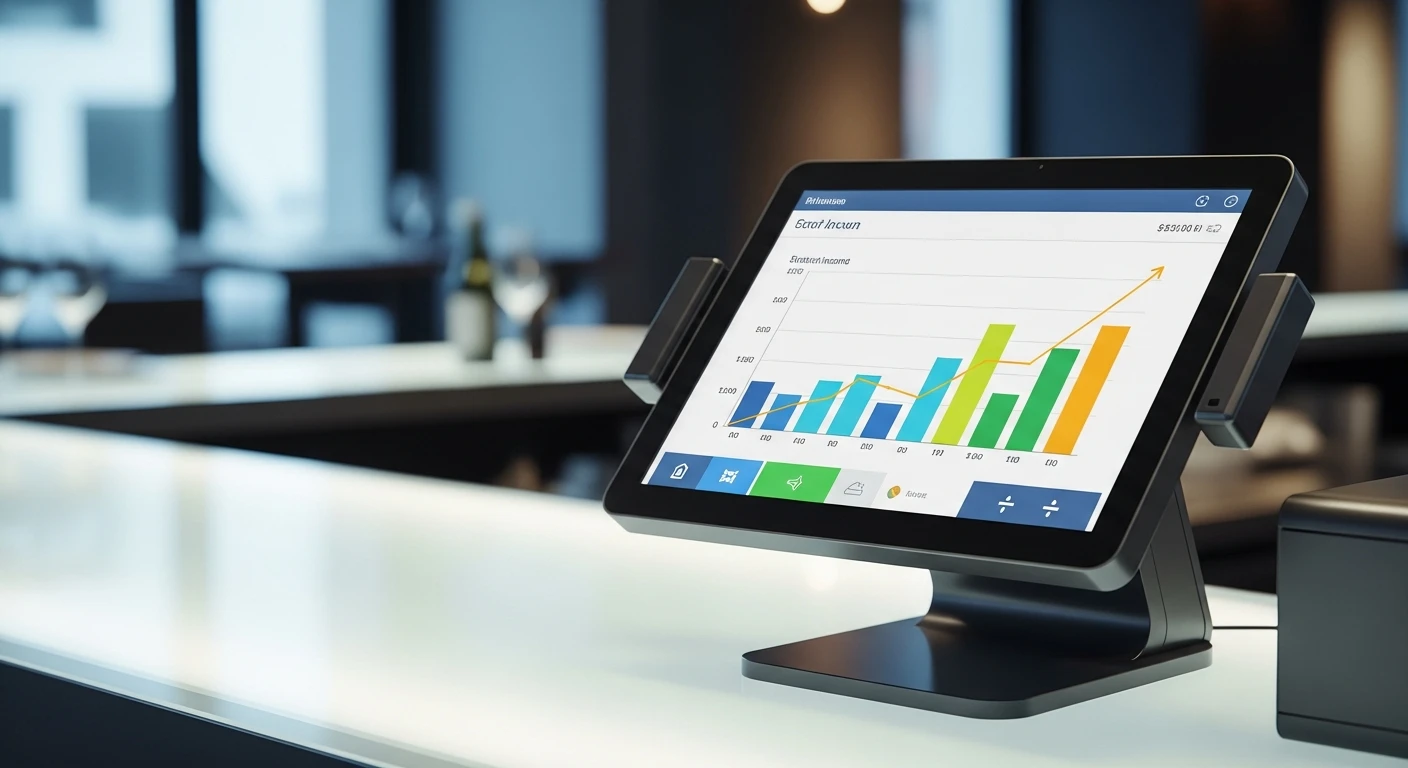
The Problem: You place 10 merchants a month on Toast. You earn a $1,000 bonus per deal. That is $120,000 a year — and it sounds great until you realize Toast is pocketing $40,000+ in processing revenue from each of those merchants over their lifetime. You brought the deal. They keep the residuals. And the moment you stop selling, your income drops to zero.
The Agitation: It gets worse. There are roughly 12,000 active POS resellers in the United States, and the vast majority are trapped in this exact cycle — grinding month after month on a treadmill that never builds equity. No portfolio. No passive income. No exit strategy. After 5 years of hard work, you own nothing. Meanwhile, your POS partner has banked $4.8 million in processing revenue from the merchants you sourced.
The Solution: There is a different model — one where you keep the processing relationship and the $127,000+/year in residual income that comes with it. This article breaks down the exact math. Not theoretical numbers. Not "up to" figures from a glossy partner brochure. Real, achievable numbers based on $40,000 average monthly card volume, 0.15% standard residual splits, and the compounding effect that turns 10 placements/month into a six-figure passive income stream within 24 months.
But here is what most resellers miss...
The Economics of POS Reselling: Two Fundamentally Different Models
Here is the thing nobody tells you upfront:
Before we run the numbers, you need to understand that there are two completely different economic models in the POS reseller world. Most resellers do not realize this until they have already committed to the wrong one.
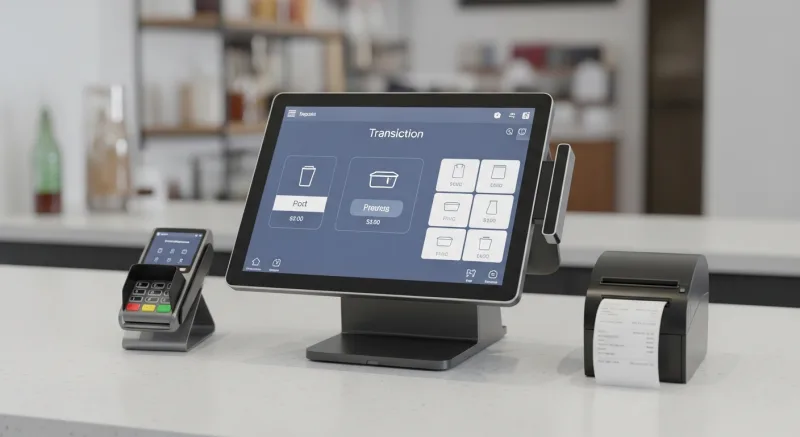
Model A: The "Bonus" Model (Toast, SpotOn, and Others)
In this model, the POS company owns the processing relationship. When you place a merchant on Toast, that merchant processes cards through Toast Payments. The reseller receives an upfront bonus — typically $500 to $2,000 per placement depending on the merchant's projected volume — and then their financial relationship with that merchant is essentially over.
Toast's Go-to-Market Partner program, for example, pays a one-time referral fee. The merchant signs a processing agreement with Toast. Toast earns the interchange markup, the monthly fees, and the residual income from that merchant for the life of the relationship. The reseller who made the introduction gets paid once.
Let us quantify what this means. If you place 10 merchants per month at an average bonus of $1,000 each, your Year 1 income is:
10 placements/month × $1,000 bonus × 12 months = $120,000
That looks attractive. But wait — here is the problem: your Year 2 income is also $120,000. And your Year 5 income is also $120,000. You are on a treadmill. The moment you stop placing new merchants, your income drops to zero. Every month starts at $0. There is no compounding, no portfolio value, and no exit strategy. You are a commission-only salesperson, not a business owner.
Model B: The "Residual" Model (Processor-Agnostic POS Platforms)
In this model, the POS platform does not touch the processing. The merchant chooses their own payment processor — or the reseller places them with a processor where the reseller has a residual agreement. The POS system integrates with the processor via gateway, but the processing relationship belongs to the reseller.
This is how KwickOS operates. KwickOS is processor-agnostic. It integrates with virtually every major payment processor in the U.S. — First Data, TSYS, Global Payments, Worldpay, Elavon, Heartland, Paysafe, and dozens of others. When a KwickOS reseller places a merchant, that reseller maintains their processing relationship and earns residuals on the card volume for the life of the merchant.
The math is radically different.
The $127K Residual Income Calculation: Step by Step
Let us build this from the ground up, using conservative assumptions that any experienced reseller will recognize as realistic.
Assumptions
- Placement rate: 10 new merchants per month (achievable for a single full-time reseller)
- Average monthly card volume per merchant: $40,000 (the national average for a full-service restaurant is $35,000-$50,000/month)
- Residual rate: 0.15% of card volume (this is a standard agent split on interchange-plus pricing)
- Monthly attrition: 2% (industry average for well-serviced portfolios is 1.5%-3%)
- Ramp-up: Consistent 10 placements/month from Month 1 (in reality, most resellers start slower and accelerate, but we are keeping this simple)
Year 1: Building the Portfolio
| Month | New Merchants | Total Active Merchants (After Attrition) | Monthly Residual Income |
|---|---|---|---|
| 1 | 10 | 10 | $600 |
| 2 | 10 | 20 | $1,188 |
| 3 | 10 | 29 | $1,764 |
| 4 | 10 | 39 | $2,328 |
| 5 | 10 | 48 | $2,880 |
| 6 | 10 | 57 | $3,420 |
| 7 | 10 | 66 | $3,948 |
| 8 | 10 | 75 | $4,464 |
| 9 | 10 | 83 | $4,968 |
| 10 | 10 | 91 | $5,460 |
| 11 | 10 | 99 | $5,940 |
| 12 | 10 | 107 | $6,420 |
Year 1 Total Residual Income: ~$43,380
Now compare that to Model A. In Year 1, the bonus-model reseller earned $120,000. The residual-model reseller earned $43,380. The bonus model appears to win — and this is exactly why so many resellers choose it. They optimize for Year 1 and sacrifice everything after.
Year 2: The Compounding Kicks In
Here is where the residual model changes the game. At the start of Year 2, you already have 107 active merchants generating residual income. You continue placing 10 new merchants per month. But you are no longer starting from zero — you are building on a foundation.
| Month | Total Active Merchants | Monthly Residual Income |
|---|---|---|
| 13 | 115 | $6,888 |
| 14 | 123 | $7,344 |
| 15 | 130 | $7,788 |
| 16 | 137 | $8,220 |
| 17 | 144 | $8,640 |
| 18 | 151 | $9,048 |
| 19 | 158 | $9,444 |
| 20 | 164 | $9,828 |
| 21 | 171 | $10,260 |
| 22 | 177 | $10,620 |
| 23 | 183 | $10,968 |
| 24 | 189 | $11,340 |
Year 2 Total Residual Income: ~$110,388
Combined Year 1 + Year 2: $153,768. And by Month 24, your run-rate is $11,340/month, which annualizes to $136,080/year — exceeding the $127K figure in our headline and still climbing.
Meanwhile, the bonus-model reseller earned the same $120,000 in Year 2 that they earned in Year 1. Their cumulative total is $240,000 versus your $153,768. But look at what happens in Year 3: you are starting the year with 189 merchants generating $11,340/month. Even if you stopped placing new merchants entirely, your Year 3 income would exceed $120,000 from passive residuals alone.
The Crossover Point
Now it gets really interesting.
The residual model surpasses the bonus model in cumulative earnings somewhere around Month 30-36, depending on exact attrition rates and volume growth. But the real advantage is not in the crossover — it is in what happens after. The bonus model is linear. The residual model is exponential. By Year 5, a residual-model reseller with the same 10 placements/month pace is earning $18,000-$22,000/month in passive income. The bonus-model reseller is still grinding for the same $10,000/month in commissions.
At 10 placements/month with 0.15% residual on $40K average volume and 2% monthly attrition, a KwickOS reseller reaches $11,340/month in recurring revenue by Month 24. That is $136,080 annualized — and it continues growing every month you add merchants.
Why Your POS Partner Determines Your Income Ceiling
And this is where it gets critical.
The calculation above works only if your POS platform lets you keep the processing relationship. This is the critical variable that separates six-figure resellers from five-figure resellers, and it is the variable that most POS partner programs are specifically designed to obscure.
How Toast Captures Your Processing Revenue
When you place a merchant on Toast, the merchant must use Toast Payments. This is not optional — Toast requires it. Toast earns an estimated 2.49% + $0.15 per transaction on standard processing, plus an additional per-transaction fee on Toast-facilitated online orders. For a restaurant processing $40,000/month in card volume, Toast is earning approximately $1,011/month in processing revenue from that single merchant.
You, the reseller who sourced, qualified, demonstrated, and closed that merchant, receive a one-time bonus. Toast receives $1,011/month for the life of the relationship, which averages 3-4 years. That is $36,396 to $48,528 in processing revenue from a merchant you brought to the table.
Let that sink in: you got $1,000. Toast got $40,000+.
How Square Limits Your Upside
Square's model is similar but even more restrictive. Square for Restaurants uses Square's integrated processing at 2.6% + $0.10 per tap/dip/swipe. There is no formal reseller program with negotiated residuals. Square's "partner" relationships are primarily referral-based, with modest per-activation bonuses. The processing revenue stays with Square, period.
How Clover Creates the Illusion of Choice
Clover, owned by Fiserv, technically allows processing through Fiserv's network, and some ISOs can maintain a processing relationship through the Fiserv/First Data channel. But the margins are compressed because Fiserv controls both the POS (Clover) and the processing rails. The ISO's residual on a Clover merchant is typically 30-50% lower than what they would earn on the same merchant with an independent POS platform, because Fiserv takes a larger share of the pie at the platform level.
How KwickOS Protects Your Processing Revenue
KwickOS does not process payments. KwickOS does not want to process payments. KwickOS is a point-of-sale operating system that integrates with the processor of the merchant's (or the reseller's) choice. When you place a merchant on KwickOS and pair them with a processor where you have a residual agreement, you keep your full residual split. KwickOS does not take a cut of the processing, does not require a specific processor, and does not compete with you for the most valuable revenue stream in the relationship.
This is not altruism — it is a business model. KwickOS earns revenue from its software platform and value-added services. The processing revenue is not KwickOS's business. But it is absolutely your business, and that alignment of incentives is what makes the reseller economics work.
The Portfolio Valuation: Your Residual Book Is an Asset
But the income is only half the story.
There is an additional financial dimension that bonus-model resellers never experience: portfolio valuation. A book of processing residuals is a sellable asset. In the payments industry, residual portfolios typically trade at 24x to 36x monthly residual, depending on merchant quality, retention rates, and contract terms.
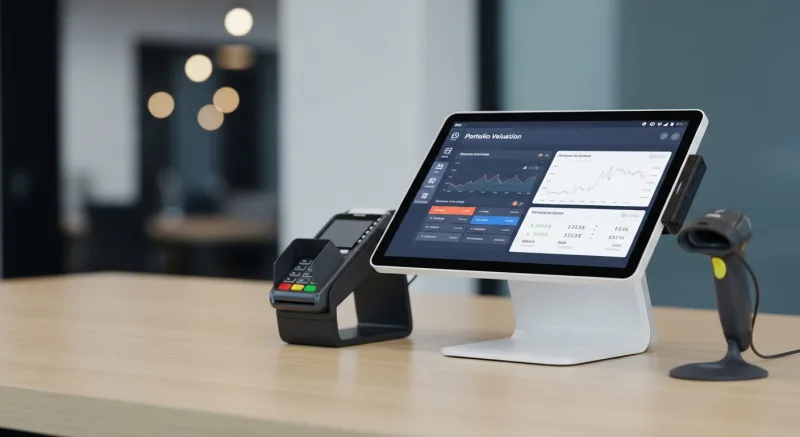
Let us apply this to our model reseller at Month 24:
- Monthly residual: $11,340
- Portfolio valuation at 24x: $272,160
- Portfolio valuation at 30x: $340,200
- Portfolio valuation at 36x: $408,240
At the 24-month mark, a KwickOS reseller has not only earned $153,768 in cumulative residual income — they have also built an asset worth $272,000 to $408,000 that they can sell, use as collateral, or pass to their heirs. The Toast reseller who earned $240,000 in bonuses owns nothing. When they stop selling, the income stops. There is no asset. There is no exit.
For agents thinking about long-term wealth building — particularly those approaching retirement or considering eventual exit from the industry — the portfolio valuation is the most consequential number in this entire analysis.
What KwickOS Resellers Actually Do (And What KwickOS Does for Them)
A common objection from resellers evaluating any POS partnership is the fear of getting stuck with support calls, installation headaches, and technical troubleshooting. These fears are legitimate. Many resellers have been burned by POS companies that dump the post-sale workload on their channel partners.
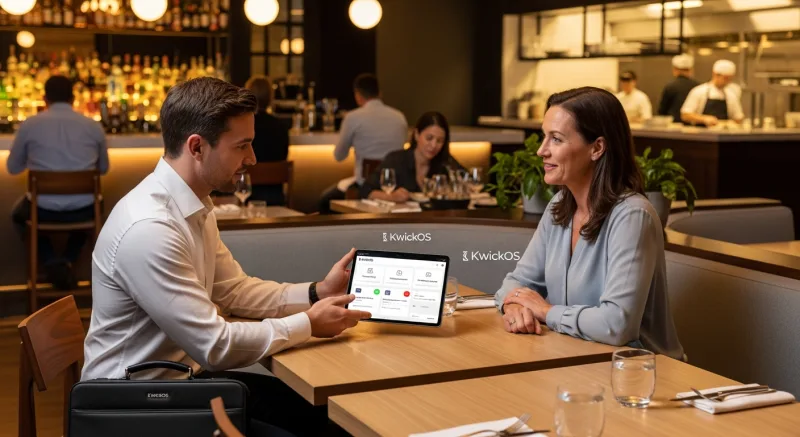
KwickOS operates differently. Here is the division of labor:
What the Reseller Does
- Identifies prospects — restaurants, retail stores, beauty/spa businesses, grocery stores in their territory
- Conducts demos — KwickOS provides demo terminals and training for resellers
- Closes deals — negotiates pricing, manages the merchant relationship
- Places the processing — sets up the merchant's payment processing with the processor of choice
What KwickOS Does
- Installation: 7-10 days from purchase to live system. KwickOS technical team handles all hardware setup, software configuration, menu programming, and network configuration.
- Training: 1-2 hours of on-site or remote training for the merchant's staff. KwickOS case study: Shogun Japanese Hibachi achieved operator proficiency in under 5 minutes on the system.
- 24/7 Support: Multilingual (English, Chinese, Spanish) U.S.-based support handles all technical issues, hardware replacements, software updates, and troubleshooting. The reseller is not the help desk.
- Software Updates: KwickOS runs on Linux, updates automatically, requires no Windows licensing and no manual patching. The reseller never touches the technology stack.
- Multi-Location Management: For chain accounts, KwickOS provides centralized menu management, real-time multi-store monitoring, and cloud-based reporting. Crafty Crab Seafood runs 19 locations with 152 terminals on KwickOS, with one-click menu sync across all stores.
The net effect: the reseller's time is spent on revenue-generating activities (prospecting, demoing, closing) rather than revenue-draining activities (support, troubleshooting, installations). This is what allows a single reseller to maintain a placement rate of 10 merchants/month — because they are not spending half their time on post-sale support.
Three Reseller Tiers: Scale at Your Own Pace
Not every reseller wants to be a full-time POS salesperson, and KwickOS's program is structured to accommodate different levels of involvement.
Tier 1: Referral Partner
You send a lead to KwickOS. If the lead converts, you receive a referral fee. Zero involvement required beyond the introduction. This is ideal for payment consultants, restaurant suppliers, commercial real estate agents, and others who regularly interact with merchants but do not want to sell POS systems. You earn a one-time referral bonus per converted lead.
Tier 2: Active Reseller
You handle the sales process — demos, proposals, closing. KwickOS handles everything else: installation, training, support, updates. You maintain the processing relationship and earn your full residual. This is the sweet spot for ISO agents and independent POS resellers. You sell, KwickOS does the work, and you keep earning on every merchant you place.
Tier 3: Full Partner
Deeper integration, higher revenue share, potential white-label capability. Full Partners may co-brand the KwickOS platform, receive dedicated account management, and access priority support channels. This tier is designed for established POS distributors and regional MSPs who want to build a branded POS business without developing software from scratch.
The philosophy across all three tiers is the same: KwickOS does the work. You make the money.
Real Numbers: KwickOS by the Scale
Theory is useful, but let me give you the operational context that makes these numbers believable.
KwickOS currently operates across 5,000+ active merchants in all 50 states. The platform processes $2 million+ in daily sales. These are not pilot-stage numbers — this is a mature, proven platform that has been refined over years of real-world deployment in restaurants, retail, and beauty/spa businesses.
Our merchant roster includes single-location independents and major multi-unit chains:
- Haidilao Hot Pot — 600+ locations worldwide. One of the largest restaurant brands in Asia, running KwickOS.
- Crafty Crab Seafood — 19 stores, 152 terminals. Multi-location chain management with one-click menu sync.
- T. Jin China Diner — 15 stores, 75 terminals. Real-time remote monitoring across all locations.
- Rockin' Rolls Sushi Express — 3 stores, 49 iPad self-ordering stations. Full KDS integration reducing serving time.
- Tiger Sugar International Dessert — 2 stores, 2 kiosks. Minimal-step personalization with electronic receipts and loyalty integration.
For a reseller, these reference accounts are sales ammunition. When you walk into a prospect and say "we run 152 terminals for Crafty Crab," the credibility conversation is over. When you show a single-location owner that the same platform powering a 600-location international chain will power their one restaurant — with the same features, the same support, the same reliability — the deal closes itself.
The Competitive Intelligence You Need: Toast vs. KwickOS Reseller Economics
Let us put the two models head to head with a specific scenario.
Scenario: A reseller places 120 merchants over 12 months. Average merchant card volume is $40,000/month.
| Metric | Toast Reseller | KwickOS Reseller |
|---|---|---|
| Year 1 Income | $120,000 (one-time bonuses) | $43,380 (compounding residuals) |
| Year 2 Income | $120,000 (same effort, same result) | $110,388 (portfolio + new placements) |
| Year 3 Income (if you stop selling) | $0 | $105,000+ (passive portfolio residuals) |
| Cumulative Income (3 Years) | $360,000 | $258,768 + passive Year 3 |
| Portfolio Asset Value | $0 | $272,000 - $408,000 |
| Total Wealth Created (3 Years) | $360,000 | $530,000 - $666,000 |
| Income if You Take a Month Off | -$10,000 | $11,000+ (residuals continue) |
The Toast model pays more in Year 1. The KwickOS model builds more wealth. And the wealth gap widens every year. By Year 5, the KwickOS reseller has built a portfolio worth over $500,000 in sellable residual value while earning $200,000+ per year in passive income. The Toast reseller has earned more total commissions — but owns nothing, and must continue selling at the same pace to maintain the same income.
The Hidden Variable: Merchant Retention
Stay with me — this next part could save your entire portfolio.
Residual income models live and die on merchant retention. If your merchants leave after 12 months, the compounding effect we described above does not materialize. This is where POS platform quality directly impacts your income.
KwickOS's architecture provides several retention advantages that directly protect your residual stream:
- Hybrid local+cloud architecture. KwickOS runs on a local Linux server with cloud sync. Transaction latency is 1ms (versus 20ms+ for cloud-only systems). More importantly, the system continues operating if the internet drops. A merchant whose POS goes down during a Friday dinner rush because their cloud-based system lost connectivity is a merchant who will leave that POS — and take your residuals with them. KwickOS merchants stay operational through outages.
- All-in-one platform. POS, KDS, online ordering, kiosks, digital signage, CRM, loyalty, gift cards, delivery, marketing — all integrated in a single platform. Merchants on KwickOS are not tempted by competitors offering "one more feature" because KwickOS already includes everything. No upsell fatigue means no switching incentive.
- Processor freedom. This is the retention lever most resellers overlook. When a merchant's processing is locked to their POS vendor (as with Toast or Square), the merchant is trapped. If they find a better processing rate, they cannot switch processors without switching their entire POS system. This creates resentment. KwickOS merchants can change processors at any time without touching their POS. This freedom, paradoxically, increases retention — because the merchant never feels trapped.
- 24/7 multilingual support. English, Chinese, and Spanish support from U.S.-based teams. For the diverse restaurant market — particularly Asian cuisine concepts that represent a large and growing segment — this is a genuine differentiator. A merchant who can call support and speak to someone in their native language at 11 PM on a Saturday night is a merchant who stays.
KwickOS's merchant retention rate is a direct input to your income calculation. Every point of retention improvement compounds across your entire portfolio, every month, for as long as you hold the residual relationship.
Getting Started: The Practical Path to $127K
Let us translate the math into an action plan.

Months 1-3: Foundation
- Complete KwickOS reseller onboarding and product training
- Set up your processing relationship with a gateway-compatible processor (KwickOS provides integration guidance for all major processors)
- Target 5-8 placements per month while learning the product and refining your pitch
- Focus on single-location restaurants — they make decisions fastest and have the least internal bureaucracy
Months 4-6: Acceleration
- Ramp to 10 placements per month
- Use early merchant success stories as case studies for new prospects
- Begin targeting multi-location operators for larger deals
- Your portfolio should be 40-50 active merchants generating $2,400-$3,000/month in residuals
Months 7-12: Compounding
- Maintain 10 placements/month while residual income covers your fixed costs
- Explore vertical specialization — some resellers dominate specific segments like Asian restaurants, beauty salons, or retail
- By Month 12, your portfolio exceeds 100 merchants and your monthly residual exceeds $6,000
- Total Year 1 income: $43,000+ in residuals plus any upfront installation revenue
Year 2+: Wealth Building
- Your residual baseline enters the year at $6,400+/month
- Every new placement adds to a growing foundation rather than replacing expiring commissions
- By Month 24, you are earning $11,000+/month in passive residuals
- Your portfolio is a sellable asset worth $272,000-$408,000
- You have built a business, not just a job
Who This Model Is Best For
The KwickOS residual model is not for everyone. It requires patience. Year 1 income is lower than the bonus model. If you need maximum cash flow immediately and have no interest in building long-term wealth, the Toast bonus model may be a rational short-term choice.
But if you match any of these profiles, the residual model is likely your optimal strategy:
- ISO agents who already have processing relationships and need a POS platform that does not compete for the processing revenue
- Experienced POS resellers who are tired of the treadmill and want to build an asset
- Entrepreneurs entering the POS space who want to build a recurring revenue business from Day 1
- Payment consultants who advise merchants and want a POS recommendation that aligns with their existing processing business
- Anyone planning a 3-5 year horizon who understands that compounding beats commissions over time
The Bottom Line
The POS reseller industry is at an inflection point. The major platforms — Toast, Square, Clover — have built their business models around capturing the processing relationship from their channel partners. They pay resellers a one-time bonus for a revenue stream worth $40,000+ per merchant over the merchant's lifetime. The math is not hidden. It is just not advertised.
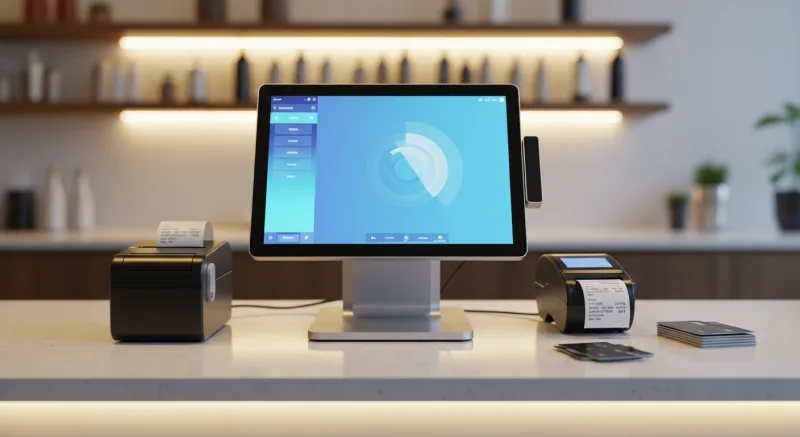
KwickOS offers a fundamentally different proposition: a processor-agnostic POS platform that lets resellers keep the most valuable revenue stream in the merchant relationship. The technology is proven across 5,000+ merchants in all 50 states, processing $2M+ in daily sales. The support infrastructure — 24/7 multilingual, full installation and training — means the reseller's time stays focused on selling rather than servicing.
The $127K/year figure in this article's headline is not a promise and not a projection. It is a mathematical outcome of placing 10 merchants per month at average card volumes with standard residual splits, compounded over 24 months. The inputs are achievable. The math is straightforward. The only question is whether your POS partner is structured to let you build this kind of income — or structured to prevent it.
If you are evaluating POS reseller programs and want to see how the numbers work for your specific situation, contact our partner team or call us at (888) 355-6996.
Your Secret Selling Weapon: Gift Cards, Loyalty & Points — Included Free
Here is what closes deals for KwickOS resellers: when a merchant asks "what about gift cards?" or "do you have a loyalty program?" — you say "It is included. No extra monthly fee." Watch their face when they realize Toast charges $75/month and Square charges $45/month for the same thing.
Why This Matters for Your Sales Pitch
Gift cards and loyalty programs are the features merchants ask about but competitors charge extra for. This is your competitive advantage in every demo:
- Gift card program — physical cards + e-gift cards, multi-location balance sync. Sell it as "your own Starbucks card" for their business
- Points system — automatic point earning on every transaction. Customers come back more often, spend more each visit
- Membership tiers — VIP programs, subscription models, exclusive pricing. Perfect upsell for restaurants, salons, and coffee shops
- CRM integration — customer purchase history, preferences, birthday tracking, SMS/email marketing all from one screen
The Math That Closes Deals
Toast loyalty add-on: $75/month = $900/year. Square loyalty: $45/month = $540/year. KwickOS: $0 extra. Over a 3-year contract, that is $1,620-2,700 your merchant saves — just on loyalty and gift cards. Add payment processing freedom savings ($6,000+/year) and you are showing $8,000+ in annual savings. That is an easy yes.