You've decided to add POS to your payment business. Smart move. Here's exactly how to sign your first 10 merchants in 90 days.
I still remember my first merchant. It was a Vietnamese pho restaurant in a strip mall. The owner, Mrs. Nguyen, was paying $150 a month for a clunky system that crashed every Saturday night—right in the middle of the dinner rush. I showed her KwickOS on my demo tablet, she watched me punch in a pho order in Vietnamese characters, and her eyes went wide. She signed the next day.
That was merchant number one. Within 90 days, I had ten. Within a year, I had forty. Today, those merchants generate a reliable monthly residual that I frankly wouldn't have believed when I started.
I'm going to walk you through the same 90-day playbook I used—the same one I've watched dozens of KwickOS resellers use to build real businesses. It's not magic. It's legwork, a solid product, and a system. Let's break it down week by week.
Phase 1: Setup & Preparation (Weeks 1–2)
Before you knock on a single door, you need to be ready. Two weeks of focused preparation will save you months of fumbling. Here's your checklist.
Build Your Foundation
- Apply for the KwickOS Partner Program. The application takes about 15 minutes. Once approved, you'll get access to the partner portal, marketing materials, and—most importantly—your free demo hardware kit.
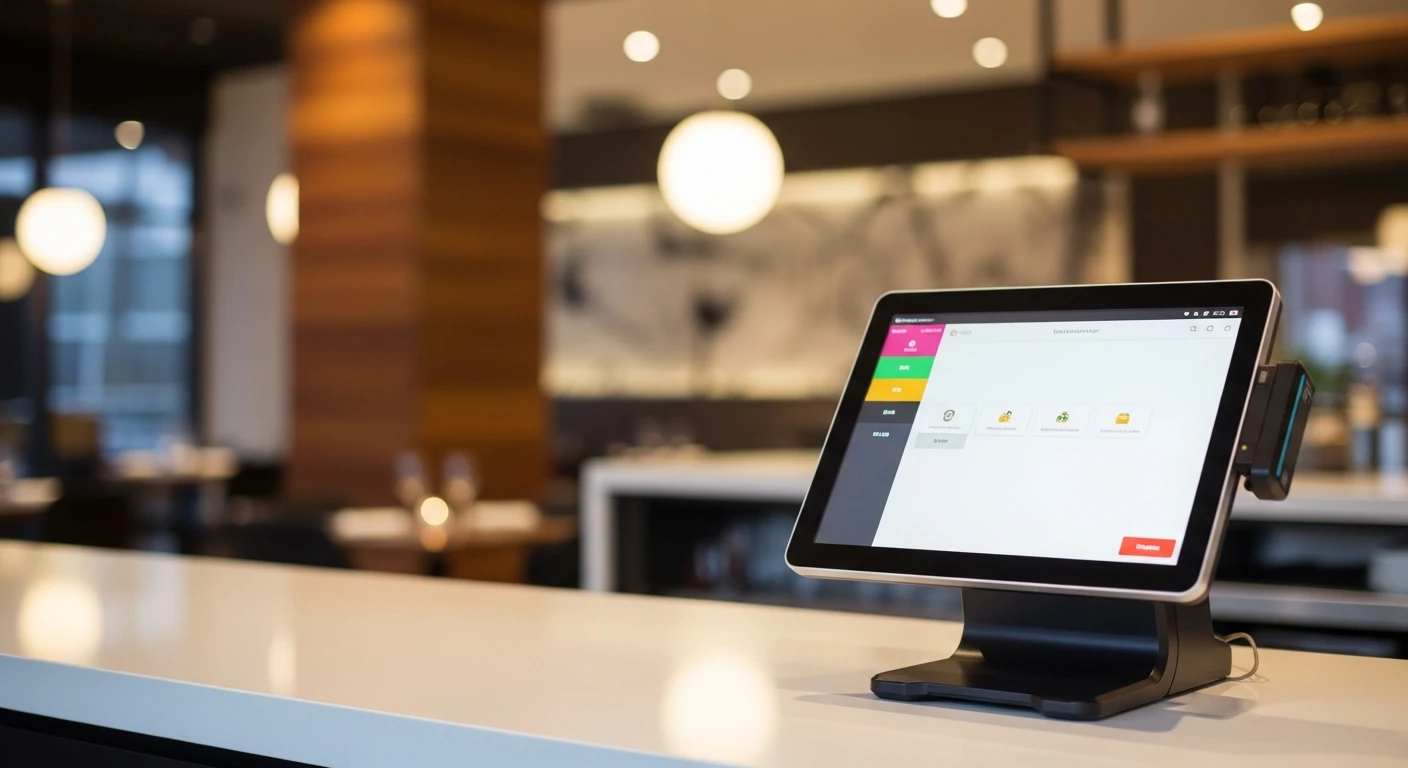
- Receive your free demo hardware kit. This is your most valuable sales tool. It ships within a few business days. When it arrives, unbox it, charge it up, and put it somewhere you'll see it every day. It's going on the road with you.
- Learn the platform. The training takes 1–2 hours. That's it. You don't need to become a certified technician. You need to know how to take an order, process a payment, pull a report, and show off the kitchen display system. Practice until it's second nature.
- Identify your target vertical. This is the single most important decision of your first 90 days. Chinese restaurants? Nail salons? Retail shops? Bubble tea? Pick one to start. Specializing in a vertical lets you refine your pitch, build referral networks within a community, and become the known expert. You can always expand later.
- Prepare your pitch. Keep it simple. The core message is: "You keep your processing, I give you a better POS." That line alone disarms most merchants who think you're just another credit card salesperson trying to switch their processor.
Notice what's not on this list: building a website, designing business cards, creating a social media strategy. Those things can come later. Right now, you need a demo kit, product knowledge, a target vertical, and a simple pitch. Everything else is procrastination dressed up as productivity.
Phase 2: Your First 3 Merchants (Weeks 3–4)
The fastest path to your first three merchants runs straight through your existing book of business. These are people who already know you, already trust you, and already pay you for processing. You're not asking them to take a risk on a stranger. You're offering them more value from someone they already work with.

Sell Into Your Portfolio
Pull up your existing merchant list and look for anyone running outdated POS hardware, anyone who's complained about their system, or anyone on Toast or Square who might be feeling the squeeze. Then make the calls.
The pitch to your existing merchants: "Hey, I can save you money on your POS AND you keep working with me on processing. Got 15 minutes this week so I can show you?"
That's it. You're not cold-calling. You're calling people who pick up when your number shows up.
Competing Against Toast
If a merchant is on Toast, you have a powerful weapon: processing cost savings. Toast locks merchants into their proprietary processing at 2.99% + $0.15 per transaction. With KwickOS, they keep their existing processor—or you can offer competitive rates—typically around 2.3%.
For a restaurant processing $40,000/month:
Toast: $40,000 × 2.99% = $1,196/month
KwickOS + competitive processing: $40,000 × 2.3% = $920/month
That's real money. And you haven't even talked about the POS features yet. Lead with the savings, and the features become the bonus that seals the deal.
Competing Against Square
Square is a different conversation. Their processing isn't always the worst, but their feature set for restaurants and salons has real gaps. When you sit down with a Square merchant, show them what they're missing:
- No real kitchen display system (KDS). Square uses a basic ticket view. KwickOS gives the kitchen a dedicated display with order routing, timing, and priority management.
- No real online ordering. Square's online ordering is bolted on and limited. KwickOS has native, commission-free online ordering built into the system.
- No multi-location management. If a merchant is growing beyond one location, Square becomes a headache. KwickOS handles multi-location from a single dashboard.
- No staff commission tracking. For salons and spas, this is a dealbreaker. Square simply doesn't do it.
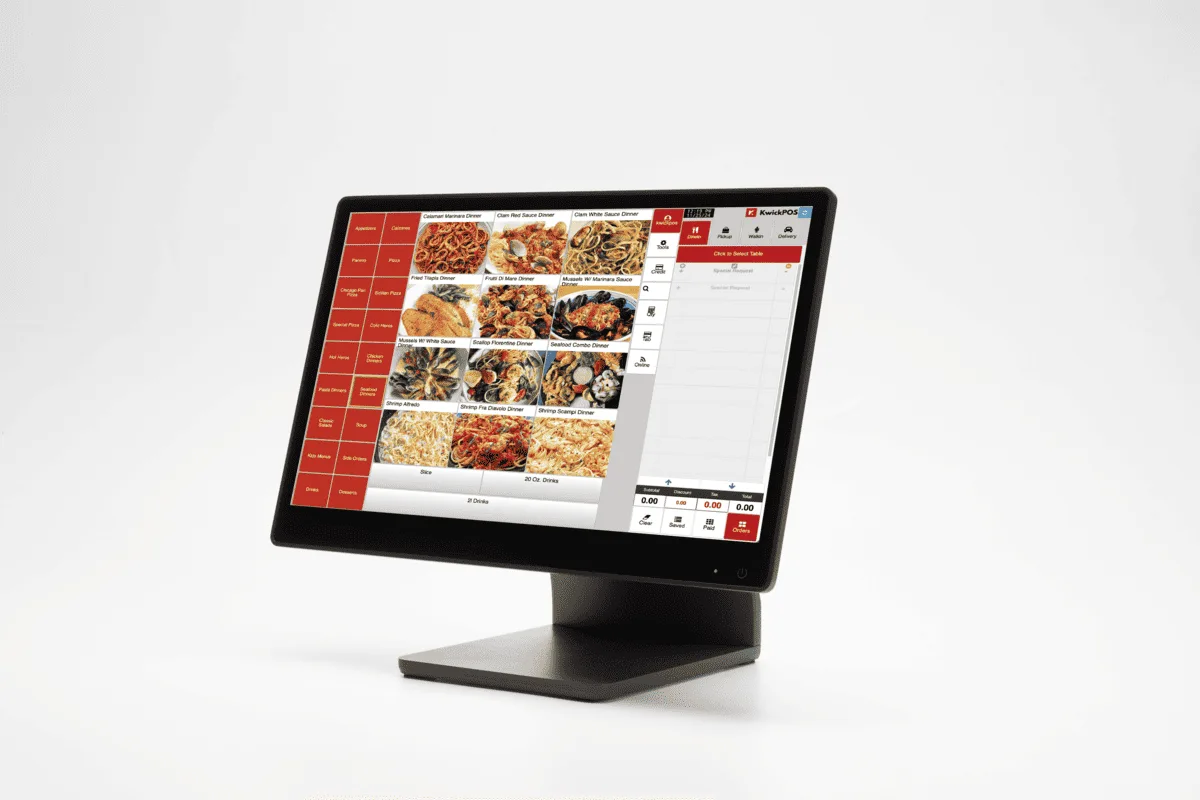
The key to these first three merchants: demo the system on your kit. Don't just talk about features. Put the hardware in their hands. Let them tap through a mock order. Let them see their type of menu on the screen. The moment a restaurant owner sees their actual dishes on a KwickOS terminal, it stops being theoretical.
Phase 3: Expand to 7 Merchants (Weeks 5–8)
You've got your first three merchants installed and running. Here's what you might not expect: those three merchants are about to become your best salespeople. Happy merchants talk. They talk to other restaurant owners, to their friends who own nail salons, to the guy at the chamber of commerce mixer.
Referrals, Outreach & Hustle
You need four more merchants to hit seven. Here's where they come from:
- Ask your first 3 merchants for referrals. Literally ask: "Do you know any other restaurant owners who are frustrated with their POS?" Buy them lunch. Offer a referral bonus. Make it easy for them to recommend you. A warm introduction from a fellow restaurant owner is worth more than a hundred cold calls.
- Walk into restaurants during off-peak hours (2–4 PM). Bring your demo kit. The lunch rush is over, the dinner rush hasn't started, and the owner is probably there doing prep or paperwork. Introduce yourself, mention you work with [local merchant they might know], and ask for 10 minutes. Most will give you the time.
- Attend local restaurant association events. Every metro area has them. These are rooms full of your exact target customer, and they're there specifically to network. Show up, be genuine, and hand out your card with a mention of what you do.
- Join Facebook groups for restaurant owners in your area. Don't spam. Be helpful. Answer questions about technology. When someone posts about POS problems—and they will—offer your perspective. Over time, you become the person people tag when someone asks, "Does anyone know a good POS system?"
- Post on Craigslist and local classifieds. KwickOS provides templates you can customize. These are low-effort, high-reward posts that consistently generate inbound leads from merchants actively looking for alternatives.
- Use the KwickOS comparison pages as leave-behind materials. After every demo, leave something behind. The comparison one-pagers (KwickOS vs. Toast, KwickOS vs. Square, KwickOS vs. Clover) are designed to be left on the counter so the merchant can review them later and share them with their business partner or spouse.
During this phase, you're going to develop your rhythm. You'll learn which hours to visit, which opening lines work, and how to read a merchant's body language to know if they're interested or just being polite. This is the messy middle—the phase where discipline matters more than talent.
A realistic target: aim for 5–8 demos per week during this phase. If you close one in three demos, you'll easily hit your four-merchant goal. Some weeks you'll close two. Some weeks you'll close zero. Keep moving.
Phase 4: Hit 10 & Systemize (Weeks 9–12)
By week nine, something shifts. Your pitch is sharp. You've handled the objections before—all of them. You know the product inside and out because you've installed it, troubleshot it, and watched merchants use it. You're not practicing anymore. You're performing.
Scale & Systemize
- Each install takes 1–3 hours. You've done enough now to be efficient. You can comfortably handle 2–3 installations per week without burning out.
- Start tracking your residual income growth. Every merchant you install generates ongoing monthly revenue. This is the beauty of the model. Here's what the trajectory looks like:
| Month | Active Merchants | Avg. Monthly Residual per Merchant | Total Monthly Residual |
|---|---|---|---|
| Month 1 | 3 | $150 | $450 |
| Month 2 | 7 | $150 | $1,050 |
| Month 3 | 10 | $150 | $1,500 |
| Month 6 | 25 | $150 | $3,750 |
| Month 12 | 50 | $150 | $7,500 |
- Consider expanding to a second vertical. If you started with Chinese restaurants, maybe add nail salons or bubble tea shops. Your product knowledge transfers. Your confidence transfers. Only the pitch nuances change.
- Begin recruiting sub-agents. If you want to scale to distributor level, this is the time to start thinking about it. Find someone like you were 90 days ago—hungry, connected to merchants, willing to hustle—and teach them what you've learned.
The residual income table above is conservative. I've seen agents with higher-volume restaurants generating $200–$300 per merchant in monthly residuals. And unlike a one-time commission, this income compounds. Month after month, it grows. That's the real reason you're doing this.
Real Tips from the Field
I've collected these lessons from agents across the country—people who've been exactly where you are right now. Tape these to your dashboard.
"Never bad-mouth the merchant's current POS. Show them the savings and let them decide. The moment you trash-talk their system, they get defensive—even if they hate it. Nobody wants to feel like they made a bad decision. Show them a better option, and let the product do the talking."
"The demo kit is your best sales tool. Let them see it, touch it, play with it. I've lost count of how many times a merchant said no to a verbal pitch, then said yes after five minutes with the hardware. Something changes when they tap the screen and see their menu come to life."
"Chinese restaurants are a sweet spot—they need Chinese language support, and most POS systems don't have it. When you walk in and show them a system that speaks their language, literally, the conversation shifts from 'why should I switch?' to 'how soon can you install?'"
"Nail salons need commission tracking—this is where KwickOS crushes Square and Toast. Every nail technician works on commission, and the salon owner needs to track it precisely. Show them the built-in commission tracking, and you've just solved their biggest operational headache."
"Onboarding is 7–10 days. Set expectations. Fast onboarding equals happy merchant equals referrals. I tell every new merchant: 'You'll be fully up and running in about a week.' And when we deliver on that promise, they remember. And they tell their friends."
Proof It Works: Merchants Who Started with One Location
These aren't hypotheticals. These are real merchants signed by real agents using the same playbook you're holding right now.
Crafty Crab
19 locations — started with 1The agent who signed Crafty Crab's first location had no idea it would become a 19-store chain. They installed one system, delivered excellent support, and when Crafty Crab started expanding, there was never a question about which POS they'd use. The agent grew with the merchant. That first install now generates residual income across 19 locations. One relationship. Nineteen revenue streams.
Diva Nail Salon
4 locations — commission tracking was the closerDiva Nail was using Square across their salons and spending hours every pay period manually calculating technician commissions. The agent led with one question: "How much time do you spend tracking commissions?" The owner said three hours per pay period. The agent showed her KwickOS's built-in commission tracking. Diva Nail switched all four locations within a month. The key differentiator wasn't price—it was solving an operational pain point that Square couldn't touch.
Shogun Hibachi
Customized station displays — something Toast couldn't doShogun Hibachi needed a specific station layout: a dedicated screen for the hibachi grill area, a separate flow for the sushi bar, and a third for takeout. Their Toast system treated everything as one flat queue. The agent worked with KwickOS to configure customized station displays for each area. The result was a kitchen that ran smoother, fewer order errors, and a restaurant owner who tells everyone at the local restaurant association about the agent who actually listened to his needs.
There's a common thread in all three stories: the agent didn't just sell a product. They listened to a specific problem, matched it to a KwickOS capability, and delivered. That's the playbook. Listen, match, deliver.
Let's Talk About the Math
Here's why this 90-day playbook matters beyond just hitting 10 merchants.
If you sign 10 merchants in 90 days and maintain that pace—even slowing down to 5–7 per month as you get busier with installations and support—you'll have 50 merchants within your first year. At an average residual of $150 per merchant per month, that's $7,500/month in recurring revenue by month twelve.
That's not a one-time commission. That's income that keeps arriving, month after month, as long as those merchants are processing transactions. And in the restaurant business, that means years. The average merchant stays on a POS system for 5–7 years.
Now multiply that by year two, when you've added another 50–60 merchants, possibly through sub-agents. You can see where this goes. The first 90 days are the hardest. They're also the most important. Every merchant you sign in these first 12 weeks is compounding your future income.
Your Week-by-Week Summary
Here's the playbook at a glance. Print this out. Pin it to your wall.
| Week | Focus | Target |
|---|---|---|
| 1–2 | Apply, receive demo kit, learn the platform, pick your vertical, craft your pitch | Ready to sell |
| 3–4 | Sell into your existing portfolio; demo on-site | 3 merchants signed |
| 5–8 | Referrals, walk-ins, events, online groups, leave-behinds | 7 merchants total |
| 9–12 | Close remaining deals, systemize installs, track residuals, consider second vertical | 10 merchants total |
Ten merchants in 90 days is not a stretch goal. It's a realistic, achievable target for anyone willing to put in consistent effort. I've seen agents who were nervous about their first demo end up with 15 merchants by month three because referrals started flowing faster than expected.
The merchants are out there. They're frustrated with Toast's fees. They're hitting Square's limitations. They're running on legacy systems from 2015 that crash every weekend. They're waiting for someone to walk in with a better option.
Be that someone.
Ready to Get Started?
Apply for the KwickOS Partner Program today. We'll ship your free demo kit and have you ready to sell within two weeks.
Apply for Partner Program