Most restaurant loyalty programs fail. Not because loyalty programs are a bad idea, but because they are poorly designed, inconsistently executed, or bolted onto technology that makes participation friction-heavy for both customers and staff. The punch card in a drawer, the app nobody downloads, the points system that feels like it takes forever to earn anything meaningful — these are symptoms of programs built without understanding what actually drives repeat visits.
This guide covers how to build a restaurant loyalty program that delivers measurable results: increased visit frequency, higher average spend, and genuine customer retention that survives the opening of a competitor across the street.
Why Restaurant Loyalty Programs Matter More in 2026
Customer acquisition costs in the restaurant industry have increased significantly. Between delivery platform commissions, digital advertising costs, and discount-driven promotions, acquiring a new customer can cost $10 to $25 depending on your market and concept. Retaining an existing customer costs a fraction of that.
The math is compelling: a 5% increase in customer retention typically produces a 25% to 95% increase in profits, according to research consistently replicated across the restaurant industry. Loyalty programs are the most direct mechanism for driving that retention increase.
Restaurants with active loyalty programs report 18-25% higher visit frequency among enrolled customers compared to non-enrolled guests in the same demographic.
Types of Restaurant Loyalty Programs
| Program Type | How It Works | Best For | Limitations |
|---|---|---|---|
| Points-Based | Earn points per dollar spent, redeem for rewards | Most restaurant types | Can feel slow if earn rate is too low |
| Visit-Based | Earn stamps/credits per visit regardless of spend | Coffee shops, fast-casual, boba | Does not incentivize higher spending |
| Tiered | Different reward levels based on cumulative spending | Full-service, fine dining, chains | Complex to communicate, requires critical mass |
| Cashback | Percentage of spending returned as credit | High-frequency, price-sensitive markets | Direct margin impact, less emotional engagement |
| Subscription | Monthly fee for perks (free drinks, discounts) | High-frequency concepts, coffee, fast-casual | Commitment barrier, churn management |
Points-Based Programs: The Most Versatile Option
Points-based loyalty programs are the most widely adopted for good reason: they are flexible enough to reward different behaviors, easy for customers to understand, and straightforward to manage through POS integration.
The key design decisions are the earn rate and the redemption threshold. A common structure is 1 point per dollar spent, with rewards available starting at 50 to 100 points. This means a customer spending $15 per visit earns a reward every 4 to 7 visits — frequent enough to maintain engagement, infrequent enough to protect margins.
Visit-Based Programs: Simplicity Wins
For quick-service restaurants, bubble tea shops, and coffee shops where the average ticket is low and visit frequency is high, a visit-based program is often more effective. "Buy 10, get 1 free" is universally understood and requires zero mental math from the customer.
The digital version of this — tracked through your POS rather than a physical punch card — adds data collection. You know who your most loyal customers are, when they visit, and what they order. Physical punch cards provide none of this intelligence.
Tiered Programs: Rewarding Your Best Customers
Tiered programs add a psychological layer: status. Customers who reach Gold or VIP tier feel recognized, and the desire to maintain that status drives continued visits even after the novelty wears off. Airlines and hotels perfected this model, and it translates well to restaurant groups with sufficient scale.
Tiered programs work best for restaurants with high average tickets or multi-location operations where customers can earn across sites. A single-location casual restaurant may not generate enough transaction volume for tiers to feel meaningful.
Built-In Loyalty, Zero Add-On Fees
KwickOS includes loyalty program management in the core platform. No third-party subscriptions, no per-member fees. Set up points, visits, or tiered programs directly from your POS.
See How It WorksDesigning Your Reward Structure
The Psychology of Effective Rewards
Research on loyalty program design consistently reveals several principles that separate programs customers love from programs they ignore:
- Early wins matter — Give new members a signup bonus that gets them partway to their first reward immediately. A program that starts at zero feels like a long road. One that starts at 25/100 points feels achievable.
- Reward variety prevents fatigue — Offering only "free entree at 100 points" gets boring. Mix in smaller rewards at lower thresholds: a free appetizer at 50 points, a dessert at 75, and the entree at 100. Multiple redemption options keep the program feeling dynamic.
- Surprise rewards outperform expected ones — Occasionally sending a loyal customer an unexpected reward ("You have been a loyal guest for 6 months — enjoy a complimentary appetizer on your next visit") creates disproportionate goodwill compared to its cost.
- Expiration drives action, but too-short windows drive resentment — Points that never expire are a growing liability. Points that expire in 30 days feel punitive. A 6 to 12 month expiration window balances urgency with fairness.
- Make the next tier visible — Showing customers how close they are to their next reward or tier is a powerful motivator. "You are $12 away from a free drink" at checkout converts casual visitors into return customers.
Calculating the Right Reward Percentage
Your loyalty rewards represent a real cost. The reward percentage — the value of rewards given divided by the spending required to earn them — should typically fall between 5% and 10% of customer spending.
Example: If a customer earns a $10 reward after spending $150, the reward percentage is 6.7%. At a restaurant with 65% food cost on the reward item, the actual cost to the restaurant is approximately $6.50, or about 4.3% of the spending that generated it.
This is almost always a worthwhile investment. A customer enrolled in your loyalty program who visits once per week instead of once every two weeks generates far more incremental revenue than the cost of occasional rewards.
Technology: POS-Integrated vs. Third-Party Loyalty
The Case for POS-Integrated Loyalty
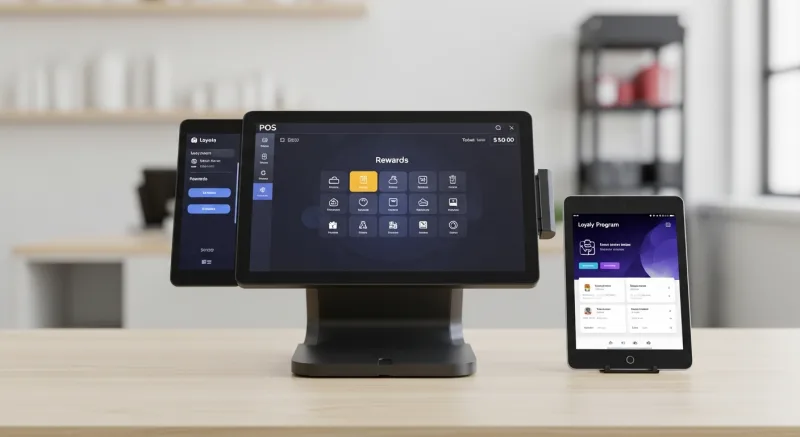
The most effective loyalty programs are built into the POS system. When loyalty is native to the platform, enrollment happens at checkout, points are tracked automatically, and rewards apply without staff intervention. This eliminates the friction that kills third-party program engagement.
| Factor | POS-Integrated (e.g., KwickOS) | Third-Party App |
|---|---|---|
| Customer Enrollment | At checkout, phone number only | Download app, create account |
| Points Tracking | Automatic with every transaction | Requires scan/check-in |
| Reward Redemption | Applied at POS automatically | Show phone to cashier |
| Data Quality | 100% of transactions captured | Only scanned/checked-in visits |
| Monthly Cost | Included in KwickOS | $50 – $300/month + per-member fees |
| Staff Training | Minimal (part of checkout flow) | Separate process to learn |
| Multi-Location Support | Automatic cross-location recognition | Depends on configuration |
| Customer Data Ownership | You own everything | Shared with or owned by vendor |
KwickOS includes loyalty program management as a core module. You configure the program structure, earn rates, reward tiers, and communication rules within the same back office that manages your POS, online ordering, and customer database. There is no separate subscription, no per-member fee, and no data shared with a third-party vendor.
Why Third-Party Apps Often Underperform
Third-party loyalty apps suffer from a fundamental friction problem: they require the customer to do something extra. Download an app. Create an account. Remember to scan at checkout. Each step reduces participation, and participation is the entire point.
Industry data shows that third-party restaurant loyalty apps average 15-25% active participation among enrolled customers after six months. POS-integrated programs that require only a phone number at checkout maintain 50-70% active participation over the same period. The difference is entirely attributable to friction.
Step-by-Step Setup Guide
Step 1: Define Your Objective
Before choosing a program type or configuring software, clarify what you want the loyalty program to achieve:
- Increase visit frequency — Best addressed with visit-based or low-threshold points programs.
- Increase average check size — Best addressed with spend-based points or tiered programs that reward higher spending.
- Improve retention during competitive pressure — Best addressed with tiered programs that create switching costs.
- Collect customer data for marketing — Any program type works, but POS-integrated systems capture the most complete data.
- Drive traffic to specific dayparts — Best addressed with bonus points during slow periods (e.g., double points on Tuesday lunch).
Step 2: Choose Your Program Structure
Based on your objective, restaurant type, and average ticket, select the program type from the comparison table above. For most restaurants, a points-based program with a 5-8% reward rate provides the best balance of customer appeal and margin protection.
Step 3: Configure Your POS
In KwickOS, loyalty configuration is accessed through the CRM module. You will set:
- Earn rate (points per dollar or credit per visit)
- Reward thresholds and available rewards
- Signup bonus (recommended: 10-25% of the first reward threshold)
- Point expiration policy (recommended: 12 months of inactivity)
- Bonus multiplier rules (double points on slow days, birthday bonuses)
- Communication preferences (SMS, email for reward notifications)
If you operate multiple locations, configure whether points are earned and redeemed across all sites or limited to the enrollment location. For most restaurant groups, cross-location earning and redemption drives the highest engagement.
Step 4: Train Your Staff
Staff enrollment behavior makes or breaks a loyalty program. Train every front-of-house employee to ask customers if they are a loyalty member at the beginning of the transaction, not at the end. The prompt should be natural: "Are you earning rewards with us?" followed by "Would you like to start? It is free and just takes your phone number."
Set enrollment targets for each shift and track them through your POS reporting. Locations that actively enroll customers achieve 3 to 5 times higher participation than those that rely on customer self-discovery.
Step 5: Launch with a Promotion
Do not soft-launch a loyalty program. Create a launch event with a compelling offer: double points for the first two weeks, a free item for signing up, or a raffle among new members. Use KwickSign to promote the program on your digital menu boards and in-store signage. Announce it through your online ordering platform via KwickMenu.
Step 6: Measure and Iterate
After 30 days, review these metrics:
- Enrollment rate — What percentage of transactions involve a loyalty member? Target: 40%+ within 90 days.
- Redemption rate — What percentage of earned rewards are redeemed? Target: 60-80%. Below 40% suggests rewards are not compelling. Above 90% suggests they are too easy to earn.
- Incremental visit frequency — Compare visit frequency of enrolled customers before and after joining. Target: 15-25% increase.
- Average check impact — Are loyalty members spending more or less per visit? Well-designed programs should increase average check by 5-12%.
- Reward cost as percentage of revenue — Track the actual cost of rewards against revenue from loyalty members. Target: 3-5% of loyalty member revenue.
Launch Your Loyalty Program This Week
KwickOS includes loyalty management at no extra cost. Points, visits, tiers, birthday rewards, and cross-location earning — all built into your POS.
Become a PartnerAdvanced Loyalty Strategies
Daypart-Specific Bonus Points
If your restaurant has a strong dinner service but struggles at lunch, offer double or triple points during lunch hours. This leverages existing loyalty members to fill underperforming dayparts without broad discounting that devalues your brand.
Birthday and Anniversary Rewards
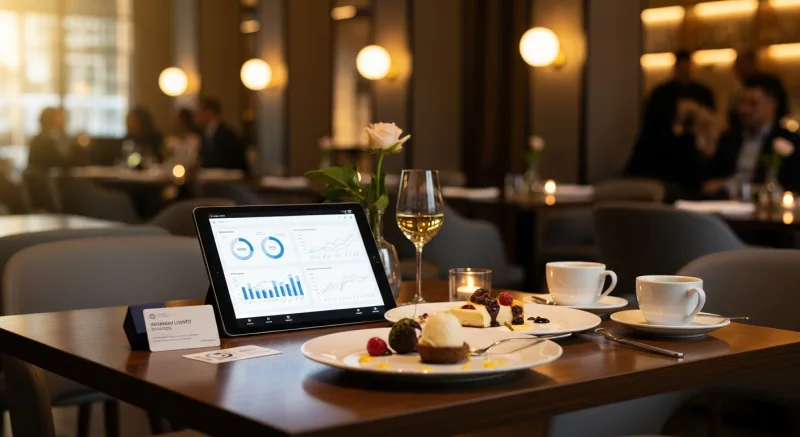
Automated birthday rewards are among the highest-converting loyalty communications. A "Happy Birthday! Enjoy a free dessert this week" message sent via SMS generates redemption rates of 30-50% and often brings a party of two or more, turning a $5 dessert cost into a $40+ check.
Referral Bonuses
Reward existing loyalty members for bringing new customers. A "Give $5, Get $5" referral bonus turns your most loyal customers into a marketing channel with zero acquisition cost until a new customer actually visits.
Lapsed Customer Win-Back
When a loyalty member who typically visits weekly has not been seen in three weeks, trigger an automated win-back message: "We miss you! Here is a bonus 25 points to welcome you back." This proactive approach recovers customers who are drifting away before they are fully lost.
This automation requires a POS with integrated CRM that tracks visit patterns and triggers communications based on behavioral thresholds. KwickOS supports these automated campaigns natively.
Integration with Online Ordering
Your loyalty program must extend to online orders. Customers who order through KwickMenu or your website should earn and redeem points identically to in-store transactions. A program that only works at the register misses the growing percentage of revenue that flows through digital channels.
Common Loyalty Program Mistakes
- Setting the first reward too far away — If a customer needs to spend $200 before earning anything, most will disengage before getting there. Make the first reward achievable within 3-5 visits.
- Complicating the earn structure — "Earn 1 point per dollar on food, 0.5 points on drinks, 2 points on catering orders over $100 on Tuesdays" is a program nobody will understand. Keep it simple.
- Relying on an app for participation — Requiring customers to download and use an app reduces participation dramatically. Use phone-number-based enrollment through your POS instead.
- Failing to train staff consistently — The program is only as strong as the person at the register. If staff stop asking about loyalty enrollment, participation decays rapidly.
- Not promoting rewards availability — Customers with redeemable rewards who are not reminded will forget. Use SMS or receipts to notify members when they have rewards available.
- Ignoring the data — A loyalty program is a customer data engine. If you are not analyzing purchase patterns, visit frequency, and reward effectiveness, you are leaving the most valuable part of the program on the table.
Measuring ROI: Is Your Loyalty Program Working?
The ultimate measure of a loyalty program is whether it generates more incremental revenue than it costs. Here is a framework for calculating ROI:
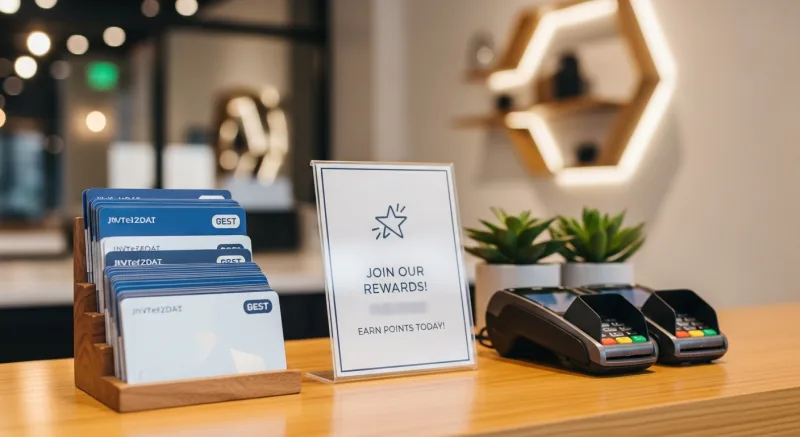
- Calculate incremental revenue: Compare the average annual spending of loyalty members to non-members. Multiply the difference by the number of active loyalty members. This is your incremental revenue attributable to the program.
- Calculate total program cost: Add the cost of redeemed rewards, technology costs (zero if using KwickOS's built-in loyalty), marketing costs for the program, and staff time spent on enrollment and management.
- Divide incremental revenue by total cost: A well-run program should return $3 to $8 for every $1 invested.
If your ROI is below $2 per dollar, revisit your reward structure — you may be giving away too much or not driving enough behavioral change. If it is above $10, you may have room to increase reward generosity and drive even higher engagement.
The Technology Foundation
A loyalty program is only as effective as the technology that powers it. The ideal setup integrates loyalty directly into the POS, CRM, online ordering, and communication systems so that every customer interaction is an opportunity to enroll, engage, and reward.
KwickOS provides this integration natively. The loyalty module connects to KwickPOS for automatic point tracking, KwickMenu for online order earning, the CRM for automated communications, and KwickSign for in-store promotional displays. There are no third-party subscriptions, no per-member fees, and no data shared outside your control.
For restaurants evaluating their broader technology stack alongside loyalty, our guides on cloud POS vs traditional systems and choosing the right POS platform provide additional context on building an integrated technology foundation.
Stop Paying Extra for Loyalty
KwickOS includes a full-featured loyalty program in every plan. Points, visits, tiers, automated campaigns, and cross-location support — all at no additional cost.
Compare KwickOSFinal Thoughts
A restaurant loyalty program is not a marketing gimmick — it is a retention system that, when properly designed and executed, consistently ranks among the highest-ROI investments a restaurant can make. The programs that work share common traits: low enrollment friction, achievable rewards, POS integration, and consistent staff execution.
The programs that fail share different traits: they require an app download, their rewards feel out of reach, they are disconnected from the checkout experience, and they depend on customers remembering to participate rather than making participation automatic.
Choose a technology platform that makes loyalty effortless for both your customers and your team. With KwickOS, loyalty is not an add-on — it is part of the operating system that runs your business. Explore our industry solutions to see how restaurants, retail stores, and service businesses use the platform to build lasting customer relationships.