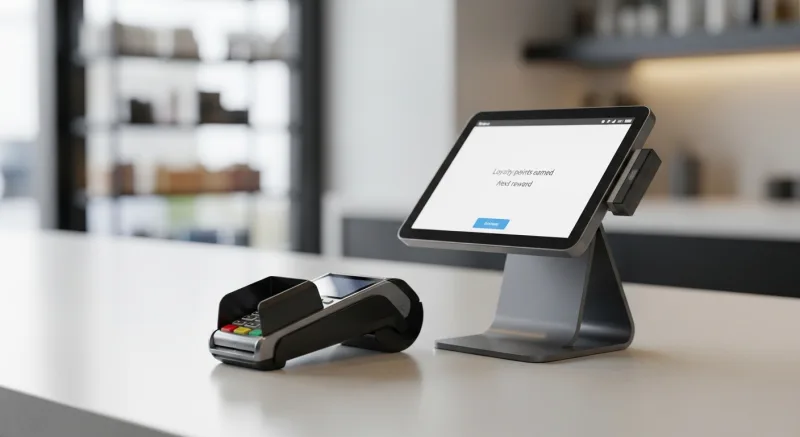
The best Build a Restaurant Loyalty Program That Actually Works | Kwi... handles everything from checkout to closing — without extra apps or workarounds. You have 200 customers who visit once a week. They spend $25 per visit. That is $260,000 a year in revenue from regulars alone.
Now imagine 20% of them stop coming. Maybe they found a new spot. Maybe they moved. Maybe they just drifted away — no dramatic reason, just life.
That is 40 customers gone. $52,000 in annual revenue, vanished.
Replacing them is expensive. The average cost to acquire a new restaurant customer through marketing is $10 to $30 per head. To replace 40 lost regulars, you are spending $400 to $1,200 in acquisition cost — and even then, new customers visit less frequently and spend less than established ones.
Here is the number that should change how you think about retention: 67% of the average restaurant's revenue comes from repeat customers. Not new customers. Not marketing-driven first-timers. Repeat visitors who already know your food and have decided to come back.
A loyalty program is not a nice-to-have perk. It is an insurance policy on two-thirds of your revenue. And when built correctly, it does not just retain existing customers — it increases their visit frequency by 15% to 25% and their average spend by 10% to 20%.
But most loyalty programs fail. Here is why — and how to build one that does not.
Why Most Restaurant Loyalty Programs Fail
Before we design a program, we need to understand why so many of them end up as forgotten apps and unchecked punch cards.
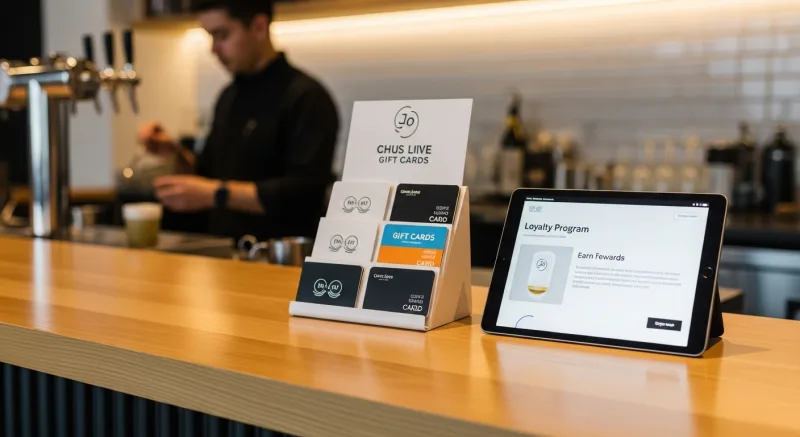
The Reward Takes Too Long to Earn
A program that requires 20 visits for a free entree means a weekly customer waits 5 months for a $15 reward. That is $0.75 per visit in perceived value — not enough to influence behavior. The customer has no emotional connection to the program because the reward horizon is too distant.
Rule of thumb: customers should earn a meaningful reward within 8 to 12 visits. For a weekly customer, that is 2 to 3 months — long enough to build habit, short enough to maintain engagement.
The Reward Is Not Compelling
"10% off your next visit" is not a reward. It is a coupon. Rewards need to feel like gifts — something the customer would not ordinarily buy for themselves. A free dessert, a complimentary appetizer, an upgrade to premium, a birthday surprise. These create emotional value beyond the dollar amount.
The Sign-Up Process Is Painful
If loyalty enrollment requires downloading an app, creating an account, verifying an email, and setting a password, you will lose 70% of interested customers before they finish. The best-performing loyalty programs enroll in under 10 seconds: "Can I get your phone number for our rewards program?" Done.
There Is No Reminder System
Customers who sign up for loyalty and never hear from you again do not change their behavior. They forget the program exists. A loyalty program without automated re-engagement (email, SMS, or push notifications) is a database that collects dust.
It Is Not Integrated with the POS
If loyalty exists as a separate system from the POS, several things break. Staff must manually apply discounts (which they forget or find cumbersome). Point balances require a separate lookup (which slows the line). Redemptions require manual overrides (which create errors). Data lives in two systems that do not communicate (which makes reporting useless).
The most effective loyalty programs are invisible to staff — they work automatically through the POS, requiring zero extra steps at checkout.
The Three Loyalty Program Models
Every restaurant loyalty program falls into one of three structural models. Choosing the right one depends on your concept, average check size, and customer behavior.
1. Points-Based (Best for Varied Check Sizes)
How it works: Customers earn points per dollar spent. Points accumulate and can be redeemed for rewards at defined thresholds.
Example: Earn 1 point per $1 spent. At 100 points, redeem for $10 off. At 250 points, redeem for a free entree.
Pros: Scales with spending (high spenders earn faster, which feels fair). Flexible reward tiers. Works for any check size. Rewards customers who spend more, not just those who visit more.
Cons: Can feel abstract ("How many points do I have?"). Requires clear communication about earning rates and redemption thresholds.
Best for: Casual dining, fast-casual, and any restaurant where check sizes vary significantly between customers or visits.
2. Visit-Based (Best for Habitual Purchases)
How it works: Customers earn a stamp or credit per visit. After a defined number of visits, they earn a free item.
Example: Buy 9 coffees, get the 10th free. Visit 8 times, get a free appetizer on your 9th visit.
Pros: Extremely simple to understand. The progress toward reward is tangible and easy to track. Works perfectly for habitual, low-ticket purchases.
Cons: Does not reward spending — a $5 order and a $50 order both earn one visit credit. Can feel slow for infrequent visitors.
Best for: Coffee shops, juice bars, quick-service, pizza delivery — anywhere customers make frequent, similar-value purchases.
3. Spend-Based Tiers (Best for High-Ticket Concepts)
How it works: Customers are placed into tiers (bronze, silver, gold) based on their cumulative spending over a period (usually annual). Each tier unlocks escalating perks.
Example:
- Bronze ($0-$500/year): Earn 1 point per dollar, birthday reward
- Silver ($500-$1,500/year): 1.5x points, priority reservations, quarterly surprise
- Gold ($1,500+/year): 2x points, complimentary valet, chef's table access, annual dinner
Pros: Creates aspiration (customers want to reach the next tier). High-value customers feel recognized. Perks can be experiential, not just monetary, which strengthens emotional connection.
Cons: Complex to manage. Only works if you have enough high-spending customers to populate upper tiers. Irrelevant for low-ticket concepts.
Best for: Fine dining, upscale casual, wine bars, and any concept where a meaningful segment of customers spends $1,000+ per year.
Digital vs. Physical: Why This Is Not Even a Debate
Physical punch cards had their moment. That moment is over.
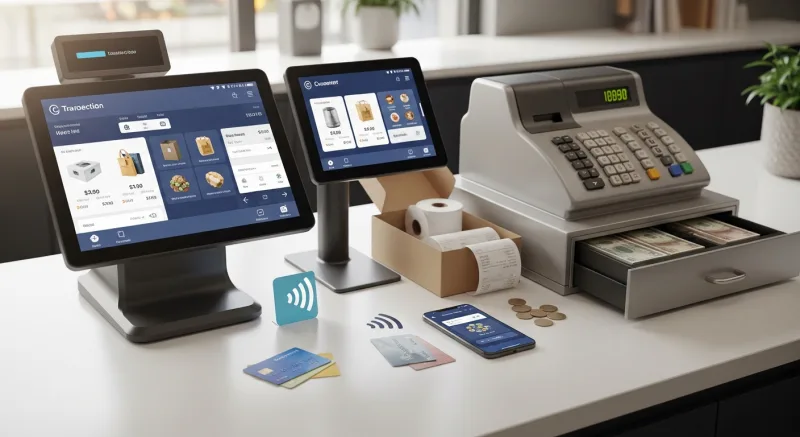
| Factor | Physical Punch Card | Digital Loyalty (POS-Integrated) |
|---|---|---|
| Abandonment rate | 60-80% (lost, forgotten) | 10-20% (tied to phone #) |
| Customer data captured | None | Name, phone, email, visit history, spend |
| Fraud prevention | None (self-punch is rampant) | Full (POS-verified transactions only) |
| Remarketing capability | None | Email, SMS, push notifications |
| Behavior tracking | Visit count only | Items ordered, spend patterns, daypart, frequency |
| Cross-location support | Impractical | Automatic (shared database) |
| Staff effort per transaction | Find card, stamp, return | Zero (auto-linked by phone # or card) |
| Cost | $50-$100 for printing | $0-$99/mo (often included in POS) |
The data capture alone makes digital loyalty transformative. When you know that Customer A visits every Tuesday, always orders the pad thai, and has not been in for three weeks, you can send a targeted message: "We miss you — here is a free spring roll with your next pad thai." That level of personalization is impossible with a punch card.
Tiger Sugar: Digital Loyalty in Action
Tiger Sugar International Dessert operates 2 stores with 2 kiosks running KwickOS. Their loyalty program is built into the ordering experience — customers receive electronic receipts that double as loyalty tracking. No app download. No physical card. Every purchase automatically accrues loyalty credit tied to the customer's phone number.
The result: minimal friction at the point of enrollment (the kiosk asks for a phone number as part of the ordering flow), high participation rates (customers are already interacting with the kiosk), and a complete purchase history that enables targeted promotions for repeat visits.
Because the loyalty system is integrated with KwickOS POS, Tiger Sugar's management can see loyalty program metrics alongside sales data — not in a separate dashboard, but in the same reports they already review daily. Loyalty redemption cost, member visit frequency, and revenue per loyalty member are all tracked automatically.
Calculating the ROI of Your Loyalty Program
A loyalty program has costs. Rewards have a real dollar value. The question is whether the behavioral changes (more visits, higher spend) outweigh the cost of the rewards.
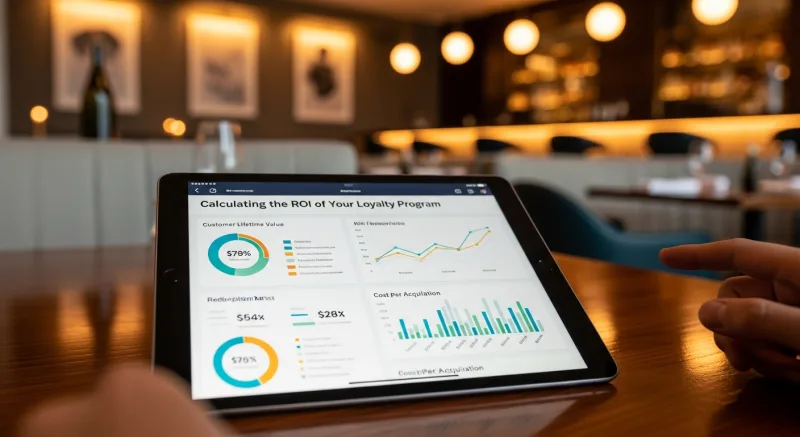
Here is a framework for calculating ROI.
The Costs
- Reward cost: The food cost of redeemed rewards. If 30% of members redeem a free $10 item each month, and your food cost on that item is 30%, the actual cost is $3 per redeeming member per month.
- Technology cost: POS-integrated loyalty is often included in your POS subscription. Third-party loyalty platforms charge $50 to $300/month.
- Marketing cost: SMS messages cost $0.01 to $0.03 each. Email is essentially free. Budget $50 to $200/month for loyalty-related communications.
The Revenue
- Increased visit frequency: Well-designed loyalty programs increase visit frequency by 15% to 25%. If a loyal customer currently visits 3 times/month and increases to 3.5 times/month, that is a 17% lift.
- Increased average check: Loyalty members tend to spend 10% to 20% more per visit than non-members. Part of this is point accumulation motivation ("I need $8 more to hit the next reward level"), and part is the comfort effect (loyalty members feel like insiders and explore the menu more).
- Reduced churn: Loyalty members defect at roughly half the rate of non-members. If your annual customer churn rate drops from 20% to 12%, you are retaining 8% more revenue base every year.
Example ROI Calculation
A casual dining restaurant with 500 loyalty members, $30 average check, 3 visits/month:
| Metric | Without Loyalty | With Loyalty |
|---|---|---|
| Monthly visits per member | 3.0 | 3.5 (+17%) |
| Average check | $30.00 | $33.00 (+10%) |
| Monthly revenue per member | $90.00 | $115.50 |
| Monthly revenue (500 members) | $45,000 | $57,750 |
| Monthly reward cost (@ 3% of member revenue) | $0 | $1,733 |
| Technology + marketing cost | $0 | $200 |
| Net monthly gain | - | $10,817 |
| Net annual gain | - | $129,804 |
The loyalty program costs approximately $1,933/month in rewards and technology and generates approximately $12,750/month in incremental revenue. That is a 6.6x return on investment.
Even at conservative assumptions (10% visit increase, 5% spend increase), the ROI remains strongly positive. The math works because the cost of a reward (food cost of a free item) is far lower than the revenue generated by the incremental visits that the reward motivates.
Building Your Loyalty Program: Step by Step
- Choose your model. Points-based for varied check sizes, visit-based for habitual purchases, or tier-based for high-ticket concepts. When in doubt, start with points-based — it is the most flexible.
- Set your earning rate and reward thresholds. Target a reward every 8 to 12 visits. For points-based: if your average check is $25 and you want to reward at 10 visits, set the threshold at 250 points (1 point per dollar). The reward should be worth $8 to $15 (a free appetizer, dessert, or drink).
- Design your enrollment flow. Phone number at checkout is the lowest friction option. Train staff: "Would you like to join our rewards program? Just need your phone number." That is it. No app, no form, no email verification.
- Integrate with your POS. This is non-negotiable. If loyalty is not built into the transaction flow, staff will not use it and customers will not benefit. Points should accrue automatically when the customer's phone number is entered at checkout. Rewards should apply automatically when earned.
- Set up automated communications. At minimum: a welcome message (what they earned by joining), a reward notification (when they hit a threshold), a reminder (when they have not visited in 2+ weeks), and a birthday reward. These should be automated — set once, run forever.
- Launch with a sign-up bonus. "Join today and get a free drink on us" creates immediate value and establishes the habit of checking in. First-visit rewards have the highest enrollment conversion rate of any tactic.
- Track and optimize monthly. Monitor enrollment rate, active member percentage, visit frequency (members vs. non-members), average check (members vs. non-members), and reward redemption rate. Adjust earning rates and reward values based on data, not guesses.
Advanced Strategies: Once Your Program Is Running
Segmented Promotions
Once you have 3 to 6 months of loyalty data, you can segment your customers and target them differently:
- Lapsed members (no visit in 30+ days): "We miss you — here is a $5 reward waiting for your next visit."
- High-frequency, low-spend: "Next time you add an appetizer, earn double points."
- Low-frequency, high-spend: "You are 50 points away from gold status — visit once more this month."
- Top spenders: Surprise and delight. An unexpected free dessert or a handwritten thank-you note from the chef goes further than any points bonus.
Referral Bonuses
Turn your loyalty members into recruiters. "Refer a friend — when they join and make their first purchase, you both get 50 bonus points." This leverages your happiest customers to acquire new ones at a fraction of traditional marketing cost.
Cross-Channel Integration
Loyalty should work everywhere your customer interacts with you — dine-in, online ordering, delivery, and catering. If a customer earns points on a KwickMenu online order, those points should be visible when they dine in. If they redeem a reward in-store, it should reflect on their online ordering account.
This requires a unified CRM behind all channels — which is exactly what an integrated platform provides. Separate systems for POS loyalty and online ordering loyalty create frustrating inconsistencies for customers and reconciliation headaches for you.
Gamification
Simple gamification elements — streak bonuses for consecutive weekly visits, surprise rewards at random intervals, seasonal challenges ("Try all 5 new fall items for a bonus reward") — keep the program engaging beyond the basic earn-and-redeem cycle. The key is keeping gamification simple. One challenge at a time. Clear rules. No complex mechanics.
The Data Advantage: CRM Beyond Loyalty
The most valuable output of a loyalty program is not the customer retention — it is the customer data.
After 6 months of running a POS-integrated loyalty program, you have a database that tells you:
- Who your top 50 customers are (by visit frequency and spend)
- What time of day and day of week each customer typically visits
- What items each customer orders most frequently
- Which customers are at risk of churning (visit frequency declining)
- Which promotions drive the most incremental visits
- What your customer lifetime value looks like by segment
This data informs every decision you make: menu development (what are your best customers ordering?), staffing (when are loyalty members visiting?), marketing (which segments respond to which offers?), and pricing (how price-sensitive are your regulars?).
A restaurant without customer data is guessing. A restaurant with 6 months of loyalty data is making informed decisions backed by the actual behavior of its actual customers.
The Bottom Line
A loyalty program is not about giving away free food. It is about systematically increasing the frequency and value of visits from customers who already like your restaurant.
The mechanics matter: the right model for your concept, a frictionless enrollment flow, POS integration that requires zero staff effort, automated communications that keep the program alive, and a reward structure that motivates behavior without destroying margins.
When these pieces work together, the result is predictable: 15% to 25% more visits from loyal customers, 10% to 20% higher average checks, dramatically lower churn, and a customer database that makes every future marketing decision smarter.
Two-thirds of your revenue walks through the door already knowing your name. A well-built loyalty program makes sure they keep coming back.
Build Loyalty That Drives Revenue
KwickOS CRM and loyalty is built into the POS — no separate app, no extra cost, no staff training. Customers earn rewards automatically with every transaction.
Explore CRM & Loyalty