Toast has built a strong reputation as a restaurant-focused POS system, and for good reason. It offers an all-in-one platform with online ordering, payroll, and marketing tools designed specifically for food service businesses. But here is the reality many restaurant owners discover after signing up: Toast locks you into its own payment processing, charges escalating monthly fees, and makes it difficult to leave once you are embedded in the ecosystem.
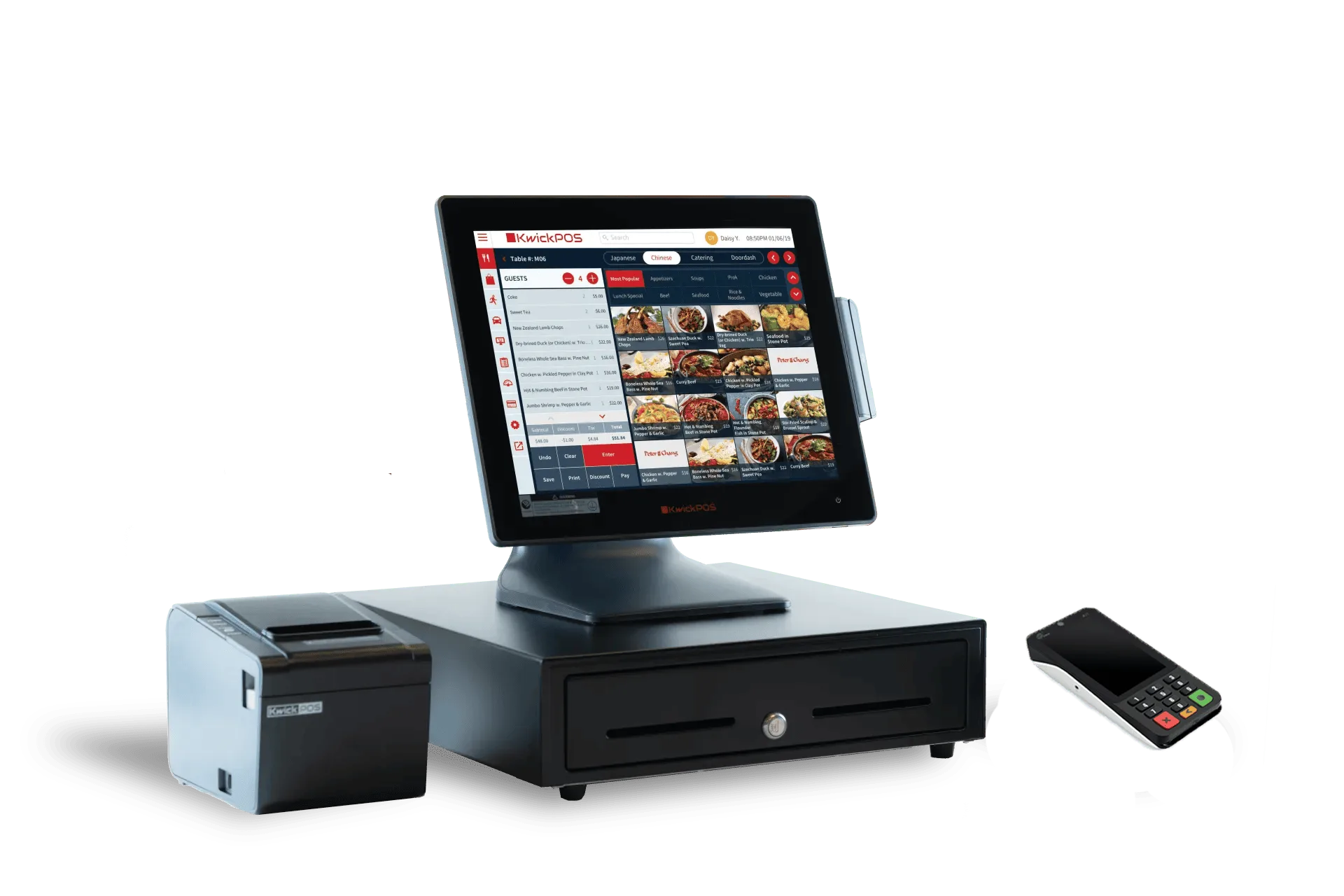
KwickOS complete POS station — processor-agnostic alternative to Toast
If you are shopping for a Toast POS alternative in 2026, you are not alone. According to industry surveys, nearly 40% of restaurant owners who switch POS systems cite payment processing costs as their primary motivation. Whether you are opening a new restaurant or looking to replace an existing system, this guide covers the five best alternatives to Toast and what makes each one worth considering.
Why Restaurant Owners Are Leaving Toast
Before we dive into the alternatives, it helps to understand the common pain points that drive restaurants away from Toast:
- Mandatory payment processing: Toast requires you to use Toast Payments. You cannot bring your own processor, which means you have no leverage to negotiate lower rates as your volume grows.
- Rising monthly fees: What starts as an affordable plan often escalates. Toast's Growth plan runs $110+/month per terminal, and add-on modules like online ordering, loyalty, and marketing pile on additional charges.
- Hardware lock-in: Toast runs on proprietary hardware. If you leave, your terminals become expensive paperweights.
- Long-term contracts: Many operators report being locked into multi-year agreements with steep early termination fees.
- Processing rate increases: Toast has raised processing rates multiple times, and merchants have no ability to shop for better rates elsewhere.
The average full-service restaurant processes $40,000 to $80,000 per month in credit card transactions. Even a 0.3% difference in processing rates translates to $1,440 to $2,880 per year in savings—money that goes straight to your bottom line.
What to Look for in a Toast Alternative
When evaluating a restaurant POS system as a replacement for Toast, prioritize these factors:

- Payment processing freedom: Can you choose your own processor or are you locked in?
- Total cost of ownership: Look beyond monthly software fees. Factor in processing costs, hardware, add-on modules, and contract terms.
- Restaurant-specific features: Table management, kitchen display systems, online ordering, menu modifiers, and tip management are table stakes.
- Hardware flexibility: Does the system run on commercial off-the-shelf hardware, or do you need proprietary devices?
- Scalability: Can the system grow with you from a single location to multiple sites?
The 5 Best Toast POS Alternatives for 2026
1. KwickOS (KwickPOS)
Best for: Restaurants that want full control over payment processing and a modular all-in-one business platform.
KwickOS takes a fundamentally different approach from Toast. Instead of locking you into a single payment processor, KwickOS is fully processor-agnostic—you choose whichever payment processor offers you the best rates, and you keep 100% of your processing revenue. This single difference can save a busy restaurant thousands of dollars per year.
KwickOS is not just a POS system. It is a modular business operating system with purpose-built modules that work independently or together:
- KwickPOS: Full-featured restaurant POS with table management, split checks, kitchen display integration, and multi-language support.
- KwickMenu: QR code digital menus and commission-free online ordering built in.
- KwickSign: Digital signage for menu boards and promotions.
- KwickPhone: AI-powered phone ordering system that takes orders 24/7.
- KwickPay: Flexible payment processing integration with the processor of your choice.
- KwickTracker: Real-time business analytics and reporting across all locations.
With over 5,000 active merchants and 4,000+ restaurants—including Haidilao, which operates 600+ locations worldwide—KwickOS has proven it can handle everything from a single food truck to a global restaurant chain.
Pricing: Competitive monthly software fees with no processing markup. Hardware runs on standard Android and Windows devices.
Standout feature: Processor-agnostic architecture means you negotiate directly with payment processors and keep every dollar of processing margin.
Ready to Stop Overpaying for Payment Processing?
See how much you could save by switching to a processor-agnostic POS system.
Become a Partner2. Square for Restaurants
Best for: Small, casual restaurants and cafes that want simple setup with minimal commitment.
Square for Restaurants is a solid entry-level option, especially for new restaurants on a tight budget. The free tier includes basic POS functionality, and Square's ecosystem of tools (invoicing, payroll, banking) is convenient for owners who want everything under one roof.
The downside? Like Toast, Square requires you to use its own payment processing at a flat rate of 2.6% + $0.10 per transaction. That flat rate is simple to understand but becomes expensive at higher volumes. Square also lacks some of the deeper restaurant-specific features that full-service establishments need, such as advanced table management and complex modifier trees.
Pricing: Free plan available. Plus plan starts at $60/month per location. Processing at 2.6% + $0.10.
Standout feature: No long-term contracts and free entry-level plan.
3. Clover
Best for: Quick-service restaurants that want attractive hardware and a broad app marketplace.
Clover offers sleek hardware and a growing marketplace of third-party apps. It is sold through independent merchant services providers, which means processing rates and contract terms vary depending on your reseller. This can be an advantage—you may find a Clover reseller offering competitive rates—but it can also be a trap if you sign with an unscrupulous ISO.
Clover's restaurant features have improved significantly, but it still falls short of dedicated restaurant platforms for complex operations like fine dining or high-volume banquet service.
Pricing: Hardware from $799 to $1,799+. Software from $14.95 to $94.85/month. Processing rates vary by reseller.
Standout feature: Large third-party app marketplace for customization.
4. TouchBistro
Best for: iPad-based restaurants that want a locally installed system with cloud reporting.
TouchBistro is a restaurant-focused POS that runs on iPads with a local server, which means it continues working even if your internet connection drops. It offers solid table management, staff scheduling, and menu management. TouchBistro partners with Chase for payment processing in the U.S., which limits your options but does give you the backing of a major financial institution.
The main drawback is cost. TouchBistro's add-on pricing for online ordering ($50/month), loyalty ($99/month), and marketing ($99/month) can add up quickly.
Pricing: Starts at $69/month. Add-ons are extra. Hardware is standard iPads.
Standout feature: Hybrid local/cloud architecture for reliability.
5. Lightspeed Restaurant
Best for: Upscale and multi-location restaurants that need advanced inventory and reporting.
Lightspeed Restaurant (formerly Upserve) offers strong inventory management, detailed reporting, and a polished interface. It is particularly well-suited for restaurants that want granular insights into food costs, menu performance, and server productivity. Lightspeed also offers its own payment processing but does allow some flexibility with third-party processors on higher-tier plans.
The learning curve is steeper than some competitors, and pricing on the premium tiers can rival Toast's most expensive plans.
Pricing: Starts at $69/month (Essentials). Plus plan at $189/month. Pro plan at $399/month.
Standout feature: Advanced reporting and menu performance analytics.
Toast Alternatives Comparison Table
| Feature | KwickOS | Square | Clover | TouchBistro | Lightspeed |
|---|---|---|---|---|---|
| Choose Your Own Processor | Yes | No | Varies | Limited | Higher tiers |
| Free Online Ordering | Yes (KwickMenu) | No (add-on) | No (add-on) | No ($50/mo) | No (add-on) |
| Multi-Language Support | Yes | Limited | Limited | Limited | Limited |
| Digital Signage | Yes (KwickSign) | No | No | No | No |
| AI Phone Ordering | Yes (KwickPhone) | No | No | No | No |
| Hardware Flexibility | Android/Windows | iPad/Square HW | Clover HW only | iPad | iPad |
| Contract Required | No | No | Varies | Yes | Yes |
| Active Restaurant Users | 4,000+ | Not disclosed | Not disclosed | 16,000+ | Not disclosed |
How to Switch From Toast Without Disrupting Your Business
Switching POS systems sounds daunting, but with proper planning it can be done with minimal disruption. Here is a practical roadmap:
- Check your contract: Review your Toast agreement for termination clauses and fees. Many operators find that the savings from lower processing rates pay for early termination within months.
- Export your data: Pull your menu data, sales reports, and customer information from Toast before you cancel. Most alternatives can import this data.
- Set up in parallel: Configure your new system while Toast is still running. Train staff on the new platform during off-hours.
- Negotiate processing rates: If you are moving to a processor-agnostic system like KwickOS, get quotes from at least three payment processors. Use your transaction volume as leverage.
- Go live during a slow period: Switch over on a Monday or Tuesday, not a Friday night. Have your vendor's support team on standby.
The Bottom Line
Toast remains a capable restaurant POS, but it is no longer the only game in town for restaurants that want purpose-built technology. The biggest differentiator among Toast alternatives in 2026 comes down to one question: who controls your payment processing?
If you want the freedom to choose your own payment processor, negotiate your own rates, and keep 100% of your processing revenue, a processor-agnostic platform like KwickOS gives you that control. If simplicity and low upfront cost matter most, Square is a reasonable starting point. And if you want a middle ground, Lightspeed and TouchBistro offer competent restaurant-focused platforms with varying degrees of flexibility.
Whatever you choose, do the math on total cost of ownership—not just the monthly software fee. For most restaurants, payment processing fees are the single largest technology expense, and the POS system that lets you control those fees will save you the most money over time.
See KwickOS in Action
Join 4,000+ restaurants that have taken control of their payment processing. Schedule a free demo today.
Request a Demo