
You spent months building a Toast reseller portfolio—signing merchants, training staff, earning their trust. Then one day, your merchant calls to say Toast offered them a better deal directly. Your residual? Gone. Your relationship? Bypassed. Your 8 months of work? Worth nothing to the company that profited from it.
It gets worse. Toast controls the processing, sets the rates at 2.99% + $0.15 per transaction, and keeps the lion's share of the margin you helped create. You can't lower your merchant's fees. You can't protect them from competitors who will. And when Toast's internal sales team starts calling your accounts—offering pricing you never had access to—there's nothing you can do about it.
But there is a way out. Hundreds of payment agents are switching to processor-agnostic POS platforms where they own 100% of the processing relationship, keep the full spread, and never compete with the technology partner for their own merchants. Here's exactly how—and why the math makes it obvious.
I signed my twentieth merchant onto Toast on a Tuesday afternoon. A Thai restaurant in suburban Dallas. The owner shook my hand, thanked me for walking her through the setup, and said she finally felt like she had a system she could trust. I drove home thinking I was building something—a real portfolio, a book of business, a future.
Three weeks later, that same owner called me. She sounded confused. "Someone from Toast called me," she said. "They're offering me a lower rate if I sign a new agreement directly with them. Should I do it?"
I sat there for a moment, phone in hand, staring at nothing. Then I pulled up my other merchants' accounts and started making calls. Four of them had gotten similar outreach. Toast was offering them better pricing—pricing I was never given access to—in exchange for signing directly and cutting me out of the loop entirely.
That was the moment I understood what I actually was to Toast: a temporary acquisition channel. Not a partner. A channel they'd use until they didn't need me anymore.
If you're a payment agent, ISO, or reseller currently working with Toast—or considering it—this article is the honest breakdown I wish someone had given me. I'm going to walk through exactly why Toast's reseller model is structurally broken for agents, what the real economics look like, and what I eventually did about it.
The Five Structural Problems with Toast's Reseller Program
Let me be clear about something: Toast builds a decent restaurant POS. I'm not here to trash the product. The problem isn't the software. The problem is a business model that treats agents as disposable, and a partner structure that ensures you'll never truly own your book of business.
1. Toast Controls the Processing—You Don't
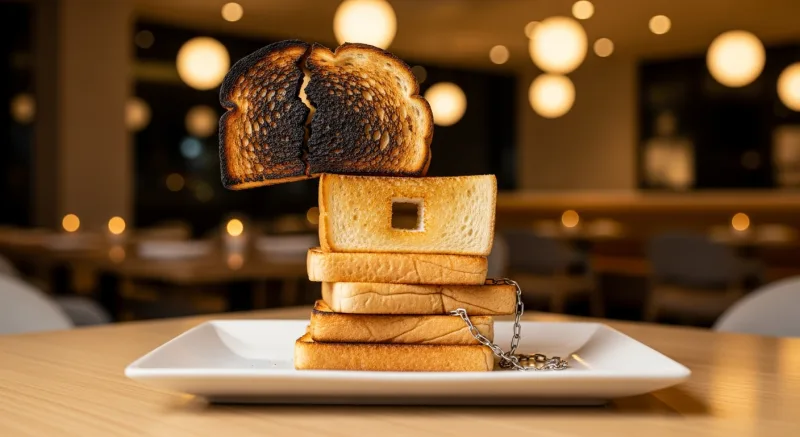
This is the foundational issue, and everything else flows from it. When you sign a merchant onto Toast, that merchant's payment processing goes through Toast Payments. You don't own the processing relationship. You don't set the rates. You earn a referral fee or a small residual slice that Toast defines and controls.
And here's what that really means for your bottom line.
For agents who come from traditional merchant services, this is a radical downgrade. In a normal ISO or agent relationship, you own the processing. You negotiate rates with your processor, you set the merchant's pricing, and the spread between those two numbers is yours. That's how real residual portfolios are built.
With Toast, you're earning a fraction of what you could earn because Toast has inserted itself as the processor and is keeping the lion's share of the margin. You're doing the hardest part of the job—finding merchants, building trust, closing deals—and Toast is keeping most of the revenue that relationship generates.
2. The Pricing Hurts Your Merchants (and Creates Churn)
Toast's standard processing rate is 2.99% + 15 cents per transaction. For a full-service restaurant doing $40,000 a month in card volume, that translates to roughly $1,196 in monthly processing fees. That's expensive. Very expensive.
Most independent agents and ISOs can place the same merchant at 2.2% to 2.5% through competitive processors. That's a meaningful difference—hundreds of dollars a month—and merchants figure it out eventually. Maybe not in month one. Maybe not in month six. But someone walks in with a statement analysis, shows them the savings, and suddenly your merchant is looking for the exit.
But here's the real kicker.
The irony is brutal: Toast's high processing rates make your merchants vulnerable to competitors, but you can't do anything about the rates because you don't control the processing. You placed the merchant, but you can't protect them.
3. Toast Contacts Your Merchants Directly
I described my own experience above. It's not an anomaly. Talk to enough Toast resellers and you'll hear variations of the same story: merchants getting calls from Toast's internal sales team, being offered better terms, being migrated to direct accounts.
Toast's internal sales goals don't align with your interests as a reseller. Their team is incentivized to bring merchants into direct relationships because the margins are better for Toast when there's no agent residual to pay out. You are, quite literally, a cost center they have motivation to eliminate once the merchant is onboarded.
4. Proprietary Hardware Creates a Trap—But Not for You
Toast runs on proprietary hardware. The Toast terminals, kitchen display systems, and kiosks are Toast-manufactured and Toast-controlled. Merchants who buy into the Toast ecosystem are locked into Toast hardware, which means they face real switching costs if they want to leave.
Now, you might think that works in your favor. Think again.
At first glance, that might seem like it protects your book. It doesn't. The lock-in protects Toast's book. If a merchant wants to leave Toast, they have to replace all their hardware. But you have no leverage in that equation. Toast can change your commission structure, reduce your residuals, or contact your merchant directly, and the hardware lock-in means the merchant stays with Toast regardless. The lock-in serves Toast's retention, not your revenue.
And when you're trying to sell Toast to a new prospect? That proprietary hardware means a higher upfront cost, which makes your pitch harder. You're asking merchants to invest in equipment that only works with one system. Every experienced restaurant owner knows that's a risk.
5. When a Merchant Leaves Toast, You Lose Everything
Because you don't own the processing relationship and the hardware is proprietary, when a merchant churns from Toast, you have nothing. No processing residual to fall back on. No portable merchant relationship. No hardware that can be repurposed. It's a total loss.
In a traditional agent model, if a merchant switches POS systems, you can often retain the processing relationship. The merchant might change their software but keep the same payment processor—and your residual continues. With Toast, the software and processing are bundled. When one goes, everything goes.
What Payment Agents Actually Want
After I realized Toast's reseller program wasn't built for long-term agent success, I spent three months talking to other agents. ISOs. People running mid-size portfolios. Agents who'd been in the business for fifteen years and agents who were two years in. I wanted to understand what a real partner program should look like.
Four things came up in nearly every conversation.
Control of the Processing Relationship
This is non-negotiable. Every serious agent I spoke to said the same thing: if I don't own the processing, I don't have a business. I have a referral arrangement. The processing residual is the backbone of a merchant services career. It's what pays you month after month, year after year. It's what makes your portfolio an asset you can sell or pass on. Any POS partner that takes that away from you is taking away the most valuable thing you build.
A POS Company That Doesn't Compete With You
Agents want a technology partner, not a technology competitor. The POS company should be focused on building great software. You should be focused on merchant acquisition and processing relationships. The moment those two roles overlap—the moment the POS company starts acting as a processor or contacting your merchants—the partnership is compromised.
Hardware Flexibility
Agents want the ability to deploy on whatever hardware makes sense for the merchant. Maybe that's an iPad for a small cafe. Maybe that's a commercial-grade Android terminal for a busy restaurant. Maybe it's repurposing equipment the merchant already owns. Hardware flexibility lowers the barrier to sale and reduces the merchant's upfront investment, which means faster closes and happier customers.
Multi-Industry Reach
Restaurants are a massive market, but they're one vertical. An agent who can only sell into restaurants is leaving money on the table every time they walk past a retail shop, a salon, a convenience store, or a grocery market. The best agents work across industries because opportunity doesn't come neatly labeled by vertical.
Why I Moved My Book to KwickOS
I spent those three months not just talking to agents but evaluating every POS platform that had a partner or reseller program. I looked at Clover, Square, Lightspeed, Revel, and 14 others. Most of them had some version of the same problem Toast has: they want to control the processing, or they compete with agents on direct sales, or both.
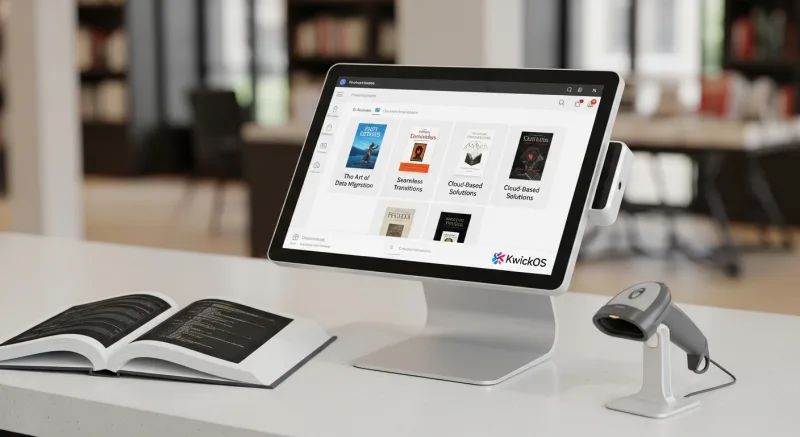
KwickOS was different, and the difference is structural, not cosmetic.
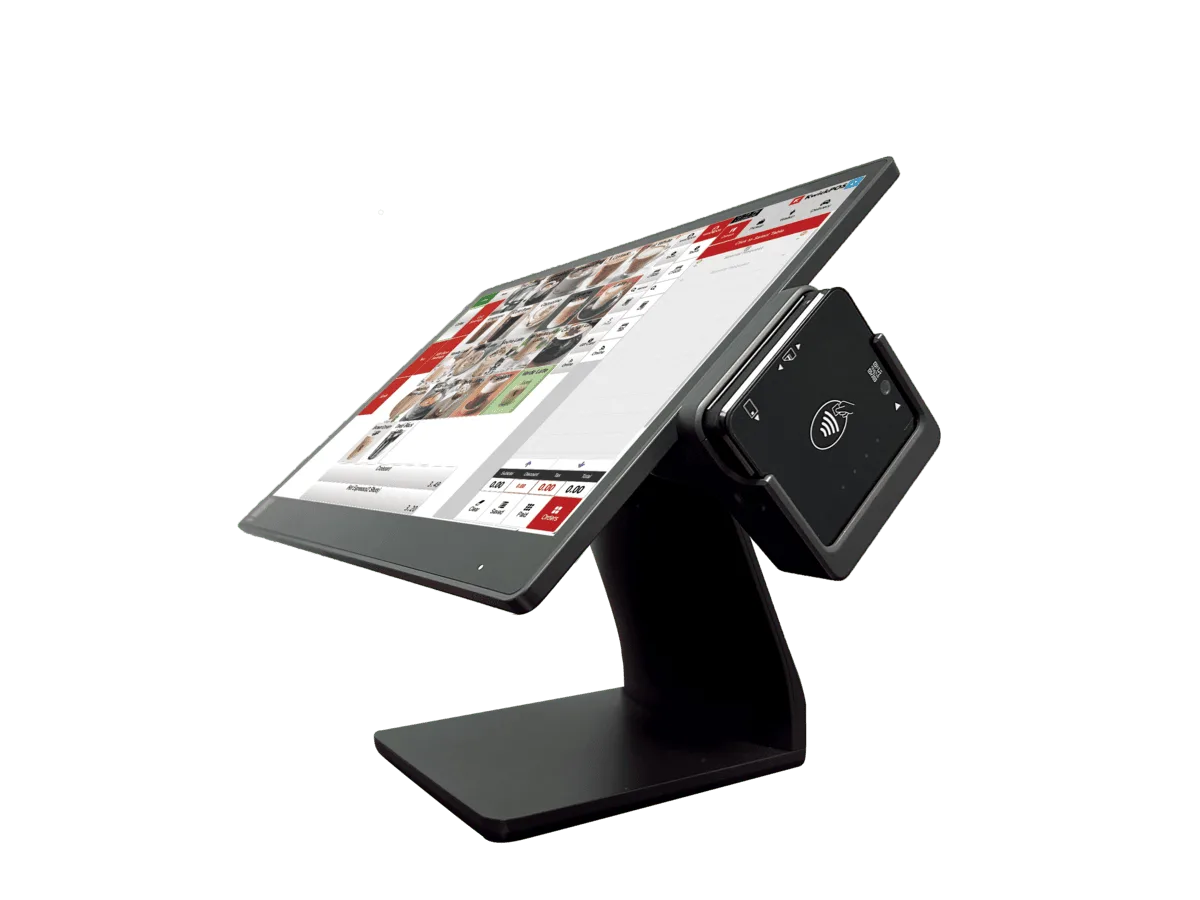
Processor-Agnostic Architecture
KwickOS doesn't process payments. Full stop. The platform is processor-agnostic, meaning it integrates with whatever payment processor the merchant uses. That processor is yours. You choose it, you set the rates, you own the residual. KwickOS never touches your processing revenue because KwickOS has no processing revenue. They make money on software subscriptions. You make money on processing. There's zero conflict.
I cannot overstate how significant this is. When I was with Toast, I was earning a small referral fee on each merchant. Now, I own the full processing spread on every merchant in my portfolio. The per-merchant revenue difference isn't incremental—it's multiples.
No Direct Competition
KwickOS doesn't have an internal sales team calling your merchants. They don't offer direct-to-merchant pricing that undercuts your deals. Their partner program is built on a simple premise: agents bring merchants, KwickOS provides the technology, and each party earns from their own lane. In two years of working with KwickOS, I've never once had a merchant tell me they got a call from KwickOS offering a better deal.
Runs on Any Hardware
KwickOS runs on standard commercial hardware—Android terminals, iPads, Windows PCs, existing equipment. I've deployed it on everything from a $200 Android tablet to a full multi-terminal setup with kitchen displays. This flexibility means two things: merchants spend less on hardware (which makes them happier and less likely to churn), and I can close deals faster because there's no $5,000 proprietary hardware package to justify.
Four Verticals, Not One
Here's the part that changed my business the most. KwickOS serves restaurants, retail, beauty and spa, and grocery. That's not four slightly different versions of the same product—it's purpose-built modules for each industry. KwickPOS handles restaurant-specific workflows. KwickSign does digital signage for retail. KwickMenu powers QR-code ordering. KwickPhone handles AI phone answering. KwickTracker manages delivery logistics.
When I was a Toast reseller, I'd walk past retail shops and salons every day. They weren't prospects. Now, every SMB is a prospect. My addressable market didn't just grow—it multiplied by four. With 5,000+ active merchants already on the platform across these verticals, I'm not pitching unproven software. I'm offering a system that's running at scale right now.
| Factor | Toast Reseller | KwickOS Partner |
|---|---|---|
| Processing ownership | Toast controls processing | Agent owns 100% |
| Residual type | Small referral/slice | Full processing spread |
| Direct merchant contact | Toast contacts merchants | No direct competition |
| Hardware | Proprietary (Toast-only) | Any commercial hardware |
| Industries served | Restaurants only | Restaurant, retail, beauty, grocery |
| If merchant switches POS | Lose everything | Keep processing residual |
| Revenue conflict | Toast earns on processing | KwickOS earns on software only |
A Real Switch: 30 Merchants, Better Numbers Across the Board
Let me tell you about an agent I know—I'll call him David, because he asked me not to use his real name. David had 30 active merchants on Toast. All restaurants. He'd been in the Toast reseller program for about 14 months and was earning referral-based income that, frankly, didn't reflect the work he'd put in to acquire those accounts.
David and I had been in the same ISO before he went to Toast, so when I told him what I was doing with KwickOS, he was skeptical but willing to listen. We sat down and looked at his portfolio merchant by merchant.
What happened next surprised both of us.
The migration took about six weeks. Not every merchant moved—6 were locked into Toast financing agreements—but 24 of the 30 came over. Here's what changed:
For the merchants: Processing rates dropped from Toast's 2.99% + 15 cents to competitive rates David negotiated through his processor, averaging around 2.3%. On a merchant doing $40,000 a month in card volume, that's a savings of roughly $276 every month. Real money for a small restaurant. Some of his higher-volume merchants were saving over $400 a month. David became the guy who saved them money, which is the best reputation an agent can have.
For David: He went from earning Toast's referral fee structure to owning the full processing spread. His per-merchant revenue jumped from roughly $35/month under Toast's referral model to $110-$150/month owning the full spread. He also started earning referral bonuses on KwickOS software subscriptions, which added a second revenue stream he didn't have before. And because KwickOS works across industries, David started selling into retail and salon accounts in the same neighborhoods where he already had restaurant relationships.
Twelve months later, David's portfolio is 40+ merchants across three verticals, and his monthly residual income grew from $1,050 under Toast to over $5,200—a 5x increase.
The Math: One Merchant, Toast vs. KwickOS + Agent Processing
Multiply that across 30 merchants and you're looking at $2,250–$3,450 more per month—$27,000–$41,400 more per year. That's not a marginal improvement. That's a fundamentally different business model.
The Deeper Issue: Who Owns Your Business?
If I strip away all the specific numbers and comparisons, the core question every payment agent should ask about any POS partnership is this: at the end of the day, who owns the merchant relationship?
With Toast, the answer is Toast. They own the processing. They own the hardware. They own the merchant data. They own the direct line of communication to your merchants. You are a contractor, not a partner, and contractors get replaced when they're no longer useful.
With a processor-agnostic platform like KwickOS, the answer is you. You own the processing. You choose the hardware. You maintain the direct merchant relationship. The POS company provides the software layer and earns from that. Your revenues don't compete. Your incentives are aligned. And if a merchant ever decides to change POS platforms—which happens in this industry—you still have the processing relationship.
That's the difference between building on rented land and building on land you own.
Who This Move Makes Sense For
I'm not going to pretend this transition is right for everyone. If you're an agent who signed up with Toast as a side gig and you're placing one or two merchants a quarter, the economics of switching may not justify the effort. Toast's referral model is simple, and simple has value when you're not doing this full-time.

But if you're serious about building a merchant services portfolio—if you're placing five, ten, twenty merchants a year and you want those accounts to compound into real residual income—then the Toast reseller model is structurally working against you. Every merchant you place on Toast is a merchant you don't truly own, generating revenue you don't truly control, on a timeline Toast dictates.
The agents I see making this move tend to share a few characteristics:
- They've been in merchant services long enough to understand the value of owning residuals
- They're frustrated by earning referral fees when they know the processing margins they're leaving on the table
- They want to expand beyond restaurants into retail, beauty, or other verticals
- They've had at least one experience where Toast (or a similar POS company) contacted their merchant directly
- They're thinking about their portfolio as a long-term asset, not just short-term commissions
If that sounds like you, it's worth having the conversation.
What Making the Switch Actually Looks Like
I won't sugarcoat it: migrating merchants takes work. You need to have honest conversations with your merchants about why you're recommending a change. The good news is that the pitch is straightforward—you're saving them money on processing and giving them a more flexible system. Most merchants will listen to that.
KwickOS provides migration support, including data transfer assistance and on-site installation help. The hardware flexibility means merchants don't necessarily need to buy all new equipment. And because KwickOS runs across multiple industries, you can start placing new merchants on the platform immediately while you work through your existing Toast book over time.
And here's what most agents don't expect.
The first month is the hardest. After that, you're operating in a model that actually rewards the work you're doing.
Ready to Own Your Portfolio?
Talk to the KwickOS partner team about processor-agnostic POS that lets you keep 100% of the processing relationship. No conflict. No competition. Just technology that makes your merchants successful and your residuals permanent.
Explore the KwickOS Partner ProgramThe Bottom Line
Toast built a good restaurant POS. But they also built a business model that systematically extracts value from the agents who sell it. The proprietary hardware, the controlled processing, the direct merchant outreach—these aren't bugs. They're features of a system designed to minimize Toast's dependence on outside sales channels.
If you're a payment agent and you're building your career on a Toast reseller agreement, you're building on a foundation someone else controls. You deserve a model where the technology partner stays in their lane, the processing relationship stays in yours, and both of you grow because you're focused on what you do best.
That's the model I found with KwickOS. It's the model more agents are finding every month. And based on the numbers—both mine and the agents I've helped make the switch—it's the model that actually builds long-term wealth in this business.
I don't regret my time with Toast. It taught me exactly what I don't want in a POS partner. And that clarity turned out to be worth more than any referral check they ever sent me.