Philadelphia Doesn't Trust Outsiders. But Philly Restaurants Trust AI That Saves Them Money.
Updated March 2026 · 11 min read
Philadelphia has 4,200 restaurants and a dining culture that runs on neighborhood loyalty, BYO wine bottles, and an irrational devotion to the Eagles that turns every game day into a citywide dining event. Philly's food scene is a paradox: simultaneously underrated nationally and intensely competitive locally. The city has more restaurants per capita than Los Angeles and higher restaurant failure rates than the national average. If you cannot make it in Philly's brutal market — where customers expect New York quality at prices 30% lower — you cannot make it anywhere.
The restaurants thriving in Philadelphia's compressed-margin environment have discovered something: artificial intelligence does not replace the human touch that Philly diners demand. It protects the margins that make that human touch financially sustainable. When your BYOB model sacrifices alcohol revenue, your AI needs to extract every possible dollar from food sales. When Eagles Sunday triples your normal traffic, your AI needs to have predicted it on Thursday.
The BYOB Economy: AI for Restaurants Without Liquor Revenue
Philadelphia has more BYOB restaurants than any other major American city, a legacy of Pennsylvania's restrictive liquor licensing system where a liquor license costs $100,000-300,000 in Philadelphia. Many restaurants simply cannot afford one. BYOB operations sacrifice the 65-75% margins on alcohol that licensed restaurants enjoy, meaning their entire profit must come from food — a category where margins average 28-35%.
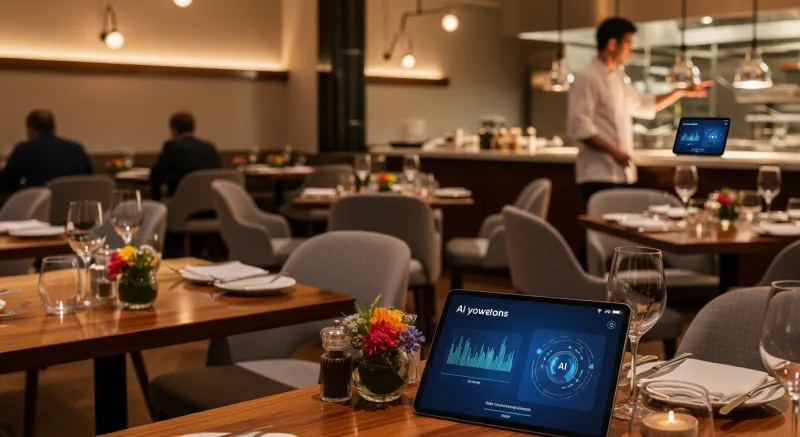
KwickOS AI compensates for the missing alcohol revenue through surgical food profitability optimization. The system analyzes every menu item's true cost (ingredients plus attributable labor), calculates margin at the item level, and identifies where pricing adjustments can recover margin without triggering customer resistance.
The AI identifies that BYOB customers have different spending patterns than licensed-restaurant customers. Without alcohol markup, the average check is lower, but food ordering volume is higher — BYOB diners order 1.4 appetizers per table versus 0.8 at licensed restaurants. The system recommends expanding the appetizer menu and positioning high-margin starters prominently, capitalizing on the BYOB customer's tendency to compensate for the missing drink order with additional food courses.
Corkage fee optimization is another AI contribution. Many Philly BYOBs charge no corkage fee as a competitive advantage. KwickOS tracks which customers bring wine (potential premium spenders) and which do not (lower-check customers). For customers who consistently bring premium wine, the AI suggests high-margin food pairings via server prompts: "Table 7 brought a Barolo. Suggest the braised short rib or the truffle risotto." The wine pairing intelligence increases average food check for wine-bringing tables by 12-18%.
Eagles Game Day: The AI Event That Pays January's Rent
Philadelphia Eagles games generate the most concentrated restaurant revenue spikes of any city's sports franchise. Eagles fans do not just watch games — they turn game day into a 6-hour dining and drinking event. Pre-game meals start 3 hours before kickoff. Post-game celebrations (or commiseration) extend 2 hours after the final whistle. A bar near the stadium that does $4,000 on a normal Sunday can do $14,000 on an Eagles Sunday.
KwickOS AI integrates the Eagles schedule into demand forecasting automatically, modeling each game's impact based on kickoff time, opponent significance, weather, and whether the game is home or away. A 1 PM home game against the Cowboys (top rivalry) generates 80% more pre-game traffic than a 4:25 PM game against a non-rival. The AI models this with historical precision.
Labor scheduling for game days is where the AI generates the most value. The system recommends adding 3 kitchen staff and 2 servers for the Eagles-Cowboys home game but only 1 additional kitchen position for a less-significant away game. Each recommendation includes the projected revenue impact and the marginal labor cost, letting the owner make data-informed decisions rather than guessing whether extra staff will pay for themselves.
The AI also identifies the Monday-after effect. Eagles wins increase Monday lunch traffic by 8-12% (fans still celebrating). Eagles losses suppress Monday traffic by 5-8% (fans in mourning). The system adjusts Monday prep and staffing based on Sunday's outcome — a correlation that no human would build into a labor schedule but that the AI tracks empirically.
South Philly's Italian Heritage and Predictive Tradition
South Philadelphia's Italian restaurant tradition creates a unique AI application: predicting demand for deeply traditional menus with seasonal and cultural patterns that follow the Italian-American calendar rather than the commercial one. Christmas Eve dinner (Feast of the Seven Fishes) produces the highest single-night revenue of the year for South Philly Italian restaurants — often 4x normal. Easter dinner, Saints' feast days, and Italian heritage festivals create smaller but predictable spikes.
KwickOS AI models these cultural demand patterns alongside commercial ones. It identifies that your lasagna sells at 2x normal volume during the week following the first cold snap in October (comfort food response). It detects that your calamari fritti appetizer peaks during Lent (when customers replace meat dishes). It tracks that your Sunday gravy special has a loyal following that declines 30% during summer (families traveling) and rebounds in September.
For multi-generational Italian restaurants that have always relied on family knowledge of these patterns, the AI codifies institutional wisdom. When the patriarch who knew exactly how much ricotta to order for Christmas Eve is no longer making those decisions, the system preserves the knowledge in data form, accessible to whoever manages the kitchen next.
The Soda Tax and Menu Intelligence
Philadelphia's 1.5-cent-per-ounce sugary beverage tax adds $0.48 to a 32-ounce soda. This tax, unique among major American cities, has measurably shifted beverage purchasing at Philadelphia restaurants. KwickOS AI tracks the tax's impact on your specific beverage sales and recommends menu adjustments.
The system detects that your fountain soda sales dropped 23% since the tax implementation while iced tea and lemonade (untaxed) sales increased 31%. It recommends reducing fountain soda inventory by 20% and expanding the untaxed beverage selection. It identifies that customers are increasingly ordering water with their meals — a behavior that reduces average check by $3-4 unless compensated by food upselling.
The AI creates targeted beverage upsell strategies that account for the tax reality. Rather than pushing sugary drinks that customers resist, it trains the upsell engine on high-margin untaxed alternatives: craft lemonade, house-made iced tea, sparkling water. These items carry margins comparable to soda without the tax resistance.
Neighborhood AI: Fishtown vs. University City vs. Manayunk
Philadelphia's restaurant neighborhoods are economically distinct in ways that demand location-specific AI strategies.
Fishtown / Northern Liberties: Young professional clientele, high brunch demand, social media-driven discovery. KwickOS AI detects that your Saturday brunch generates 35% of weekly revenue and recommends disproportionate staffing and prep investment. The system identifies that Instagram-tagged dishes drive 15% of first-time visits and tracks which items generate the most social sharing.
University City: Student and academic clientele, price-sensitive, high delivery demand from Penn and Drexel dormitories. AI optimizes for delivery efficiency during midweek evenings (study-session ordering) and fast counter service during lunch (class-break dining). The system identifies that $10-14 is the student price ceiling and recommends lunch specials that hit that range with acceptable margins.
Manayunk: Weekend dining destination, event-driven (restaurant week, canal festivals), seasonal outdoor dining. AI predicts the dramatic difference between a quiet Tuesday (40 covers) and a festival Saturday (200 covers), generating staffing and prep plans that handle 5x swings in demand without overstaffing the quiet nights or understaffing the events.
KwickOS's multi-location intelligence allows a restaurant group operating across neighborhoods to see these differences quantitatively rather than anecdotally, making data-driven decisions about menu, pricing, and staffing at each location.
Loyalty and Gift Cards in Philadelphia's Repeat-Visit Culture
Philadelphia diners are creatures of habit more than any other East Coast city. A Philly regular visits their spot 2-3 times per week for years. This loyalty intensity makes retention programs extraordinarily valuable — a regular worth $4,000-6,000 annually is common in Philadelphia restaurants.
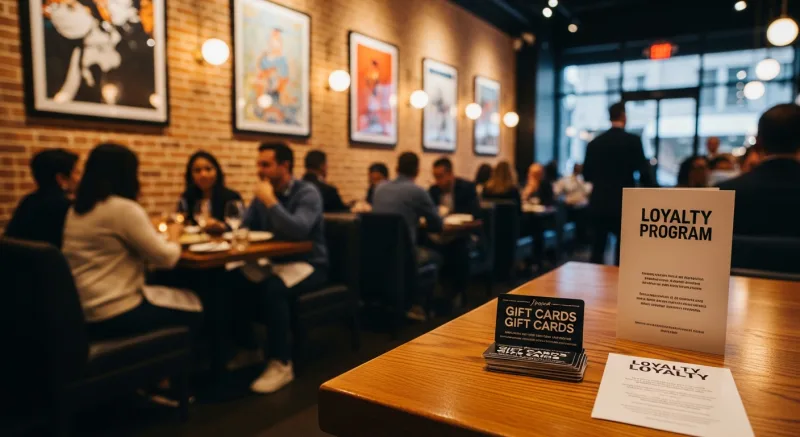
KwickOS AI builds loyalty programs that deepen habit rather than discount it. A three-time-per-week regular does not need a discount to keep coming — they need recognition. The system tracks their preferences, suggests their usual order, remembers their seating preference, and triggers a birthday acknowledgment with a complimentary dessert. The AI alerts the manager when a three-time regular drops to twice per week, enabling a personal outreach before the decline becomes permanent.
Gift cards in Philly have strong local utility: cheesesteak shops, Italian restaurants, and neighborhood bars are the top gift card categories. KwickOS identifies that Philly gift card purchases spike during Eagles playoff runs (fans buying celebratory restaurant gifts), back-to-school (parents treating professors and teachers), and the December holidays. The AI activates promotional campaigns timed to each window.
KwickPhone for Philly's Phone-Order Culture
Philadelphia has a stronger phone-ordering culture than most major cities, particularly for cheesesteak shops, pizza places, and Italian delis where customers call ahead to avoid waiting. KwickPhone handles these calls with Philly-specific menu knowledge: "Let me get a cheesesteak wit, Whiz, peppers" is parsed as "cheesesteak, with onions, Cheez Whiz, peppers." The dialect-specific understanding prevents the errors that occur when generic voice AI cannot parse regional ordering language.
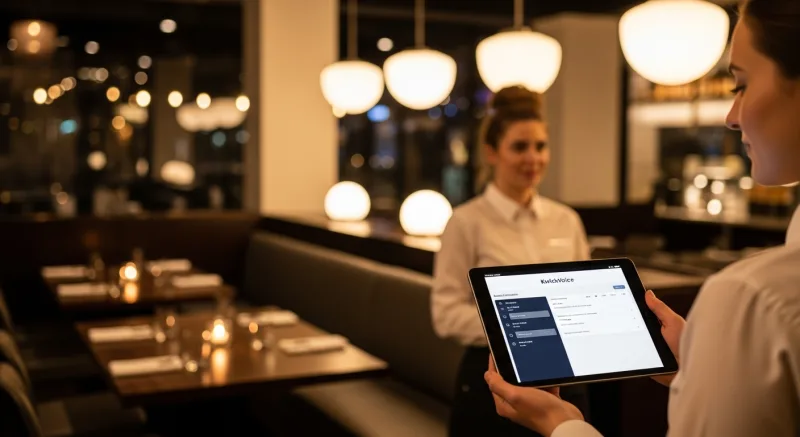
For restaurants receiving 40-60 phone orders daily, KwickPhone eliminates the 2-minute-per-call staff burden during peak hours, freeing 80-120 minutes of labor for production work.
Why Philly Restaurants Are Choosing KwickOS
Toast's processing fees on a Philly restaurant processing $60,000 monthly cost $1,944/month. An independent processor at 2.2% charges $1,380. Annual savings: $6,768. KwickOS's processor freedom delivers this saving automatically.
Toast cannot handle BYOB-specific analytics, Eagles-driven demand modeling, or soda-tax beverage optimization. Square cannot scale beyond a single counter location. KwickOS handles the full complexity of Philadelphia's unique restaurant economics while running offline during winter storms that drop internet across the city's older infrastructure.
Philly restaurant owners: Call (888) 355-6996 or visit KwickOS.com for a demo built for Philadelphia's unique market.
AI + Loyalty: Smarter Customer Retention
KwickOS combines AI insights with built-in loyalty tools to do something no other POS can: predict which customers are about to stop coming in and automatically re-engage them.
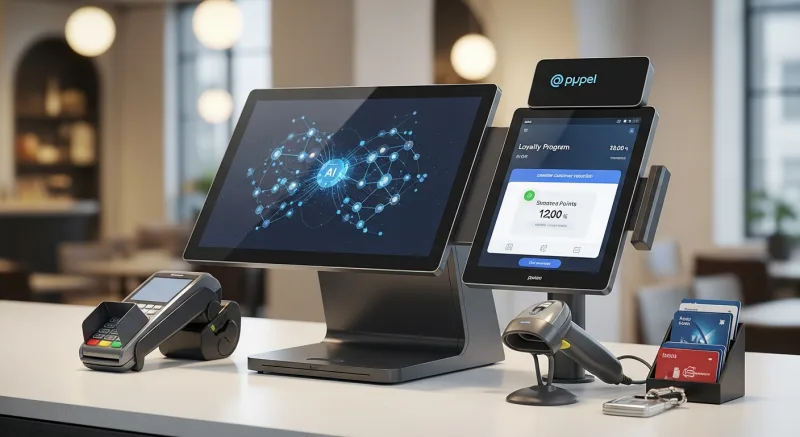
The gift card and loyalty system is not just a punch card — it is connected to AI-powered analytics that identify spending patterns, predict churn risk, and suggest targeted promotions. A customer who used to visit weekly but has not been in for 3 weeks? The system flags them and can trigger an automatic points bonus or e-gift card offer via SMS.
- Smart gift cards — AI suggests optimal gift card denominations based on your average ticket size
- Predictive loyalty — identifies at-risk customers before they leave, triggers re-engagement
- Points optimization — automatically adjusts earn rates during slow periods to drive traffic
- Membership insights — shows which VIP tiers generate the most lifetime value
All included. No add-on fees. Toast charges $75/month for basic loyalty without any AI component.
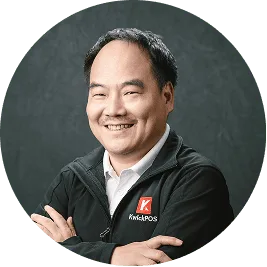
Founder & CIO of KwickOS · 30 Years IT · 20 Years Restaurant Industry
Tom built KwickOS after decades running restaurants and IT companies. Today KwickOS serves 5,000+ businesses across 50 states.