AI That Predicts Happy Hour Demand and Auto-Orders Your Next Keg
Updated March 2026 · 11 min read
The best AI That Predicts Happy Hour Demand and Auto-Orders Your Next Keg handles everything from checkout to closing — without extra apps or workarounds. Every bar owner knows the feeling. It is 9:47 PM on a Saturday, the house is packed, and your bartender just pulled the last pint from the IPA keg. The backup is warm in the stockroom because nobody rotated it into the cooler this morning. Three customers at the rail are waiting for the beer you just 86'd, and each of them is going to order something cheaper or leave. The keg cost $180 and sold $720 worth of pints before it kicked. The replacement will not be cold for four hours. You just lost tomorrow's Sunday brunch beer sales too, because the distributor does not deliver on weekends.
This is not a staffing failure or a management failure. It is an information failure. Nobody in your bar — not the owner, not the bar manager, not the bartender who has been pouring for 15 years — can accurately predict how fast a keg will drain on any given night. The variables are too numerous: weather, local events, sports schedules, seasonal preferences, the band playing next door, whether the new cocktail menu is pulling people away from draft beer. Human intuition handles some of this. It does not handle all of it simultaneously.
Artificial intelligence does. And in 2026, the bars that are winning the margin game are the ones that let AI handle the inventory decisions humans were never equipped to make.
Pour Cost: The Number That Defines Bar Profitability
Pour cost is the percentage of revenue spent on the liquor, beer, or wine that generated that revenue. Industry standard targets are 18-24% for liquor, 20-28% for beer, and 30-40% for wine. A bar running a 22% blended pour cost on $50,000 in monthly revenue spends $11,000 on product. Drop that to 19% and you save $1,500 per month — $18,000 per year — with identical revenue.
The problem is that pour cost is traditionally calculated after the fact. You count inventory at the end of the month, compare it to sales, and discover that your actual pour cost was 27% instead of 22%. Five points of margin vanished, but you do not know when, where, or why. Was it overpouring? Theft? Comp drinks that were not logged? A pricing error on the new cocktail menu? By the time you have the data, the money is gone.
KwickOS AI tracks pour cost in real time by correlating every sale with expected inventory depletion. When a bartender rings up a 2-ounce pour of Maker's Mark, the system deducts 2 ounces from the bottle inventory. At any moment, the bar manager can see actual versus expected inventory for every product. A bottle of Maker's that should have 12 ounces remaining but only has 8 signals a 33% variance — overpouring, unrung drinks, or theft. The AI flags the discrepancy the night it happens, not four weeks later during inventory.
Predictive Keg Management: Never 86 a Draft Again
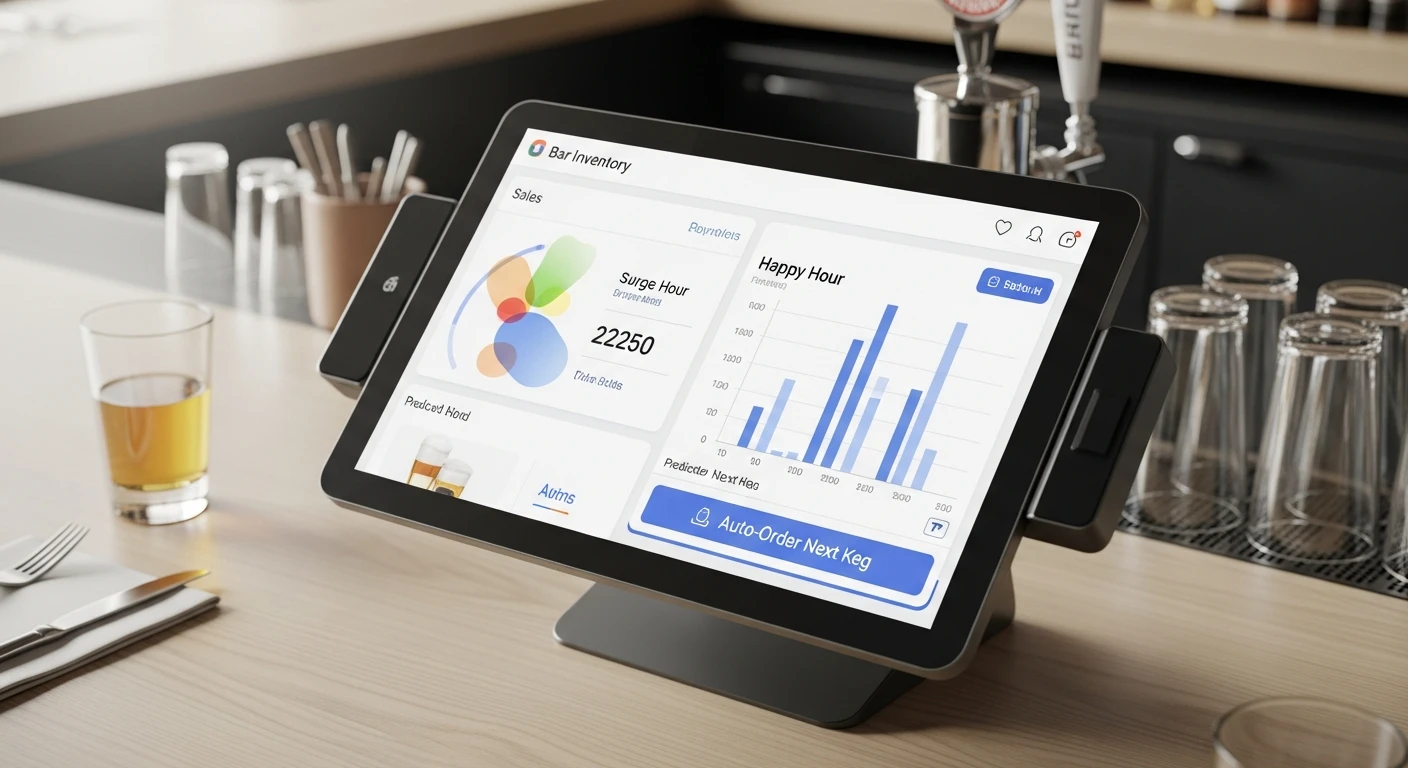
KwickOS monitors keg depletion rate in real time based on pints sold per hour. The AI models each keg's remaining lifespan and generates alerts when a keg is projected to kick within the current shift. If your IPA keg has been pouring at 8 pints per hour and has approximately 20 pints remaining, the system alerts the bar manager at 7 PM that the keg will empty around 9:30 PM — enough time to get the backup into the cooler.
More importantly, the system learns long-term consumption patterns and generates reorder recommendations based on projected depletion against delivery schedules. If your IPA keg lasts an average of 4.2 days and your distributor requires 48-hour notice, the system triggers a reorder recommendation at day 2.2, ensuring the new keg arrives before the current one kicks.
The AI also detects seasonal trends in draft preferences. It notices that your wheat beer outsells your stout 3:1 during summer but the ratio inverts in November. It recommends adjusting your draft lineup two weeks before the historical crossover point, so you are stocked with what your customers want before they start asking for it.
Happy Hour Engineering: Data-Driven Discounting
Most bars set happy hour pricing by intuition: half-price wells, $2 off drafts, two-for-one appetizers. These discounts bring bodies through the door, but are they profitable? A bar running $3 well drinks during happy hour on liquor that costs $0.45 per pour is making 85% margin. The same bar running $5 craft cocktails that cost $2.80 in ingredients is making 44% margin. The well drink discount is highly profitable. The craft cocktail discount is barely breaking even.

KwickOS AI analyzes happy hour profitability by item and recommends a pricing strategy that maximizes both traffic and margin. It might suggest keeping well drink discounts (high margin, high traffic driver) while replacing the craft cocktail discount with a free appetizer with any two craft cocktail purchases (the appetizer costs $2.50 and drives two $12 drinks instead of one discounted $8 drink).
The system also identifies the optimal happy hour window. You run happy hour from 4-7 PM because that is what you have always done. The AI shows you that 85% of your happy hour revenue arrives between 5:15 and 6:45 PM, and extending to 7 PM cannibalizes your full-price dinner revenue. Cutting happy hour by 15 minutes at the end increases total daily revenue by 3% without reducing happy hour traffic.
AI-Powered Loyalty and Gift Cards for Bars
Bar loyalty programs have traditionally been crude — a punch card for a free drink after ten purchases. KwickOS transforms bar loyalty into a behavioral intelligence system.
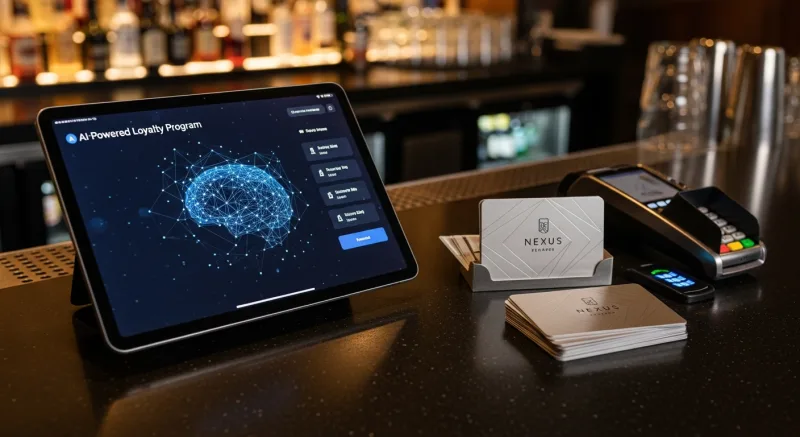
The AI segments your customers into behavioral profiles: the after-work regular who comes every Thursday, the weekend warrior who visits twice a month, the special-occasion visitor who appears for birthdays and celebrations. Each segment receives different loyalty incentives optimized for their behavior pattern.
The Thursday regular gets a "fifth Thursday free" reward that reinforces their existing habit. The weekend warrior gets a "happy hour preview" that brings them in on a slower weeknight, expanding their visits without discounting the nights they already attend. The special-occasion visitor gets a personalized birthday offer with a free premium cocktail that drives a group booking worth $200-400 in total spend.
Gift cards become a strategic tool when AI is involved. KwickOS identifies that gift card redemptions peak during the first two weeks of January (post-holiday spending), and 68% of gift card users spend 35% more than the card value. The system recommends a December gift card promotion — buy $50, get $10 bonus — timed to capture holiday gifting. The $10 bonus costs less than the incremental spending it triggers in January, turning a typically slow month into a revenue recovery period.
Membership programs for bars represent a growing trend that AI makes viable. A $29/month "Rail Pass" membership that includes two free wells per visit, priority seating, and early access to event tickets creates predictable recurring revenue. KwickOS tracks member engagement and flags members whose visit frequency declines, enabling targeted outreach before they cancel. A bar with 100 active members generating $2,900 in monthly recurring revenue has a predictable revenue floor that smooths out the volatility of nightly sales.
KwickPhone: The AI That Handles Your Reservation and Event Calls
Bars with event spaces, private rooms, or reservation-based service receive dozens of calls weekly that go unanswered because staff are serving customers. A call at 10 PM on Friday about booking a private room for next Saturday's birthday party goes to voicemail. The customer calls the next bar on their list, which answers.

KwickPhone handles these calls with AI-powered natural language processing. It can take reservation requests, provide information about event packages, quote pricing for private events, and collect contact information for follow-up. For a bar that hosts 4-6 private events per month averaging $1,500 each, capturing even two additional events per month through improved phone responsiveness adds $36,000 in annual revenue.
The system also handles the mundane calls that consume staff time: hours of operation, happy hour times, whether you have a specific beer on tap, parking availability. Every minute a bartender spends answering a phone call is a minute they are not serving the customers sitting in front of them. KwickPhone eliminates that friction entirely.
Theft Detection: AI Sees What Cameras Cannot
Bar theft is an industry-wide problem with estimates ranging from 4% to 8% of total revenue. The most common form is not the dramatic cash grab but the quiet, daily erosion: unrung drinks, overpouring for tips, comp drinks without authorization, "buybacks" for friends that are not tracked. A bartender who gives away three free drinks per shift at an average pour cost of $1.50 costs the bar $4.50 per shift, or $1,170 per year for a five-shift-per-week employee. Multiply by a staff of six bartenders and the number becomes substantial.
KwickOS AI detects theft patterns that cameras and spot-checks miss. The system correlates register activity with expected inventory consumption. A bartender whose register shows 40 transactions but whose station consumed inventory consistent with 52 drinks has a 30% variance that triggers an alert. The AI identifies which hours the variance occurred, which products were involved, and whether the pattern is consistent (suggesting systematic theft) or sporadic (suggesting overpouring).
KwickOS fingerprint authentication adds another layer. Every register transaction is tied to the specific employee who rang it. There is no sharing logins, no propping the register open on a generic account. When a variance is detected, it is attributed to a specific person at a specific time, making investigation straightforward and accountability unambiguous.
Labor Optimization for the Bar Industry's Unique Staffing Challenges
Bars have the most volatile staffing needs in food service. A Tuesday night might need two bartenders. A Friday might need five. A night when the local team is in the playoffs might need seven. Scheduling by instinct leads to either overstaffing slow nights (wasting $150-300 in labor per unnecessary bartender) or understaffing busy nights (losing $500-1,000 in revenue from slow service that drives customers away).
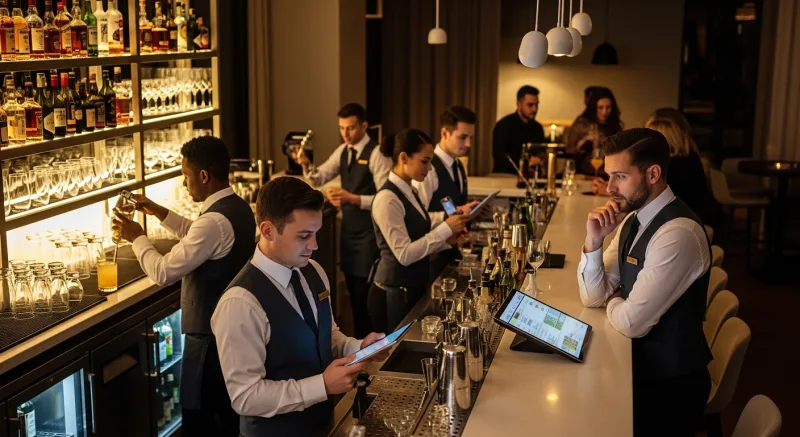
KwickOS labor optimization correlates historical sales data with upcoming events, weather forecasts, and local calendars to recommend staffing levels for each shift. The system knows that home football games increase Saturday revenue by 45% and recommends adding two bartenders and a barback. It knows that the first warm Saturday in April brings an outdoor seating rush and adjusts accordingly.
The AI also identifies optimal shift start times. Instead of scheduling all bartenders at 4 PM for a shift that does not peak until 8 PM, the system staggers arrivals: two at 4 PM for happy hour, one more at 6 PM for the dinner transition, two more at 8 PM for the evening rush. This reduces labor hours by 8-12 per week while maintaining coverage during every demand period.
Menu Engineering: What to Feature, What to Kill
Every cocktail menu has stars (high profit, high sales), puzzles (high profit, low sales), plowhorses (low profit, high sales), and dogs (low profit, low sales). Traditional menu engineering requires a spreadsheet, cost calculations for every drink, and manual categorization. Most bar owners do this annually if they do it at all.
KwickOS performs continuous menu analysis. The AI identifies that your $14 Old Fashioned is a star (high margin, consistent seller) while your $16 Espresso Martini is a plowhorse (high sales but ingredient costs eat the margin). It suggests raising the Espresso Martini to $17 (the AI's demand model shows minimal volume impact at a $1 increase) and positioning the Old Fashioned more prominently on the menu to increase its already-strong sales.
For seasonal cocktails, the AI tracks when a new addition peaks and when it fades. Your summer watermelon cocktail sold 15 per night in July, 8 in August, and 3 in September. The system recommends removing it from the menu in mid-August before it becomes dead inventory and replacing it with the fall menu two weeks earlier than planned.
Why Toast and Square Fall Short for Bars
Toast's bar features are adapted from its restaurant platform. Tab management exists, but real-time pour cost tracking does not. Toast cannot tell you which bartender is overpouring or predict when your keg will kick. Its loyalty program is generic — the same structure whether you run a steakhouse or a dive bar.
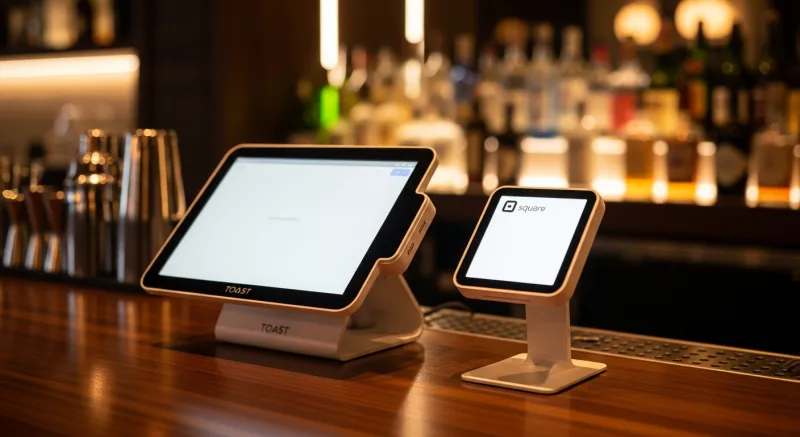
Square's bar capabilities are even more limited. Square treats a bar like any retail transaction: item in, payment out. It has no concept of pour cost variance, keg depletion modeling, or bartender-specific performance tracking. Square's inventory counts bottles. It does not track ounces within bottles.
Neither platform offers AI phone handling for event bookings. Neither segments loyalty customers by behavioral profile. Neither predicts draft beer demand based on weather and local events.
KwickOS was designed as an operating system that adapts to the specific operational DNA of each business type. For bars, that means understanding that your inventory depletes by the ounce, your demand shifts by the hour, and your profitability lives or dies in the three percentage points between a good pour cost and a bad one.
Bar owners ready for smarter operations: Call (888) 355-6996 or visit KwickOS.com to see AI-powered bar management in action.
AI + Loyalty: Smarter Customer Retention
KwickOS combines AI insights with built-in loyalty tools to do something no other POS can: predict which customers are about to stop coming in and automatically re-engage them.
The gift card and loyalty system is not just a punch card — it is connected to AI-powered analytics that identify spending patterns, predict churn risk, and suggest targeted promotions. A customer who used to visit weekly but has not been in for 3 weeks? The system flags them and can trigger an automatic points bonus or e-gift card offer via SMS.
- Smart gift cards — AI suggests optimal gift card denominations based on your average ticket size
- Predictive loyalty — identifies at-risk customers before they leave, triggers re-engagement
- Points optimization — automatically adjusts earn rates during slow periods to drive traffic
- Membership insights — shows which VIP tiers generate the most lifetime value
All included. No add-on fees. Toast charges $75/month for basic loyalty without any AI component.
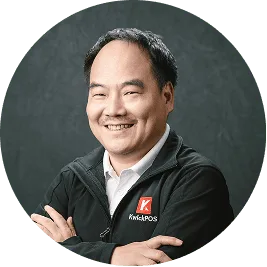
Founder & CIO of KwickOS · 30 Years IT · 20 Years Restaurant Industry
Tom built KwickOS after decades running restaurants and IT companies. Today KwickOS serves 5,000+ businesses across 50 states.