New York Nightlife Meets AI: How Manhattan Bars Are Cutting Pour Costs by 22%
Updated March 2026 · 13 min read
For New York business owners searching for New York Nightlife Meets AI, here's what the top operators already know. New York City has 27,000 restaurants competing for 8.3 million residents and 60 million annual tourists in 302 square miles. The math is staggering: 89 restaurants per square mile. Within any given block in Manhattan, a diner can choose from 15-20 options without crossing a street. Every restaurant and bar in the five boroughs operates under a simple economic truth: your rent does not care whether tonight is busy or dead. The $85 per square foot you pay for a 1,200 square foot space in the East Village costs $102,000 annually whether you do $2 million in revenue or $800,000.
This reality makes New York the most data-sensitive restaurant market on earth. Every underperforming hour costs more in NYC than anywhere else because the fixed costs per hour are the highest in the country. A bar that underperforms its pour cost by 3 points is bleeding margin faster in Manhattan than the same bar would in any other city. A restaurant that turns tables at 1.8 instead of 2.2 during Saturday dinner is leaving $1,500 on the table that night — $78,000 annually — which in NYC might be the difference between lease renewal and closure.
AI-powered POS systems are finding their most receptive market in New York because NYC operators cannot afford to guess. The margin for error that exists in lower-cost markets simply does not exist at $85-150 per square foot rent and $16+ minimum wage.
Revenue Per Square Foot: The NYC Metric That AI Maximizes
In New York, the most important business metric is not revenue per hour or profit margin. It is revenue per square foot. A 900 square foot restaurant paying $76,500 in annual rent needs to generate at least $850 per square foot in annual revenue to cover rent at 10% of sales. At 2.5 table turns per night with 30 seats, average check of $55, and 350 operating nights, the math barely works: $55 x 30 x 2.5 x 350 = $1,443,750 / 900 sqft = $1,604/sqft. Tight but viable. Drop to 2.0 turns and revenue falls to $1,155,000 — $1,283/sqft — and the business model strains.
KwickOS AI maximizes revenue per square foot through table turn optimization, average check enhancement, and gap-filling promotions. The system identifies that your 4-top tables turn 15% slower than your 2-tops because parties of 3-4 linger over dessert and coffee. It recommends dessert-first presentation (offer dessert while clearing entrees rather than after entree plates are cleared) to shave 8 minutes off the 4-top turn time without rushing the guest experience.
For NYC bars specifically, the AI calculates revenue per linear foot of bar rail. A 20-foot bar rail that accommodates 10 bar-seated customers generates revenue based on drinks per customer per hour, average drink price, and turnover rate. The system identifies that Friday customers at the rail order 2.8 drinks in 75 minutes while Tuesday customers order 1.4 drinks in 90 minutes. The Friday rail generates $168/hour while Tuesday generates $56/hour — data that informs Tuesday promotional strategies to close the gap.
Pour Cost Intelligence for the $18 Cocktail Market
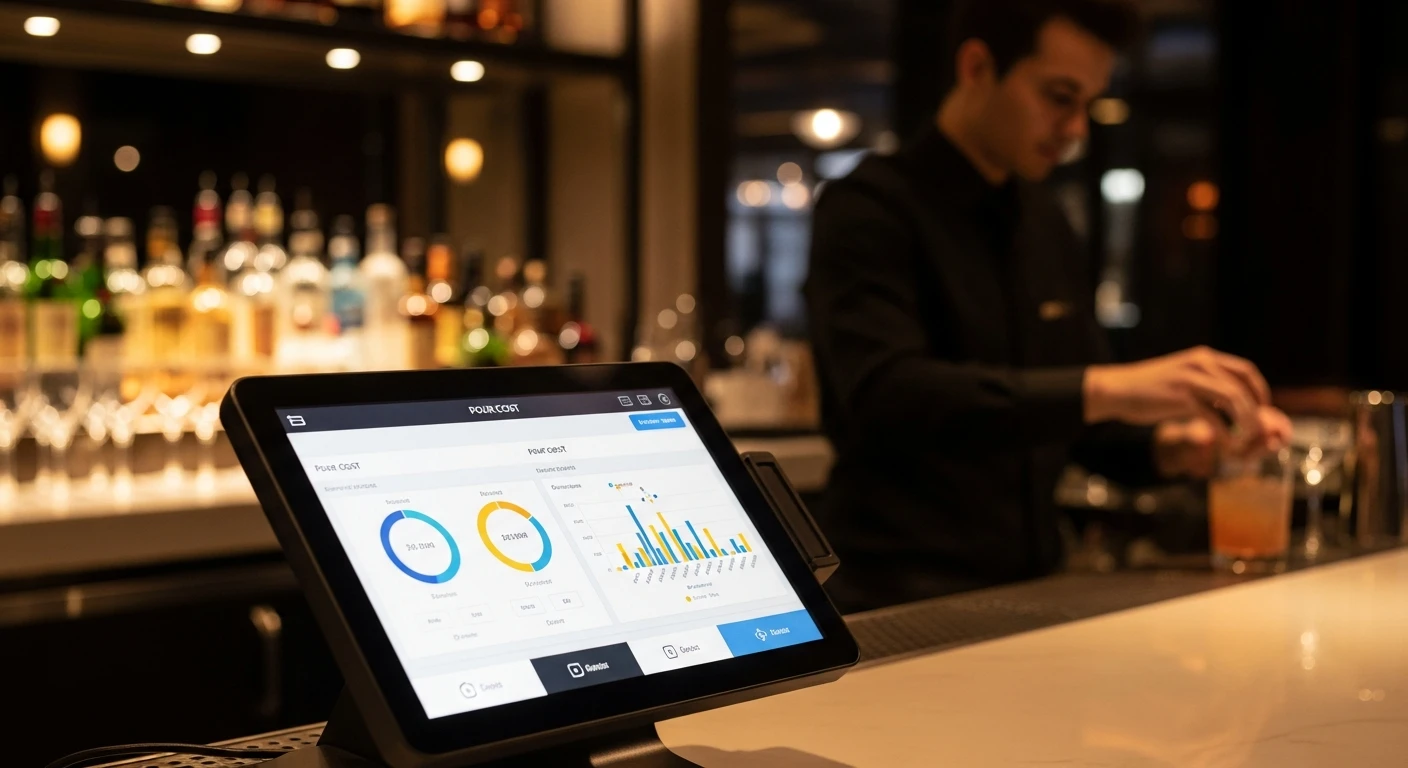
New York cocktails average $16-22, making the city the highest-price cocktail market in the country. At those prices, pour cost margins appear healthy: an $18 cocktail with $3.50 in ingredients runs 19.4% pour cost, well within the 18-24% target. But NYC's high volume amplifies any variance. A bar pouring 400 cocktails per night with a 2% pour cost variance (actual 21.4% versus target 19.4%) loses $14.40 per night. That is $5,256 annually in invisible margin loss from a variance most bar owners would consider negligible.
KwickOS AI tracks pour cost in real time at the bartender level. It identifies that Bartender A's station consistently runs 2.5% over target while Bartender B's station runs 0.8% under target. The variance correlates with Bartender A's heavier pour on premium spirits — a quality-focused instinct that costs the bar $18 per shift. The AI does not recommend cutting quality. It identifies the specific spirits being overpoured and recommends measured pours for those items specifically, preserving the craft while controlling the cost.
For wine programs, the AI tracks glass-pour waste. A bottle of wine yields 5 standard pours. If your staff is pouring 4.6 glasses per bottle (generous pours), you are giving away 8% of your wine inventory. On a wine program doing $300,000 annually, that is $24,000 in free wine. The system flags wines where per-bottle yield is below standard and identifies which servers or bartenders are responsible.
Delivery in the Densest Market: AI Dispatch for 5-Block Radiuses
NYC delivery operates in a fundamentally different mode than suburban delivery. Delivery radiuses are tiny — 5-15 blocks rather than 5-15 miles. Deliveries are by bicycle or foot, not car. The density of orders per square mile is 10-50x higher than suburban markets. And third-party delivery commissions are just as painful: 20-30% on every order regardless of the 3-block delivery distance that takes 7 minutes.
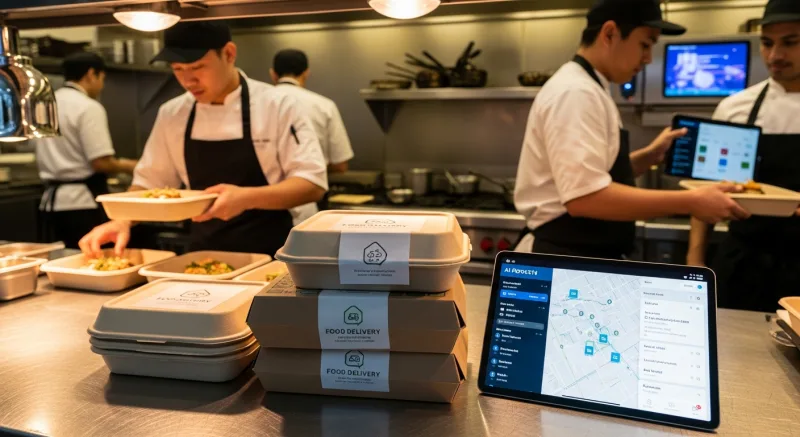
KwickOS with KwickDriver adapts to NYC's delivery model with flat $2 per delivery pricing that makes short-distance delivery economically rational. A $25 delivery order to an apartment 4 blocks away costs $2 through KwickDriver versus $5-7.50 through DoorDash. Over 80 deliveries per day (typical for a busy NYC restaurant), the daily savings are $240-440, or $87,600-160,600 annually.
The AI optimizes delivery batching for NYC's unique density. In a suburban market, batching means holding an order for a nearby address. In Manhattan, batching means a single bike courier delivering to three different apartments in the same building or adjacent buildings within a 2-block radius. The AI identifies building-clustered orders and batches them for single-trip delivery, tripling courier efficiency without adding delivery time for any individual customer.
The Flushing-to-Manhattan Pipeline: Multi-Location AI for NYC
NYC's restaurant groups often operate across boroughs with dramatically different economics. A dim sum restaurant in Flushing (rent: $30/sqft) and a modern Chinese restaurant in Chelsea (rent: $95/sqft) share cuisine DNA but operate in different economic realities. Flushing survives on volume and value. Chelsea survives on check average and experience. Managing both with the same operational assumptions is a recipe for failure at one or both locations.
KwickOS AI provides location-specific intelligence within a unified management view. The Flushing location's demand model reflects its weekend dim sum rush (400+ covers Saturday-Sunday), price-sensitive customer base (average check: $22), and high cash transaction ratio (35%). The Chelsea location's model reflects its smaller weekend evening service (120 covers), premium customer base (average check: $65), and nearly cashless operation (95% card transactions). Each location receives customized scheduling, inventory, and pricing recommendations while the owner views both on a single dashboard.
For Chinatown-to-Midtown operators, KwickOS's multilingual capability is essential. The Chinatown kitchen runs in Chinese. The Midtown front of house runs in English. Both locations' data feeds into unified reporting in whichever language the owner prefers.
Loyalty in a City of One-Timers and Regulars
NYC's customer base splits into two distinct populations: neighborhood regulars who visit weekly (20-30% of revenue) and one-time visitors — tourists, commuters, random walk-ins — who will never return (40-60% of revenue). The remaining 10-30% are occasional visitors who could become regulars with the right incentive.
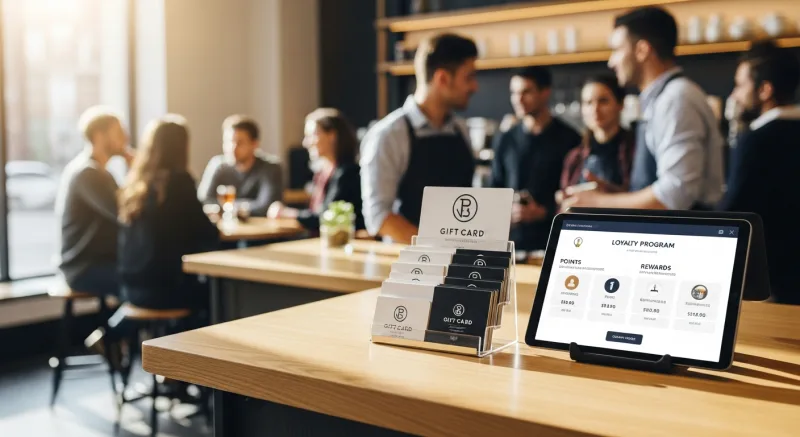
KwickOS AI identifies and targets the convertible middle segment. A customer who visited twice in a month but has not been in for three weeks is the ideal loyalty target — they liked the restaurant enough to return but have not formed a habit. The system sends a precisely timed offer: a complimentary appetizer on their next visit, valid for 7 days. The urgency and specificity convert at 28% compared to 8% for generic email blasts.
For tourists and one-timers, the AI optimizes for maximum single-visit revenue rather than retention. Upsell prompts on kiosks and server terminals suggest higher-margin items and premium additions. The system identifies that tourist-heavy time periods (weekend lunch in Times Square, evening service near Broadway) are the windows where premium pricing is most accepted and trains the promotional engine accordingly.
Gift cards in NYC serve a unique market: corporate entertainment and holiday gifting in the city with the highest gift card spend per capita. KwickOS identifies corporate buyers (multiple cards, high denominations, invoice requests) and creates enterprise gift card accounts with bulk pricing and branded packaging options. A corporate client who purchases $5,000 in gift cards annually for client entertainment is worth cultivating with white-glove service that no generic loyalty program provides.
KwickPhone for NYC's Phone-Hostile Environment
NYC restaurants are notoriously difficult to reach by phone. The ambient noise level in a Manhattan restaurant at 8 PM makes phone conversations nearly impossible for the host. Meanwhile, 30-40 calls per night come in for reservations, takeout orders, and event inquiries. Each unanswered call is a potential $50-200 in lost revenue.
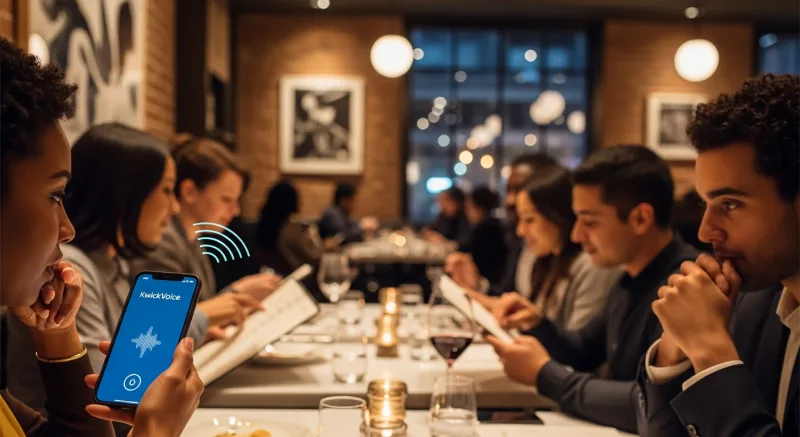
KwickPhone handles these calls in a quiet AI environment where street noise, kitchen clatter, and dining room conversation do not exist. Reservation requests are processed against real-time availability. Takeout orders are entered with precision that human phone-takers in a noisy restaurant cannot match. The system processes calls in English, Chinese, and Spanish — covering the three most common languages in NYC restaurant phone interactions.
For NYC's event-heavy restaurant market, KwickPhone captures private dining and event inquiries that arrive during service. A caller interested in booking a private room for 40 people next month gets a detailed response: available dates, price per person options, deposit requirements, and a follow-up callback slot with the events manager. This structured capture prevents the "we'll call you back" promise that results in a forgotten note and a lost $3,000 booking.
NYC's Inspection-Heavy Environment and AI Compliance
The NYC Department of Health grades restaurants on an A/B/C system that is displayed prominently in every restaurant window. An "A" grade is essential — studies show that a grade drop from A to B reduces revenue by 5-10%. The grading system is based on violation points accumulated during surprise inspections, with food temperature management, pest evidence, and hygiene practices as the primary failure categories.
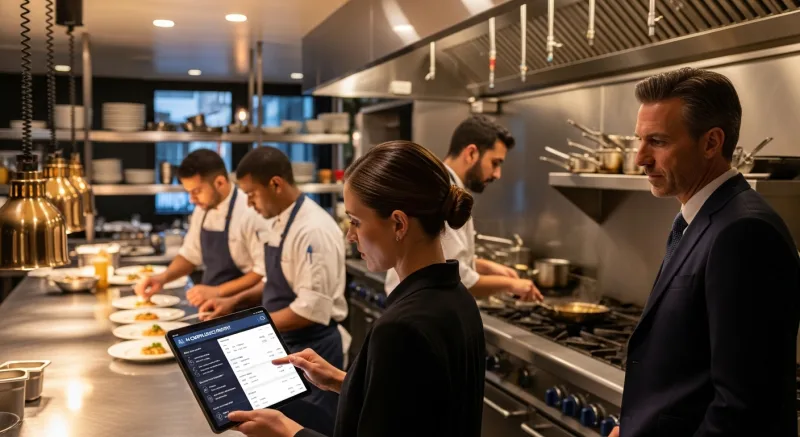
KwickOS integrates food safety protocols into kitchen display workflows. Temperature check reminders, holding-time alerts, and FIFO rotation prompts appear on the KDS during service. Each compliance action is logged with a timestamp, creating documentation that satisfies inspectors and protects the restaurant's grade. The AI identifies compliance gaps — temperature checks that are consistently missed during the Friday rush, holding-time alerts that are dismissed without action — and recommends process adjustments before they become inspection violations.
Why NYC Operators Are Moving Beyond Toast and Square
Toast's 2.99% processing rate on NYC's high average checks ($35-65 per person) generates annual processing fees of $30,000-70,000 for a single location. An independent processor at 2.0-2.3% saves $8,000-25,000 per location per year. For a 3-location group, KwickOS's processor freedom saves enough to pay for an additional full-time employee.
Toast's cloud-dependent architecture is a liability in a city where underground fiber gets cut during construction more frequently than anyone admits. A midtown restaurant that loses internet during the 8 PM rush on a Saturday needs a POS that keeps working. KwickOS's local processing handles the $15,000 evening without interruption while Toast shows a loading spinner.
Square is increasingly rare in NYC's restaurant scene because its simplicity cannot handle the complexity of multi-location groups, high-volume bar operations, event management, and the granular analytics that NYC's razor-thin margins demand.
NYC restaurant and bar owners: Call (888) 355-6996 or visit KwickOS.com to see AI-powered operations built for the world's most demanding food market.
AI + Loyalty: Smarter Customer Retention
KwickOS combines AI insights with built-in loyalty tools to do something no other POS can: predict which customers are about to stop coming in and automatically re-engage them.
The gift card and loyalty system is not just a punch card — it is connected to AI-powered analytics that identify spending patterns, predict churn risk, and suggest targeted promotions. A customer who used to visit weekly but has not been in for 3 weeks? The system flags them and can trigger an automatic points bonus or e-gift card offer via SMS.
- Smart gift cards — AI suggests optimal gift card denominations based on your average ticket size
- Predictive loyalty — identifies at-risk customers before they leave, triggers re-engagement
- Points optimization — automatically adjusts earn rates during slow periods to drive traffic
- Membership insights — shows which VIP tiers generate the most lifetime value
All included. No add-on fees. Toast charges $75/month for basic loyalty without any AI component.
AI + Loyalty: Smarter Customer Retention
KwickOS combines AI insights with built-in loyalty tools to do something no other POS can: predict which customers are about to stop coming in and automatically re-engage them.
The gift card and loyalty system is not just a punch card — it is connected to AI-powered analytics that identify spending patterns, predict churn risk, and suggest targeted promotions. A customer who used to visit weekly but has not been in for 3 weeks? The system flags them and can trigger an automatic points bonus or e-gift card offer via SMS.
- Smart gift cards — AI suggests optimal gift card denominations based on your average ticket size
- Predictive loyalty — identifies at-risk customers before they leave, triggers re-engagement
- Points optimization — automatically adjusts earn rates during slow periods to drive traffic
- Membership insights — shows which VIP tiers generate the most lifetime value
All included. No add-on fees. Toast charges $75/month for basic loyalty without any AI component.
AI + Loyalty: Smarter Customer Retention
KwickOS combines AI insights with built-in loyalty tools to do something no other POS can: predict which customers are about to stop coming in and automatically re-engage them.
The gift card and loyalty system is not just a punch card — it is connected to AI-powered analytics that identify spending patterns, predict churn risk, and suggest targeted promotions. A customer who used to visit weekly but has not been in for 3 weeks? The system flags them and can trigger an automatic points bonus or e-gift card offer via SMS.
- Smart gift cards — AI suggests optimal gift card denominations based on your average ticket size
- Predictive loyalty — identifies at-risk customers before they leave, triggers re-engagement
- Points optimization — automatically adjusts earn rates during slow periods to drive traffic
- Membership insights — shows which VIP tiers generate the most lifetime value
All included. No add-on fees. Toast charges $75/month for basic loyalty without any AI component.

Founder & CIO of KwickOS · 30 Years IT · 20 Years Restaurant Industry
Tom built KwickOS after decades running restaurants and IT companies. Today KwickOS serves 5,000+ businesses across 50 states.