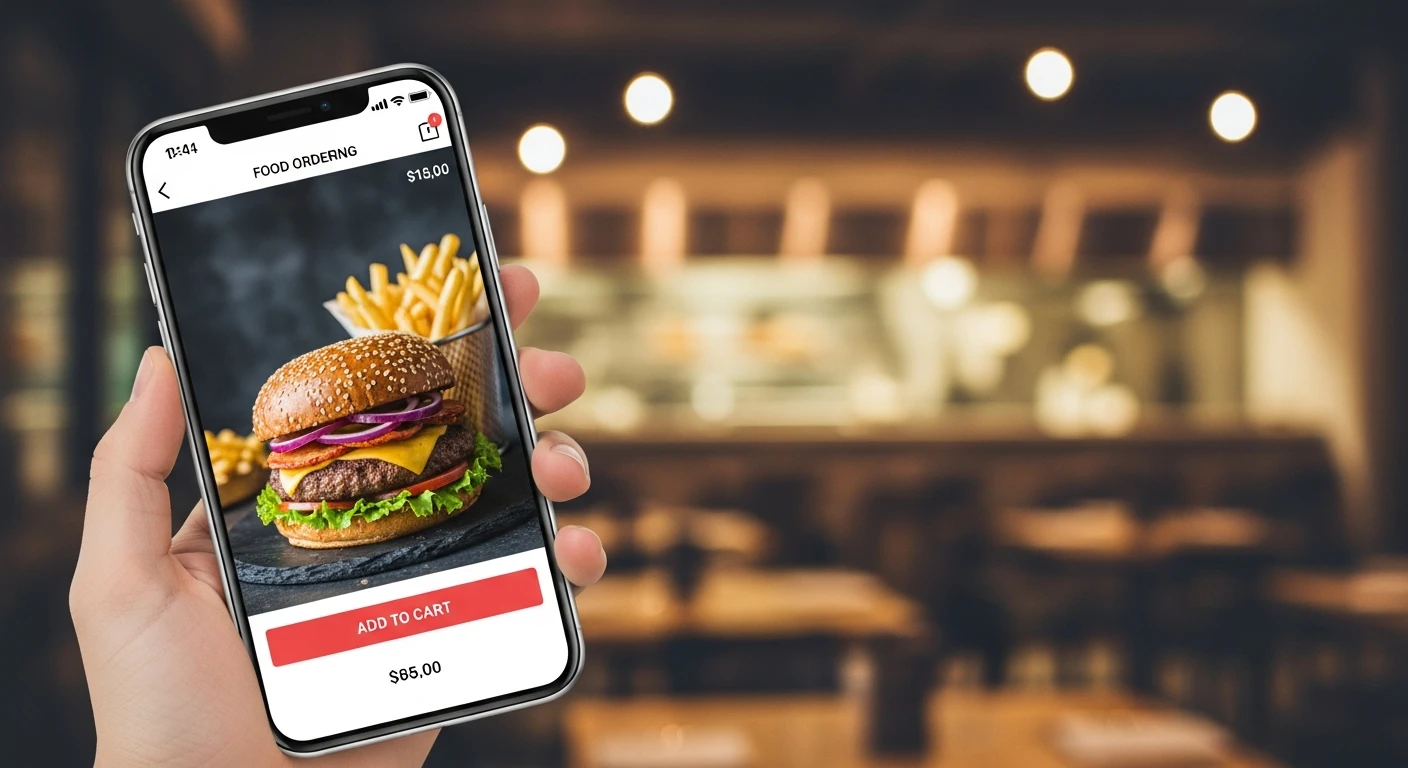
The best Commission-Free Online Ordering handles everything from checkout to closing — without extra apps or workarounds. Here is a number every restaurant owner should write on their office wall: $72,000.
That is not a renovation estimate. It is not the cost of a new walk-in cooler. It is the amount a restaurant doing $20,000 per month in DoorDash orders hands over in commissions every single year — and never sees again.
The math: $20,000/month in third-party orders × 30% average commission = $6,000/month walking out the door. Over 12 months, that is $72,000 — enough to hire a full-time line cook, fund a kitchen remodel, or open a second location's security deposit.
At a 5% net margin (industry average), you would need to generate $1,440,000 in additional revenue to offset that commission loss through sales alone.
The cruel irony? That $72,000 is coming from your food, prepared by your cooks, packed by your staff, and ordered by customers who think they are buying from you. But a third of the ticket goes to a company in San Francisco that has never chopped an onion.
There is a better way. Thousands of restaurants have figured it out. In this article, we are going to walk through the three models for restaurant online ordering, run the real numbers on each, and show you exactly how operators are keeping 100% of their online revenue — without losing the discovery that delivery apps provide.
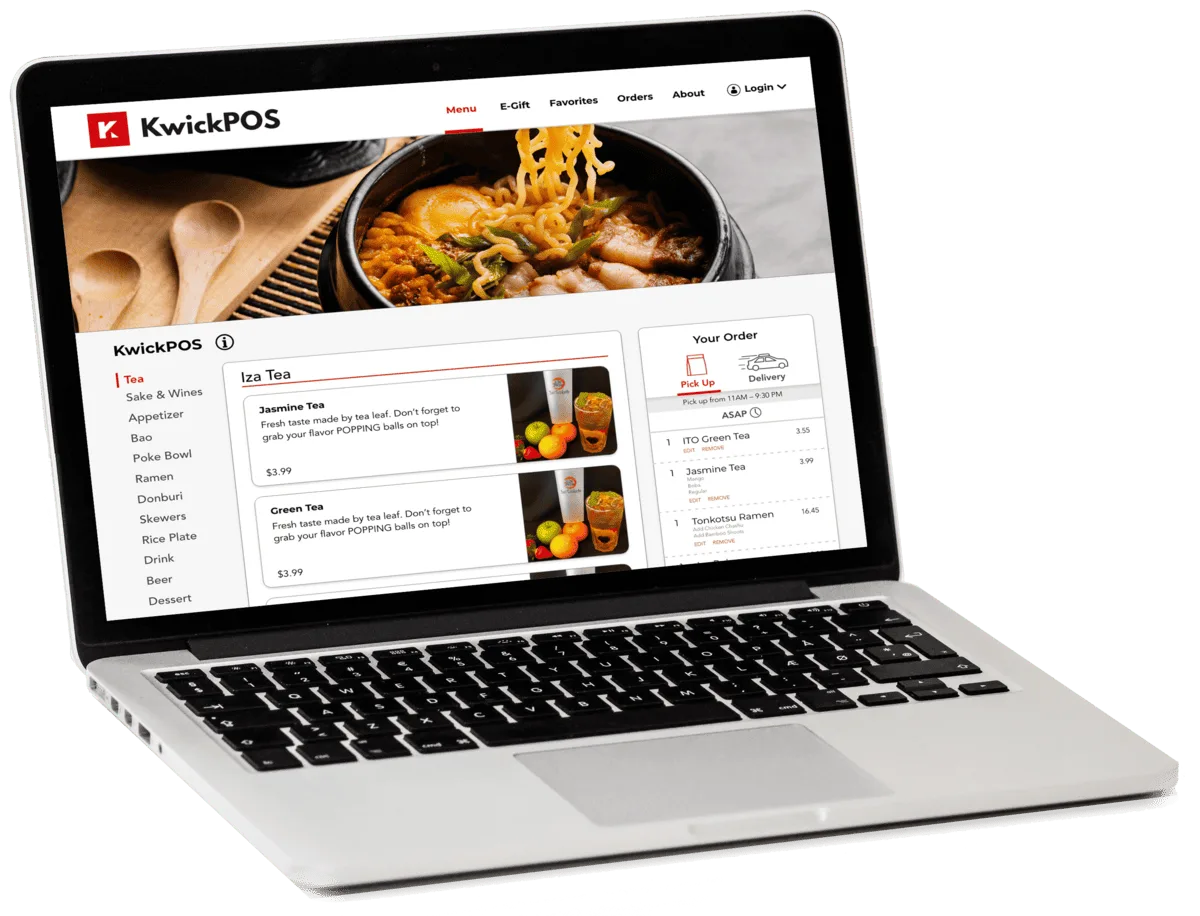
Commission-free online ordering, branded to your restaurant, built into your POS — not bolted on as an afterthought.
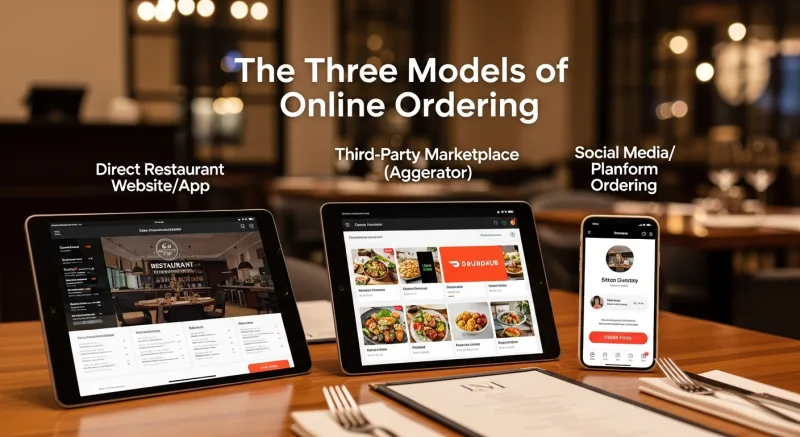
The Three Models of Restaurant Online Ordering
Not all online ordering is the same. The differences come down to who owns the customer relationship, who takes the money, and how much of that money you actually keep. Let us break down each model with the specificity that matters: dollars.
Model 1: Third-Party Marketplaces (DoorDash, UberEats, Grubhub)
This is the model most restaurants start with because it requires zero effort. You sign up, upload your menu, and orders come in. The platform handles the app, the marketing, the customer support, and the delivery driver. In return, they take a sizable percentage of every order.
- DoorDash: 15–30% commission per order (varies by plan tier)
- UberEats: 15–30% commission per order
- Grubhub: 15–25% commission per order
On a $40 order at 30% commission, you lose $12. Your food cost was probably $12–14 as well. That means you made that order, packaged it, handed it off, and broke even or lost money. The platform made $12 for building an app.
Who owns the customer? The platform does. You do not get the customer's email. You do not get their phone number. You cannot remarket to them. If DoorDash raises fees tomorrow, you have no leverage because you have no direct relationship with the person eating your food.
Model 2: Commission-Free Platforms with Monthly Fees (ChowNow, etc.)
The second wave of online ordering came from companies that said: "What if we charge a flat monthly fee instead of commissions?" Platforms like ChowNow, Menufy, and others charge $99–$199 per month for a branded ordering website and app.
- Monthly fee: $99–$199/month ($1,188–$2,388/year)
- Commission: 0% on orders (some charge credit card processing on top)
- Setup fees: Some charge $200–$500 upfront
This is a genuine improvement. On $15,000/month in online orders, you are paying $199/month instead of $2,250–$4,500/month in marketplace commissions. The savings are real.
The catch: These platforms run alongside your POS, not inside it. That means a separate tablet on your counter, separate reporting, no integration with your in-house loyalty program, and staff toggling between systems during the dinner rush. Orders come in on one screen. Your kitchen tickets print from another. Inventory does not sync. It works, but it creates operational friction that costs you speed and accuracy.
Model 3: Built-In POS Online Ordering (KwickMenu + KwickOS)
The third model eliminates the false choice entirely. Instead of paying a separate company for online ordering — whether by commission or subscription — the ordering system is built directly into the POS you already use to run your restaurant.
- Monthly fee: $0 extra — included with your KwickOS POS system
- Commission: 0% on every order, forever
- Setup fee: $0 — activated from your existing POS dashboard
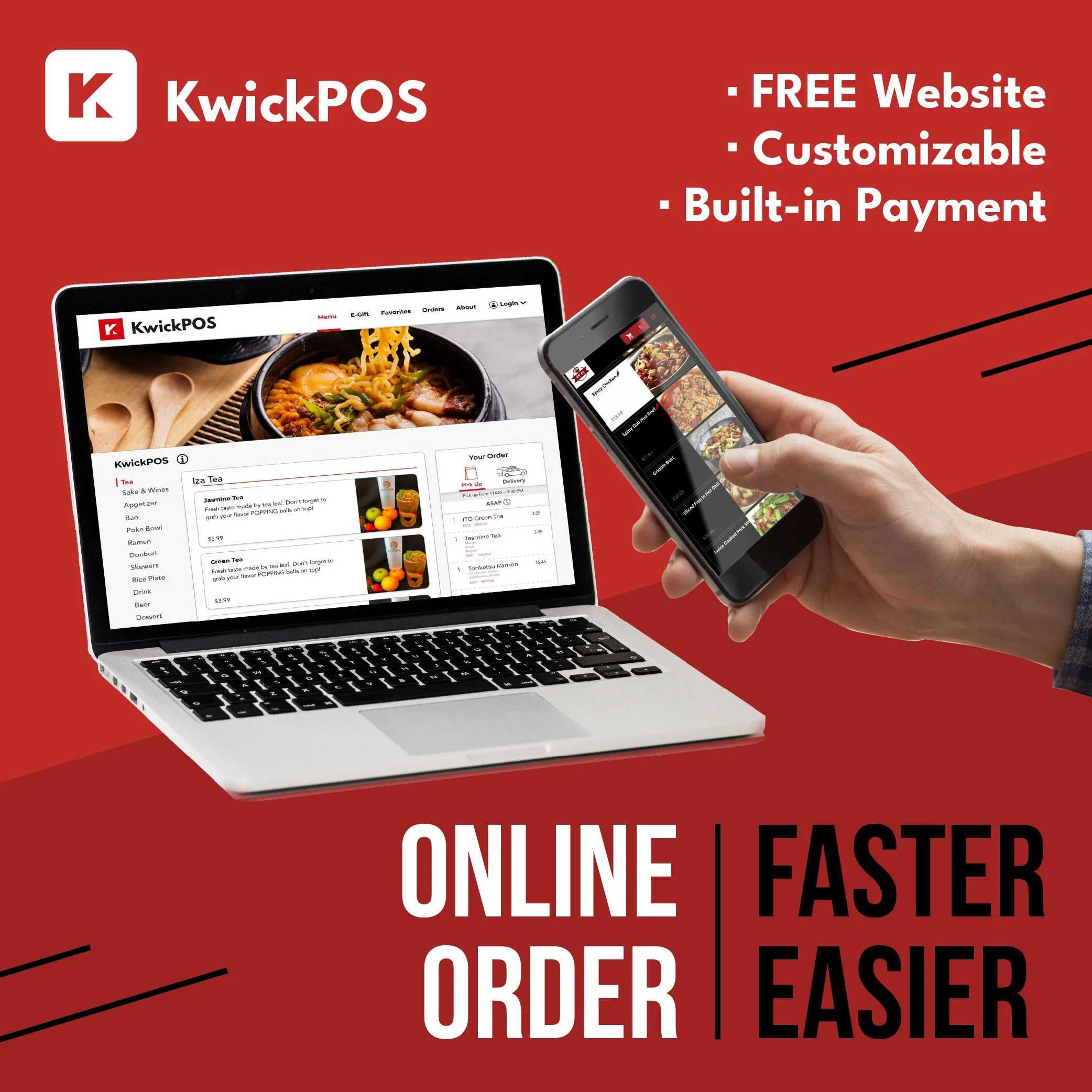
KwickMenu is the online ordering module inside KwickOS. It is not a bolt-on. It is not a third-party integration. When a customer places an order on your branded KwickMenu website, that order flows directly into the same system printing your dine-in tickets. Same kitchen display. Same inventory count. Same reporting dashboard. Same loyalty program.
Who owns the customer? You do. Every email, every phone number, every order history — it is yours. You can send targeted promotions, build loyalty rewards, and remarket to your best customers without paying a middleman.
The Real Dollar Comparison: $15,000/Month in Online Orders
Theory is useful. Math is better. Let us take a restaurant generating $15,000 per month in online orders and run the numbers across all three models over a full year.
| Cost Factor | DoorDash (30%) | ChowNow ($149/mo) | KwickMenu (KwickOS) |
|---|---|---|---|
| Monthly Online Revenue | $15,000 | $15,000 | $15,000 |
| Commission Rate | 30% | 0% | 0% |
| Monthly Commission Paid | $4,500 | $0 | $0 |
| Monthly Platform Fee | $0 | $149 | $0 (included with POS) |
| Annual Commissions | $54,000 | $0 | $0 |
| Annual Platform Fees | $0 | $1,788 | $0 |
| Total Annual Cost | $54,000 | $1,788 | $0 |
| Revenue You Keep (Annual) | $126,000 | $178,212 | $180,000 |
| Annual Savings vs. DoorDash | — | +$52,212 | +$54,000 |
| Separate Tablet Required? | Yes | Yes | No — built into POS |
| Customer Data Ownership | Platform owns it | Shared | 100% yours |
| Loyalty Integration | None | Limited / extra cost | Built-in (KwickOS) |
Read that last row carefully. The difference between DoorDash and KwickMenu for a restaurant doing $15,000/month in online orders is $54,000 per year. Over a 5-year lease term, that is $270,000 in commissions avoided. For a two-location restaurant, double it: $540,000.
What KwickMenu Actually Does (Feature by Feature)
Commission-free is the headline, but operational integration is the reason 5,000+ restaurants on KwickOS use KwickMenu as their primary ordering channel. Here is what is included at zero additional cost:
Custom Branded Ordering Website
Every restaurant gets a fully branded online ordering site — your logo, your colors, your photography. Customers see your brand, not a generic marketplace. The site is mobile-optimized, fast-loading, and designed for conversion. No coding required. Your menu syncs directly from your POS, so when you 86 an item in the kitchen, it disappears from the website in real time.
Future Ordering (Scheduled Pickup & Delivery)
Customers can schedule orders hours or days in advance. A catering order for Friday's office lunch can be placed on Tuesday. This alone changes your prep workflow — you know exactly what is coming and when, reducing waste and improving kitchen efficiency.
Email & SMS Order Alerts
Automated notifications go to both the restaurant and the customer at every stage: order received, order in preparation, order ready for pickup. Customers stop calling to ask "is my order ready?" Your front-of-house staff gets 15 minutes back per shift.
Loyalty Program Integration
Online orders earn the same loyalty points as dine-in orders because they run through the same system. This is the structural advantage of built-in ordering vs. bolt-on platforms. A customer who orders online three times and earns a free appetizer will keep ordering directly from you — not from DoorDash, where their loyalty points do not exist.
KwickDriver: Flat-Rate Delivery
For restaurants that need delivery but do not want to hire drivers, KwickDriver provides on-demand delivery at a transparent price: $2 flat fee + $6.99 per 5 miles. No percentage of the order. No surge pricing. A $40 delivery order within 5 miles costs $8.99 in delivery fees — paid by the customer, not absorbed by the restaurant. Compare that to $12 in DoorDash commissions on the same order.
A simple receipt insert or table tent with a QR code turns every dine-in customer into a direct online ordering customer.
Case Study: Tiger Sugar International Dessert
Tiger Sugar International Dessert — 2 Locations, 2 Kiosks, Zero Commissions
Tiger Sugar is a popular international dessert brand known for its brown sugar boba and specialty drinks. Their two KwickOS-powered locations faced the same dilemma most fast-casual restaurants face: third-party apps were driving volume, but the margins on a $7 boba tea cannot absorb a 30% commission.
Their approach was methodical and worth studying.
The Setup
Each location runs 2 KwickOS self-service kiosks alongside the counter POS. Every transaction — kiosk, counter, or online — runs through the same system. The kiosks handle the in-store rush, freeing staff to focus on preparation speed rather than order-taking.
The Direct Ordering Flywheel
Here is the strategy that other restaurants should steal: every electronic receipt includes a direct ordering link. When a customer pays at the kiosk or counter, their emailed receipt contains a prominent link to Tiger Sugar's KwickMenu ordering page. The message is simple: "Skip the line next time — order ahead and earn rewards."
This creates a flywheel:
- First visit: Customer discovers Tiger Sugar (possibly through DoorDash or foot traffic)
- In-store purchase: Electronic receipt includes direct ordering link + loyalty signup
- Second order: Customer orders directly through KwickMenu — earns loyalty points
- Third order and beyond: Customer is now a direct-ordering regular. Zero commission. Full margin.
The genius is that they are not fighting DoorDash. They are using DoorDash as an acquisition channel for the first order, then converting those customers to direct ordering for every subsequent order. The commission on order #1 becomes a customer acquisition cost. Orders #2 through #200 are commission-free.
The Tiger Sugar math: If a customer's first DoorDash order costs $2.10 in commission (30% of a $7 drink), but that customer goes on to place 50 direct orders over the next year, the effective acquisition cost is $0.04 per order. That is cheaper than any digital ad campaign running today.
"But DoorDash Brings Me New Customers"
This is the most common objection, and it is partially valid. Third-party marketplaces do bring discovery. People searching "boba near me" on DoorDash will find restaurants they have never heard of. That has real value.
The mistake is treating discovery and fulfillment as the same thing. They are not.
DoorDash is an excellent discovery tool. It is a terrible fulfillment partner for repeat customers. The strategic move is to use each tool for what it does best:
The Dual-Channel Strategy
- Use DoorDash/UberEats for discovery: Keep your listing active. Let new customers find you. Accept that the commission on a first-time order is a customer acquisition cost, not a permanent tax.
- Redirect repeat customers to direct ordering: Every receipt, every bag sticker, every table tent, every email should push customers to your branded KwickMenu site. Make the incentive clear and financial: "Order direct, earn rewards. $5 off your next order when you download our app."
- Use QR codes everywhere: On receipts, on packaging, on napkins, on the window. A QR code that links to your KwickMenu ordering page converts a DoorDash customer into a direct customer in 3 seconds.
- Reward direct ordering through loyalty: If your loyalty program only credits direct orders (not third-party orders), customers learn quickly where to place their next order.
Think of it like real estate: DoorDash is the billboard that gets someone to visit your property. KwickMenu is the property itself. You would never pay the billboard company 30% of your rent forever just because they sent the first tenant.
The Revenue Impact of Going Direct
Restaurants with online ordering see an average 30% revenue increase compared to those without any online channel. That figure comes from aggregated data across the KwickPOS restaurant network. But here is the nuance most articles miss: that 30% increase is only a 30% increase to your bottom line if you are keeping the revenue.
Let us do the math for three scenarios on a restaurant with $50,000/month in base (dine-in) revenue that adds online ordering:
Scenario A — Online ordering via DoorDash (30% commission):
New online revenue: $15,000/month
Commission: -$4,500/month
Net new revenue: $10,500/month (+21% actual increase)
Scenario B — Online ordering via ChowNow ($149/month):
New online revenue: $15,000/month
Platform fee: -$149/month
Net new revenue: $14,851/month (+29.7% actual increase)
Scenario C — Online ordering via KwickMenu ($0):
New online revenue: $15,000/month
Additional cost: $0
Net new revenue: $15,000/month (+30% actual increase)
The restaurant in Scenario A thinks it added 30% in revenue. In reality, after commissions, it added 21%. Nearly a third of the "growth" went to the delivery platform. The restaurant in Scenario C keeps every dollar of that growth and reinvests it into the business — better ingredients, higher wages, a second location.
Five Steps to Transition from Third-Party to Direct Ordering
You do not have to rip the bandage off overnight. Here is the proven transition playbook used by restaurants in the KwickOS network:
Step 1: Activate KwickMenu (Day 1)
If you are on KwickOS, KwickMenu is already available in your dashboard. Activate it, upload hero photos for your top 20 items, and set your pickup and delivery parameters. This takes less than an hour.
Step 2: Add QR Codes to Every Customer Touchpoint (Week 1)
Print table tents, receipt inserts, and bag stickers with a QR code linking to your KwickMenu ordering page. The message: "Order direct next time — skip the line, earn rewards." Cost: $30 at any print shop.
Step 3: Launch a Direct-Only Promotion (Week 2)
Offer a one-time incentive available only through direct ordering: free drink with first online order, 10% off orders over $25, or double loyalty points for the first month. This gives customers a financial reason to try the new channel.
Step 4: Enable Electronic Receipts with Ordering Links (Week 2)
Turn on email and SMS receipts through KwickOS. Every receipt becomes a remarketing channel — with your ordering link, your loyalty balance, and a prompt to reorder their last meal. This is exactly what Tiger Sugar does, and it converts at remarkable rates because the customer just had a positive experience with your food.
Step 5: Monitor and Optimize (Month 2+)
Track the ratio of third-party orders to direct orders weekly. Most restaurants in the KwickOS network see a shift from 80/20 (marketplace-heavy) to 40/60 (direct-heavy) within 90 days. Some aggressive operators hit 20/80 within six months. Every percentage point that shifts from marketplace to direct is pure margin recaptured.
Why 5,000+ Restaurants Run Online Ordering Through Their POS
There is a reason KwickMenu.com serves over 5,000 restaurants and drives significant search traffic in the online ordering space. The value proposition is not complicated. It is math.
Restaurants run on slim margins. The average full-service restaurant operates at 3–5% net profit. A 30% commission on a growing percentage of total revenue is not a cost of doing business — it is an existential threat to profitability. The restaurants that thrive in the next decade will be the ones that own their customer relationships and keep their revenue.
Commission-free online ordering is not a feature. It is a financial strategy. And when it is built into the POS system you already use to run every other part of your operation, there is no additional cost, no additional tablet, no additional login, and no additional headache.
Just the revenue you earned, staying where it belongs: in your restaurant.
Stop Paying Commissions on Your Own Customers
KwickMenu is included free with every KwickOS system. Zero commissions. Zero monthly fees. Your brand, your customers, your revenue.
See KwickMenu in ActionFree demo · No obligation · See real savings for your volume
KwickOS is the all-in-one business operating system for restaurants, retail, and beauty/spa businesses. KwickMenu, KwickPOS, KwickSign, KwickPhone, KwickPay, KwickPhoto, and KwickTracker are integrated modules that work independently or together. Serving 5,000+ businesses across North America. Learn more at KwickOS.com.