The average restaurant spends between 3% and 6% of revenue on marketing, yet most owners have no clear strategy for how that money gets spent or what it returns. In a landscape where new restaurants open every day and customer attention is fragmented across dozens of platforms, a disciplined marketing approach is no longer optional. It is a survival requirement.
This guide lays out 15 proven restaurant marketing strategies that work in 2026. Each strategy includes practical implementation steps, expected impact, and the tools you need to execute. Whether you are a new restaurant building awareness or an established operation looking to drive more repeat visits, these tactics deliver measurable results.
Foundation: Get These Right Before Anything Else
Strategy 1: Optimize Your Google Business Profile
Your Google Business Profile (GBP) is the single most important piece of digital real estate your restaurant owns. When someone searches "restaurants near me" or "best Thai food in [your city]," your GBP determines whether you appear in results and how compelling you look when you do.
Action steps to optimize your profile:
- Complete every field: Business name, address, phone, hours, website, menu link, attributes (outdoor seating, delivery, wheelchair accessible, etc.)
- Add high-quality photos: Upload at least 20 photos including your exterior, interior, popular dishes, drinks, and team. Update monthly with seasonal dishes and events
- Post weekly updates: Google Business posts (events, offers, updates) appear directly in search results and signal activity to the algorithm
- Respond to every review: Thank positive reviewers by name and address negative reviews professionally within 24 hours. This signals to potential customers that you care about the experience
- Keep hours accurate: Update holiday hours, special closures, and seasonal changes immediately. Nothing frustrates a potential customer more than driving to a restaurant that Google says is open but is actually closed
"Restaurants with complete Google Business Profiles receive 7x more clicks than those with incomplete profiles. It is the highest-ROI marketing activity for most local restaurants."
Strategy 2: Build a Fast, Mobile-First Website
Over 75% of restaurant searches happen on mobile devices. Your website needs to load in under 3 seconds and make it effortless for mobile visitors to find your menu, hours, location, and a way to order or reserve. Essential pages include:
- Homepage with your value proposition, hours, and location
- Menu page (not a PDF; use web-native text that search engines can read)
- Online ordering page (direct ordering, not a redirect to a third-party app)
- About page with your story, team, and sourcing philosophy
- Contact page with embedded Google Map and reservation or waitlist functionality
Strategy 3: Claim and Manage All Review Platforms
Beyond Google, claim your profiles on Yelp, TripAdvisor, Facebook, and any platform relevant to your area. Monitor reviews across all platforms and respond consistently. Aim for a 4.2+ star average across platforms. Below 4.0 stars, many potential customers will scroll past without a second look.
Customer Acquisition: Bring New People Through the Door
Strategy 4: Launch Direct Online Ordering
Third-party delivery platforms like DoorDash, Uber Eats, and Grubhub charge restaurants 15% to 30% commission on every order. For a $30 order, that is $4.50 to $9.00 going to the platform instead of your bottom line. Direct online ordering through your own website or app eliminates these commissions entirely.
Use third-party platforms for discovery (new customers finding you for the first time), but redirect repeat customers to your direct ordering channel through in-bag flyers, receipt messaging, and loyalty incentives. KwickOS includes built-in online ordering that integrates directly with your POS, so orders flow straight to your kitchen without commission fees.
| Order Channel | Commission | Revenue on $30 Order | Annual Impact (200 orders/week) |
|---|---|---|---|
| Third-party delivery app | 25% | $22.50 | -$78,000 in commissions |
| Direct online ordering (KwickOS) | 0% | $30.00 | $0 in commissions |
| Difference | - | $7.50 per order | $78,000 saved annually |
Strategy 5: Leverage Local SEO Content
Create content on your website that targets local search queries your potential customers are using. Blog posts, neighborhood guides, and event pages help your site rank for terms beyond just your restaurant name. Examples:
- "Best lunch spots in [neighborhood]" (include yourself naturally in the guide)
- "What to do in [area] this weekend" (pair with your weekend specials)
- "[Cuisine type] restaurants in [city]" with detailed descriptions of your offerings
- Event pages for seasonal menus, holiday dinners, and special events
Strategy 6: Partner with Local Businesses and Organizations
Cross-promotion with complementary local businesses extends your reach into established customer bases. Effective partnerships include:
- Hotels and Airbnbs: Provide menus or discount cards for guest welcome packets
- Office buildings: Offer corporate catering and group lunch delivery for nearby workplaces
- Gyms and fitness studios: Cross-promote healthy menu options to health-conscious customers
- Local events and festivals: Sponsor or participate in community events for visibility and sampling opportunities
- Other restaurants: Collaborate on multi-course dining events or "restaurant crawl" promotions with non-competing neighbors
Strategy 7: Run Targeted Social Media Advertising
Organic social media reach for businesses is minimal in 2026. To use social media as a customer acquisition channel, you need to invest in targeted advertising. The good news is that restaurant ads on Instagram and Facebook are highly effective because food is inherently visual and shareable.
Best practices for restaurant social ads:
- Target by geography: Set a radius of 5 to 10 miles around your restaurant location
- Use video content: Short-form video (15 to 30 seconds) of food preparation and plating outperforms static images by 2 to 3x in engagement
- Include a clear offer: "Get a free appetizer with your first order" outperforms generic brand awareness ads
- Retarget website visitors: Show ads to people who visited your website but did not place an order
- Budget $300 to $500 per month: Start small, test creative variations, and scale what works
Turn Marketing into Revenue with the Right Tools
KwickOS includes built-in CRM, loyalty programs, and direct online ordering so you can capture customer data and drive repeat visits without third-party tools or commissions.
Explore KwickOS Marketing ToolsCustomer Retention: Keep Them Coming Back
Strategy 8: Launch a Loyalty Program
Acquiring a new customer costs five to seven times more than retaining an existing one. A well-structured loyalty program incentivizes repeat visits and provides valuable customer data for targeted marketing. Effective loyalty program structures include:
- Points-based: Earn 1 point per dollar spent; redeem at thresholds (e.g., 100 points = $10 off)
- Visit-based: Every 10th visit earns a free entree or discount
- Tiered: Bronze, Silver, Gold levels with escalating rewards that incentivize higher spending frequency
The key to a successful loyalty program is integration with your POS system. When loyalty tracking happens automatically at checkout, enrollment is frictionless and customers actually use the program. Paper punch cards get lost; digital loyalty built into your POS does not.
Strategy 9: Build an Email and SMS Marketing List
Email and SMS are the most cost-effective marketing channels for restaurants, with SMS open rates above 95% and email delivering an average $36 return for every $1 spent. Build your list through:
- Loyalty program enrollment (captures email and phone at sign-up)
- Online ordering (customer provides contact information with every order)
- Wi-Fi sign-in (offer free Wi-Fi in exchange for an email address)
- Table-side QR codes that link to a sign-up page with an incentive
Send one to two messages per week. Focus on value: exclusive offers, new menu announcements, event invitations, and behind-the-scenes content. Avoid generic "come visit us" messages that train customers to ignore you.
Strategy 10: Use Digital Signage for In-Restaurant Upselling
Customers already in your restaurant are the easiest audience to market to. Digital menu boards and promotional displays increase average check size by 12% to 20% by visually merchandising high-margin items, combo deals, and limited-time offers.
KwickOS includes KwickSign, a digital signage module that integrates with your POS and menu system. Update promotions across all screens from a single dashboard, schedule daypart-specific content (breakfast specials in the morning, happy hour promotions at 4 PM), and display dynamic content that changes based on inventory levels or time of day.
Strategy 11: Create a Memorable Dining Experience Worth Sharing
The most powerful marketing is word of mouth, and word of mouth is driven by experiences worth talking about. Identify at least one "shareable moment" in your customer experience:
- A signature presentation for your most popular dish (tableside preparation, dramatic plating, unusual servingware)
- A distinctive interior design element that photographs well for social media
- An unexpected touch of hospitality (a complimentary amuse-bouche, a handwritten thank-you note with takeout orders)
- Interactive elements (build-your-own options, open kitchen views, seasonal DIY experiences)
Revenue Growth: Increase What Each Customer Spends
Strategy 12: Engineer Your Menu for Profit
Menu engineering is the science of designing your menu to guide customers toward high-margin items. Techniques include:
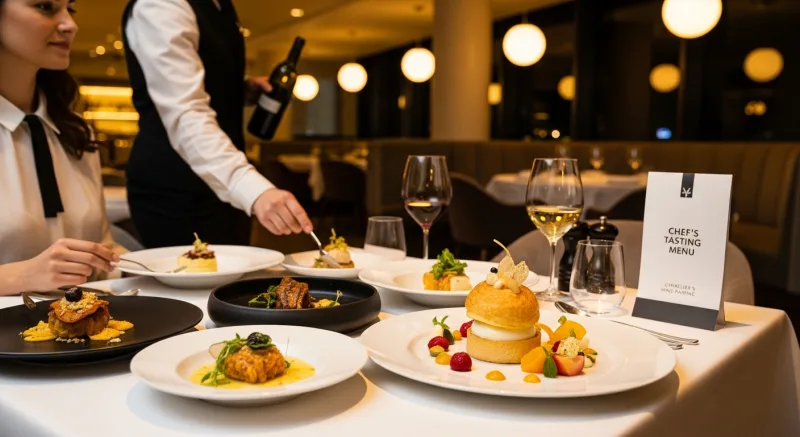
- Strategic placement: Place high-margin items in the top-right of each menu section (where eyes go first) or in boxed/highlighted callouts
- Anchor pricing: Include one premium-priced item in each category to make your target items seem reasonably priced by comparison
- Descriptive language: Items with vivid, sensory descriptions sell 27% more than items with plain names. "Pan-seared Atlantic salmon with lemon-herb butter" outsells "grilled salmon"
- Remove dollar signs: Menu pricing displayed without dollar signs (e.g., "18" instead of "$18.00") reduces price sensitivity
- Limit choices per category: Five to seven items per section reduces decision fatigue and speeds ordering
Strategy 13: Develop Catering and Private Event Revenue
Catering and private events can represent 10% to 25% of total revenue for restaurants that actively pursue them. Create a dedicated catering menu with clear pricing, minimum order sizes, and lead time requirements. Promote catering through:
- A dedicated catering page on your website with an inquiry form
- Business card-sized catering menus inserted with every takeout order
- Outreach to local businesses during corporate event planning seasons
- Partnerships with event planners and wedding venues
Strategy 14: Implement Strategic Promotions (Not Discounts)
Blanket discounting trains customers to wait for deals and erodes your perceived value. Instead, use strategic promotions that drive behavior without devaluing your brand:
| Promotion Type | Example | Goal |
|---|---|---|
| Daypart-shifting | $5 off any entree on Tuesday and Wednesday | Fill slow days without discounting peak periods |
| Bundle upsell | "Add a dessert and two drinks for $12" (vs. $18 individually) | Increase average check size |
| New item trial | Free sample of a new appetizer with any entree purchase | Drive trial and gather feedback on new menu items |
| Referral reward | "Bring a friend, you both get a free appetizer" | Acquire new customers through existing ones |
| Loyalty milestone | Free entree on your birthday or anniversary of first visit | Deepen loyalty and create emotional connection |
Strategy 15: Track Everything and Double Down on What Works
The most important marketing strategy is not a tactic at all. It is the discipline of measuring results and allocating resources toward what works. Every promotion, campaign, and channel should be tracked against specific metrics:
- Customer acquisition cost: Total marketing spend divided by new customers acquired
- Return on ad spend (ROAS): Revenue generated per dollar spent on advertising
- Repeat visit rate: Percentage of customers who return within 30, 60, and 90 days
- Average check size: Track by channel (dine-in, takeout, delivery, online) and by promotion
- Loyalty program engagement: Enrollment rate, redemption rate, and incremental spending by loyalty members vs. non-members
Your POS system is the central data source for most of these metrics. KwickOS provides detailed reporting on sales by channel, customer frequency, loyalty program performance, and promotional impact. When your marketing data and sales data live in the same system, connecting spend to results becomes straightforward.
Marketing Tools Built Into Your Business OS
KwickOS includes CRM, loyalty programs, digital signage, direct online ordering, and detailed analytics. Everything you need to market your restaurant, integrated into one platform.
Get Started with KwickOSBuilding Your Restaurant Marketing Plan
With 15 strategies to choose from, the temptation is to try everything at once. Resist that impulse. Instead, build a phased marketing plan that layers strategies over time:
Month 1: Foundation
- Optimize your Google Business Profile (Strategy 1)
- Audit and improve your website (Strategy 2)
- Claim all review platforms and begin responding to reviews (Strategy 3)
- Set up direct online ordering (Strategy 4)
Months 2-3: Acquisition
- Launch local SEO content (Strategy 5)
- Begin local business partnerships (Strategy 6)
- Start social media advertising with a test budget (Strategy 7)
Months 4-6: Retention and Growth
- Launch your loyalty program (Strategy 8)
- Build and begin using your email/SMS list (Strategy 9)
- Install and configure digital signage for upselling (Strategy 10)
- Engineer your menu for profit (Strategy 12)
Ongoing
- Refine your shareable experience (Strategy 11)
- Develop catering and events (Strategy 13)
- Run strategic promotions (Strategy 14)
- Track, measure, and optimize (Strategy 15)
Consistency beats intensity in restaurant marketing. Small, sustained efforts across multiple channels compound into significant results over 6 to 12 months. The restaurants that market effectively are not spending the most money; they are spending it most consistently and measuring what it returns.
For a complete guide on setting up your restaurant from scratch with the right technology and systems in place, see our step-by-step guide to opening a restaurant. And to understand how your POS choice impacts your bottom line through processing fees, read our complete breakdown of credit card processing costs.