I have spent the better part of fifteen years recruiting payments professionals into partner programs. I have sat across the table from ISO agents who built six-figure residual portfolios, POS resellers who turned a territory into a family business, and distributors who manage fifty sub-agents without ever swiping a card themselves. And the single most common question I hear, still, every week, is this:
"What exactly is the difference between a distributor, a reseller, and an agent? And which one should I be?"
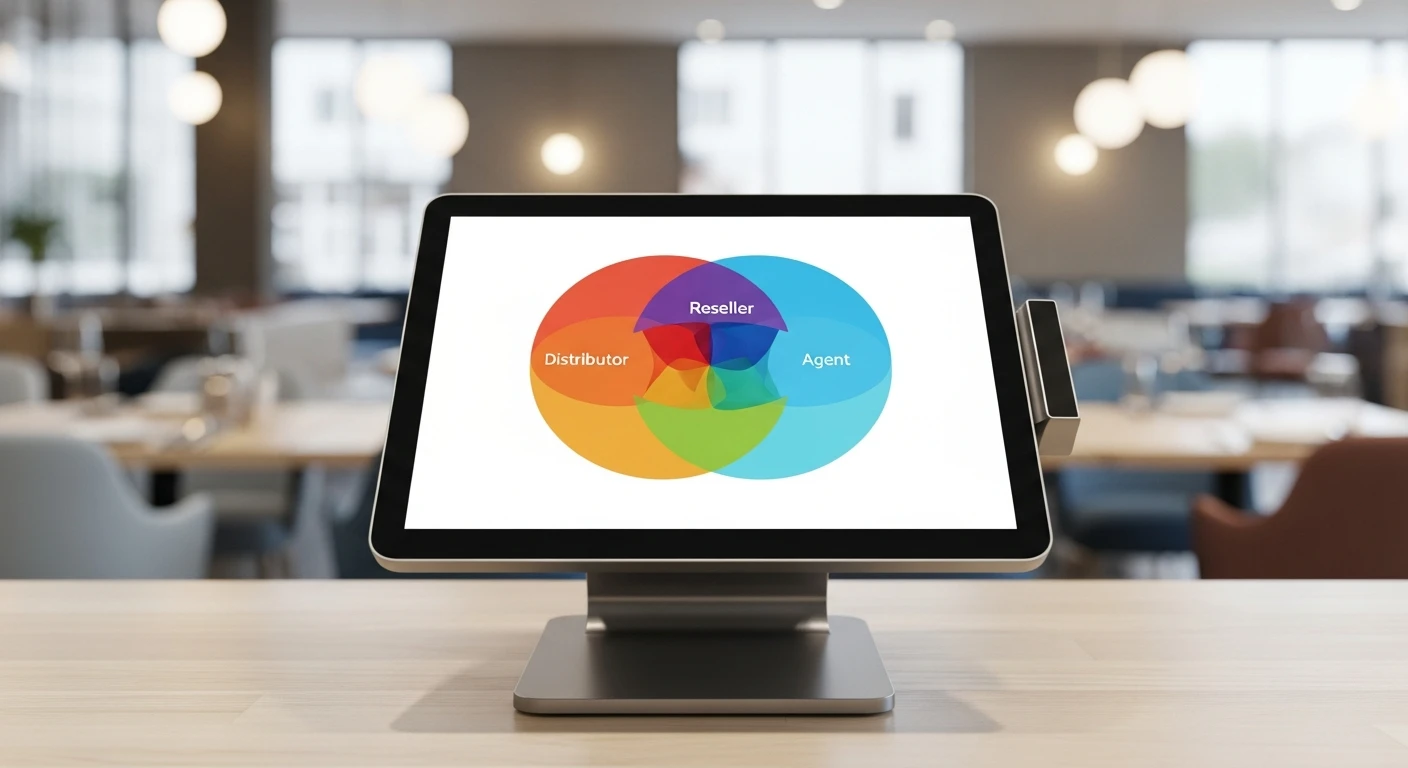
It is a fair question. The payments industry has always been loose with its terminology. An "agent" in one ISO means something entirely different in another. A "reseller" might bundle processing or might not. A "distributor" could be a one-person operation or a regional powerhouse with a warehouse full of terminals.
This article will do three things. First, it will give you clean, honest definitions of each model. Second, it will explain why the old boundaries between them are collapsing, and what that means for your income. Third, it will show you how KwickOS works with all three models, so no matter where you are in your career, there is a path that fits.
The Three Partner Models, Defined Clearly
Before we talk strategy, let us get the definitions right. I have seen too many partnership decks that blur these lines on purpose, because ambiguity benefits the company, not the partner. Here is how the industry actually works.
ISO / Agent
An ISO (Independent Sales Organization) or agent sells payment processing to merchants. Your primary product is the ability to accept credit cards. You earn residual income based on the card volume your merchants process each month. If a restaurant processes $80,000 in card transactions and your split is 10 basis points, you earn $80 per month from that single account, for as long as they keep processing.
Traditionally, agents did not own the POS relationship. You would walk in, set up a Verifone terminal or a Clover device that belonged to the processor, board the merchant, and your value was the rate and the relationship. The hardware and software were someone else's problem.
Revenue model: Residuals on monthly card volume. Recurring, but vulnerable if the merchant switches processors or if the POS provider bundles their own processing.
POS Reseller
A POS reseller sells point-of-sale hardware and software. Your product is the system itself: the terminal, the kitchen printer, the customer-facing display, the back-office reporting dashboard. You earn on hardware markup (selling a $400 terminal for $600) and monthly software subscriptions (earning a split on the $79-$149/month the merchant pays for the platform).
Some resellers also control payment processing, earning a triple stack of hardware, software, and processing revenue. Others leave processing to a separate ISO, which means they are leaving serious money on the table.
Revenue model: Upfront hardware margin + recurring SaaS residual + optional processing residual. More diversified, but requires more technical knowledge and support responsibilities.
Distributor
A distributor operates at scale. Rather than selling directly to every merchant, a distributor recruits, trains, and manages a team of sub-agents or sub-resellers across a defined territory. You earn overrides on every deal your team closes. If your sub-agent earns $80 per month on a merchant, you might earn an additional $20-$40 override on that same account, multiplied across every agent in your network.
Distributors are portfolio builders. Your day-to-day is less about merchant sales pitches and more about recruiting talent, running training sessions, managing inventory, and optimizing territory coverage. It is a bigger operation with bigger upside, but it requires infrastructure and management skill.
Revenue model: Overrides on sub-agent/reseller portfolios + territory bonuses + volume escalators. The highest ceiling, but requires the most capital and organizational capability.
The Convergence Problem: Why the Old Lines Are Disappearing
The Uncomfortable Truth About Toast and Square
For decades, these three models operated in relatively clean lanes. Agents sold processing. Resellers sold POS systems. Distributors managed the people who did both. Everyone had a role. Everyone got paid.
Then companies like Toast and Square rewrote the rules. They bundled payment processing directly into the POS software, created closed ecosystems, and cut the independent agent out of the equation entirely. If a restaurant signs with Toast, there is no room for your processing. Toast is the processor. Toast is the POS. Toast is the support line. You, the agent, are irrelevant.
- Toast requires merchants to use Toast Payments. No outside processing allowed. Agent residuals? Gone.
- Square processes everything in-house. No ISO splits. No agent channel. Period.
- Clover ties to Fiserv processing. Want to board on your own BIN? Good luck navigating that relationship long term.
This is not a prediction about the future. This is happening right now, in every market, in every vertical. The closed-ecosystem POS companies are systematically eliminating the independent payments professional.
So what does a smart agent do? The answer is straightforward: you must control the POS to protect your processing.
If you are an agent who only sells processing, you are one Toast sales rep away from losing every account in your portfolio. But if you are the one who installed the POS, trained the staff, configured the menu, and set up the kitchen printers, you own that relationship at a much deeper level. Ripping out an entire POS system is a far bigger decision than switching processors. You become stickier. Your residuals become safer.
This is the convergence. The best agents are becoming resellers. The best resellers already control processing. And the best distributors are building teams that do both. The question is no longer "which model are you?" but "how many revenue streams are you stacking?"
How KwickOS Works with All Three Models
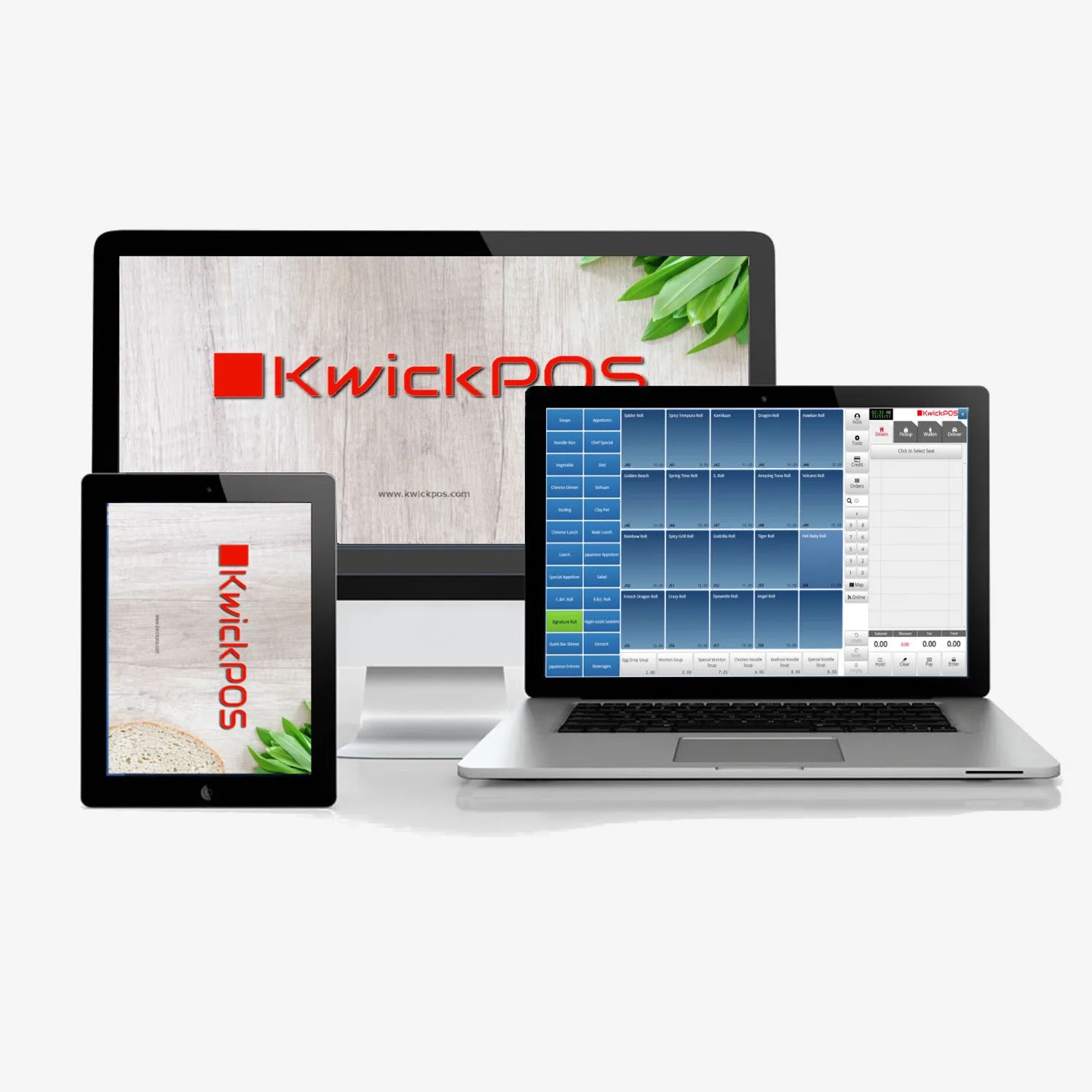
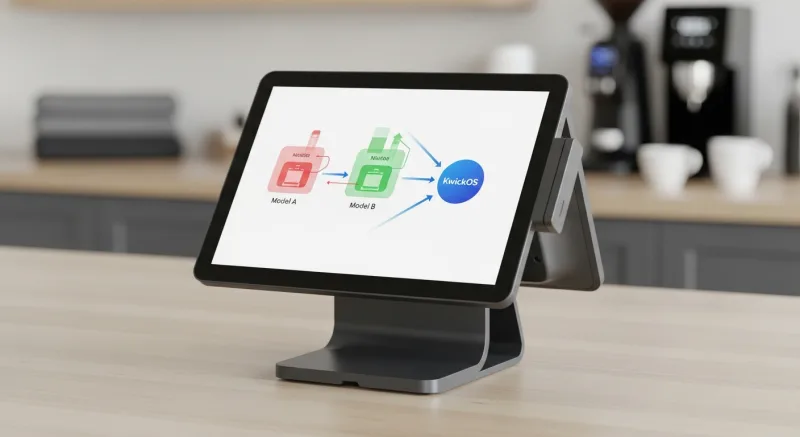
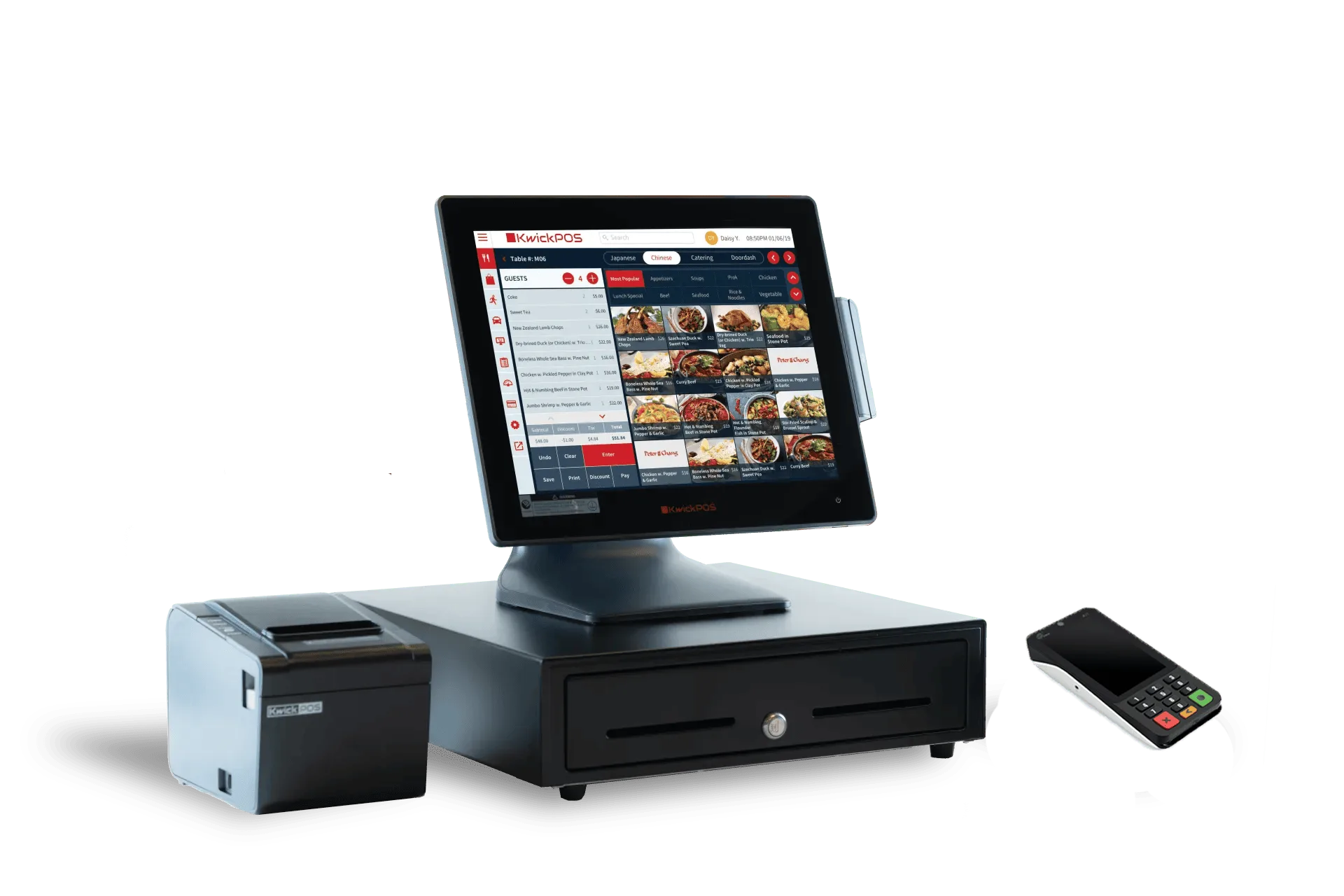
Most POS companies force you to pick a lane. KwickOS does not. The platform was built from the ground up to be processor-agnostic, which means it works with your existing processing relationships instead of replacing them. That single architectural decision changes everything about how the partner economics work.
If You Are an Agent
You already have processing relationships. Maybe you are with a large ISO, maybe you run your own shop. Either way, you have merchants on your BIN and you earn residuals on their volume. Your problem is that every closed-ecosystem POS is a threat to those residuals.
With KwickOS, you sell the POS and keep your processing. Board the merchant on your existing processor. KwickOS integrates with all major payment platforms, so the merchant gets a modern, full-featured POS and you keep every basis point of your residual. You also add a new revenue stream: the KwickOS software subscription residual, paid monthly, on top of your processing income.
You are no longer just the "card guy." You are the technology partner who installed their entire business operating system. When a Toast rep walks in and tries to flip your merchant, the merchant now has to consider ripping out their POS, their KDS, their online ordering, their loyalty program, and their reporting dashboard. That is a conversation most merchants will not have.
If You Are a Reseller
You already sell POS systems. You know hardware. You know installation. You know the twenty questions a restaurant owner asks about menu configuration and tip adjustment and end-of-day reports. Your challenge is usually one of two things: either your current POS vendor does not let you control processing, or they only serve one vertical and you are leaving other merchant types on the table.
KwickOS gives you the full partner kit. You earn on hardware markup. You earn a monthly software residual. And because KwickOS is processor-agnostic, you add your own processing and earn that residual too. Three revenue streams from every single merchant.
But here is where it gets better: KwickOS covers every vertical. Restaurants, retail, beauty and spa, grocery. One platform, one training investment, one support relationship. Instead of selling one POS for restaurants and scrambling to find something different for the nail salon next door, you walk the entire strip mall with a single solution. Your addressable market doubles or triples overnight.
If You Are a Distributor
You think in portfolios, not individual merchants. You need a POS platform that your sub-agents can learn quickly, deploy reliably, and support without calling you at midnight. You need territory protection so your people are not tripping over each other. And you need override economics that make it worth building a team.
KwickOS offers territory rights. You recruit sub-agents and sub-resellers into your territory. Every deal they close, you earn an override on the software subscription, the hardware, and the processing. You can build a portfolio of hundreds of merchants through your team, earning on every single one without personally installing a single terminal.
The KwickOS partner portal gives you visibility into your entire team's pipeline, installations, and recurring revenue. You know exactly which agents are performing and which need coaching. It is the infrastructure a distributor needs to scale without chaos.
Revenue Comparison: The Numbers That Matter
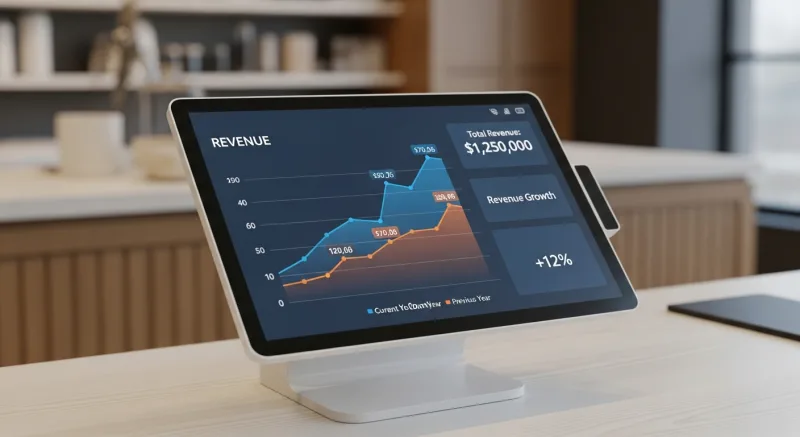
Theory is nice. Let us talk about money. The table below models revenue across 50 active merchants, using conservative industry averages. These are not best-case fantasies. These are the numbers I have seen real partners hit in their first 12-18 months with a solid POS offering.
| Revenue Stream | Agent Only (Processing) |
Agent + POS (KwickOS) |
Distributor (10 Sub-Agents, 50 Total) |
|---|---|---|---|
| Processing Residual | $4,000/mo | $4,000/mo | $2,000/mo (override) |
| Software Subscription Residual | $0 | $2,500/mo | $1,250/mo (override) |
| Hardware Margin (Upfront) | $0 | $15,000 one-time | $7,500 one-time (split) |
| Installation / Setup Fees | $0 | $12,500 one-time | — |
| Monthly Recurring Total | $4,000/mo | $6,500/mo | $3,250/mo |
| Year-One Total Revenue | $48,000 | $105,500 | $46,500 |
| Year-Two Total Revenue | $48,000 | $78,000 | $39,000 |
| Portfolio Stickiness | Low — vulnerable to POS bundling | High — you own the full stack | High — deep multi-layer relationships |
Read that Year-One line again. An agent selling processing alone earns $48,000 on 50 merchants. The same agent, selling KwickOS with their own processing, earns $105,500. That is not a marginal improvement. That is more than doubling your revenue from the exact same number of merchant relationships. The distributor model shows lower per-merchant income but scales horizontally as you add agents, with minimal additional effort per deal.
The distributor numbers look smaller per-merchant, and that is by design. Distributors trade per-deal income for scalability. A distributor with 10 sub-agents each managing 50 merchants is earning overrides on 500 accounts. At that scale, the distributor model outpaces both other models. The question is simply where you are today and where you want to be in three years.
One Platform. Every Merchant Type.
There is one more advantage that does not show up in a revenue table but matters enormously in the field: KwickOS covers every vertical you will encounter.
If you sell a restaurant-only POS, you walk past the retail shop, the barbershop, the nail salon, and the convenience store. Those are merchants who need processing and POS, and you have nothing to offer them. Every one of those doors you walk past is revenue you are leaving to someone else.
KwickOS is a modular business operating system. The same core platform powers:
- Restaurants — full-service, quick-service, cafes, bars, food trucks. Kitchen display, tableside ordering, online ordering, delivery integration.
- Retail — inventory management, barcode scanning, purchase orders, customer loyalty, ecommerce sync.
- Beauty and Spa — appointment booking, service menus, staff scheduling, client profiles, package and membership management.
- Grocery and Convenience — scale integration, age verification, EBT acceptance, high-SKU inventory, bottle deposit tracking.
For partners, this is a force multiplier. You learn one platform. You attend one training. You call one support line. And you can walk into literally any small business in any strip mall in North America and offer a solution. That breadth is what separates partners who plateau at 30 merchants from partners who build portfolios of 200+.
Real Support Behind the Sales Pitch
I have seen too many partner programs that look great on a slide deck and fall apart after the contract is signed. The hardware ships late. The "dedicated partner manager" is shared between 200 partners. The support line routes to a call center that has never seen the product. This is where KwickOS is deliberately different.
Free Demo Kit
Full working hardware and software bundle shipped to you at no cost. Walk into pitches with a live system, not a PowerPoint.
Dedicated Partner Manager
A single point of contact who knows your portfolio, your territory, and your goals. Not a shared inbox.
24/7 Multilingual Support
English, Spanish, Chinese, and more. Your merchants get help in their language, any hour of the day.
7-10 Day Onboarding
From signed deal to live system in under two weeks. Menu programmed, hardware configured, staff trained.
That 7-10 day onboarding number matters more than most partners realize. In the POS world, time-to-install is time-to-revenue. If your current vendor takes 30-45 days to get a merchant live, that is a month of processing residuals you are not earning and a month where the merchant might get cold feet. Speed closes deals and starts your recurring revenue clock faster.
So Which Model Fits You?
After fifteen years of this conversation, here is my honest framework:
Choose the Agent path if you are an individual producer who loves the merchant-facing sale. You enjoy walking into businesses, diagnosing their problems, and closing deals. You want to maximize per-merchant revenue and build a tight personal portfolio. With KwickOS, you stack processing plus SaaS residuals plus hardware margin, and you own every relationship deeply.
Choose the Reseller path if you are technically inclined and want to be the go-to POS expert in your market. You are comfortable with installation, configuration, and first-line support. You might have a small team already. KwickOS gives you the full toolkit: hardware at margin, software residuals, and the freedom to pair it with your own processing or a processor you trust.
Choose the Distributor path if you are a builder. You think in systems, not individual sales. You want to recruit a team, manage a territory, and earn on everything they produce. You are willing to invest time in training and infrastructure because you know the compounding math of overrides. KwickOS gives you territory rights, a partner portal with full visibility, and a platform your sub-agents can learn in days, not weeks.
And here is the part nobody tells you: these paths are not permanent. Most of the best distributors I know started as agents. They built a personal portfolio of 30-50 merchants, proved the model worked, and then started recruiting. The agent path is not lesser. It is the foundation. KwickOS is designed so you can start in one model and grow into another without switching platforms, renegotiating contracts, or migrating merchants.
The Bottom Line
The payments industry is not dying. It is restructuring. The agents, resellers, and distributors who will thrive over the next decade are the ones who control the full merchant technology stack, not just one piece of it. Processing alone is vulnerable. POS alone leaves money on the table. The winning play is both, under one platform, with the flexibility to structure your business the way that makes sense for you.
KwickOS was built for exactly this moment. Processor-agnostic, so your processing stays yours. Multi-vertical, so every merchant is a prospect. And structured for agents, resellers, and distributors alike, so the partner model fits your business rather than forcing your business to fit the model.
Find Out Which Partner Model Fits You
Whether you are an agent protecting your residuals, a reseller expanding your verticals, or a distributor building a team, KwickOS has a program designed for the way you actually work. Talk to our partner team today.
Apply to the Partner Program