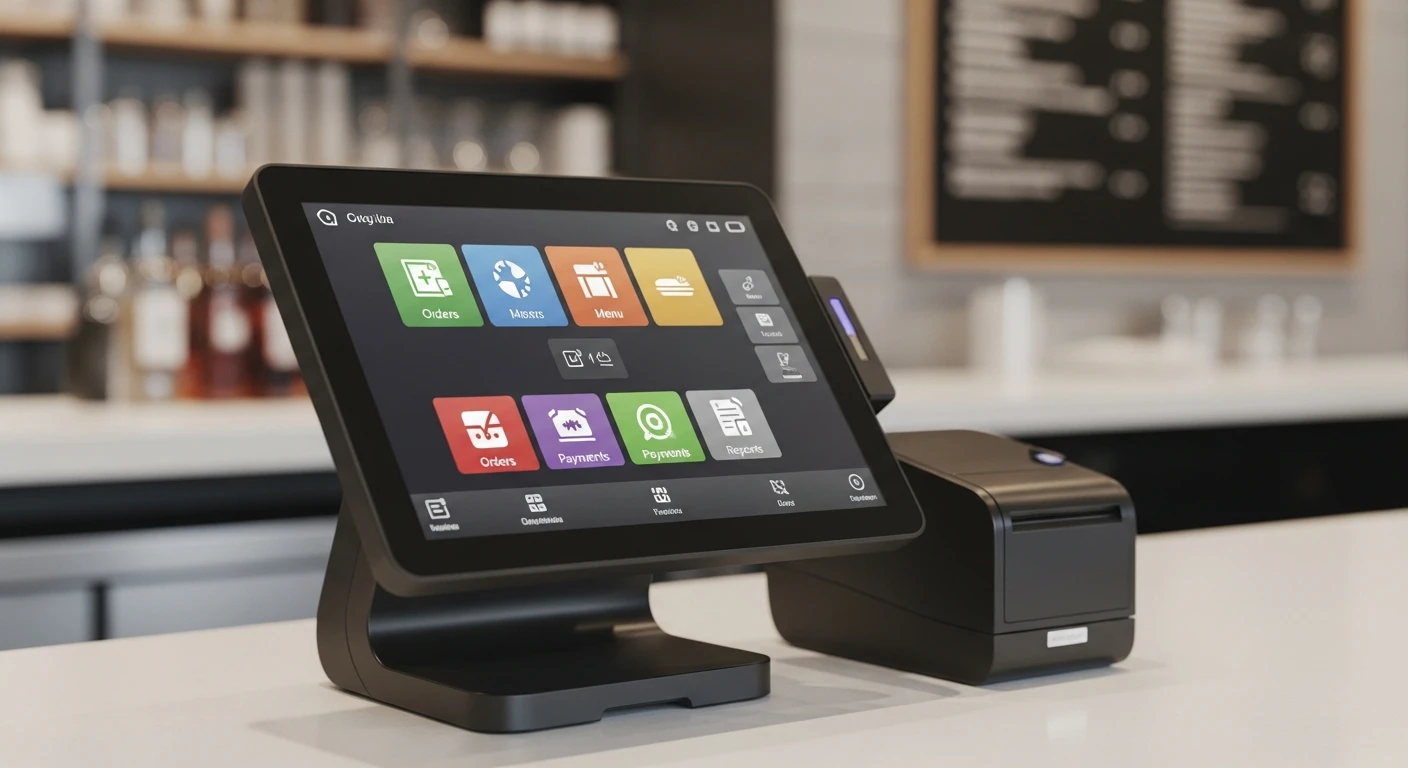
For New York business owners searching for 30,000 Restaurants and Counting, here's what the top operators already know. Every POS company in America wants to sell in New York. Toast has a massive sales team here. Square started here. SpotOn is aggressively expanding. Clover has bank-channel distribution through every major financial institution. The competitive intensity is the highest in the country. And yet, the opportunity for a processor-agnostic POS reseller in New York is actually larger than in less competitive markets.
Here is why: the more POS vendors selling in a market, the more merchants locked into proprietary processing contracts. The more merchants locked in, the larger the pool of restaurant owners frustrated with their processing costs and ready for an alternative. New York has the largest installed base of locked-in POS merchants in America — which means it has the largest addressable market for a processor-agnostic escape route.
NYC by the Numbers
- 30,000+ restaurants across five boroughs
- $48 billion in annual restaurant revenue
- Average monthly card volume: $52,000 (Manhattan average: $70,000+)
- 800+ distinct cuisines represented
- New openings: 500+ per month across the city
At $52,000 average card volume and 0.15% residual, each NYC merchant generates approximately $78/month in processing residuals. Manhattan placements average $105/month. A portfolio of 100 NYC merchants generates $7,800-$10,500/month in residual income.
The Five Borough Strategy
Flushing, Queens: The Greatest Food Corridor in America
Flushing has the largest Chinatown in the Western Hemisphere — larger than Manhattan's Chinatown and San Francisco's combined. Approximately 800 Chinese, Korean, and other Asian restaurants operate within a one-mile radius of the Flushing Main Street station. The multilingual POS need here is existential. A reseller who speaks Mandarin and works Flushing full-time can place 20+ restaurants per month using KwickOS's Chinese language capability alone. No other POS vendor can compete on this feature in Flushing.
Manhattan's Ethnic Corridors
Manhattan has 10,000 restaurants. Rather than trying to compete with Toast's massive Manhattan sales force on their terms, target the ethnic food corridors where multilingual POS gives you an unassailable advantage. Chinatown (Canal Street to Chatham Square) has 300+ Chinese restaurants. Koreatown (32nd Street) has 50+ Korean restaurants. East Harlem's Latin corridor has 200+ Spanish-language operations. Washington Heights' Dominican restaurant scene processes significant volume in a predominantly Spanish-speaking community. These corridors are your Manhattan beachheads.
Brooklyn: Sunset Park to Williamsburg
Brooklyn's restaurant scene is the most diverse in America. Sunset Park's massive Chinatown has 200+ Chinese and Mexican restaurants where KwickOS's trilingual support is immediately relevant. Bay Ridge's Middle Eastern corridor, Flatbush's Caribbean scene, and Brighton Beach's Russian restaurants add further diversity. Williamsburg's high-end dining scene offers premium card volumes for high-value placements.
Jackson Heights, Queens
Jackson Heights has the densest concentration of South Asian restaurants outside the Indian subcontinent. Indian, Bangladeshi, Nepali, and Tibetan restaurants line Roosevelt Avenue and 74th Street. The diversity of cuisine and language here is staggering — and underserved by POS technology.
The Bronx: Arthur Avenue
Arthur Avenue's Italian restaurant corridor and the Bronx's growing Latin American restaurant scene represent underserved POS markets where competition is significantly lower than in Manhattan or Brooklyn.
Revenue Projections: NYC Premium
- Average monthly card volume: $52,000
- Per-merchant monthly residual: $78
- Year 1 (10 placements/month): ~$54,000
- Year 2 monthly run-rate: $14,000+
- Year 2 annual residual: $160,000+
NYC's card volumes produce the second-highest Year 2 projections in this series (behind Las Vegas). The market size means the ceiling is virtually unlimited — a reseller placing 20 merchants/month achieves Year 2 income exceeding $320,000.

The NYC Infrastructure Reality
New York's aging infrastructure produces more internet outages than most major cities. Basement restaurants in Chinatown have notoriously poor connectivity. Older buildings in the East Village and Lower East Side have wiring that predates the internet. Old electrical systems in pre-war buildings cause intermittent connectivity issues. When a cloud-only POS goes down during a Friday dinner rush, every minute of downtime costs $50-$100 in lost revenue.
KwickOS's hybrid local+cloud architecture processes transactions locally at 1ms latency — regardless of internet status. For NYC restaurants operating in buildings that were constructed before electricity, this is not a luxury feature. It is operational insurance that pays for itself the first time the internet drops during service.
Three-Tier Partnership
Referral Partner: NYC's massive hospitality ecosystem — real estate brokers, restaurant consultants, commercial landlords, food distributors — creates thousands of referral opportunities. KwickOS handles the 7-10 day implementation and all ongoing support.
Active Reseller: Pick a borough or neighborhood. Own it. NYC is too large for one reseller to cover entirely. Focus on a corridor — Flushing, Sunset Park, East Harlem — and dominate it before expanding. KwickOS handles 1-3 hour installation and 1-2 hour training.
Full Partner: Build a multi-agent KwickOS operation covering multiple boroughs. NYC's market depth supports a 10+ agent team generating $1M+ annually in combined residual income within 3 years.
Case Studies for NYC Sales
Haidilao: NYC Credibility
Haidilao's NYC locations are among the city's highest-profile Asian restaurants. KwickOS powering 600+ Haidilao locations worldwide provides instant credibility when selling to NYC's Asian restaurant community. If KwickOS handles Haidilao, it handles any NYC operation.
Crafty Crab: 19 Locations, 152 Terminals
NYC restaurant groups operate at enormous scale. Crafty Crab's deployment proves KwickOS handles enterprise-level multi-unit operations with one-click menu sync across all locations.
T. Jin: Cross-Borough Monitoring
For NYC operators managing locations across multiple boroughs — where a trip from Flushing to Manhattan can take 90 minutes — T. Jin's real-time monitoring across 15 stores is essential infrastructure. Seventy-five terminals, all visible from a phone, in any language.
The Labor Cost Factor
New York's minimum wage and labor regulations make every operational efficiency critical. KwickOS's fingerprint-based 1:N employee identification eliminates buddy punching and time theft — saving NYC restaurants thousands per year in fraudulent labor costs. Self-ordering kiosks reduce front-of-house staffing needs. Rockin' Rolls' deployment of 49 iPad self-ordering stations across 3 locations demonstrates the model that NYC fast-casual operators are increasingly adopting. KwickDriver's flat delivery fees ($2 + $6.99/5mi) versus DoorDash's 15-25% commissions save NYC restaurants $2,000-$4,000/month on delivery alone.
Your NYC Launch Plan
Month 1: Start in Flushing if you speak Mandarin, or Sunset Park if you speak both Chinese and Spanish. The multilingual advantage creates immediate wins that no competitor can match.
Month 2: Expand within your chosen borough. Build 15-20 placements. Collect testimonials in the community's language.
Month 3-6: Expand to adjacent corridors or boroughs. Consider adding a second language corridor — Manhattan Chinatown, East Harlem, Washington Heights.
Months 7-12: Begin targeting multi-location groups using your portfolio as proof. Recruit sub-agents to cover additional territories.
New York is the largest POS reseller opportunity in America. Its scale, card volumes, and multilingual demand create a market where a focused reseller can build extraordinary residual income. The competition is real — but the opportunity is larger.
Explore the KwickOS Partner Program or call (888) 355-6996 to discuss NYC territory opportunities.
Your Secret Selling Weapon: Gift Cards, Loyalty & Points — Included Free
Here is what closes deals for KwickOS resellers: when a merchant asks "what about gift cards?" or "do you have a loyalty program?" — you say "It is included. No extra monthly fee." Watch their face when they realize Toast charges $75/month and Square charges $45/month for the same thing.
Why This Matters for Your Sales Pitch
Gift cards and loyalty programs are the features merchants ask about but competitors charge extra for. This is your competitive advantage in every demo:
- Gift card program — physical cards + e-gift cards, multi-location balance sync. Sell it as "your own Starbucks card" for their business
- Points system — automatic point earning on every transaction. Customers come back more often, spend more each visit
- Membership tiers — VIP programs, subscription models, exclusive pricing. Perfect upsell for restaurants, salons, and coffee shops
- CRM integration — customer purchase history, preferences, birthday tracking, SMS/email marketing all from one screen
The Math That Closes Deals
Toast loyalty add-on: $75/month = $900/year. Square loyalty: $45/month = $540/year. KwickOS: $0 extra. Over a 3-year contract, that is $1,620-2,700 your merchant saves — just on loyalty and gift cards. Add payment processing freedom savings ($6,000+/year) and you are showing $8,000+ in annual savings. That is an easy yes.