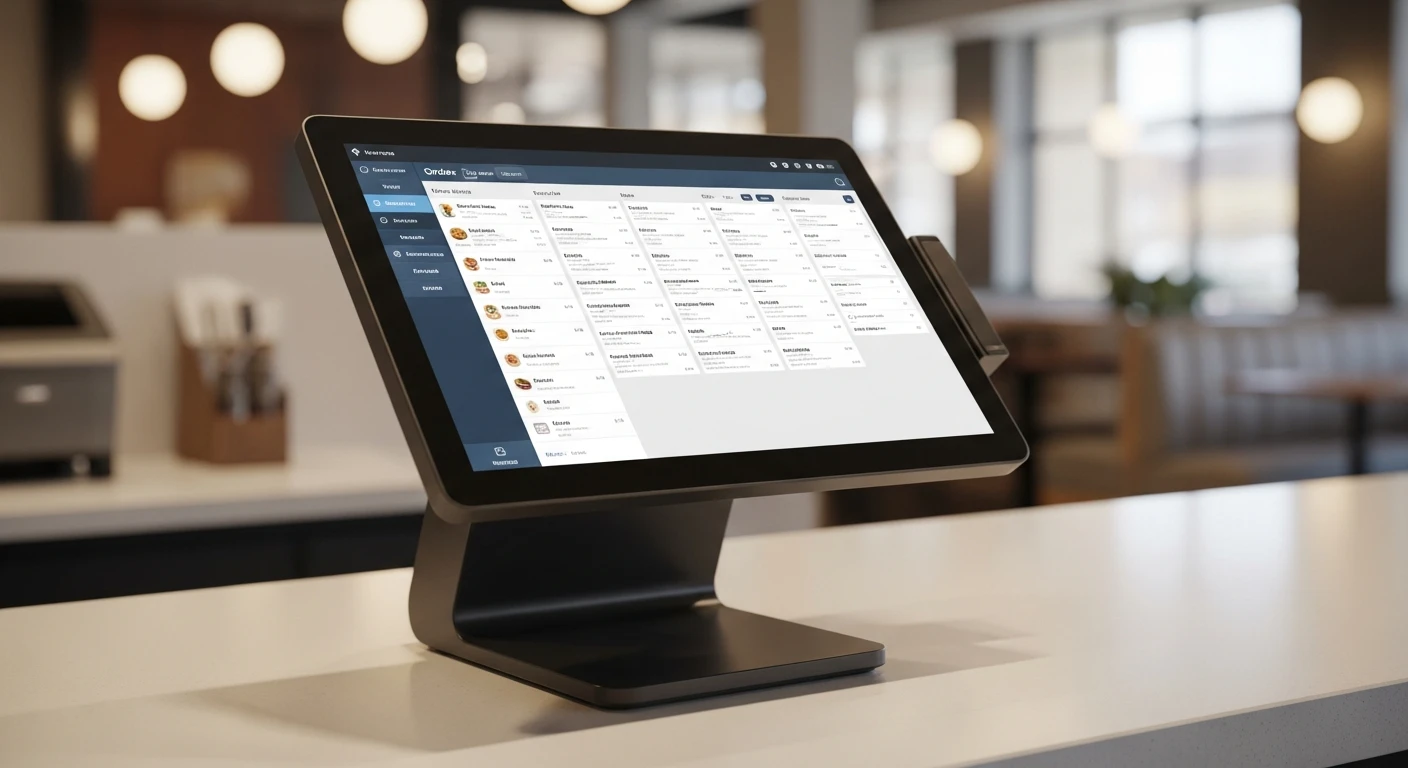
For restaurant operators, There Are 1 Million Restaurants in the US. 73% Haven't Upgraded The... isn't optional — it's the backbone of daily operations. The U.S. point-of-sale market is not a mature, static industry where the major players have locked up all the customers. It is a dynamic, fragmented, and surprisingly underserved market where the majority of businesses are running outdated technology, paying too much for basic features, and locked into processing relationships they did not choose. For anyone considering entering the POS reseller space — or for existing agents evaluating where to focus — the market data tells a compelling story.
This article is a market analysis, not a sales pitch. The numbers come from industry reports, census data, and operational data from KwickOS's 5,000+ merchant base across all 50 states. The goal is to give you the market intelligence you need to make a rational decision about whether the POS reseller opportunity is worth your time and capital.
The Total Addressable Market: Bigger Than You Think
Most people think of POS as a restaurant product. It is not. Every business that accepts payments needs a point-of-sale system. The total addressable market (TAM) in the United States includes:
| Vertical | Estimated U.S. Locations | Average Annual POS Spend | Segment TAM |
|---|---|---|---|
| Full-Service Restaurants | 350,000+ | $4,200 | $1.47B |
| Quick-Service / Fast Casual | 400,000+ | $3,600 | $1.44B |
| Bars & Nightclubs | 65,000+ | $3,000 | $195M |
| Coffee Shops & Cafes | 85,000+ | $2,400 | $204M |
| Retail (Non-Grocery) | 500,000+ | $2,800 | $1.40B |
| Grocery & Convenience | 150,000+ | $3,200 | $480M |
| Beauty, Spa & Salon | 200,000+ | $2,000 | $400M |
| Other Services (laundry, auto, etc.) | 300,000+ | $1,800 | $540M |
| Total | 2,050,000+ | $6.13B |
That is 2 million+ business locations spending a combined $6+ billion annually on POS technology. And this is just the software and hardware spend — it does not include the processing revenue attached to each merchant, which is where the real money is for resellers.
When you add processing revenue (average markup of 0.15-0.25% on card volume), the total annual revenue opportunity for POS resellers is approximately $6 billion in POS + $12-15 billion in processing residuals. The combined opportunity exceeds $20 billion annually.
The Upgrade Cycle: Why 2026-2029 Is the Window
The POS industry runs on upgrade cycles. Merchants typically replace their POS system every 5-7 years, driven by hardware obsolescence, software end-of-life, or operational needs that outgrow their current system.
The last major upgrade wave happened in 2017-2019, driven by EMV chip card compliance. Restaurants that upgraded to chip-card-capable terminals in that period are now approaching the 7-year mark. Their hardware is aging. Their software has not kept pace with post-pandemic requirements (online ordering, contactless payment, QR code menus, delivery integration). And many are locked into processing agreements that are 2-3 years beyond their original term, with escalated rates they have not renegotiated.
The data supports this timing:
- 73% of independent restaurants have not made a significant POS investment since 2019 (pre-pandemic). Their systems were chosen before online ordering, before contactless payment became standard, and before the labor shortage forced businesses to adopt self-service technology.
- POS system replacement rate is accelerating. Research indicates that 34% of restaurant operators plan to upgrade their POS in the next 12-18 months — up from 22% in 2024. The trigger is not hardware failure; it is the gap between what their current system can do and what modern operations require.
- Cloud POS dissatisfaction is creating a counter-trend. Merchants who adopted cloud-first systems (Toast, Square) in 2020-2022 are experiencing reliability issues during peak hours, and some are actively seeking alternatives that offer local processing with cloud capabilities. This is a niche that KwickOS's hybrid architecture specifically addresses.
The largest POS upgrade cycle since EMV compliance is underway. Nearly three-quarters of independent restaurants are running systems that predate the pandemic — systems that lack online ordering, contactless payment, self-service, and modern delivery integration.
Market Consolidation: Why Toast and Square Are Vulnerable
The conventional narrative is that Toast and Square are "winning" the restaurant POS market. The data tells a more nuanced story.
Toast's Market Position
Toast reports approximately 120,000 restaurant locations as of late 2025. That is roughly 12% of U.S. restaurants — significant market share, but far from dominant. More importantly, Toast's growth has come at enormous cost: the company spent over $600 million on sales and marketing in 2024 and has never generated a full-year net profit. Toast's strategy is to grow at all costs and monetize through processing revenue — which means their merchants are paying a premium (2.49% + $0.15) to fund Toast's customer acquisition.
Toast's vulnerabilities for resellers to exploit:
- Processing lock-in resentment. Merchants who signed with Toast for the software are increasingly frustrated with the mandatory Toast Payments. As processing costs rise industry-wide, the inability to shop for better rates becomes a sore point.
- Add-on fatigue. Toast's modular pricing means merchants face $200-$400/month in add-on fees beyond the base software. Each new feature Toast launches comes with a new monthly charge, creating cumulative frustration.
- Cloud reliability. Toast's 100% cloud architecture means internet-dependent operation. Restaurants in areas with unreliable internet — strip malls, rural areas, older buildings with poor wiring — experience periodic outages that directly impact revenue.
- Churn rate. Toast does not publicly disclose merchant churn, but industry estimates suggest 15-20% annual churn for cloud POS platforms. That means Toast needs to replace 18,000-24,000 merchants per year just to maintain its current base — before adding new ones.
Square's Market Position
Square for Restaurants has a smaller footprint in the full-service segment, with stronger penetration in coffee shops, quick-service, and micro-merchants. Square's vulnerabilities are different:
- Limited scalability. Square works well for single-location, low-complexity merchants. Multi-location restaurants, high-volume operations, and businesses needing advanced KDS or inventory find Square insufficient.
- Flat-rate pricing penalty. Square's 2.6% + $0.10 flat rate is simple but expensive for any merchant doing over $10,000/month in card volume. Merchants who understand interchange-plus pricing realize they are overpaying by 0.5-1.0% — which at $40K/month volume is $200-$400/month in unnecessary processing costs.
- No processor choice. Like Toast, Square requires its own processing. The merchant has no alternative.
Clover's Market Position
Clover, through Fiserv's distribution network, has significant installed base but faces its own challenges:
- Fragmented app ecosystem. Clover's app marketplace means merchants need third-party apps for features that should be native (loyalty, advanced reporting, delivery). This creates integration issues and multiple vendor relationships.
- Fiserv margin compression. ISOs selling Clover earn compressed residuals because Fiserv takes a platform cut. This makes Clover less attractive for agents building processing portfolios.
The Gap in the Market
The market data reveals a clear gap: merchants want a modern, all-in-one POS platform that does NOT lock their processing, does NOT charge for individual features, and does NOT fail when the internet drops. This is precisely the positioning that KwickOS occupies — and it is the positioning that creates the reseller opportunity.
Segment Analysis: Where the Best Opportunities Are
Not all merchant segments offer equal opportunity for POS resellers. Here is a segment-by-segment assessment of where the economics are most attractive.
Asian Restaurant Concepts: The Underserved Gold Mine
There are approximately 45,000 Chinese restaurants, 28,000 Japanese restaurants, 12,000 Thai restaurants, 8,000 Korean restaurants, and 6,000 Vietnamese restaurants in the United States. This segment — nearly 100,000 locations — is dramatically underserved by the major POS platforms.
Why: Toast, Square, and Clover operate in English only. For restaurant owners whose primary language is Chinese, Korean, or Vietnamese, this creates an operational barrier. Staff training takes longer. Menu programming is slower. Support interactions are frustrating.
KwickOS offers native Chinese language support throughout the interface, with English and Spanish also built in. For resellers targeting Asian restaurant communities — which tend to be tightly networked and referral-driven — a single successful installation can generate 5-10 referrals within the community.
KwickOS already has deep penetration in this segment: T. Jin China Diner (15 stores, 75 terminals), Crafty Crab Seafood (19 stores, 152 terminals), Tiger Sugar International Dessert (2 stores, 2 kiosks), and Haidilao Hot Pot (600+ locations worldwide). These reference accounts open doors that English-only platforms cannot enter.
Beauty, Spa, and Salon: Commission Tracking Is the Key
The 200,000+ beauty/spa locations in the U.S. have a unique POS requirement: automated commission tracking. Stylists, nail technicians, estheticians, and massage therapists are typically paid on commission, and calculating those commissions accurately across multiple service types, product sales, and tip distributions is a significant operational burden.
Most general-purpose POS systems handle commission tracking poorly or not at all. KwickOS includes automated commission calculation — Diva Nail Beauty reported a 90% increase in operational efficiency after implementing KwickOS across 4 stores, specifically because of the commission automation.
Average POS contract value for beauty/spa is lower than restaurants ($2,000/year vs. $4,000+), but the segment compensates with higher density (more locations per square mile in urban areas), lower competition from major platforms (Toast does not seriously pursue beauty/spa), and strong word-of-mouth within salon communities.
Multi-Location Chains: The High-Value Target
Multi-location operators — chains with 3-50 locations — represent the highest per-deal value in POS sales. A 10-location chain typically requires 20-40 terminals, centralized management, real-time multi-store reporting, and consistent menu/pricing across all locations.
The reseller economics on chain accounts are compelling: one sales effort can generate 10-40 terminal placements, with proportional processing volume. A 10-store restaurant chain doing $40,000/month per location generates $400,000/month in total card volume. At 0.15% residual, that is $600/month from a single client — $7,200/year in recurring revenue.
KwickOS is specifically built for multi-location management. Crafty Crab Seafood's 19-store deployment uses one-click menu sync across all locations. T. Jin China Diner's 15-store operation uses real-time remote monitoring from any terminal. These are capabilities that smaller POS platforms cannot deliver and that enterprise platforms charge premium prices for.
Restaurants Leaving Toast: The Low-Hanging Fruit
With Toast's estimated 15-20% annual churn rate, approximately 18,000-24,000 restaurants leave Toast every year. These are merchants who have already decided they want something different. They understand modern POS technology (they have been using it). They know what they want (more features, lower processing costs, more control). And they are actively shopping.
For KwickOS resellers, ex-Toast merchants are ideal prospects because the sales conversation is framed as "everything you liked about Toast, without the processing lock-in and add-on fees." The transition is straightforward because the merchant is already operating on a modern platform — they are not making the leap from a legacy cash register to cloud technology.
The Economics of Entry: What It Takes to Start
For entrepreneurs evaluating the POS reseller space as a business opportunity, here are the practical economics of entry.
Capital Requirements
- Demo equipment: KwickOS provides demo terminals to qualified resellers. Your investment in hardware for demos is minimal to zero.
- Processing agreement: If you do not already have an ISO or agent agreement with a payment processor, you will need to establish one. Many processors accept new agents with no upfront cost — they earn when you place merchants. Alternately, you can partner with an existing ISO who provides the processing while you provide the POS sales.
- Operating capital: The residual model means income ramps over months, not days. Budget 3-6 months of living expenses as a runway before residual income becomes meaningful. At 10 placements/month, you will reach $3,000+/month in residuals by Month 5-6.
- Vehicle and travel: POS is a face-to-face sale for most merchant types. You need reliable transportation and the ability to visit merchants in your territory.
Skills Required
- Sales ability: Consultative B2B sales experience is the most valuable skill. You are not selling widgets — you are selling a business solution that impacts the merchant's daily operations and annual profitability.
- Technical knowledge: Basic understanding of how POS systems work, how payment processing works (interchange, basis points, residuals), and how to conduct a product demonstration. KwickOS provides training on all of this.
- Local market knowledge: Knowing which restaurants are opening, which are expanding, which are frustrated with their current POS, and who the decision-makers are. This is the intelligence that no marketing campaign can replace.
Time to Revenue
- Month 1: Complete onboarding, set up processing agreement, begin prospecting
- Month 2-3: First 3-8 placements, first residual income ($180-$480/month)
- Month 6: Portfolio of 25-40 merchants, residual income $1,500-$2,400/month
- Month 12: Portfolio of 80-100+ merchants, residual income $4,800-$6,000/month
- Month 24: Portfolio of 150-190+ merchants, residual income $9,000-$11,400/month
Competitive Moats: What Protects Your Business
A common concern for new resellers is competitive defensibility. If you build a portfolio of 200 merchants, what prevents someone from taking them? Several factors create natural moats:
- Merchant switching costs. Replacing a POS system is disruptive — it requires retraining staff, reprogramming menus, and adjusting workflows. Merchants switch POS only when the pain of staying exceeds the pain of changing. This natural friction keeps your portfolio stable.
- Relationship depth. You are the person who solved their POS problems. You visit periodically. You understand their business. A merchant who has a trusted technology advisor does not respond to cold calls from competitors.
- Processing portability. Because KwickOS does not control the processing, your processing relationship is portable. Even if a merchant left KwickOS (unlikely given retention rates), you could potentially retain the processing relationship on their new platform — as long as the new POS is also processor-agnostic.
- Referral networks. Merchants refer other merchants. A satisfied restaurant owner tells their friend who owns a restaurant. This creates a self-reinforcing growth dynamic that is difficult for outside competitors to disrupt.
Market Timing: Three Trends Converging in 2026
Three macro trends are converging in 2026 that create an unusually favorable window for POS resellers:
Trend 1: The Post-Pandemic Tech Reckoning
Restaurants that panic-adopted technology during 2020-2021 — often choosing the first available option — are now evaluating whether those choices were correct. Many adopted Toast or Square because they were available immediately. Now, with operations stabilized, they are re-evaluating based on total cost, feature completeness, and processing economics.
Trend 2: Processing Fee Awareness
The Visa/Mastercard settlement of 2024 brought unprecedented public attention to processing fees. Merchants are more aware than ever of what they pay for card processing, and the demand for transparent pricing (interchange-plus rather than flat-rate) is growing. This awareness directly benefits processor-agnostic platforms like KwickOS, because the first question educated merchants ask is: "Can I choose my own processor?"
Trend 3: The Consolidation Backlash
As Toast, Square, and Clover consolidate market share, a counter-movement is emerging among merchants who reject the one-size-fits-all approach. They want platforms that serve their specific vertical (Asian cuisine, beauty/spa, multi-location management), offer flexibility (processor choice, offline capability), and do not nickel-and-dime them with add-on fees. This is the segment where KwickOS — with its all-in-one platform, multi-language support, and processor freedom — thrives.
The Decision Framework
If you are evaluating whether to enter the POS reseller market (or whether to double down on your existing POS business with a stronger platform), here is the framework:
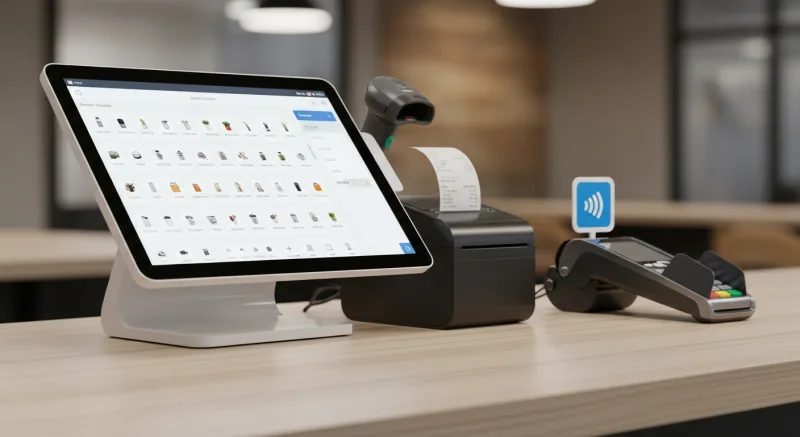
- Market size: 2 million+ business locations, $6B+ in POS spend, $12-15B in processing revenue. The market is large enough to support thousands of resellers without saturation.
- Timing: The 2026-2029 upgrade cycle is the largest since EMV compliance. 73% of independents are running pre-pandemic technology. The window is open now.
- Economics: Dual revenue (POS placements + processing residuals) with compounding returns. $127K+/year achievable within 24 months at 10 placements/month.
- Competition: Toast and Square have high market visibility but structural weaknesses (processing lock-in, add-on pricing, cloud-only reliability) that create sales opportunities for processor-agnostic alternatives.
- Platform maturity: KwickOS is proven across 5,000+ merchants, $2M+ daily sales, all 50 states, and reference accounts from single-location independents to 600-location international chains.
The POS reseller opportunity in 2026 is not theoretical. The market exists, the timing is right, the economics are favorable, and the platform infrastructure to support a reseller business is in place. The remaining variable is you.
To explore the KwickOS reseller opportunity, visit kwickos.com/partners or call (888) 355-6996.
Turn One-Time Diners into Regulars: Built-In Gift Cards & Loyalty
Most POS companies treat gift cards and loyalty as afterthoughts — expensive add-ons that cost $50-100/month extra. KwickOS includes them at no additional charge because we believe they are essential revenue tools, not luxury features.
Gift Cards That Actually Drive Revenue
Here is what most restaurant owners do not realize: gift card buyers spend an average of 20-40% more than the card's face value. A $50 gift card typically generates $60-70 in actual spending. KwickOS supports both physical gift cards and electronic gift cards that customers can purchase, send, and redeem through their phones.
- Physical gift cards — branded plastic cards that sit on your counter and sell themselves during holidays
- E-gift cards — customers buy and send digitally via text or email, perfect for last-minute gifts
- Balance tracking — real-time balance across all your locations, no manual reconciliation
- Reload capability — customers top up their balance, creating a built-in prepayment habit
Loyalty Points That Keep Them Coming Back
KwickOS loyalty is not a punch card from 2005. It is a digital points system that tracks every dollar spent and automatically rewards your best customers:
- Earn points on every purchase — configurable ratio (e.g., $1 = 1 point, or $1 = 10 points)
- Tiered rewards — silver, gold, platinum levels to incentivize higher spending
- Birthday rewards — automated birthday offers that bring customers back during their special month
- Points-for-payment — customers redeem points directly at checkout, seamless for your staff
Membership Programs
For restaurants running VIP programs or subscription models (like monthly coffee clubs), KwickOS membership management handles recurring billing, exclusive pricing tiers, and member-only menu items — all within the same system your cashier already uses.
The bottom line: Toast charges $75/month extra for loyalty. Square's loyalty starts at $45/month. KwickOS includes gift cards, e-gift cards, loyalty points, and membership management in every plan. That is $540-900/year you keep in your pocket.