If you are an ISO agent or merchant level salesperson in 2026, you have probably noticed something uncomfortable over the past three years: your POS partners are becoming your competitors. Not for merchants — for the processing relationship itself. The POS companies that used to be agnostic about processing have systematically built their own payment stacks, and every merchant you place on their platform is a merchant whose processing revenue you lose.
This is not a conspiracy theory. It is a documented business strategy. Toast's 10-K filing explicitly states that payment processing is the company's primary revenue driver, accounting for approximately 78% of total revenue. SpotOn acquired Appetite for its payment facilitation capabilities. Clover is owned by Fiserv, one of the largest payment processors on the planet. These companies do not want to be POS vendors. They want to be payment companies that happen to sell POS systems.
And your processing residuals are what funds their growth.
The Anatomy of a Processing Revenue Theft
Let us trace the journey of a single merchant to understand exactly how ISO agents lose their processing income.
Step 1: You, an ISO agent, identify a restaurant prospect doing $50,000/month in card volume. You have them on interchange-plus pricing at IC + 25 basis points. Your cost basis with your processor is IC + 5 basis points. Your net residual is 20 basis points on $50,000/month = $100/month per merchant.
Step 2: The merchant says their current POS is outdated. They want a modern cloud-based system. You recommend a POS platform — let us say Toast, because your regional Toast rep promised you a referral bonus.
Step 3: Toast requires the merchant to use Toast Payments. Your processing relationship is terminated. The merchant's new processing rate is 2.49% + $0.15 per transaction through Toast. On $50,000/month in card volume (roughly 2,000 transactions), Toast earns approximately $1,545/month in processing revenue from this one merchant.
Step 4: You receive a one-time referral bonus. Let us be generous and say $1,500. Toast will earn $1,545 per month from the processing relationship you just surrendered. Within 30 days, Toast has recouped your bonus. Over the next 3 years, Toast will earn approximately $55,620 from the processing on this single merchant.
You got $1,500. Toast got $55,620. And you lost $100/month in residual income — $3,600 over those same 3 years — that you were already earning.
Let that sink in. You did not just fail to earn new residual income. You actively destroyed existing residual income by recommending a POS platform that displaced your processing relationship.
A $50K/month card volume merchant on Toast Payments generates approximately $1,545/month in processing revenue for Toast. Over a 3-year merchant lifetime, that is $55,620 — from a merchant the ISO agent sourced, qualified, and closed. The agent received a one-time bonus of $1,500.
How Each Major POS Platform Handles ISO Processing Relationships
Not all POS platforms are equal in how they treat ISOs. Here is a detailed breakdown of the four major models in the market today.
Toast: Full Processing Capture
Toast requires all merchants to use Toast Payments. There is no optional processing. There is no "bring your own processor" capability. When a merchant signs with Toast, their payment processing is locked to Toast's platform.
What ISOs get: A one-time Go-to-Market Partner referral fee, typically $500-$2,000 depending on merchant size and negotiated terms. Some ISO agreements include a small, time-limited residual on the first year of processing, but this is significantly below what the ISO would earn maintaining their own processing relationship.
What ISOs lose: The entire processing relationship. If the merchant was previously processing with the ISO, that residual is gone permanently. If the merchant is new, the ISO never gets to establish a processing relationship at all.
Long-term impact: Every Toast placement shrinks the ISO's portfolio. ISOs who become productive Toast partners are, paradoxically, cannibalizing their own processing business. The more Toast you sell, the smaller your residual book becomes.
SpotOn: Processing Capture with Better Optics
SpotOn uses a payment facilitation model where merchants process through SpotOn Payments. SpotOn's partner program is positioned as more ISO-friendly than Toast, and they do offer residual-like revenue sharing on processing in some partner tiers. However, the processing relationship belongs to SpotOn, not the ISO.
What ISOs get: Depending on the partner level, ISOs may receive an ongoing revenue share on processing volume. This looks like a residual but differs in critical ways: SpotOn controls the rate, SpotOn owns the merchant relationship, and SpotOn can adjust the revenue share terms. The ISO does not have a direct processing agreement with the merchant.
What ISOs lose: Direct ownership of the processing relationship, control over pricing, and portfolio portability. If an ISO leaves SpotOn, the "residual" stays with SpotOn. The ISO cannot take those merchants to another processor.
Long-term impact: SpotOn's model is better than Toast's for ISOs in the short term but carries the same structural risk. The ISO builds processing volume on SpotOn's rails, not their own. If SpotOn changes the revenue share formula — which they can do unilaterally — the ISO has no recourse.
Clover: Fiserv's Trojan Horse
Clover is a particularly interesting case because it is owned by Fiserv, which also operates the First Data processing network. Many ISOs already have processing agreements through First Data/Fiserv. In theory, Clover should be ISO-friendly because the processing runs through the same rails the ISO already uses.
In practice, it is more complicated.
What ISOs get: ISOs can maintain a processing relationship on Clover merchants through their existing Fiserv/First Data agreement. However, Fiserv takes a platform fee for Clover itself, and the ISO's net residual on Clover merchants is typically 30-50% lower than on a non-Clover merchant with the same volume. Fiserv essentially taxes the ISO for the privilege of using Clover.
What ISOs lose: Margin. The ISO still "has" a residual, but it is compressed by Clover platform fees, device fees, and Fiserv's internal revenue allocation. A merchant that would generate $100/month in net residual on an independent POS might generate $50-$70/month on Clover.
Long-term impact: Clover does not eliminate ISO residuals the way Toast does, but it erodes them. Over a portfolio of 200 merchants, the margin compression costs ISOs $6,000-$12,000/year in lost income. And because Fiserv controls both the POS and the processing, the ISO has zero leverage to negotiate better terms.
KwickOS: Full Processing Independence
KwickOS does not process payments. KwickOS does not want to process payments. KwickOS is a point-of-sale operating system that integrates with the ISO's choice of processor via standard payment gateway protocols.
What ISOs get: Complete ownership of the processing relationship. The ISO places the merchant with their preferred processor — First Data, TSYS, Global Payments, Worldpay, Elavon, Heartland, or any other supported gateway — and earns their full, uncompressed residual. KwickOS takes zero revenue from the processing transaction. Zero basis points. Zero per-transaction fees. Zero platform surcharges.
What ISOs lose: Nothing. The processing economics are identical to placing the merchant on any non-proprietary POS system.
Long-term impact: Every KwickOS placement adds to the ISO's residual portfolio at full margin. The ISO maintains direct control of the processing relationship, can adjust pricing as needed, and owns a portable asset that can be sold or transferred independently of the POS platform.
The 3-Year Portfolio Value Comparison
Let us quantify the impact across a realistic ISO portfolio. Our model ISO places 8 new merchants per month over 3 years (288 total placements). Average merchant card volume is $45,000/month. The ISO's net residual rate on their own processing is 20 basis points ($90/month per merchant). Monthly merchant attrition is 2%.
| Metric | Toast | SpotOn | Clover (via Fiserv) | KwickOS |
|---|---|---|---|---|
| Processing Residual per Merchant/Month | $0 | $35-$50 (rev share) | $50-$63 (compressed) | $90 (full) |
| Upfront Bonus per Merchant | $1,000-$1,500 | $500-$800 | $0-$300 | Varies by processor |
| Year 1 Cumulative Income | $115,200 (bonuses) | $41,800 + $38,500 | $14,400 + $43,200 | $78,000 (residuals) |
| Year 2 Cumulative Income | $115,200 (bonuses) | $41,800 + $82,000 | $14,400 + $92,400 | $168,480 (residuals) |
| Year 3 Cumulative Income | $115,200 (bonuses) | $41,800 + $108,000 | $14,400 + $126,000 | $243,000+ (residuals) |
| 3-Year Total Income | $345,600 | $353,900 | $304,800 | $489,480 |
| Portfolio Asset Value (Month 36) | $0 | $0 (SpotOn owns it) | ~$120,000 | $340,200+ |
| Total 3-Year Wealth | $345,600 | $353,900 | $424,800 | $829,680+ |
Read that bottom line again. Same number of merchants. Same ISO effort. Same 3-year timeframe. The KwickOS model generates $829,680 in total wealth versus $345,600 for Toast. That is a $484,000 difference — nearly half a million dollars — from the same work, over just three years.
The gap is not driven by KwickOS being a better POS system (though it is). The gap is entirely structural. KwickOS does not capture the ISO's processing revenue. Toast does. That single difference is worth half a million dollars over three years for an ISO placing 8 merchants per month.
The Dual-Revenue Advantage: Why ISOs Should Think in Two Streams
Here is the strategic insight that separates the top-earning ISOs from the median: with a processor-agnostic POS like KwickOS, you earn on both the POS placement and the processing residual. These are two independent revenue streams from a single sales activity.
Stream 1: POS Revenue
As a KwickOS reseller, you earn on the POS sale itself. This may be a one-time placement bonus, an ongoing monthly revenue share on the software subscription, or both — depending on your reseller tier and agreement. This is the income that Toast and SpotOn also provide, though the specific terms vary.
Stream 2: Processing Revenue
Because KwickOS does not touch the processing, you maintain your full processing residual on every merchant. This is the income that Toast eliminates, SpotOn dilutes, and Clover compresses. On KwickOS, you keep 100% of your processing spread.
The dual-revenue model means that every KwickOS merchant generates two income streams from one sales effort. Over time, the processing residual stream (Stream 2) grows to be significantly more valuable than the POS revenue stream (Stream 1), because processing residuals compound across your entire portfolio while POS bonuses are transaction-based.
This is why veteran ISOs who understand portfolio economics gravitate toward processor-agnostic POS platforms. The POS sale is the front door. The processing residual is the vault.
The Merchant Retention Factor: How POS Quality Protects Your Portfolio
A processing residual is only as valuable as the merchant's loyalty. If a merchant leaves the POS and changes processors, your residual disappears. This means that POS quality is not just a product question — it is a financial question that directly impacts your income.
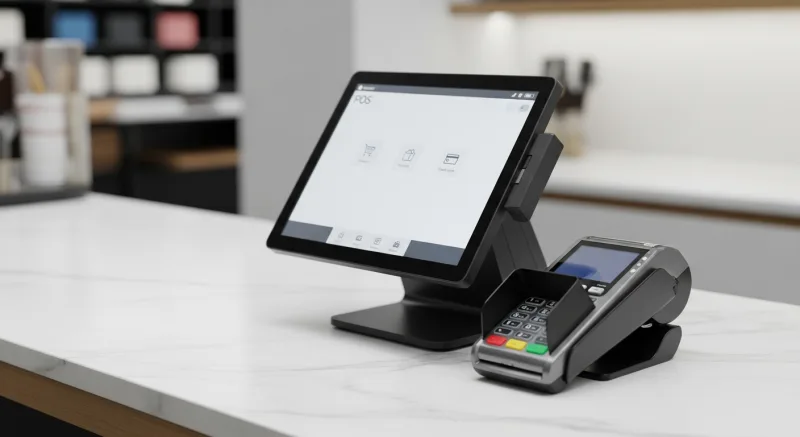
KwickOS has several architectural features that contribute to high merchant retention, each of which has a measurable impact on portfolio stability:
Hybrid Local + Cloud Architecture
KwickOS processes transactions locally with 1ms latency and syncs to the cloud in real time. When the internet goes down — and in restaurants, it does — the POS continues operating seamlessly. Cloud-only systems like Toast experience outages during internet drops, which means dead terminals during service. For a busy restaurant, even 15 minutes of POS downtime can cost thousands in lost sales and angry customers. Merchants who experience outages on cloud-only systems switch. Merchants on KwickOS keep working.
No Feature Upselling
Toast charges $75/month for loyalty. Square charges $45/month. Toast charges for online ordering add-ons. KwickOS includes POS, KDS, online ordering, digital signage, kiosks, CRM, loyalty, gift cards, and delivery in the base platform. There is no drip-pricing strategy where essential features cost extra. Merchants on KwickOS never get a surprise bill for a feature they assumed was included. This eliminates a primary source of merchant frustration and churn.
Processor Freedom
This is the retention lever that matters most to ISOs. When a merchant's processing is locked to their POS (as with Toast), the merchant cannot shop for better processing rates without replacing their entire POS system. This sounds like it should increase retention, but it actually creates resentment. Merchants who feel trapped eventually leave — and when they do, they leave both the POS and the processor.
KwickOS merchants can change processors at any time without touching their POS system. This freedom paradoxically increases retention because the merchant never feels imprisoned. They stay because the system works, not because they cannot leave. And if a merchant does want to change processors, the ISO can facilitate the switch to a new processor where the ISO also has a residual agreement — keeping the income regardless.
Enterprise-Grade Multi-Location Management
For ISOs who target multi-unit operators, KwickOS's centralized management capability is a significant retention factor. Crafty Crab Seafood operates 19 locations with 152 terminals on KwickOS, using one-click menu sync across all stores. T. Jin China Diner manages 15 stores with 75 terminals, with real-time remote monitoring from any location. Multi-location merchants with deep platform integration do not switch POS systems — the switching cost is too high. This makes chain accounts the most durable sources of residual income in an ISO's portfolio.
Practical Considerations for ISOs Evaluating the Switch
If you are currently partnered with a processing-capture POS platform and considering a move to KwickOS, here are the practical considerations:
Your Existing Portfolio
Merchants already on Toast or SpotOn are typically locked into contracts. You are not going to move them immediately. The strategy is to stop placing new merchants on processing-capture platforms and start placing new merchants on KwickOS. Your existing portfolio will naturally attrit over 2-4 years; your new KwickOS placements will compound. Within 18-24 months, your KwickOS residuals will exceed the income from your legacy POS relationships.
Processor Compatibility
KwickOS integrates with virtually every major U.S. payment processor. If you already have an ISO agreement with First Data, TSYS, Global Payments, Worldpay, Elavon, Heartland, or Paysafe, your merchants can process on their existing infrastructure. No new processor relationship is required.
Product Competitiveness
ISOs sometimes worry that processor-agnostic POS systems are technologically inferior to the big-brand platforms. This may have been true five years ago. It is not true in 2026. KwickOS runs 5,000+ merchants across all 50 states, processes $2M+ in daily sales, and serves clients from single-location independents to chains with 600+ locations. The platform includes fingerprint biometric authentication (which Toast does not support), offline operation (which Toast cannot do), multi-language support (English, Chinese, Spanish), and sub-millisecond transaction processing on local servers.
Support Infrastructure
The number one fear for ISOs recommending a POS is getting stuck with support calls. KwickOS provides 24/7 multilingual U.S.-based support. Installation takes 7-10 days, handled entirely by KwickOS technical teams. Training takes 1-2 hours. The ISO is never the help desk. Shogun Japanese Hibachi, a KwickOS merchant, reported operator proficiency in under 5 minutes — which means your merchants are not calling you for basic questions.
The Exit Strategy: Why Portfolio Ownership Matters
There is one final dimension that every ISO should consider: the exit. At some point, you will want to sell your portfolio, bring in a partner, or retire. Processing portfolios are sellable assets. They trade at 24x to 36x monthly residuals in the current market.
But here is the critical distinction: you can only sell what you own.
- Toast residuals: You do not have residuals. There is nothing to sell.
- SpotOn rev share: SpotOn owns the processing relationship. Your revenue share is not portable and not independently sellable.
- Clover/Fiserv residuals: You own a processing residual, but it is compressed and subject to Fiserv's platform fees. Portfolio buyers will value it at a discount because the margin is below market.
- KwickOS + your processor residuals: You own a full-margin processing portfolio that is completely independent of the POS platform. Portfolio buyers pay full valuation because the residual is clean, the margin is healthy, and the asset is portable.
At Month 36 of our model ISO scenario, the KwickOS agent's portfolio throws off approximately $11,340/month in processing residuals. At 30x valuation, that portfolio is worth $340,200. The Toast agent has no portfolio. The SpotOn agent has no sellable asset. The Clover agent has a compressed portfolio worth perhaps $120,000.
When you choose a POS platform, you are not just choosing your income for the next year. You are choosing whether you build an asset or just a paycheck.
The Decision Framework
Here is the honest assessment. The processing-capture model (Toast, SpotOn) pays more upfront. If you need immediate cash flow and do not care about building equity, it is a rational short-term choice. Some ISOs are in that position, and there is no judgment in choosing accordingly.
But if you are building a business — if you care about compounding income, portfolio valuation, exit strategy, and long-term wealth — then the math is unambiguous. A processor-agnostic POS platform like KwickOS allows you to earn on both the POS sale and the processing residual, build a sellable asset, and maintain control over the most valuable revenue stream in the merchant relationship.
The POS industry's move toward processing capture is not going to reverse. Toast, SpotOn, and Clover have built their entire business models around owning the payment transaction. They are not going to voluntarily give that revenue back to ISOs. The choice is yours: participate in a model designed to capture your income, or partner with a platform designed to protect it.
If you are an ISO or agent evaluating POS partnerships and want to see how the residual model works for your specific portfolio, reach out to our partner team at kwickos.com/contact or call (888) 355-6996.
Turn One-Time Diners into Regulars: Built-In Gift Cards & Loyalty
Most POS companies treat gift cards and loyalty as afterthoughts — expensive add-ons that cost $50-100/month extra. KwickOS includes them at no additional charge because we believe they are essential revenue tools, not luxury features.
Gift Cards That Actually Drive Revenue
Here is what most restaurant owners do not realize: gift card buyers spend an average of 20-40% more than the card's face value. A $50 gift card typically generates $60-70 in actual spending. KwickOS supports both physical gift cards and electronic gift cards that customers can purchase, send, and redeem through their phones.
- Physical gift cards — branded plastic cards that sit on your counter and sell themselves during holidays
- E-gift cards — customers buy and send digitally via text or email, perfect for last-minute gifts
- Balance tracking — real-time balance across all your locations, no manual reconciliation
- Reload capability — customers top up their balance, creating a built-in prepayment habit
Loyalty Points That Keep Them Coming Back
KwickOS loyalty is not a punch card from 2005. It is a digital points system that tracks every dollar spent and automatically rewards your best customers:
- Earn points on every purchase — configurable ratio (e.g., $1 = 1 point, or $1 = 10 points)
- Tiered rewards — silver, gold, platinum levels to incentivize higher spending
- Birthday rewards — automated birthday offers that bring customers back during their special month
- Points-for-payment — customers redeem points directly at checkout, seamless for your staff
Membership Programs
For restaurants running VIP programs or subscription models (like monthly coffee clubs), KwickOS membership management handles recurring billing, exclusive pricing tiers, and member-only menu items — all within the same system your cashier already uses.
The bottom line: Toast charges $75/month extra for loyalty. Square's loyalty starts at $45/month. KwickOS includes gift cards, e-gift cards, loyalty points, and membership management in every plan. That is $540-900/year you keep in your pocket.