March 13, 2026 · 16 min read
Payment Processing Lock-In Is the $6,000/Year Tax Nobody Talks About
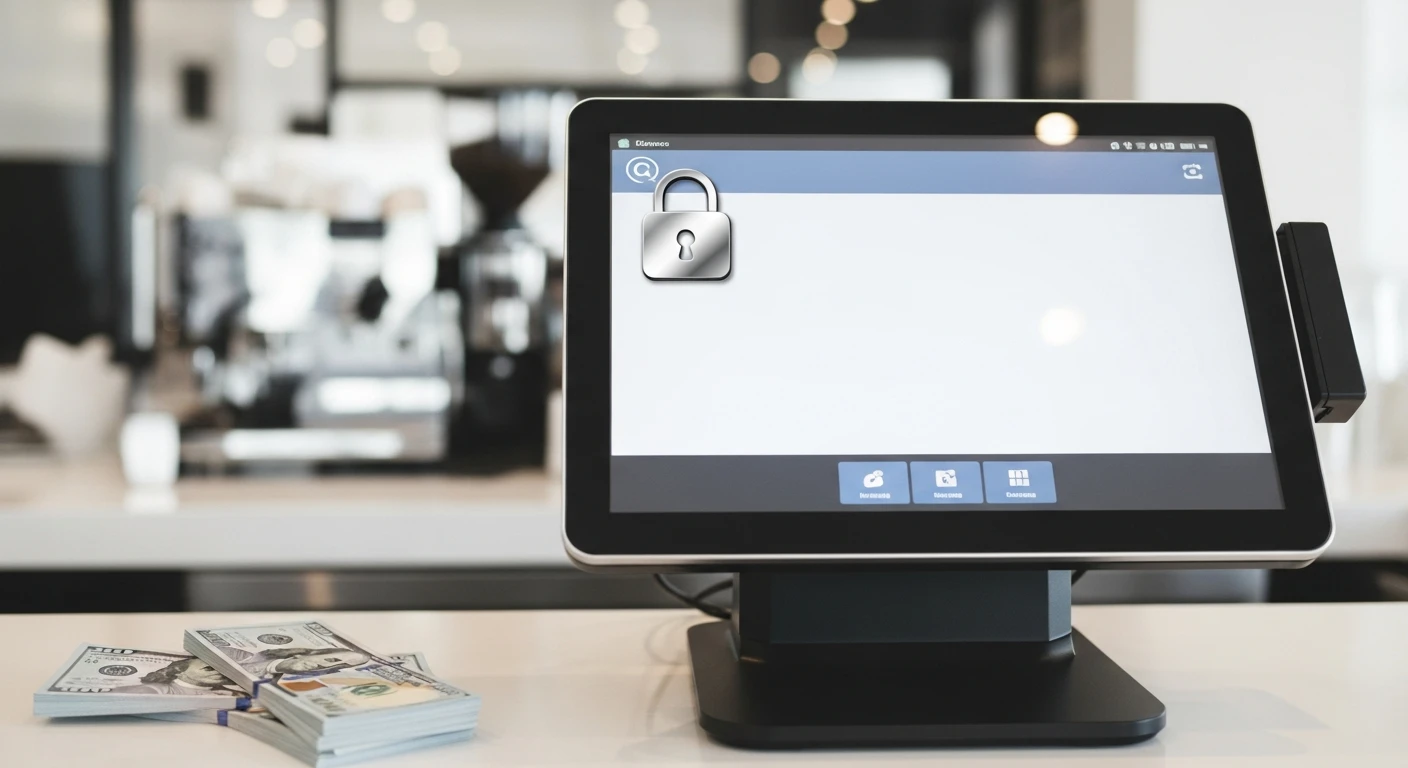
Your POS system is quietly draining $3,000 to $10,000 from your business every single year. Not through monthly fees you agreed to — through inflated payment processing rates you never had a chance to negotiate. Toast, Square, and Clover all force you onto their own processor, and because you cannot switch, they charge whatever they want. Every month the statement arrives, the overcharge compounds, and over three years you will have lost $9,000 to $30,000 for absolutely nothing in return. But here is the good news: processor-agnostic POS systems now exist, and switching takes days, not months.
The industry-wide cost: Over 800,000 U.S. small businesses use Toast, Square, or Clover — all of which require their own payment processor. If the average business overpays by $4,000/year due to lock-in, the total annual extraction from small businesses exceeds $3.2 billion. This is not a fee for a better product. It is a tax for being locked in.
What Is Payment Processing Lock-In?
Payment processing lock-in occurs when your POS system requires you to use a specific payment processor. You cannot shop for better rates. You cannot switch processors when your current rate increases. You cannot negotiate from a position of strength because the processor knows you have no alternative.
Here's where it gets real.
The three largest locked-processor POS systems in the U.S. market are:
Toast: Requires Toast Payment Processing. Rate: typically 2.99% + $0.15 per transaction. You cannot use any other processor with Toast hardware. Toast went public in September 2021, and payment processing revenue now represents 82% of their gross profit. Their business model depends on you staying locked in.
Square (Block): Requires Square's integrated payments. Rate: 2.6% + $0.10 for in-person, 2.9% + $0.30 for online. Square does not allow third-party processors. Their POS hardware physically will not work with another payment system.
Clover (Fiserv): Requires Fiserv payment processing through Clover's network. Clover is owned by Fiserv, one of the largest payment processors in the world. The POS exists to feed the processing business.
In contrast, a processor-agnostic POS like KwickOS connects to any payment processor. You choose Heartland, Worldpay, TSYS, a local ISO, or any of the hundreds of processors competing for your business. You negotiate your rate. You switch when a better offer appears. The POS does not care who processes your cards — it just processes transactions.
The Math: How Lock-In Costs You $3,000-10,000 Per Year
The locked-processor markup varies by business type, volume, and transaction size. Here is a breakdown across industries:
Coffee shop ($756K/year, 400 transactions/day): Lock-in cost: $17,000/year
Bakery ($600K/year, 200 transactions/day): Lock-in cost: $3,600/year
Bar ($800K/year, 250 tabs/night): Lock-in cost: $4,800/year
Full-service restaurant ($1.2M/year): Lock-in cost: $5,760/year
QSR ($1.89M/year, 500 transactions/day): Lock-in cost: $23,940/year
Retail ($800K/year): Lock-in cost: $4,000/year
Nail salon ($420K/year): Lock-in cost: $2,100/year
And it gets worse the smaller your tickets are.
The businesses with the highest transaction counts lose the most because the per-transaction flat fee ($0.10-0.15) compounds with every swipe. A coffee shop doing 400 micro-transactions per day gets crushed by flat fees in a way that a furniture store doing 10 large transactions never would.
The Gift Card Hostage Situation
But wait — processing fees are just the beginning.
Gift cards represent one of the most insidious lock-in mechanisms. When your POS vendor controls both your gift card system and your payment processing, your outstanding gift card balances become a migration barrier.
A business with $20,000 in outstanding gift card liabilities cannot easily leave Toast or Square because those gift cards only work within the locked ecosystem. Migrate to a new POS, and your gift card customers face declined scans. The operational cost of managing a parallel gift card resolution during migration typically runs $3,500 to $7,000 in labor and customer goodwill.
KwickOS gift cards are processor-independent. They are stored-value instruments managed by the POS, redeemable regardless of which payment processor is active. Switch processors monthly if you find better rates. Your gift cards continue working because they are not tied to a payment pipeline.
Loyalty Programs: Data Held for Ransom
Now let's talk about something even more valuable than money.
Your loyalty program — points, tiers, customer purchase histories, birthday rewards — may be the most valuable marketing asset your business owns. Repeat customers spend 67% more than new customers. A good loyalty program increases visit frequency by 20-35%.
When your loyalty data lives inside a locked POS ecosystem, that data becomes leverage against you. Toast has changed loyalty program pricing and feature sets multiple times since going public, forcing merchants to pay more for features that were previously included or lose their customer data.
KwickOS runs loyalty independently of payment processing. Your customer database, point balances, tier history, and purchase patterns belong to your business. They survive processor changes, POS upgrades, and even migration between locations. No POS vendor holds your customer relationships hostage.
Membership Billing: The Recurring Revenue Trap
Subscription and membership models are growing across every industry: coffee subscriptions, salon memberships, restaurant wine clubs, retail VIP programs. These recurring revenue streams require card-on-file tokenization for monthly billing.
When the token is controlled by a locked processor, your membership revenue is hostage. Switch POS systems, and every member must re-enter their credit card. Industry data shows 15-25% member dropout during re-enrollment events. On a $5,000/month membership program, losing 20% of members costs $12,000/year in recurring revenue.
KwickOS manages memberships with processor-agnostic tokenization. Tokens migrate with processor changes. Members never experience billing disruption. Revenue continuity is guaranteed.
The 2026 Processing Fee Landscape
Credit card processing fees hit record highs in 2025-2026. Visa and Mastercard raised interchange rates twice in 2025, adding an average of 0.04% per increase. The average merchant processing rate now sits at 2.93% for card-present transactions and 3.24% for card-not-present. These increases flow directly to locked merchants who have no negotiating leverage.
Merchants with processor choice experienced the same interchange increases but were able to renegotiate their processor markup in response. When interchange goes up by 0.05%, an independent processor competing for your business absorbs part of that increase to retain you. A locked processor passes it through entirely because you have no alternative.
Here's the bottom line.
The processing fee trend is clear: rates will continue rising. The only merchants who can manage this trend are those who can shop and negotiate. Locked merchants absorb every increase without recourse.
The Legal Landscape: Surcharging and Cash Discounts
As of 2026, credit card surcharging is legal in 48 states (Connecticut and Massachusetts are the exceptions). Surcharging allows merchants to pass the processing fee to the customer as a line item on the receipt. Cash discount programs offer a lower price for cash and a higher price for cards, achieving the same effect.
Whether or not you implement surcharging, the freedom to do so depends on knowing your actual processing cost. Locked processors make it difficult to determine your true effective rate because the rate and the POS service are bundled. With KwickOS and an independent processor, your processing costs are transparent and separate from your POS costs, making surcharging calculations straightforward if you choose to implement them.
How KwickOS Processor Freedom Works
KwickOS connects to payment processors through standard integration protocols. The process is straightforward:
- Get quotes. Contact 3-5 processors. Provide your monthly volume, average ticket, and transaction count. Let them compete. You will see rates 0.30-0.60% below what Toast or Square charges.
- Choose your processor. Evaluate based on effective rate (not just quoted rate), contract terms, customer service, and settlement speed.
- Connect to KwickOS. Integration takes minutes, not weeks. No proprietary hardware requirements. Your processor provides terminal credentials, KwickOS handles the connection.
- Renegotiate annually. When your processing agreement comes up for renewal, shop again. Your POS does not change. Only the processor behind it does. This leverage alone keeps your rate competitive permanently.
The KwickOS Platform: Beyond Processing Freedom
Processor freedom is the headline, but KwickOS delivers a complete business operating system:
Hybrid local + cloud architecture: Transactions process locally at 1ms latency. Internet outage? Business continues at full speed. Toast, Square, and Clover are cloud-dependent — internet down means operations degraded.
1:N fingerprint authentication: Employee identification by fingerprint, not shareable PINs. Prevents buddy punching, unauthorized access, and theft. Toast does not offer fingerprint support at all.
All-in-one platform: POS, KDS, online ordering, digital signage, kiosk, CRM, loyalty, delivery, scheduling, reporting — one system, one database, one monthly fee. Replace five to eight separate tools.
Multi-language support: English, Chinese, Spanish built in. Critical for diverse business communities across the U.S.
Multi-location management: T. Jin China Diner (15 stores, 75 terminals), Crafty Crab Seafood (19 stores, 152 terminals), and Haidilao Hot Pot (600+ locations worldwide) all run on KwickOS. Real-time remote monitoring, one-click menu sync, per-location processor flexibility.
KwickDriver delivery: $2 flat fee + $6.99/5mi versus 15-25% DoorDash/UberEats commission. Direct delivery at a fraction of the third-party cost.
Real Customer Proof
These are real KwickOS businesses, not fictional case studies:
- Crafty Crab Seafood: 19 stores, 152 terminals. One-click menu sync, customized KDS for special requests across all locations.
- Shogun Japanese Hibachi: 4 terminals. Customized hibachi station displays. Staff reached operator proficiency in under 5 minutes.
- Tiger Sugar International Dessert: 2 stores, 2 kiosks. Minimal-step personalization, electronic receipts with loyalty integration.
- Diva Nail Beauty: 4 stores, 4 terminals. Automated commission tracking, 90% efficiency increase in payroll processing.
- Rockin' Rolls Sushi Express: 3 stores, 49 iPad self-ordering stations. Reduced serving time with KDS integration.
- Baked Cravings: Self-serve kiosk at Lego Land. 24-hour retail, PaxA35 terminal.
The Switching Calculation
Every month you stay on a locked processor, the cost accumulates. Use this formula to calculate your specific lock-in penalty:
Step 1: Find your monthly card volume on your processing statement.
Step 2: Find your monthly transaction count.
Step 3: Calculate your current effective rate: (total monthly fees / total monthly volume) × 100. Or use our free processing fee calculator to do the math instantly.
Step 4: Get quotes from 3 independent processors for your volume level.
Step 5: Calculate the difference: (current effective rate - best quoted rate) × annual volume = annual lock-in cost.
If the difference exceeds $2,000/year, the switch pays for itself within months.
KwickOS installation takes 1-3 hours. Staff training takes 1-2 hours. The timeline from purchase to live operation is 7-10 days. The switching cost is a tiny fraction of the annual lock-in cost you eliminate by making the change.
The Decision
You have two options:
Option A: Continue paying an extra $3,000-10,000/year to your POS vendor's payment processor. Over three years, that is $9,000-30,000 in excess fees that buy you nothing — no better features, no faster service, no business improvement.
Option B: Switch to a processor-agnostic POS, negotiate your own processing rate, and redirect those savings into your business. New equipment, additional staff, marketing, expansion, or simply more profit in your pocket.
So what are you waiting for?
The math is not ambiguous. The technology is proven. The only thing keeping you locked in is inertia — and inertia has a price tag.
Ready to stop paying the lock-in tax? Call (888) 355-6996 or visit kwickos.com for a free demo.
KwickOS · 6405 Cypresswood Dr #250, Spring TX 77379
Turn One-Time Diners into Regulars: Built-In Gift Cards & Loyalty
Most POS companies treat gift cards and loyalty as afterthoughts — expensive add-ons that cost $50-100/month extra. KwickOS includes them at no additional charge because we believe they are essential revenue tools, not luxury features.
Gift Cards That Actually Drive Revenue
Here is what most restaurant owners do not realize: gift card buyers spend an average of 20-40% more than the card's face value. A $50 gift card typically generates $60-70 in actual spending. KwickOS supports both physical gift cards and electronic gift cards that customers can purchase, send, and redeem through their phones.
- Physical gift cards — branded plastic cards that sit on your counter and sell themselves during holidays
- E-gift cards — customers buy and send digitally via text or email, perfect for last-minute gifts
- Balance tracking — real-time balance across all your locations, no manual reconciliation
- Reload capability — customers top up their balance, creating a built-in prepayment habit
Loyalty Points That Keep Them Coming Back
KwickOS loyalty is not a punch card from 2005. It is a digital points system that tracks every dollar spent and automatically rewards your best customers:
- Earn points on every purchase — configurable ratio (e.g., $1 = 1 point, or $1 = 10 points)
- Tiered rewards — silver, gold, platinum levels to incentivize higher spending
- Birthday rewards — automated birthday offers that bring customers back during their special month
- Points-for-payment — customers redeem points directly at checkout, seamless for your staff
Membership Programs
For restaurants running VIP programs or subscription models (like monthly coffee clubs), KwickOS membership management handles recurring billing, exclusive pricing tiers, and member-only menu items — all within the same system your cashier already uses.
The bottom line: Toast charges $75/month extra for loyalty. Square's loyalty starts at $45/month. KwickOS includes gift cards, e-gift cards, loyalty points, and membership management in every plan. That is $540-900/year you keep in your pocket.

Tom Jin
Founder & CIO of KwickOS · 30 Years IT · 20 Years Restaurant Industry
Tom has spent decades watching POS vendors extract hidden fees from small businesses. He built KwickOS to return control of payment processing to the business owner. Today, 5,000+ businesses across 50 states run on the platform.
Payment Lock-In by Industry
Bakeries: $2,400/Year Lost
Low-ticket transactions maximize the per-swipe penalty for bakeries.
Bars: $4,800/Year Lost
High-volume tabs, splits, and tips create the perfect storm for lock-in fees.
Full-Service Restaurants: $5,760/Year Lost
Multiple revenue streams multiply the lock-in cost for FSR operators.
QSR: $23,940/Year Lost
500 daily transactions make QSR the most vulnerable to per-swipe fees.