March 13, 2026 · 14 min read
Your Bar Runs 200 Tabs a Night. Toast Takes a Cut of Every Single One.
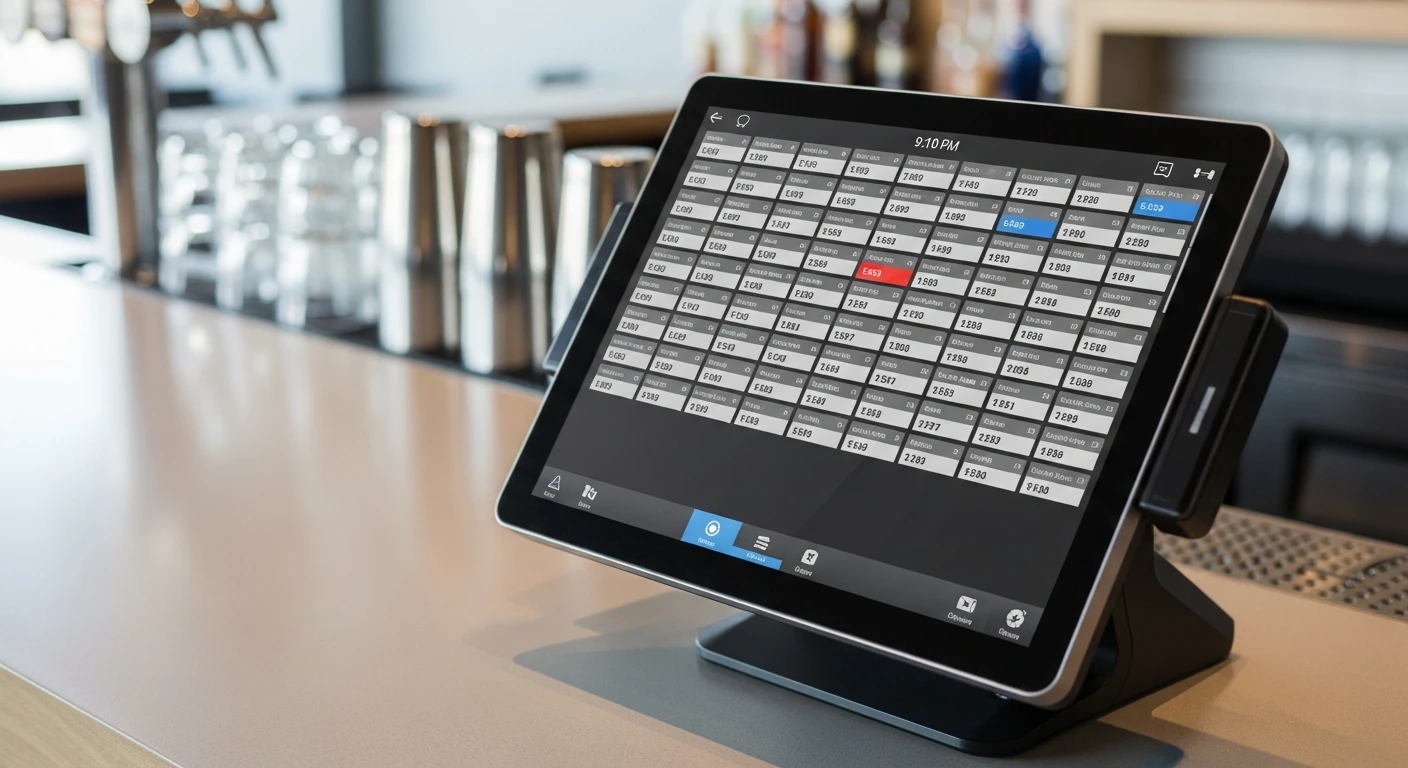
A busy bar processes more card transactions in a single Friday night than most retail stores see in a week. Every tab opened, every round ordered, every split check at 1 AM — each one carries a processing fee your POS vendor inflated because they know you cannot leave.
The tab math: A bar doing $800,000/year in card sales through a locked processor pays roughly 0.40-0.60% more than negotiated rates. That is $3,200 to $4,800/year — gone. Over three years, you have lost $9,600 to $14,400. Enough to renovate your back bar or install a draft system expansion.
Bars Are the Worst Victims of Payment Lock-In
The bar business model creates a perfect storm for payment processing exploitation. Here is why:
Extremely high card-to-cash ratio. Bars see 85-92% of transactions on cards. A restaurant might still get 15-20% cash. A bar in 2026 is essentially a cashless business. Every dollar of revenue runs through your processor.
Multiple transactions per customer per visit. A restaurant guest pays once. A bar patron opens a tab, adds drinks throughout the night, possibly splits the check with friends, and closes out. A single customer can generate three to five card interactions in one visit. Each interaction carries a per-transaction fee.
High volume, moderate tickets. A busy bar on Friday and Saturday processes 200-350 tabs per night. A cocktail bar with $14 average drinks sees $45-65 average tabs. A dive bar with $6 beers sees $18-30 tabs. Either way, you are processing hundreds of individual transactions at relatively small amounts, which maximizes the per-swipe fee damage.
Late-night authorization holds and adjustments. Bars regularly pre-authorize cards at tab open, then adjust the final amount at close. This authorization-then-capture workflow sometimes incurs additional fees from processors. When your POS locks you into a single processor, you cannot negotiate how these authorization fees are structured.
The Pre-Authorization Fee Nobody Talks About
When a bartender swipes a card to open a tab, the system sends a pre-authorization to the card network. This holds a set amount — typically $1 or a percentage of expected spend — on the customer's card. When the tab closes, the actual charge replaces the hold.
Some processors charge for the pre-authorization and the final settlement as two separate transactions. On 200 tabs per night, that could mean 400 transaction fees instead of 200. At $0.15 per transaction, that is an extra $30 per night or $10,950 per year that you are paying simply because your processor double-dips on the authorization flow.
With processor choice through KwickOS, you select a processor that charges a single fee per completed transaction, not per authorization event. That distinction alone can save a high-volume bar $5,000-10,000 annually. But you will never access that pricing structure while Toast or Square controls your processing relationship.
Split Checks: The Fee Multiplier
Last call comes. Four friends want to split a $180 tab four ways. Your bartender splits it into four $45 charges. Each charge incurs its own processing fee. What was one transaction at $180 × 2.99% ($5.38) becomes four transactions at $45 × 2.99% + $0.15 each ($5.98 total). The split costs you an extra $0.60.
That sounds trivial until you realize that 30-40% of bar tabs get split. On a 250-tab Saturday night, 85 splits generating an average of 2.5 charges each means 212 total split transactions. The additional per-transaction fees from splitting add up to $1,500-2,500 per year for a single bar location.
Processor-agnostic systems give you access to processors that handle split payments more intelligently. Some offer batch settlement pricing where splits from the same original tab are treated as a single transaction for fee purposes. You cannot access these pricing models when your POS vendor is also your processor.
Gift Cards Behind the Bar: A Revenue Engine Held Hostage
Bar gift cards spike during holidays, graduations, and birthdays. A regular buys a $100 gift card for a friend. That friend comes in, spends the $100, and adds another $40 on their own card. Gift card recipients at bars overspend by 30-45% because alcohol purchases are inherently social and impulsive — "one more round" is easier to justify when the first $100 was free.
Toast and Square gift cards are welded to their payment processing. Leave the platform, and those gift cards become orphans. A bar with $15,000 in outstanding gift card balances faces a genuine financial crisis during a POS migration: honor the cards at a loss, or anger loyal customers who received them as gifts.
KwickOS gift cards exist independently of your payment processor. They are stored-value instruments managed by your POS, redeemable regardless of which company processes the underlying card payment. Switch processors quarterly if you want. The gift cards never blink.
The Loyalty Program That Actually Fills Bar Stools on Tuesdays
Every bar has its dead nights. Tuesday. Wednesday. Maybe Sunday after football season ends. Loyalty programs are the tool that fills those stools: double points on slow nights, happy hour bonus rewards, a free drink after your tenth visit.
The problem with processor-locked loyalty is flexibility. Toast's loyalty program runs on Toast's terms. When they change the feature set — and they have, multiple times — your entire retention strategy shifts with it. You built a Tuesday double-points promotion around a feature that Toast decides to move behind a higher pricing tier. Now you pay more or lose the promotion.
KwickOS loyalty runs on your terms. Points accumulation, redemption rules, tier thresholds, promotional multipliers — all configurable without processor dependency. Your Tuesday night regulars keep earning rewards regardless of what happens in your payment processing relationship.
Speed at the Bar: Why Local Processing Wins at 11 PM
The difference between a 2-second and a 5-second card transaction is meaningless at a restaurant table. At a packed bar, it is the difference between serving 100 customers per hour and 80. When three bartenders are slinging drinks and every patron is waving a card, the system that processes fastest wins.
Cloud-based POS systems send every card transaction to a remote server for processing. The round trip takes 2-4 seconds under normal conditions. During peak hours — when every bar, restaurant, and retailer in America is processing simultaneously — that latency can spike to 6-10 seconds.
KwickOS processes locally with 1-millisecond response times. The card authorization happens on-site before the cloud is even involved. Your bartenders close tabs instantly. The line moves. Tips go up because customers are not standing around waiting for their card to process while their Uber ticks away outside.
And when the internet drops entirely — which happens with disturbing regularity in bar districts where old building infrastructure meets modern bandwidth demands — KwickOS keeps processing. Toast does not. A 15-minute internet outage during last call on a Saturday could cost a busy bar $2,000-3,000 in lost transactions. One outage per month and you have lost more than the annual processing savings.
The Tip Processing Hidden Cost
Bars generate more tip volume per transaction than any other business type. A $50 bar tab with a $10 tip means the processor processes $60, and their percentage fee applies to the full $60 — including the tip that goes to your bartender, not to you.
On $800,000 in annual card sales, if average tips are 20%, the processor collects fees on $960,000 in total charges. The fee on the $160,000 in tips alone — at 2.99% — is $4,784. That is money the processor earns on income that is not even yours. It belongs to your staff.
Some processors offer tip-adjusted processing where the percentage fee applies only to the pre-tip amount, with a flat fee on the tip portion. This can save a bar $1,200-2,000 annually. But you will never see this pricing option if Toast dictates your processing terms.
Real Bar Math: The Three-Year Lock-In Damage
Bar doing $800K/year in card sales (including tips):
Toast locked processing (2.99% + $0.15): ~$26,720/year
Negotiated interchange-plus via KwickOS: ~$21,920/year
Annual savings: $4,800
Three-year loss from lock-in: $14,400
$14,400 over three years. That is a new POS system. A draft line expansion. A patio renovation. A sound system upgrade that makes your bar the destination instead of the backup plan.
The Fingerprint Advantage: Bar Security and Processing
Bars face unique theft and fraud risks. Cash disappears. Drinks get comped without authorization. Tabs get voided and re-rung on personal cards. Employee theft costs the bar industry an estimated 4-5% of revenue.
KwickOS uses 1:N fingerprint authentication. Every tab opened, every void, every comp requires a fingerprint scan that identifies the employee from the database — no selecting a name from a list, no sharing PIN codes. The system logs who did what, when, at which terminal.
Toast does not support fingerprint authentication. Their system relies on PINs that bartenders share freely. "What's the manager code?" is the most dangerous question in any bar, and at Toast establishments, it gets asked and answered multiple times per shift.
What Switching From Toast to KwickOS Looks Like for a Bar
You do not switch POS systems during Friday happy hour. Here is the actual transition timeline for a bar:
- Week 1: Get processor quotes. With your $800K volume, processors will compete aggressively for your business. Expect to see rates 0.30-0.60% below Toast's locked rate.
- Week 2: KwickOS installation on a Monday or Tuesday — your slowest days. Hardware setup takes 1-3 hours. Menu programming happens simultaneously.
- Week 2-3: Staff training during pre-shift meetings. The interface takes 1-2 hours to learn. Your bartenders have handled touchscreen POS systems before; this is not a foreign concept.
- Week 3: Go live. Run both systems in parallel for one night if you want a safety net. Most bars cut over completely after one training shift.
Total transition time: under three weeks. Total disruption to service: zero, if you plan the cutover on a slow night.
The Crafty Crab chain — 19 stores, 152 terminals — runs on KwickOS with one-click menu sync across all locations. If a 19-store chain can switch, a single bar can handle it.
Stop Subsidizing Your POS Vendor's Revenue
Your bar generates revenue by selling drinks, creating atmosphere, and building a loyal crowd. Your POS should help you do those things, not skim an extra half-percent off every transaction as the price of participation.
Payment processing is a commodity. There are hundreds of processors competing for your business. The only reason you are paying above-market rates is that your POS vendor built a wall between you and competition. KwickOS tears that wall down.
Ready to keep more of every tab? Call (888) 355-6996 or visit kwickos.com for a free bar POS demo.
KwickOS · 6405 Cypresswood Dr #250, Spring TX 77379

Tom Jin
Founder & CIO of KwickOS · 30 Years IT · 20 Years Restaurant Industry
Tom has spent three decades in IT and two decades operating restaurants. KwickOS now serves 5,000+ businesses across all 50 states, processing over $2M in daily sales.
Related Articles
Full-Service Restaurants: The $4,000/Year Processing Drain
FSR operators lose thousands to locked processing. The math and the escape plan.
Payment Lock-In: The $6,000/Year Tax Nobody Talks About
The complete 2026 guide to processor freedom and what it means for your business.
Toast's Hidden Fees: The Real Cost Breakdown
A line-by-line analysis of what Toast actually charges beyond the sticker price.