March 13, 2026 · 13 min read
500 Transactions a Day. $10 Average Ticket. Your QSR Is a Processing Fee Machine for Toast.
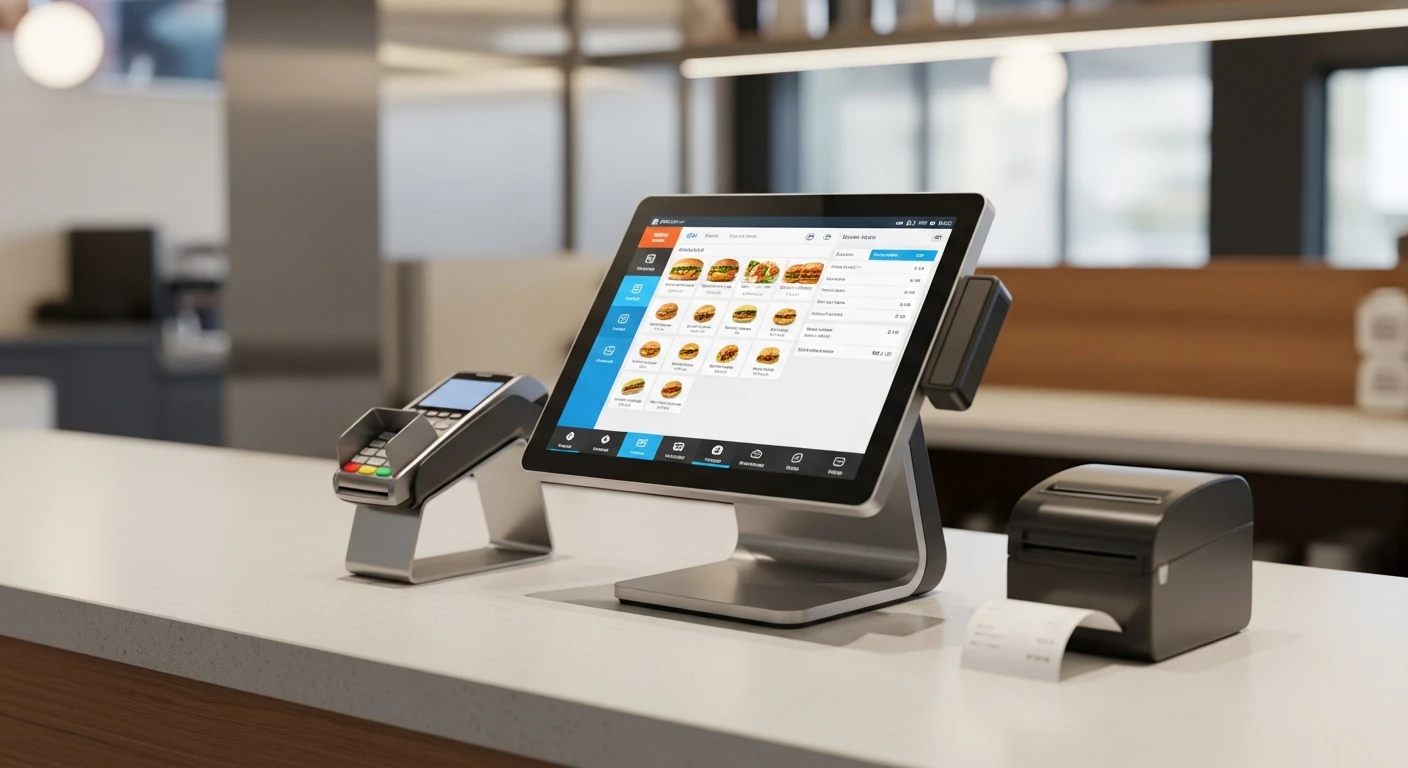
The best 500 Transactions a Day. $10 Average Ticket. Your QSR Is a Processin... handles everything from checkout to closing — without extra apps or workarounds. Quick-service restaurants are volume machines. Hundreds of orders per day, each one processed in under two minutes. The speed that makes QSR profitable also makes it the most vulnerable business type to payment processing lock-in — because volume multiplies every fraction of a cent in excess fees into thousands of dollars per year.
The QSR math: A quick-service restaurant doing 500 transactions/day at $10.50 average processes $1.89M/year in cards. The locked rate costs $59,850/year. A negotiated rate costs $49,140/year. Annual savings: $10,710. Over three years: $32,130. That is a complete kitchen equipment refresh.
Volume Is Everything — Including Volume of Fees
The QSR business model is fundamentally different from full-service dining. Speed, throughput, and transaction count drive profitability. A busy QSR serves 500-800 customers per day at $8-12 average ticket. That transaction density is what creates both the opportunity and the vulnerability.
At 500 daily transactions through a locked processor at $0.15 per swipe, the flat fee component alone costs $75/day or $27,000/year. With a negotiated processor at $0.08 per swipe, that drops to $40/day or $14,400/year. The per-transaction fee savings: $12,600/year. Before you even count the percentage savings.
No other business type generates this many processing events relative to revenue. A full-service restaurant does $1M in sales on 20,000 transactions. A QSR does $1.89M on 180,000 transactions. The QSR pays nine times as many per-transaction fees for less than double the revenue. That ratio is why payment lock-in is proportionally more destructive to quick-service operations than any other food-service segment.
The Drive-Through Processing Bottleneck
Drive-through represents 50-70% of QSR revenue. The operational metric that matters: cars per hour. The industry benchmark is 180-240 seconds from order to departure. Every second of payment processing latency reduces your cars-per-hour throughput.
A cloud-based POS adds 3-5 seconds per card authorization. At 40 drive-through cars per hour, that is 2-3 minutes of cumulative delay per hour. During the lunch rush, that delay costs you 1-2 cars per hour. At $10.50 average ticket, losing 2 cars per hour over a 3-hour lunch rush costs $63/day or $22,680/year in lost throughput.
KwickOS processes locally at 1ms. The tap-to-authorization cycle completes before the customer pulls their hand back from the reader. The drive-through window stays moving. Your cars-per-hour metric stays intact. No cloud dependency. No peak-hour latency spikes when every QSR in America is processing lunch simultaneously.
Kiosk Transactions: More Volume, More Lock-In Damage
Self-ordering kiosks increase QSR transaction counts by 15-25% while raising average tickets by 18-22% through algorithmic upselling. That is great for revenue but compounds the processing fee problem if you are locked into an expensive processor.

A QSR adding two kiosks might see daily transactions jump from 500 to 625. The additional 125 daily transactions through a locked processor generate $18.75/day or $6,750/year in extra processing fees. Through a negotiated processor, those same transactions cost $10/day or $3,600/year. The kiosk that was supposed to increase profits by $50,000/year has $3,150 of that gain eaten by excess processing fees.
Rockin' Rolls Sushi Express operates 49 iPad self-ordering stations across 3 stores on KwickOS. The kiosks reduced serving time through KDS integration while processing payments through the operator's chosen processor. Every kiosk transaction processes at the negotiated rate, not a locked markup.
Gift Card Programs at Scale
QSR gift cards are high-velocity, low-denomination instruments. The average QSR gift card is $10-25 — perfect for stocking stuffers, teacher gifts, and impulse purchases at the register. A well-promoted QSR gift card program moves $5,000-15,000/month in cards.
At QSR scale, gift card overspend compounds rapidly. Starbucks proved that gift card holders spend 22% more per visit than non-gift-card customers. Apply that to a QSR doing $100,000/year in gift card sales and you generate an additional $22,000 in overspend revenue.
Toast and Square gift cards are ecosystem-locked. Leave their platform and your gift card liabilities have no clean resolution. KwickOS gift cards are processor-independent — redeemable regardless of which company handles the underlying card processing. For a QSR with $50,000 in outstanding gift card balances at any given time, that portability is not optional.
The Loyalty App: QSR's Most Powerful Revenue Tool
QSR loyalty programs are the most engaged in food service. McDonald's, Chick-fil-A, and Starbucks have proven that a mobile loyalty app with rewards and gamification drives dramatic frequency increases. Independent QSR operators can replicate this with a well-designed loyalty program through their POS.
KwickOS loyalty runs independently of payment processing. Points accumulate based on purchases, redeem according to your rules, and persist through any processor change. When Toast modifies their loyalty program tiers or pricing — as they have done repeatedly since their IPO — your QSR's loyalty program is unaffected because it runs on your infrastructure, not theirs.
Morning, Lunch, Dinner: Three Rush Periods, Three Fee Peaks
Unlike sit-down restaurants with a single dinner rush, QSRs operate three peak periods: breakfast (6-9 AM), lunch (11 AM-2 PM), and dinner (5-8 PM). Each peak generates 100-200 transactions in concentrated bursts. The processing infrastructure must handle these bursts without latency degradation.
Cloud-based systems struggle with burst processing because network resources are shared. When 100,000 QSRs across the country hit their lunch rush simultaneously, the cloud infrastructure experiences contention. Authorization times that average 2 seconds at 10 AM spike to 5-8 seconds at noon.
KwickOS is immune to this pattern because processing happens locally. Your 1ms authorization at 10 AM is still 1ms at noon. Your busiest hour gets the same system performance as your quietest. No shared cloud infrastructure means no shared cloud degradation.
Labor Savings Meet Processing Savings
QSR operators have been reducing labor for years through automation: kiosks replace cashiers, KDS replaces paper tickets, mobile ordering replaces phone staff. Each automation step reduces labor cost but increases card transaction volume (because automation eliminates the last remaining cash transactions).
A QSR that was 80% card transactions three years ago is now 95% card transactions after deploying kiosks and mobile ordering. That 15% shift means 15% more revenue flowing through your processor — and if that processor is locked at above-market rates, your labor savings are partially offset by increased processing costs.
The only way to capture both the labor savings and the processing savings is to run a processor-agnostic POS where you can optimize processing rates independently of your automation decisions. KwickOS delivers both.
The Multi-Unit QSR Operation
QSR operators frequently run 3-10 units. A five-unit QSR chain doing $9.45M/year in combined card sales at 0.40% excess from a locked processor pays $37,800/year in unnecessary fees. Over a five-year franchise period: $189,000.
$189,000 is two additional store build-outs. That is the difference between a five-unit operation and a seven-unit operation — a 40% expansion funded entirely by processing savings that were previously flowing to a POS vendor.
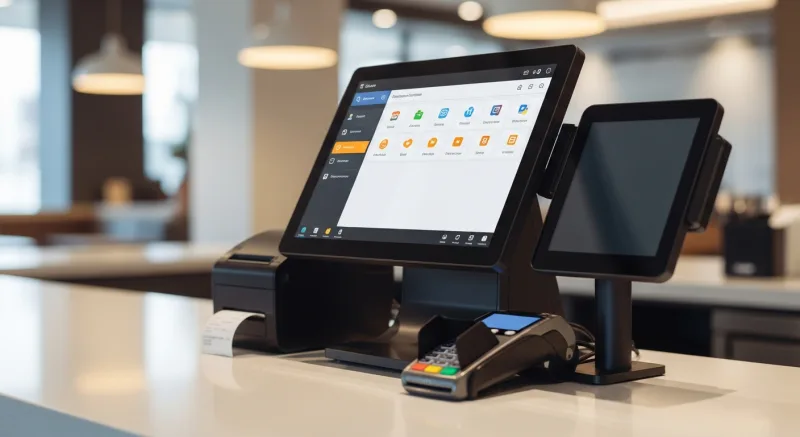
KwickOS manages multi-unit QSR chains with centralized menu control, per-location processor selection, and real-time cross-location analytics. T. Jin China Diner's 15-store operation demonstrates the platform's multi-unit capabilities, with real-time remote monitoring from a single dashboard.
Franchise Processor Mandates: The Hidden Clause
Some QSR franchisors mandate specific POS systems that come with locked processors. Franchisees accept the mandate as part of the franchise agreement, not realizing the processing cost implications. A franchise system with 100 units locked into Toast processing at 0.40% excess on $1.89M/unit is transferring $75,600/year from franchisees to Toast. Over the franchise term, that is hundreds of thousands per unit.
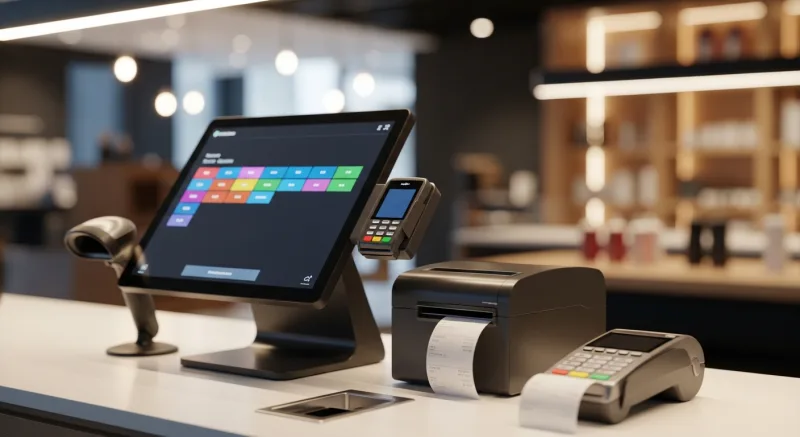
For franchise operators evaluating POS options during contract renewals, KwickOS offers a processor-agnostic alternative that satisfies franchisor POS requirements without the processing lock-in. The centralized menu sync and brand compliance features match franchise requirements while each location maintains processing independence.
The Three-Year Cost for a Single-Unit QSR
QSR: 500 transactions/day, $10.50 avg, $1.89M/year cards:
Locked processor (2.99% + $0.15): ~$83,520/year
Negotiated processor via KwickOS (2.39% + $0.08): ~$59,580/year
Annual savings: $23,940
Three-year savings: $71,820
$71,820 over three years for a single QSR location. That number is not a typo. QSR operations generate extreme transaction volumes, and the per-transaction flat fee drives the total processing cost dramatically higher than percentage-based calculations alone would suggest. The savings from processor freedom at QSR volume fund entire store renovations.
Switching a QSR to KwickOS
QSR operations have streamlined, repeatable workflows that make POS transitions smoother than complex full-service environments:
- Menu setup: QSR menus are finite and modifier-based. Import completes in minutes.
- Kiosk configuration: KwickOS kiosks deploy with visual ordering flows and algorithmic upsell prompts that replicate or exceed your current kiosk experience.
- KDS integration: Kitchen display screens configure with station routing, timing alerts, and multi-channel order management.
- Drive-through: KwickOS supports drive-through workflows with order confirmation screens and expediter displays.
- Training: Counter staff and drive-through operators train in under an hour. The interface is designed for the same speed that QSR operations demand.
- Timeline: 7-10 days from purchase. Installation: 1-3 hours per location.
Every day your QSR runs on a locked processor is a day you pay $65 more than necessary. Every week: $456. Every month: $1,995. The clock is ticking on every transaction.
Stop feeding your processing fees to your POS vendor. Call (888) 355-6996 or visit kwickos.com for a QSR POS demo.
KwickOS · 6405 Cypresswood Dr #250, Spring TX 77379
Turn One-Time Diners into Regulars: Built-In Gift Cards & Loyalty
Most POS companies treat gift cards and loyalty as afterthoughts — expensive add-ons that cost $50-100/month extra. KwickOS includes them at no additional charge because we believe they are essential revenue tools, not luxury features.
Gift Cards That Actually Drive Revenue
Here is what most restaurant owners do not realize: gift card buyers spend an average of 20-40% more than the card's face value. A $50 gift card typically generates $60-70 in actual spending. KwickOS supports both physical gift cards and electronic gift cards that customers can purchase, send, and redeem through their phones.
- Physical gift cards — branded plastic cards that sit on your counter and sell themselves during holidays
- E-gift cards — customers buy and send digitally via text or email, perfect for last-minute gifts
- Balance tracking — real-time balance across all your locations, no manual reconciliation
- Reload capability — customers top up their balance, creating a built-in prepayment habit
Loyalty Points That Keep Them Coming Back
KwickOS loyalty is not a punch card from 2005. It is a digital points system that tracks every dollar spent and automatically rewards your best customers:
- Earn points on every purchase — configurable ratio (e.g., $1 = 1 point, or $1 = 10 points)
- Tiered rewards — silver, gold, platinum levels to incentivize higher spending
- Birthday rewards — automated birthday offers that bring customers back during their special month
- Points-for-payment — customers redeem points directly at checkout, seamless for your staff
Membership Programs
For restaurants running VIP programs or subscription models (like monthly coffee clubs), KwickOS membership management handles recurring billing, exclusive pricing tiers, and member-only menu items — all within the same system your cashier already uses.
The bottom line: Toast charges $75/month extra for loyalty. Square's loyalty starts at $45/month. KwickOS includes gift cards, e-gift cards, loyalty points, and membership management in every plan. That is $540-900/year you keep in your pocket.
Tom Jin
Founder & CIO of KwickOS · 30 Years IT · 20 Years Restaurant Industry
Tom designed KwickOS for the speed and scale that QSR demands. With Rockin' Rolls Sushi Express running 49 self-ordering stations across 3 stores, the platform proves itself at QSR volume daily.
Related Articles
Pizza Shops: 3 Revenue Channels, 3 Lock-In Fees
Delivery, dine-in, and online: why pizza ops are uniquely vulnerable.

Bubble Tea: Micro-Transactions, Macro Fees
The same per-swipe penalty hits boba shops even harder at $7 tickets.
Self-Ordering Kiosks: The 30% Ticket Increase
ROI analysis for QSR kiosk deployment with real case studies.