San Francisco's Restaurant Exodus and the AI Systems Keeping Survivors Profitable
Updated March 2026 · 12 min read
San Francisco lost 15% of its restaurants between 2020 and 2025. The combination of pandemic shutdowns, remote work emptying downtown office buildings, a minimum wage approaching $19, and commercial rents that remain among the highest in America created a perfect storm that drove hundreds of restaurants out of business. Storied institutions that survived decades closed their doors. Empty storefronts multiplied in SoMa, the Financial District, and Union Square.
The restaurants that survived — and the new ones now cautiously opening — share a common DNA: they operate with a precision that pre-pandemic restaurants never required. Every labor hour is justified. Every ingredient is tracked. Every customer relationship is cultivated. Every pricing decision is data-informed. The intuition-based management that worked when SF rents were tolerable and tech workers packed restaurants every weeknight is insufficient in a market where margins have compressed to 2-4% and a single bad month can trigger closure.
AI-powered POS systems are the infrastructure enabling this precision. Not as a luxury technology for well-funded restaurants, but as a survival tool for every SF restaurant that intends to still be operating next year.
The Remote Work Revenue Crater and AI Recovery
San Francisco's Financial District and SoMa neighborhoods lost 40-60% of their weekday lunch revenue when tech companies adopted permanent remote or hybrid work policies. A restaurant that served 200 tech worker lunches per day in 2019 serves 80-100 in 2026. The customers did not leave San Francisco — they left the office. They are working from home in the Mission, the Sunset, and Noe Valley, ordering delivery or cooking instead of walking to the lunch spot near their office.
KwickOS AI helps downtown SF restaurants adapt to this structural shift through channel optimization. The system identifies that your delivery revenue has grown 120% since 2020 while dine-in dropped 45%, and recommends operational adjustments: reduce front-of-house staffing during weekday lunch (fewer servers needed for 80 covers), increase kitchen prep for delivery-optimized items (travel-friendly packaging, dishes that maintain quality for 20 minutes), and expand your delivery radius to reach residential neighborhoods where your former downtown customers now work from home.
The AI also detects the new weekday patterns. Tuesday through Thursday show the strongest in-office attendance (hybrid schedules cluster midweek), while Monday and Friday are dead for downtown dining. The system recommends concentrating promotional spending and staffing on Tuesday-Thursday and reducing operations on Monday/Friday to near-minimum viable coverage.
Chinatown's AI Revolution: Technology Meets Tradition
San Francisco's Chinatown is the oldest and one of the most vibrant in North America. Its restaurants — dim sum houses, roast meat shops, noodle restaurants, and bakeries — serve a community that is simultaneously deeply traditional and technologically engaged. The operational challenges are acute: extremely tight kitchen spaces, multilingual staff and customers (Cantonese, Mandarin, and English), thin margins on already-affordable menu prices, and a customer base that expects efficiency and quality simultaneously.
KwickOS's Chinese-language native interface is not a translation overlay — it is full Chinese functionality across POS terminals, KDS screens, KwickPhone phone ordering, and customer-facing displays. A dim sum restaurant taking phone orders in Cantonese processes them through KwickPhone in Cantonese, displays the order on the KDS in Chinese characters, and generates a receipt in Chinese. The English-speaking tourist who orders from the same menu gets English at their interface point. Same kitchen, same data, parallel language tracks.
For Chinatown's dim sum operations specifically, KwickOS AI optimizes cart-based service. The system tracks which items sell fastest from carts (har gow, siu mai), which sit unsold (tripe, chicken feet from non-Asian customers during tourist hours), and when to switch production emphasis between the morning Cantonese-speaking regular crowd (who order traditionally) and the weekend tourist crowd (who order safe items like dumplings and buns). This demand-shifting intelligence allows the kitchen to produce the right items for the right crowd at the right time.
The $19 Minimum Wage and Mandatory Benefits: AI for Regulatory Compliance
San Francisco's minimum wage of $18.67 (as of July 2024, with annual CPI adjustments pushing toward $19+) is augmented by mandatory employer contributions: the SF Health Care Security Ordinance (employer healthcare spending requirement), mandatory paid sick leave, and the highest tip credit restrictions in the country (SF does not allow tip credits against minimum wage). The total employer cost per employee significantly exceeds the already-high base wage.

KwickOS labor optimization accounts for these SF-specific costs in its scheduling recommendations. The system does not just minimize labor hours — it optimizes the complete cost of labor including healthcare contributions (which kick in at specific employee-hour thresholds), overtime premiums (California daily overtime, not just weekly), and the break scheduling requirements that, if violated, trigger penalty payments.
The AI identifies regulatory-cost cliffs. An employee who works 32 hours per week triggers a different healthcare contribution threshold than one working 28 hours. The system recommends schedule adjustments that keep employees just below costly thresholds when operationally viable, or recommends increasing hours to the level where the additional revenue justifies the benefit-cost step-up.
Micro-Neighborhood Demand: The Mission vs. the Marina vs. Hayes Valley
San Francisco's neighborhoods are economically distinct within a 7x7 mile city. The Mission's tech-gentrified clientele expects Instagram-worthy plating and pays $18 for avocado toast. The Marina's young professional crowd wants brunch with bottomless mimosas and fast-casual dinner options. Hayes Valley's performing-arts adjacent location creates pre-theater dining rushes that disappear after 7:30 PM. The Richmond District's large Chinese population supports dim sum and hot pot operations that cater primarily to a local, non-tourist clientele.
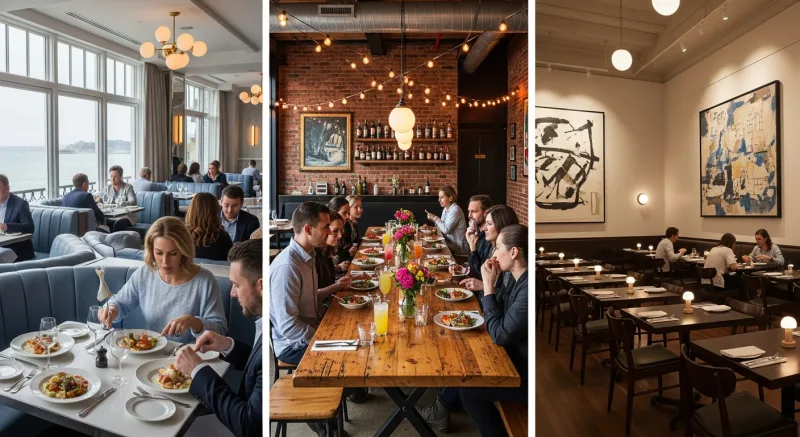
KwickOS AI models demand at the neighborhood level with hyperlocal precision. A Mission restaurant receives demand forecasts that account for art walk events, tech company happy hours, and the weekend brunch culture that drives 45% of Saturday revenue. A Hayes Valley restaurant receives pre-theater timing analysis that identifies exactly when the 8 PM show crowd arrives (6:15-6:45 PM), how quickly they need to turn (75 minutes maximum), and what menu items they order (fast-firing entrees that accommodate the time constraint).
For multi-location operators in SF, the AI highlights cross-neighborhood patterns: your Mission location's popular items that would also sell in Hayes Valley, pricing strategies that work in the Marina but would fail in the Richmond. This intelligence enables portfolio optimization rather than treating each location as an isolated operation.
Gift Cards, Loyalty, and Membership in SF's Tech-Forward Market
San Francisco diners are among the most tech-savvy in the country. They expect digital loyalty programs, mobile ordering, and contactless everything. A paper punch card is not just outdated — it is a signal that your restaurant has not invested in the technology that SF diners consider baseline.
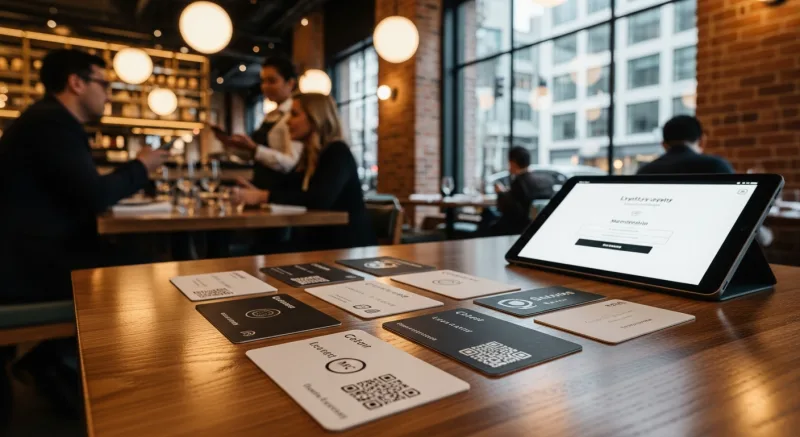
KwickOS builds loyalty programs that meet SF's digital expectations while leveraging AI for personalization. The system integrates with mobile ordering through KwickMenu (500K monthly clicks), allowing customers to order ahead, earn loyalty points, and redeem rewards through a seamless digital experience.
The AI personalizes offers based on SF-specific behaviors. Tech workers who order lunch delivery Tuesday-Thursday receive a "Friday office lunch" promotion that captures the weakest office-attendance day. Wine enthusiasts (identified by consistent wine purchases) receive first-access notifications for new wine arrivals. Brunch regulars receive "beat the line" early booking rewards that shift their arrival from the 11 AM peak to the 9:30 AM trough, smoothing the brunch demand curve.
Membership programs align with SF's subscription economy culture. A $22/month "neighborhood regular" membership that includes a free weekly coffee, priority reservations, and 10% off all food resonates with tech workers accustomed to paying monthly subscriptions for everything. KwickOS manages the billing, tracks usage, and identifies members at risk of cancellation (declining visit frequency) for proactive retention outreach.
Gift cards in SF's corporate environment serve the tech industry's gifting culture. Employee appreciation, client thank-yous, and startup team celebrations drive high-value gift card purchases ($75-200 per card). KwickOS identifies corporate buying patterns and creates enterprise accounts that simplify bulk purchasing and branded card options.
KwickPhone for SF's Reservation-Heavy Market
San Francisco has a stronger reservation culture than most American cities — a legacy of limited seating at popular restaurants and a dining public that plans ahead. Reservation calls, modification requests, and inquiry calls represent a significant phone volume that competes with service during busy hours.
KwickPhone handles reservation management with SF-specific intelligence: checking availability, accommodating dietary preference notes (SF has the highest per-capita rate of vegetarian, vegan, and allergen-restricted diners in the country), and processing special requests (birthday celebrations, anniversary decorations, tasting menu pre-selection). The system captures details that human hosts forget during a busy service: "the customer mentioned they want to sit near the window and is allergic to shellfish."
Processing Freedom at California Scale
SF's high average checks ($45-80 per person at mid-range restaurants) make processing fees a substantial line item. Toast's 2.99% on a $65 check is $1.94 per transaction. An independent processor at 2.0% charges $1.30. The $0.64 difference across 250 daily transactions is $160 daily, or $58,400 annually. For a restaurant with 3% net profit margins, this processing savings could represent the difference between profit and loss.
KwickOS processor freedom enables SF restaurants to negotiate rates with California processors who compete aggressively for high-volume, high-check-average accounts. The savings are real, material, and go directly to the bottom line.
Why SF Restaurants Are Moving to KwickOS
Toast's cloud-only architecture is a risk in a city where seismic activity, aging infrastructure, and construction projects periodically disrupt internet service. KwickOS's hybrid local processing runs every transaction at 1ms regardless of connectivity status.
Toast and Square cannot provide the multilingual Chinatown support, the SF-specific regulatory compliance intelligence, or the neighborhood-level demand modeling that San Francisco's compressed-margin market demands. In a city where restaurants are still closing faster than they are opening, the technology platform is not a back-office decision. It is the operational foundation that determines whether you are among the survivors or the statistics.
San Francisco restaurant owners: Call (888) 355-6996 or visit KwickOS.com for a demo built for the most demanding restaurant market in America.
AI + Loyalty: Smarter Customer Retention
KwickOS combines AI insights with built-in loyalty tools to do something no other POS can: predict which customers are about to stop coming in and automatically re-engage them.
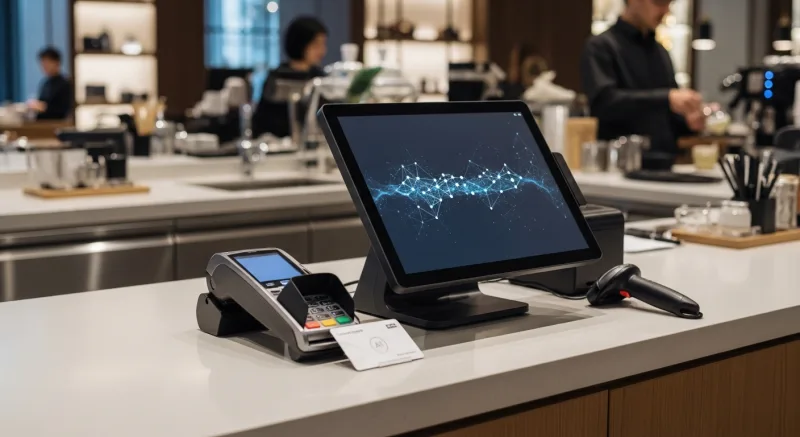
The gift card and loyalty system is not just a punch card — it is connected to AI-powered analytics that identify spending patterns, predict churn risk, and suggest targeted promotions. A customer who used to visit weekly but has not been in for 3 weeks? The system flags them and can trigger an automatic points bonus or e-gift card offer via SMS.
- Smart gift cards — AI suggests optimal gift card denominations based on your average ticket size
- Predictive loyalty — identifies at-risk customers before they leave, triggers re-engagement
- Points optimization — automatically adjusts earn rates during slow periods to drive traffic
- Membership insights — shows which VIP tiers generate the most lifetime value
All included. No add-on fees. Toast charges $75/month for basic loyalty without any AI component.

Founder & CIO of KwickOS · 30 Years IT · 20 Years Restaurant Industry
Tom built KwickOS after decades running restaurants and IT companies. Today KwickOS serves 5,000+ businesses across 50 states.