$20 Minimum Wage Killed LA Restaurants. AI Is Bringing Them Back.
Updated March 2026 · 12 min read
California's fast-food minimum wage jumped to $20 per hour in April 2024. Los Angeles County's general minimum wage already stood at $16.78, with the city of LA pushing higher. For the county's 31,000+ restaurants, this was not a gradual adjustment — it was a structural shock that fundamentally altered the economics of food service. Hundreds of LA restaurants closed in the months following the increase. Pizza Hut laid off 1,200 delivery drivers statewide. Rubio's closed 48 California locations. The pain was immediate and visible.
The restaurants that survived — and the new ones that are now opening successfully despite $20 labor — share a strategic response: they replaced human guesswork with AI precision. Not by replacing workers with robots (the technology is not there yet for most applications), but by ensuring that every worker generates maximum revenue during every hour they are on the clock. In a $20 minimum wage environment, an hour of unproductive labor costs $20 before taxes and benefits. A restaurant that eliminates 3 unproductive hours per day saves $21,900 annually. AI makes that elimination systematic rather than aspirational.
Labor Micro-Scheduling: Every 15 Minutes Counts at $20/Hour
At California's labor rates, scheduling precision is not an operational preference — it is a financial imperative. A staff member who arrives 30 minutes before they are needed costs $10. Four such instances per day across all employees means $40 daily in wasted labor. Over a year: $14,600 in payroll that generated zero revenue.
KwickOS AI generates schedules in 15-minute blocks matched to forecasted demand. The system knows that your Silver Lake restaurant's lunch rush begins at 11:45 AM (not the generic noon assumption), peaks between 12:30 and 1:15, and tapers by 1:45. It schedules the first lunch employee at 11:30 (15 minutes prep), the second at 11:45, and sends one home at 1:30 when the AI detects that remaining volume can be handled by the reduced staff.
California's complex labor laws add another dimension: mandatory meal breaks at specific intervals, overtime calculations that include daily (not just weekly) thresholds, and split-shift premiums. KwickOS builds these constraints into the schedule automatically, flagging potential violations before they occur. A server scheduled for a 10-hour shift without a second meal break triggers an alert — avoiding the labor department complaint that costs more than the break ever would.
Ghost Kitchen Intelligence: LA's Virtual Restaurant Economy
Los Angeles has more ghost kitchens (delivery-only restaurants operating from shared commercial kitchen spaces) than any other city. Cloud Kitchens, Kitchen United, and dozens of independent operators have created an ecosystem where a single physical kitchen produces food under 3-5 different restaurant brands, each appearing on delivery apps as a separate entity.
Managing multiple virtual brands from one kitchen requires AI-level orchestration. Brand A (a burger concept) and Brand B (an Asian fusion concept) share a grill but have different prep workflows, different ingredient inventories, and different peak hours. KwickOS manages each brand as a separate entity with unified kitchen operations: Brand A orders route to the grill station with Brand A ticket formatting, Brand B orders route to the same grill with Brand B formatting, and the AI coordinates production sequencing to prevent cross-brand contamination or confusion.
The AI forecasts demand for each brand independently. Brand A peaks at 6-8 PM (dinner). Brand B peaks at 11 AM-1 PM (lunch). The system schedules kitchen staff to handle both brands' peak periods, with labor allocated proportionally to each brand's revenue contribution for cost accounting purposes. A ghost kitchen operating 4 brands with AI coordination can match the kitchen output of 4 separate restaurants at a fraction of the real estate and labor cost.
Trend Prediction: Surviving LA's Fickle Food Culture
Los Angeles is where food trends are born and where they die fastest. Acai bowls exploded in 2016 and saturated by 2018. Ube (purple yam) went from Instagram novelty to commodity in 18 months. Birria tacos went from underground to ubiquitous in one year. For LA restaurants, the ability to detect a trend early, capitalize on it during peak demand, and exit before the market saturates is the difference between a profitable quarter and a costly inventory mistake.
KwickOS AI tracks item-level sales velocity and identifies emerging trends within your own customer base. It detects when a new menu item's order rate is accelerating (week-over-week growth exceeding 15%) and recommends increasing prep and promotion before the trend peaks. Conversely, it detects when a trendy item's velocity is decelerating and recommends reducing inventory commitments before you are stuck with specialty ingredients that nobody wants.
The system also identifies which existing menu items are losing share to new additions. If your tuna poke bowl was steady at 30 orders per week and drops to 18 after you add a salmon crudo, the AI calculates whether the crudo cannibalized the poke (customers switching) or expanded the category (new customers attracted). If it is cannibalization, you may want to consolidate to the higher-margin option. If it is expansion, both items justify their menu space.
Entertainment Industry Demand: Predicting the Unpredictable
LA's entertainment industry creates demand patterns that exist nowhere else. Award show seasons (December-March) increase upscale dining in West Hollywood and Beverly Hills by 25-40%. Pilot season (January-April) fills lunch spots near studios in Burbank and Culver City. Concert nights at the Hollywood Bowl, Sofi Stadium, and the Forum create predictable surges in surrounding restaurants. Film premieres generate one-night spikes at specific venues.
KwickOS AI incorporates local event calendars into demand forecasting. A Sofi Stadium event with 70,000 attendees triggers a prediction model: restaurants within 2 miles will see a 60% revenue increase from 4-7 PM (pre-event dining) and a 30% increase from 10 PM-midnight (post-event). The AI adjusts staffing recommendations, increases prep quantities, and activates promotional messaging (social media push for pre-event specials) 72 hours before the event.
For restaurants near studios, the AI learns production schedules' impact on lunch volume. When a major production wraps for hiatus, the 40 crew members who ordered lunch daily for 3 months disappear overnight. The system detects the drop in studio-area lunch orders within 2 days and adjusts prep and staffing before the owner realizes what happened.
Multilingual Operations in LA's Mosaic
Los Angeles is the most linguistically diverse metro in the country. Spanish, Mandarin, Cantonese, Korean, Tagalog, Armenian, and Vietnamese are all languages of daily commerce in LA's restaurant industry. A Korean BBQ restaurant in Koreatown has ownership speaking Korean, kitchen staff speaking Spanish, and customers ordering in Korean, English, and Spanish. A taqueria in Boyle Heights serves a neighborhood that is 94% Hispanic with a customer base that expects Spanish-language service.
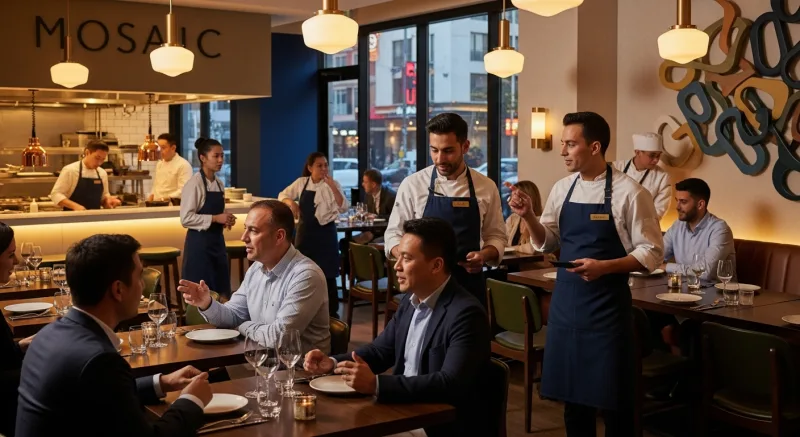
KwickOS's native English, Chinese, and Spanish support covers the three most common restaurant-industry languages in LA. For Koreatown operations, the system's Chinese-language capability serves the significant cross-over between Korean and Chinese restaurant management practices, while the English and Spanish interfaces serve the front-of-house and back-of-house respectively.
KwickPhone processes phone orders in all three languages, capturing revenue from callers who would abandon an English-only phone system. A San Gabriel Valley dim sum restaurant receiving a phone order in Mandarin for a Saturday morning reservation and pre-order processes the entire interaction without a human picking up the phone — critical during the Saturday rush when every staff member is serving the dining room.
Loyalty, Gift Cards, and Membership in LA's Competitive Market
LA diners are notoriously disloyal. The constant influx of new restaurants, food media hype, and social media-driven exploration means customer retention is harder in LA than in any other market. A customer who loved your restaurant last month has already seen three new openings promoted on their Instagram feed.
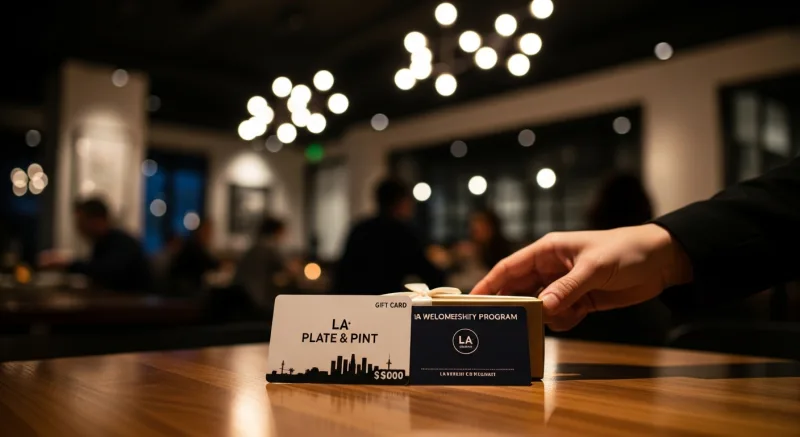
KwickOS AI builds loyalty strategies that account for LA's competitive churn. The system triggers re-engagement offers faster than in other markets: a customer who has not visited in 10 days (versus the 21-day threshold used in less competitive markets) receives a personalized offer. The offer is calibrated to their behavior: a foodie explorer gets a "new menu items just launched" notification (novelty appeal). A value-oriented regular gets a "your favorite dish + a free appetizer" bundle (reinforcing existing preference).
Membership programs work in LA when they provide access rather than discounts. A $19/month "insider club" that offers early access to new menu items, exclusive chef's table events, and priority reservations during peak times appeals to LA's status-conscious dining culture without eroding margins through discounts. The AI tracks member engagement and creates Instagram-ready experiences (photogenic special plates, behind-the-kitchen tours) that turn members into social media ambassadors.
Processing Costs at California Scale
California restaurants have among the highest average check sizes in the country, driven by high menu prices that reflect high operating costs. A casual restaurant in LA might average $45 per person compared to $28 nationally. Higher checks mean higher absolute processing fees. At Toast's 2.99% + $0.15, a $45 transaction costs $1.50. At an independent processor's 2.1% + $0.08, it costs $1.03. The $0.47 difference multiplied by 400 daily transactions is $188 daily, or $68,620 annually.
KwickOS processor freedom is especially valuable in California's high-ticket market where the absolute dollar savings per transaction are larger than in lower-cost markets.
LA restaurant owners: Call (888) 355-6996 or visit KwickOS.com to see how AI makes $20 minimum wage survivable.
AI + Loyalty: Smarter Customer Retention
KwickOS combines AI insights with built-in loyalty tools to do something no other POS can: predict which customers are about to stop coming in and automatically re-engage them.
The gift card and loyalty system is not just a punch card — it is connected to AI-powered analytics that identify spending patterns, predict churn risk, and suggest targeted promotions. A customer who used to visit weekly but has not been in for 3 weeks? The system flags them and can trigger an automatic points bonus or e-gift card offer via SMS.
- Smart gift cards — AI suggests optimal gift card denominations based on your average ticket size
- Predictive loyalty — identifies at-risk customers before they leave, triggers re-engagement
- Points optimization — automatically adjusts earn rates during slow periods to drive traffic
- Membership insights — shows which VIP tiers generate the most lifetime value
All included. No add-on fees. Toast charges $75/month for basic loyalty without any AI component.
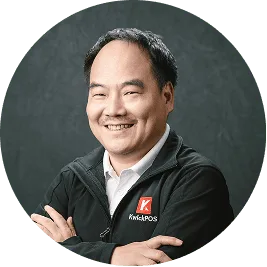
Founder & CIO of KwickOS · 30 Years IT · 20 Years Restaurant Industry
Tom built KwickOS after decades running restaurants and IT companies. Today KwickOS serves 5,000+ businesses across 50 states.