Border Town Fusion: How San Diego Restaurants Use AI to Bridge Two Cultures
Updated March 2026 · 11 min read
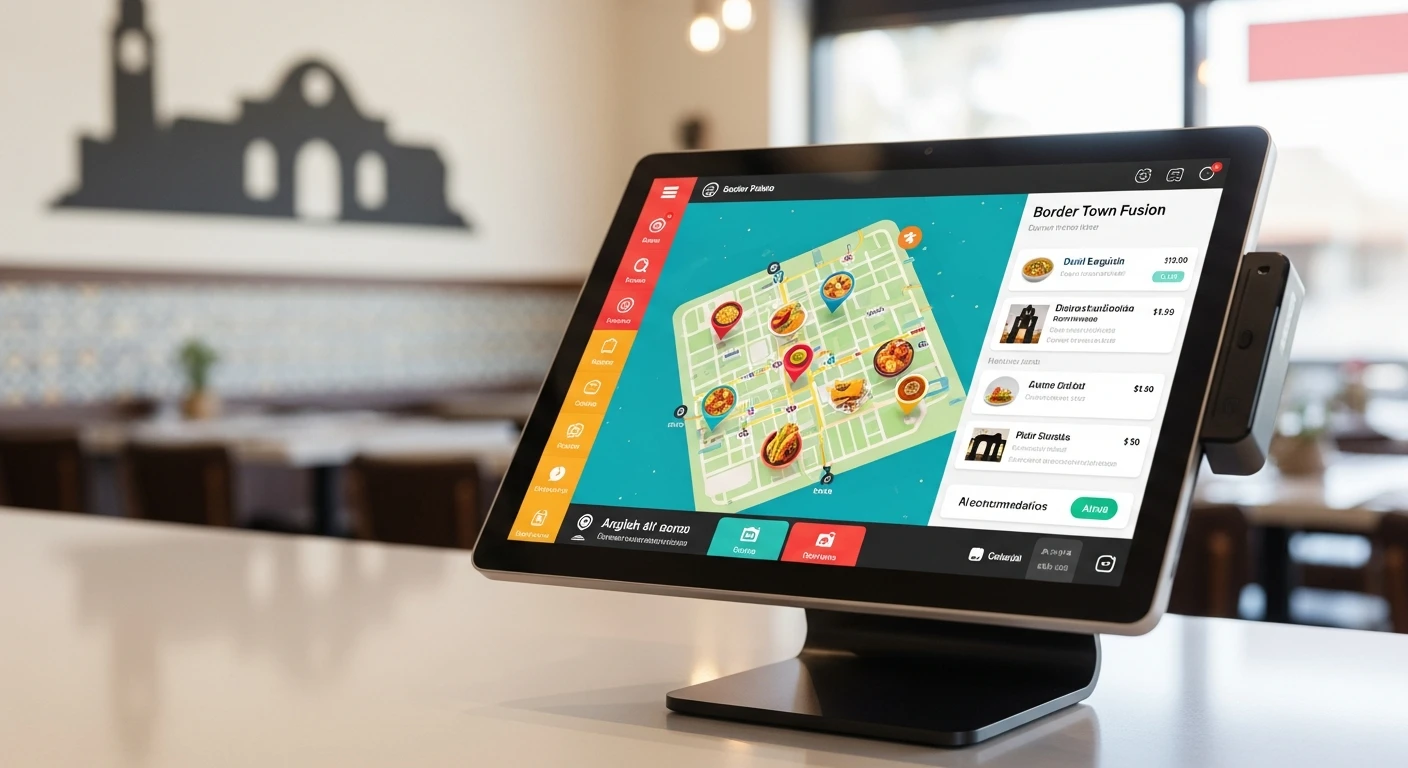
San Diego sits 17 miles from the busiest land border crossing in the Western Hemisphere. The San Ysidro Port of Entry processes 70,000 northbound crossings daily, and the cultural exchange flows in both directions. San Diego's food scene is not Mexican food adapted for American palates — it is a genuine fusion born from a border community where Baja fish tacos, birria ramen, and ceviche tostadas exist alongside craft breweries and Pacific seafood restaurants. This cultural intersection, combined with 35 million annual tourists, a major naval presence, and California's $20 fast-food minimum wage, creates a restaurant market where AI is not a competitive advantage but an operational necessity.
Bilingual by Nature: AI for a Cross-Border Workforce
San Diego's restaurant workforce is deeply bilingual. An estimated 35-40% of San Diego restaurant employees commute from Tijuana, crossing the border daily via the San Ysidro or Otay Mesa ports of entry. These cross-border commuters are often skilled and experienced, but their primary working language is Spanish. Kitchen communication, staff meetings, and training materials need to be accessible in both languages for the operation to function efficiently.
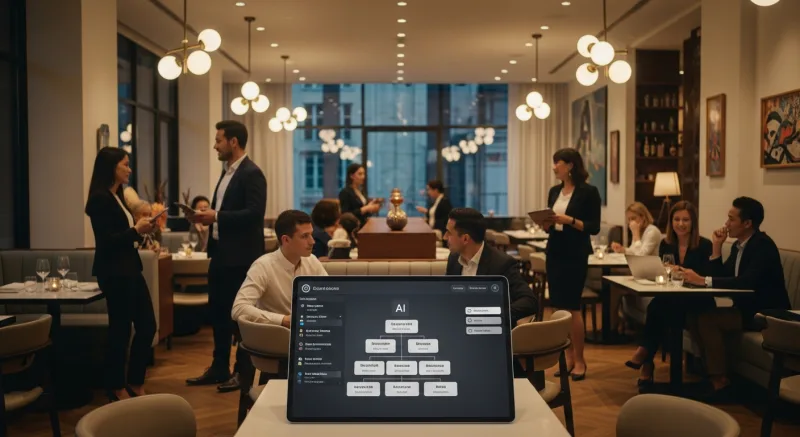
KwickOS native English and Spanish support addresses this reality at every touchpoint. KDS stations display orders in Spanish for the kitchen crew. The POS interface operates in English for front-of-house staff. Server terminals can switch languages per employee login, so a bilingual server sees English while a Spanish-dominant server sees Spanish on the same hardware. KwickPhone processes phone orders in both languages, capturing the significant Spanish-language ordering that comes from San Diego's 30% Hispanic population.
The AI layer adds intelligence to bilingual operations. It identifies when certain Spanish-language menu descriptions generate higher attachment rates for add-ons than their English equivalents, suggesting that the Spanish version's phrasing is more effective and recommending a revision of the English description. This kind of cross-language optimization is invisible to human managers but detectable through AI analysis of item-level conversion data across language interfaces.
Craft Brewery Analytics: San Diego's 150-Brewery Competitive Landscape
San Diego has more craft breweries per capita than any other major American city — over 150 breweries and brewpubs competing for the attention of a population that takes beer more seriously than wine. For restaurants with beer programs, the competitive pressure is intense: your draft list competes against taprooms that brew their own product at zero distribution markup.
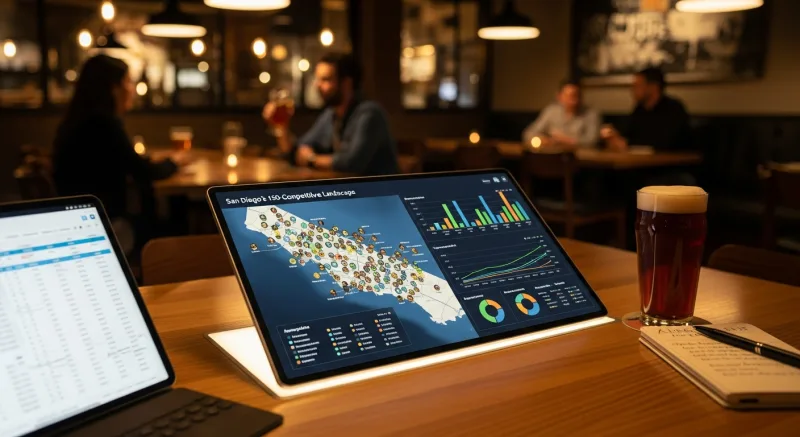
KwickOS AI tracks beer sales velocity by product and identifies emerging preferences before they become obvious. The system detects that your West Coast IPA sales are declining 3% month-over-month while your hazy IPA sales are growing 8%. It recommends adjusting your draft lineup before the IPA transition is visible to competitors. It identifies that Mexican-style lagers outsell all other styles 2:1 during summer but drop to fourth place in winter, suggesting seasonal draft rotation that matches demand curves.
For brewpubs operating their own brewing operations, the AI connects taproom sales to brewing schedules. If your house IPA sells 4 kegs per week and your brewing cycle takes 3 weeks, the system ensures that a new batch starts when you have 3 weeks of supply remaining. Running out of your house beer — the product that differentiates you from every other restaurant with a distributor account — is the most embarrassing operational failure a brewpub can experience.
Naval Base Demand Cycles: AI for Military Customer Patterns
San Diego is home to the largest naval fleet concentration in the world. Naval Base San Diego, Naval Air Station North Island, Marine Corps Air Station Miramar, and Camp Pendleton (just north) collectively support over 100,000 active-duty service members and their families. Ship deployments create dramatic demand fluctuations: when a carrier strike group deploys (3,000-5,000 personnel), restaurants near the base lose a significant customer segment overnight. When the group returns months later, those customers flood back.
KwickOS AI tracks deployment-correlated demand patterns. The system identifies a sudden 15% drop in weekday lunch revenue at a restaurant near 32nd Street Naval Station and correlates it with a known deployment date. Rather than reacting with concern (is something wrong with the restaurant?), the system models the reduced demand period and adjusts staffing and inventory accordingly.
When the fleet returns, the AI predicts the homecoming surge. Ship homecomings are specific dates known weeks in advance. The system recommends increasing staffing and prep for the homecoming weekend, when celebration dinners spike 200-300% at restaurants near the waterfront. It also triggers a re-engagement campaign to previously regular military customers: "Welcome home! Your table is ready."
Beach Tourism Demand: Seasonal Intelligence for a Year-Round Destination
San Diego's temperate climate creates year-round tourism, but with distinct seasonal patterns. Summer (June-August) brings the heaviest beach tourism, increasing restaurant demand in coastal areas (Pacific Beach, Mission Beach, La Jolla) by 40-60%. Spring and fall see convention-driven tourism concentrated downtown near the Convention Center. Winter sees a dip in tourism but an increase in local dining (holidays, cooler evenings that drive indoor restaurant traffic).
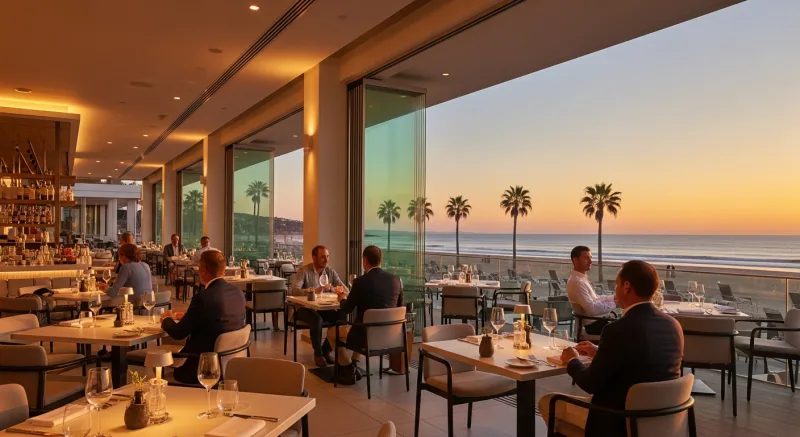
KwickOS AI models these patterns at the neighborhood level. A La Jolla restaurant receives summer tourism surge predictions with staffing recommendations calibrated to weekly tourist density (July 4th week is peak, Labor Day week is secondary peak). A downtown restaurant near the Convention Center receives event-driven predictions based on the convention calendar: Comic-Con (135,000 attendees, $150M economic impact) requires maximum capacity preparation, while a 5,000-person medical conference requires a modest increase.
The AI also differentiates between tourist and local demand at restaurants that serve both. It identifies that weekend lunch is 65% tourist traffic (higher average check, more appetizer orders, longer table times) while weeknight dinner is 80% local (faster turns, loyalty engagement, regular ordering patterns). This segmentation enables different service strategies for different periods: tourist-optimized menus and pacing during weekend lunch, local-optimized efficiency and recognition during weeknight dinner.
California's $20 Wage and San Diego's Response
California's fast-food $20 minimum wage hits San Diego's QSR and casual dining segments hard. Unlike Los Angeles or San Francisco where menu prices can absorb some of the labor increase, San Diego's price expectations are moderated by comparison to its neighbor Tijuana, where a comparable meal costs 60% less. Price-sensitive San Diegans have the literal option of driving 20 minutes south for cheaper dining.
KwickOS AI labor optimization is calibrated for California's regulatory complexity: daily overtime (anything over 8 hours), seventh-day premiums, mandatory meal and rest breaks, and the fast-food council's additional requirements. The system generates schedules that comply with every regulation while minimizing total labor cost — a combinatorial optimization problem that manual scheduling cannot solve for more than 5-6 employees.
The AI identifies labor efficiency opportunities specific to San Diego's cross-border workforce. Employees who commute from Tijuana often prefer concentrated schedules (4 ten-hour shifts rather than 5 eight-hour shifts to reduce border crossing frequency). The system accommodates these preferences while maintaining coverage requirements, improving employee retention among a workforce segment that is skilled, reliable, and cost-effective.
Loyalty for San Diego's Transient-Yet-Loyal Market
San Diego's population includes permanent residents, military families on 2-3 year rotations, university students on 4-year cycles, and tourists who return annually. Each segment requires a different loyalty approach.
KwickOS AI segments automatically. Permanent residents receive long-term loyalty programs with escalating rewards that deepen over years. Military families receive accelerated programs that deliver value within their assignment window. University students receive programs calibrated to the academic calendar: promotions during midterms (stress eating), finals week (late-night study fuel), and the September-October new-student onboarding period when habits form.
Gift cards leverage San Diego's tourism by converting visitor experiences into future revenue. A tourist who loved your Gaslamp restaurant buys a gift card for their San Diego-based colleague. KwickOS tracks the gift card's journey from tourist purchaser to local redeemer and triggers loyalty enrollment for the new customer, turning a tourist transaction into a local acquisition.
KwickPhone for San Diego's Catering and Event Economy
San Diego's year-round good weather makes it a premier outdoor event market. Weddings, corporate retreats, military ceremonies, and beach events create steady catering demand. KwickPhone processes catering inquiries with the specificity these events require: headcount, dietary restrictions, venue logistics, setup times, and billing arrangements. For bilingual events (common in San Diego's cross-cultural market), KwickPhone handles the inquiry in whichever language the caller prefers.
Why San Diego Restaurants Choose KwickOS
Toast's monolingual English-first interface fails San Diego's bilingual reality. Toast's processing lock-in at 2.99% costs San Diego restaurants $8,000-18,000 annually in excess fees versus independent California processors. Toast's cloud-only architecture fails during the Santa Ana wind events that knock out internet infrastructure across Southern California.
KwickOS provides bilingual AI, processor freedom, offline resilience, and the deployment-aware, tourism-modeled, California-compliant intelligence that San Diego's unique market demands.
San Diego restaurant owners: Call (888) 355-6996 or visit KwickOS.com for a demo tailored to San Diego's border-town market.
AI + Loyalty: Smarter Customer Retention
KwickOS combines AI insights with built-in loyalty tools to do something no other POS can: predict which customers are about to stop coming in and automatically re-engage them.
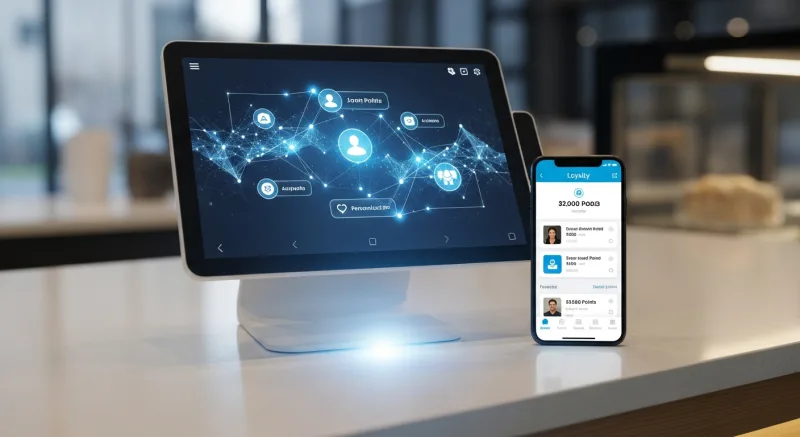
The gift card and loyalty system is not just a punch card — it is connected to AI-powered analytics that identify spending patterns, predict churn risk, and suggest targeted promotions. A customer who used to visit weekly but has not been in for 3 weeks? The system flags them and can trigger an automatic points bonus or e-gift card offer via SMS.
- Smart gift cards — AI suggests optimal gift card denominations based on your average ticket size
- Predictive loyalty — identifies at-risk customers before they leave, triggers re-engagement
- Points optimization — automatically adjusts earn rates during slow periods to drive traffic
- Membership insights — shows which VIP tiers generate the most lifetime value
All included. No add-on fees. Toast charges $75/month for basic loyalty without any AI component.
AI + Loyalty: Smarter Customer Retention
KwickOS combines AI insights with built-in loyalty tools to do something no other POS can: predict which customers are about to stop coming in and automatically re-engage them.
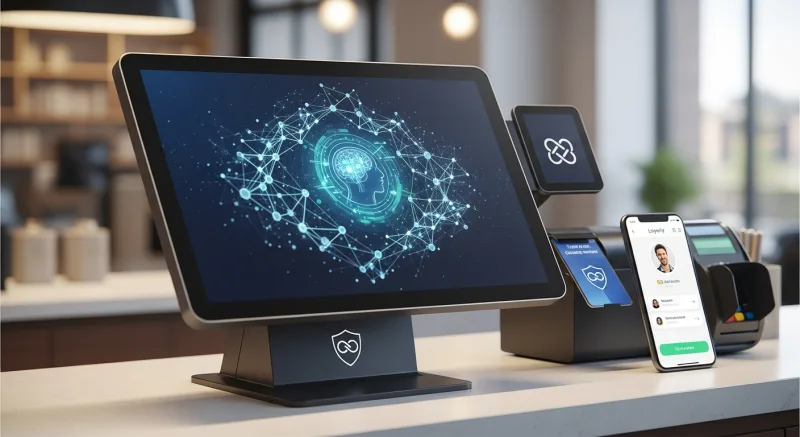
The gift card and loyalty system is not just a punch card — it is connected to AI-powered analytics that identify spending patterns, predict churn risk, and suggest targeted promotions. A customer who used to visit weekly but has not been in for 3 weeks? The system flags them and can trigger an automatic points bonus or e-gift card offer via SMS.
- Smart gift cards — AI suggests optimal gift card denominations based on your average ticket size
- Predictive loyalty — identifies at-risk customers before they leave, triggers re-engagement
- Points optimization — automatically adjusts earn rates during slow periods to drive traffic
- Membership insights — shows which VIP tiers generate the most lifetime value
All included. No add-on fees. Toast charges $75/month for basic loyalty without any AI component.
AI + Loyalty: Smarter Customer Retention
KwickOS combines AI insights with built-in loyalty tools to do something no other POS can: predict which customers are about to stop coming in and automatically re-engage them.
The gift card and loyalty system is not just a punch card — it is connected to AI-powered analytics that identify spending patterns, predict churn risk, and suggest targeted promotions. A customer who used to visit weekly but has not been in for 3 weeks? The system flags them and can trigger an automatic points bonus or e-gift card offer via SMS.
- Smart gift cards — AI suggests optimal gift card denominations based on your average ticket size
- Predictive loyalty — identifies at-risk customers before they leave, triggers re-engagement
- Points optimization — automatically adjusts earn rates during slow periods to drive traffic
- Membership insights — shows which VIP tiers generate the most lifetime value
All included. No add-on fees. Toast charges $75/month for basic loyalty without any AI component.

Founder & CIO of KwickOS · 30 Years IT · 20 Years Restaurant Industry
Tom built KwickOS after decades running restaurants and IT companies. Today KwickOS serves 5,000+ businesses across 50 states.