AI Retail POS: When Your Shelves Restock Themselves
Updated March 2026 · 12 min read
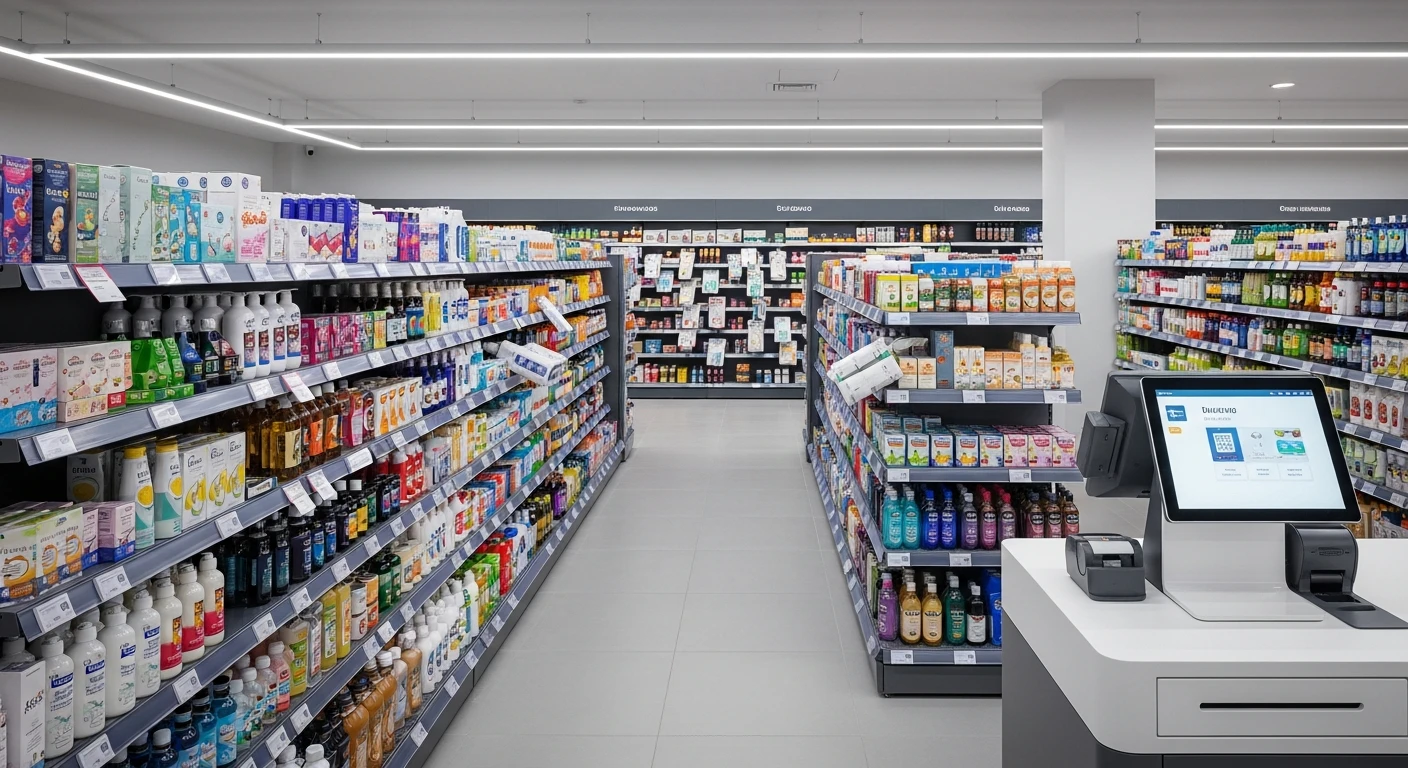
There are two kinds of empty shelves in retail. The kind that means you sold everything — which feels good but means you left money on the table by understocking. And the kind that means your reorder did not arrive in time — which costs you the sale, damages customer trust, and sends the buyer to the store down the street. Both are information failures masquerading as inventory problems.
Independent retailers have been fighting this battle with spreadsheets, intuition, and the time-honored tradition of walking the aisles with a clipboard. The owner notices the hot sauce shelf is thin on a Tuesday afternoon and mentally notes to order more. By Thursday, when she actually places the order, the shelf has been empty for a day. By the time the order arrives the following Tuesday, five customers have gone elsewhere. Each lost sale was $8. Each lost customer might not come back. The total cost of that empty shelf is invisible but substantial.
AI-powered POS systems make this problem solvable by transforming inventory management from a reactive process (notice the gap, order the fill) to a predictive one (forecast the depletion, order the replacement before the gap exists). In 2026, the retailers who are winning are the ones whose shelves seem to magically stay stocked — not because they hired more staff, but because their POS anticipates demand before it materializes.
Automated Reorder Intelligence: Beyond the Min/Max Model
Traditional retail inventory management uses minimum/maximum thresholds. When Item X drops to 5 units, order enough to bring it back to 20. This approach ignores everything that makes retail demand complex: seasonality, day-of-week patterns, promotional impacts, weather effects, and the cascade of related products that sell together.
KwickOS AI replaces static min/max with dynamic demand modeling. For each SKU, the system builds a consumption forecast that accounts for historical velocity (you sell 4 units per day on average), weekly patterns (Monday sells 6, Wednesday sells 2), seasonal trends (sales double in December), and promotional lift (your 20%-off sale last month increased velocity by 150% for two weeks, then dropped below baseline for three days as customers had overbought).
The reorder point shifts daily. During the pre-Christmas rush, the system triggers reorders when stock hits 15 units because daily velocity has tripled. In February's slow season, reorders trigger at 4 units because weekly velocity has dropped to 12. The same SKU, managed dynamically, maintains availability while reducing average inventory holding by 20-30% compared to static thresholds.
The AI also manages supplier variability. Supplier A delivers reliably in 3 days. Supplier B averages 5 days but occasionally takes 8. The system builds different safety stock calculations for each supplier, ordering from Supplier B earlier to account for their unreliability. When Supplier B's lead time improves (new data shows 4-day averages), the model adjusts and reduces safety stock accordingly.
Shrinkage Detection: Finding the Invisible Margin Leak
Retail shrinkage — the gap between what inventory records say you have and what actually exists on your shelves — averages 1.6% of revenue industry-wide. For a store doing $1 million annually, that is $16,000 in missing inventory. The causes are shoplifting (37%), employee theft (28%), administrative error (25%), and vendor fraud (10%). Most retailers discover shrinkage during periodic physical counts, weeks or months after it occurred.

KwickOS AI detects shrinkage in near-real-time by continuously comparing expected inventory (starting count minus sales minus known adjustments) against actual movement patterns. The system flags anomalies: a product that should have 24 units based on sales data but only has 18 when a receiving count or spot check is performed. The 6-unit discrepancy happened sometime in the last 7 days, narrowing the investigation window from "sometime since the last full count" to a specific week.
The AI also detects patterns that suggest employee theft or collusion. A cashier who consistently voids one transaction per shift during the same 15-minute window. A stock clerk whose receiving counts are consistently lower than supplier shipment records. A product category that shows higher shrinkage when a specific employee is on shift. These patterns are invisible to manual observation but detectable through data analysis.
KwickOS fingerprint authentication adds accountability to every transaction. Register access, voids, returns, and manual price overrides are tied to a specific employee biometric, not a login code that can be shared. When shrinkage is detected, the audit trail leads to identifiable individuals and specific transactions.
Customer Purchase Prediction: Anticipating What They Want Next
Retail AI goes beyond inventory management into customer behavior prediction. KwickOS tracks purchase patterns at the individual customer level (for loyalty members) and at the aggregate level (for all transactions), building models that predict future purchasing behavior.
At the individual level, the AI identifies replenishment cycles. A customer who buys a specific vitamin supplement every 30 days is predicted to need it again around day 28. A timely text reminder — "Your [product] is probably running low. In stock and ready for you" — converts a future purchase that might happen at any competitor into a guaranteed purchase at your store. The reminder costs nothing and captures revenue that would otherwise drift to Amazon or a pharmacy chain.
At the aggregate level, the AI identifies co-purchase patterns that inform merchandising decisions. Customers who buy organic pasta also buy imported olive oil 45% of the time. Customers who buy craft beer also buy artisan cheese 30% of the time. These co-purchase relationships suggest cross-merchandising displays (place the olive oil near the pasta) and bundled promotions ("pasta night bundle: pasta + sauce + olive oil, save $2").
Loyalty Programs That Increase Basket Size, Not Just Visits
Retail loyalty programs often focus on visit frequency, but the higher-leverage metric is basket size. A customer who visits once a week and spends $35 is more valuable than a customer who visits twice a week and spends $15 per visit. Increasing the $35 customer's basket to $42 (a 20% increase) generates more incremental revenue than adding a visit from the $15 customer.
KwickOS AI builds loyalty incentives around basket expansion. A customer whose average basket is $30 receives a "spend $40 and earn double points" offer that nudges them above their comfort threshold. The AI calibrates the threshold precisely — $40 is achievable (one additional item) without being so aggressive ($60) that the customer ignores it.
The system personalizes basket expansion suggestions based on purchase history. A customer who regularly buys coffee beans but has never purchased a grinder receives: "Add any coffee grinder to your next order and earn 500 bonus points." The suggestion is relevant (coffee-adjacent), margin-positive (grinders carry high margins), and introduces the customer to a product category they have not explored at your store.
Gift cards in retail create a unique economic advantage: 6-10% of gift card value is never redeemed (breakage), representing pure profit. KwickOS maximizes gift card revenue by identifying seasonal purchase peaks and launching promotions that drive gift card sales during high-intent periods. The system tracks that gift card purchases spike 400% during the December 20-24 window and recommends an in-store display positioned at checkout during that period. The display's conversion rate is tracked daily, and placement or promotion adjustments are recommended in real time.
KwickPhone: Handling Retail Phone Inquiries Without Pulling Staff from the Floor
Retail stores receive a steady stream of phone calls that pull employees away from customers on the floor: "Do you have [product] in stock?", "What are your hours?", "Do you carry [brand]?", "What is the price of [item]?", "Can you hold [product] for me?" Each call takes 60-120 seconds and interrupts whatever the employee was doing for an in-store customer.
KwickPhone handles these calls by accessing the store's real-time inventory data. "Do you have the Lodge 12-inch cast iron skillet in stock?" The AI checks inventory: "Yes, we currently have 3 in stock. Would you like me to hold one for you?" If the customer says yes, the system creates a hold with the customer's name and a 24-hour expiration, and sends a confirmation text with the store address.
For product inquiries that require more nuance ("Do you have anything for removing rust from cast iron?"), KwickPhone can search the product catalog by category and description, providing relevant options. For complex questions, it collects the customer's question and routes it to a staff member for callback during a non-peak period.
Dynamic Pricing for Perishable and Seasonal Inventory
Retailers with perishable goods (specialty food stores, florists, bakery-cafes) or heavily seasonal inventory (holiday decor, outdoor furniture, seasonal clothing) face a markdown optimization problem. Discount too early and you sacrifice margin. Discount too late and the product has no value.
KwickOS AI tracks sell-through rates and triggers markdown recommendations at the optimal point. A seasonal product with 60% sell-through at the halfway point of its selling season is on track — no markdown needed. The same product at 35% sell-through needs a 15% markdown now to avoid being stuck with 40% of the inventory when the season ends. A 25% markdown in the last week is too late — demand evaporates as the season passes.
For perishable goods, the system triggers time-based markdowns. A specialty cheese that expires in 3 days gets a 20% discount that appears on the register and the customer-facing display. The markdown is calculated to be the minimum discount required to clear the remaining inventory before expiration, based on historical price sensitivity for that product category.
Multi-Location Retail Intelligence
Retail operators with 2+ locations face the inventory distribution challenge: the same product might be overstocked at Location A and out of stock at Location B. Traditional management discovers this during weekly reporting. AI discovers it in real time.

KwickOS identifies inventory imbalances across locations and recommends transfers. Location A has 28 units of a slow-moving product that Location B sold out of yesterday. A 12-unit transfer to Location B costs $15 in logistics but recovers $180 in sales. The AI calculates the net benefit of every potential transfer and prioritizes the recommendations by ROI.
The system also identifies location-specific demand patterns. Location A's customer base prefers premium products with higher margins. Location B's neighborhood is more price-sensitive. The AI recommends different assortments for each location: more premium SKUs at A, more value SKUs at B. The same brand deployed at both locations but with location-optimized assortments generates higher total revenue than a one-size-fits-all inventory approach.
Labor Optimization for Retail's Variable Traffic
Retail traffic follows patterns that vary by day, time, season, and weather. Saturday afternoon traffic might be 3x Wednesday morning. The week before Christmas is 5x a normal week. A rainy Tuesday suppresses foot traffic by 30%. Staffing should match these patterns, but most retail schedules are built on fixed weekly templates.
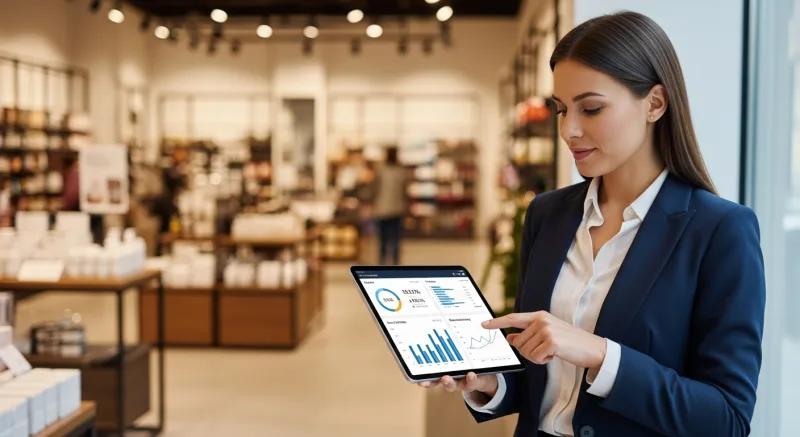
KwickOS AI generates staffing recommendations based on forecasted traffic and historical revenue-per-labor-hour data. The system learns that adding a third floor associate on Saturday from 1-5 PM generates an additional $800 in revenue (from fewer missed customer interactions and shorter checkout lines) at a labor cost of $72. It identifies that the Tuesday 10 AM-2 PM shift can be handled by one person instead of two, saving $80 in labor with no measurable sales impact.
The system tracks employee-specific sales performance, identifying top sellers who should be scheduled during high-traffic periods and employees whose strengths lie in merchandising or stock work who should be scheduled during off-peak hours when the floor is quiet and the backroom needs attention.
Why Toast and Square Miss the Retail Market
Toast is a restaurant POS. It has no barcode scanning, no SKU-level inventory management, no retail-specific features whatsoever. It is irrelevant for retail.
Square for Retail exists and handles basic inventory and transactions. But Square's AI capabilities are minimal. Square cannot predict demand at the SKU level, generate dynamic reorder points, detect shrinkage patterns, or personalize loyalty offers based on purchase prediction models. Square counts inventory. KwickOS manages inventory — predicting depletion, automating replenishment, identifying margin leaks, and optimizing assortment across locations.
The processor lock-in difference also matters. Square charges 2.6% + $0.10 per transaction. On $500,000 in annual card sales, that is $13,500. An independent processor at 2.1% + $0.08 charges $10,900. KwickOS is processor-agnostic, letting retailers negotiate the best rate available. Annual savings: $2,600 that goes directly to the bottom line.
Retail owners ready for AI-powered inventory management: Call (888) 355-6996 or visit KwickOS.com to see intelligent retail operations in action.
AI + Loyalty: Smarter Customer Retention
KwickOS combines AI insights with built-in loyalty tools to do something no other POS can: predict which customers are about to stop coming in and automatically re-engage them.
The gift card and loyalty system is not just a punch card — it is connected to AI-powered analytics that identify spending patterns, predict churn risk, and suggest targeted promotions. A customer who used to visit weekly but has not been in for 3 weeks? The system flags them and can trigger an automatic points bonus or e-gift card offer via SMS.
- Smart gift cards — AI suggests optimal gift card denominations based on your average ticket size
- Predictive loyalty — identifies at-risk customers before they leave, triggers re-engagement
- Points optimization — automatically adjusts earn rates during slow periods to drive traffic
- Membership insights — shows which VIP tiers generate the most lifetime value
All included. No add-on fees. Toast charges $75/month for basic loyalty without any AI component.
AI + Loyalty: Smarter Customer Retention
KwickOS combines AI insights with built-in loyalty tools to do something no other POS can: predict which customers are about to stop coming in and automatically re-engage them.
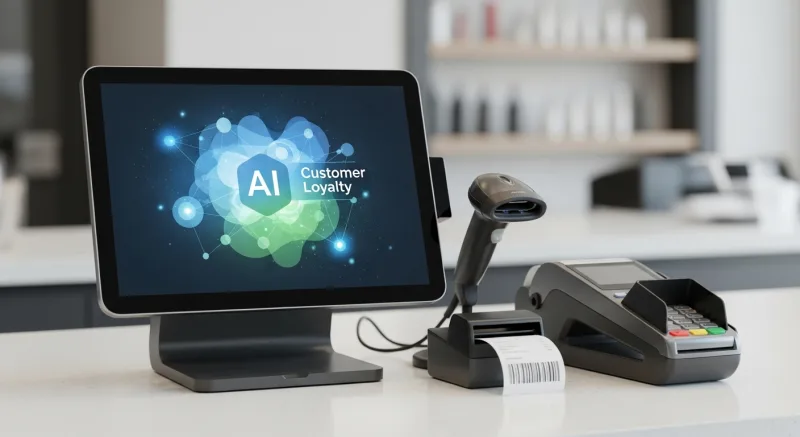
The gift card and loyalty system is not just a punch card — it is connected to AI-powered analytics that identify spending patterns, predict churn risk, and suggest targeted promotions. A customer who used to visit weekly but has not been in for 3 weeks? The system flags them and can trigger an automatic points bonus or e-gift card offer via SMS.
- Smart gift cards — AI suggests optimal gift card denominations based on your average ticket size
- Predictive loyalty — identifies at-risk customers before they leave, triggers re-engagement
- Points optimization — automatically adjusts earn rates during slow periods to drive traffic
- Membership insights — shows which VIP tiers generate the most lifetime value
All included. No add-on fees. Toast charges $75/month for basic loyalty without any AI component.
AI + Loyalty: Smarter Customer Retention
KwickOS combines AI insights with built-in loyalty tools to do something no other POS can: predict which customers are about to stop coming in and automatically re-engage them.
The gift card and loyalty system is not just a punch card — it is connected to AI-powered analytics that identify spending patterns, predict churn risk, and suggest targeted promotions. A customer who used to visit weekly but has not been in for 3 weeks? The system flags them and can trigger an automatic points bonus or e-gift card offer via SMS.
- Smart gift cards — AI suggests optimal gift card denominations based on your average ticket size
- Predictive loyalty — identifies at-risk customers before they leave, triggers re-engagement
- Points optimization — automatically adjusts earn rates during slow periods to drive traffic
- Membership insights — shows which VIP tiers generate the most lifetime value
All included. No add-on fees. Toast charges $75/month for basic loyalty without any AI component.

Founder & CIO of KwickOS · 30 Years IT · 20 Years Restaurant Industry
Tom built KwickOS after decades running restaurants and IT companies. Today KwickOS serves 5,000+ businesses across 50 states.