Every Nail Tech's Commission Calculated Wrong Last Month. AI Fixes That.
Updated March 2026 · 11 min read
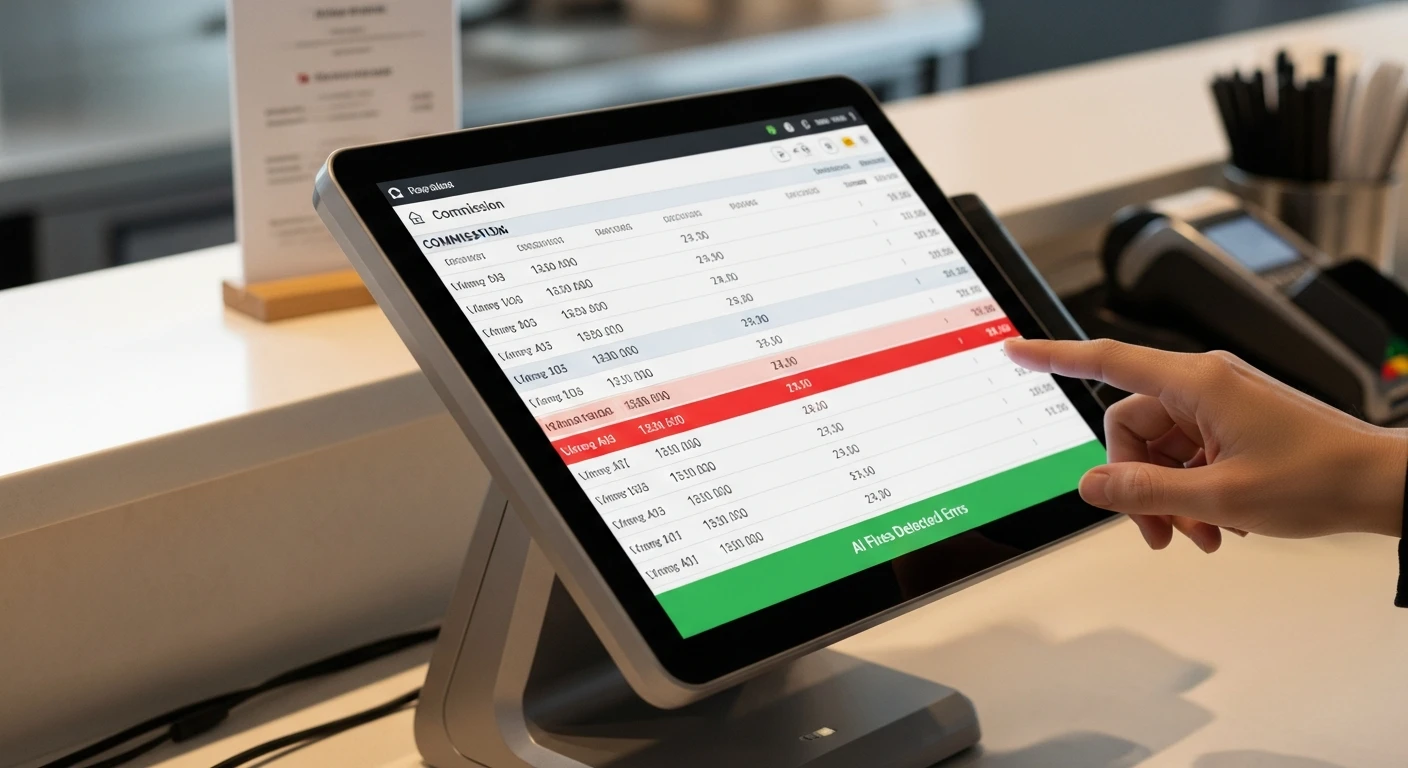
It is the first of the month and you are sitting at your desk with a calculator, a printed report, and a growing headache. Lisa did 142 services at 60% commission. Maria did 118 services at 55% commission but had a different rate for gel sets. The new tech, Jenny, is on a guaranteed minimum for her first three months. Two nail techs split a group booking last Saturday. Three customers paid partially with gift cards, partially with credit cards, and one used loyalty points for a discount. You have been calculating commissions for two hours and you still are not confident the numbers are right.
Here's the real cost of that chaos.
This is not a minor administrative inconvenience. Commission errors cause more nail salon employee disputes than any other issue. A technician who believes she was underpaid $80 does not file a complaint — she starts looking for another salon. In an industry where the average nail technician can walk across the street and start at a competitor tomorrow, commission accuracy is not an accounting function. It is a retention function.
Diva Nail Beauty, operating 4 stores with 4 terminals on KwickOS, achieved a 90% efficiency increase by automating commission tracking. That efficiency gain did not come from working harder. It came from eliminating the manual calculations that consumed hours and generated errors. AI does not make commission calculation faster. It makes commission calculation perfect.
How AI Handles Commission Complexity in Nail Salons
Nail salon commission structures are among the most complex in any service industry. A single salon might have five different commission tiers based on seniority, different rates for different service categories (manicures vs. pedicures vs. gel vs. acrylics), bonus rates for retail product sales, deductions for supply usage, and guaranteed minimums for new hires. When a single transaction involves multiple services at different rates performed by different technicians, the math becomes a tangled web.
KwickOS configures each technician's complete compensation structure in the system. When a service is rung up, the commission is calculated instantly based on the performing technician, the service category, any active promotional pricing, and the payment method. At the end of any day, week, or pay period, the owner can generate commission reports that show exactly what each technician earned, broken down by service, tip, retail commission, and deductions.
But accuracy is just the beginning.
The AI adds intelligence on top of accuracy. It identifies that Technician A's commission has been declining for three consecutive weeks — not because she is doing fewer services but because her average ticket is dropping. The system cross-references and finds that A has been doing more basic manicures and fewer gel sets compared to her historical mix. Is she avoiding gel services because of a supply issue? Is she rushing through appointments and not offering upgrades? The data prompts a coaching conversation before the trend becomes a resignation.
Walk-In Volume Prediction: Staff the Front Desk with Data
Nail salons operate on a hybrid booking model: approximately 40-60% of revenue comes from appointments and 40-60% from walk-ins. This split creates a staffing dilemma. If you staff for appointments only, walk-in customers face long waits and leave. If you staff for maximum walk-in capacity, you pay idle technicians during slow periods.
KwickOS AI predicts walk-in volume by hour, day, and season based on historical patterns and external factors. The system learns that Saturday walk-ins peak between 11 AM and 2 PM. It detects that walk-in volume increases 25% the week before prom season, 30% before Mother's Day, and 40% before Christmas. It identifies that rainy Saturdays reduce walk-ins by 20% but increase appointment rebooking for the following week.
With these forecasts, the system generates staffing recommendations. This Saturday, expect 35 walk-ins between 11 AM and 3 PM based on seasonal patterns and weather. You need 6 technicians on the floor during that window. Tuesday afternoon typically sees 8 walk-ins: 3 technicians are sufficient. The AI also recommends which technicians to schedule based on their speed and service mix — faster technicians during walk-in heavy periods to reduce wait times, and detail-oriented technicians during appointment-heavy periods when clients expect unhurried service. Not sure if adding staff pencils out? Use our break-even calculator to run the numbers before you hire.
Wait Time Management: The Psychology of the Lobby
A nail salon lobby filled with waiting customers creates two psychological problems. The waiting customers grow frustrated after 15 minutes. New walk-ins who see a full lobby walk out without asking. Both scenarios cost revenue.
So how do you solve this?
KwickOS displays real-time wait time estimates at the front desk and, optionally, on a customer-facing display. "Estimated wait: 12 minutes for a manicure, 25 minutes for a pedicure, 8 minutes for a gel change." These estimates are not guesses — they are calculated from the current service queue, each technician's average speed for their current service, and their remaining time to completion.
The system also offers a virtual queue feature. Walk-in customers can leave their phone number and receive a text when their technician is 5 minutes from availability. This eliminates the lobby-crowding problem entirely — customers can browse nearby stores or wait in their car instead of occupying lobby seats and intimidating new walk-ins.
Service Upselling: AI Identifies the $15 Upgrade Opportunity
The difference between a basic manicure ($25) and a gel manicure ($40) is $15 in additional revenue and $11 in additional profit. The difference between a standard pedicure ($35) and a deluxe pedicure with callus treatment ($55) is $20 in additional revenue and $16 in additional profit. Most nail salons leave these upsell opportunities to individual technician initiative, which means they happen inconsistently.
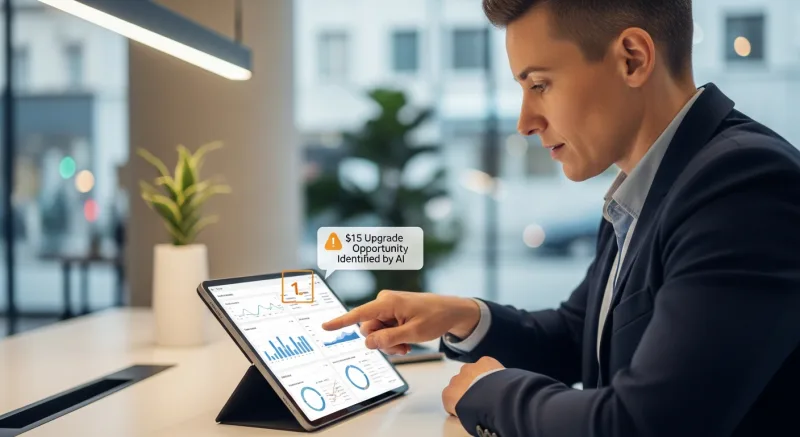
KwickOS AI identifies upsell opportunities at the point of service entry. When a walk-in requests a basic manicure, the system prompts the front desk: "This customer's last visit was a gel manicure. Suggest gel today." When a regular pedicure client arrives, the system notes: "Client has purchased the deluxe upgrade 3 of the last 5 visits. Offer deluxe." These prompts transform upselling from a personality-dependent behavior into a systematic practice.
And it doesn't stop at individual transactions.
The AI also identifies seasonal and trend-based upsell opportunities. It detects that nail art add-ons ($10-20 per service) spike during wedding season and recommends featuring art designs on the display screen during April through June. It notices that dip powder services are growing 15% month-over-month among your clients aged 25-35 and suggests adding a "try dip powder" promotion to capture the trend.
Loyalty Programs That Match Nail Salon Visit Frequency
Nail salon clients visit with remarkable regularity — every 2-3 weeks for gel, every 3-4 weeks for acrylics, every 4-6 weeks for natural nails. This predictable cadence makes loyalty programs extraordinarily effective when calibrated correctly.
KwickOS AI tailors loyalty rewards to each client's visit pattern. A gel client who visits every 14 days earns a free nail art add-on after 6 visits (every 3 months). An acrylic client who visits every 21 days earns a free full set after 8 visits (approximately every 6 months). The reward timing is calibrated so clients are approaching their reward threshold just when the temptation to try a new salon is highest — creating a psychological switching cost that keeps them loyal.
The system detects when a client breaks their pattern. A 14-day gel client who has not returned by day 18 receives an automated text: "We miss you! Your next gel manicure includes a complimentary hand treatment." This intervention costs the salon $3 in product but protects a client worth $1,300+ annually.
Now here's where it gets even more interesting.
Gift cards in nail salons drive significant new client acquisition. KwickOS identifies that 55% of nail salon gift card recipients are first-time visitors to the salon. The AI triggers a first-visit experience flow: the new client receives a welcome text with booking instructions, a recommendation for their first service, and automatic loyalty enrollment. A first-time gift card redeemer who has a positive experience converts to a regular client at a 40% rate — making gift cards one of the most cost-effective acquisition channels available.
KwickPhone: Managing the Most Phone-Dependent Industry
Nail salons receive more phone calls per employee than almost any other retail or service business. Appointment bookings, availability checks, pricing inquiries, walk-in wait time questions, and modification requests create a constant stream of calls. During peak hours, the receptionist cannot answer every call while also checking in walk-ins, processing payments, and managing the lobby.
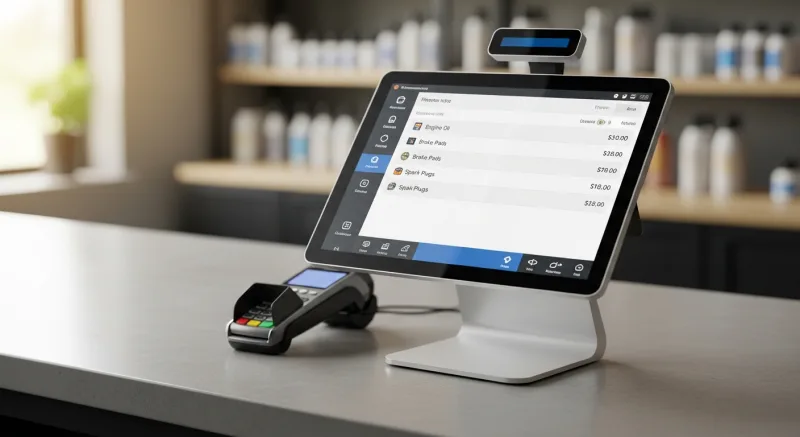
KwickPhone handles nail salon calls with service-specific intelligence. It checks real-time availability when a caller requests an appointment: "We have openings for a gel manicure at 2:30 PM with Lisa or 3:00 PM with Maria. Would either work for you?" It provides accurate pricing for every service on the menu. It quotes current wait times for walk-in inquiries. For complex requests (bridal party bookings, event appointments), it collects details and routes to the manager.
The system reduces front desk phone burden by 60-70%, allowing the receptionist to focus on in-salon customer experience. For a salon that currently lets 15-20 calls go to voicemail daily, KwickPhone converts an estimated 35-45% of those calls into booked appointments that would have otherwise gone to competitors.
Supply Management: From Polish Walls to Cotton Balls
Nail salon inventory spans hundreds of SKUs across fundamentally different categories: nail polish colors (50-200 individual shades), gel and acrylic supplies (liquids, powders, tips), disposables (cotton, files, buffers, toe separators), and retail products (hand creams, cuticle oils, nail strengtheners). Managing this inventory manually means either constant stockouts of popular colors or overstocking of slow-moving shades.
KwickOS AI tracks product usage at the service level. When a gel manicure is performed, the system deducts the average gel quantity, disposable supplies, and the specific polish color used. Over time, the AI builds a consumption profile for every product. It identifies that OPI "Lincoln Park After Dark" is used in 12% of all gel services and should never be out of stock, while Essie "Marshmallow" is used in 0.5% of services and can be reordered only when depleted.
For polish color management, the AI analyzes seasonal color trends from your own sales data. It identifies that warm reds and golds spike 40% in November-December, that pastels dominate April-May, and that nudes are consistent year-round. Reorder recommendations adjust for these patterns, ensuring your color wall reflects what clients will actually choose. Want to forecast your supply costs? Try our cash flow forecast tool.
Multi-Location Intelligence for Nail Salon Chains
Nail salon owners who expand to 2-5 locations face unique management challenges. Service quality must be consistent across locations. Commission structures may vary by market. Walk-in patterns differ dramatically between a suburban strip mall location and an urban downtown salon.
KwickOS provides centralized dashboards that compare performance across locations on every metric: revenue per technician, average ticket, walk-in conversion rate, service mix, retail attachment rate, and client retention. The AI identifies best practices at one location and recommends implementation at others. Location 2's higher retail sales correlate with a specific display layout that Location 1 and 3 should adopt. Location 3's lower client retention traces to longer wait times that additional Saturday staffing would solve.
Why Toast and Square Miss the Nail Salon Market
Toast is irrelevant for nail salons. It has no appointment system, no commission engine, no service-provider assignment, and no walk-in queue management. Toast was built for restaurants and has no mechanism for the service-provider-to-client relationship that defines a nail salon. See the full KwickOS vs Toast comparison for a detailed feature breakdown.
Square Appointments provides basic booking but lacks the intelligence nail salons need. Square cannot calculate multi-tier commissions with service-category differentials and supply deductions. It cannot predict walk-in volume or generate staffing recommendations. Its loyalty program does not adapt to individual client visit frequencies or trigger timely re-engagement for overdue clients. Read the KwickOS vs Square comparison for the full picture.
KwickOS understands that a nail salon is a service manufacturing operation with the complexity of a restaurant kitchen and the relationship dynamics of a medical practice. The AI manages this complexity so the salon owner can focus on what actually builds the business: client experience and team development.
Nail salon owners ready for automated commissions and smarter scheduling: Call (888) 355-6996 or visit KwickOS.com for a demo designed for beauty service operations.
AI + Loyalty: Smarter Customer Retention
KwickOS combines AI insights with built-in loyalty tools to do something no other POS can: predict which customers are about to stop coming in and automatically re-engage them.
The gift card and loyalty system is not just a punch card — it is connected to AI-powered analytics that identify spending patterns, predict churn risk, and suggest targeted promotions. A customer who used to visit weekly but has not been in for 3 weeks? The system flags them and can trigger an automatic points bonus or e-gift card offer via SMS.
- Smart gift cards — AI suggests optimal gift card denominations based on your average ticket size
- Predictive loyalty — identifies at-risk customers before they leave, triggers re-engagement
- Points optimization — automatically adjusts earn rates during slow periods to drive traffic
- Membership insights — shows which VIP tiers generate the most lifetime value
All included. No add-on fees. Toast charges $75/month for basic loyalty without any AI component.

Founder & CIO of KwickOS · 30 Years IT · 20 Years Restaurant Industry
Tom built KwickOS after decades running restaurants and IT companies. Today KwickOS serves 5,000+ businesses across 50 states.