The Stylist Who Left Took 40 Clients. AI Would Have Kept Them.
Updated March 2026 · 12 min read
Last month, your senior stylist gave two weeks notice. She had been with you for three years, built a book of 85 regular clients, and generated $8,500 per month in service revenue. On her last day, she posted on Instagram that she was moving to a new salon across town. Within a week, 40 of her clients had followed her. You did not just lose a stylist. You lost $4,000 per month in revenue — $48,000 annually — and you had no tool to prevent it.
This is the hair salon industry's most devastating and most predictable failure. Stylists leave. It happens with statistical certainty: annual turnover in hair salons averages 40-60%. The question is not whether you will lose a stylist but whether the clients they built will belong to the stylist or to the salon. In 2026, that question is answered by your technology.
An AI-powered POS system shifts client relationships from individual stylists to the salon itself. It captures every client preference, service history, product usage, and color formula in the salon's system — not in the stylist's memory. When a stylist leaves, the next stylist has complete client intelligence on day one. The client does not need to explain their color history, their preferred cutting technique, or the product that controls their frizz. The salon already knows.
Client Intelligence: What AI Captures That Stylists Keep in Their Heads
A good stylist remembers that Mrs. Rodriguez likes her highlights three shades lighter than her natural color, prefers the back section done first, always wants a blowout, and is allergic to a specific keratin brand. This knowledge took 12 appointments to build. It lives entirely in the stylist's memory. When the stylist leaves, it leaves too.
KwickOS captures every service detail in a structured client profile. Color formulas with mixing ratios. Preferred products used during service. Timing between appointments (Mrs. Rodriguez comes every 7 weeks like clockwork). Service preferences logged by the stylist after each visit. Before/after notes that document what worked and what the client wanted adjusted next time.
The AI goes beyond recording what happened. It predicts what should happen next. Mrs. Rodriguez's 7-week cycle means she is due for an appointment in 10 days. The system sends an automated booking reminder. It notes that her last three appointments included a deep conditioning treatment added at the chair — the AI suggests pre-booking the treatment to save time and ensure product availability. It flags that her color formula was adjusted slightly at the last visit and prompts the next stylist to review the notes before the appointment begins.
Booking Gap Prediction: Fill Tomorrow's Empty Chair Today
An empty stylist chair during business hours is the most expensive waste in a hair salon. A chair that generates $75 per hour when occupied and sits empty for 3 hours per day costs $225 daily, or $58,500 annually. Most salon owners see gaps in the schedule and react by posting a same-day discount on social media. By then, the opportunity window has closed — the client who might have booked has already made other plans.
KwickOS AI predicts scheduling gaps 48-72 hours in advance by analyzing booking patterns, cancellation probabilities, and historical no-show rates. The system identifies that Tuesday afternoon consistently has 4 empty hours across your stylists. It detects that clients who book Tuesday appointments cancel at a 15% rate (higher than the 8% average), suggesting that Tuesday clients are tentative bookers who reschedule when something better comes up.
Armed with this intelligence, the system launches targeted outreach to fill predicted gaps. Clients whose records show flexibility in scheduling receive a text: "We have openings Tuesday afternoon with a complimentary deep conditioning upgrade." The AI selects clients who have visited on Tuesdays before, who respond to promotional offers, and whose appointment cycle suggests they are due for a visit. This targeted approach fills gaps at a 25% conversion rate versus the 3% response rate of generic social media posts.
Commission and Compensation: AI-Powered Fairness
Hair salon compensation structures are notoriously complex: base pay plus commission on services, commission on retail products, tip distribution, booth rental deductions, and product usage charges. Calculating this manually leads to errors that erode stylist trust and accelerate turnover.
Diva Nail Beauty, a KwickOS customer with 4 stores and 4 terminals, achieved a 90% efficiency increase through automated commission tracking. The same capability applies to hair salons where commission structures are even more complex. KwickOS calculates each stylist's compensation in real time: service commission at their negotiated rate, retail commission on products sold, tips distributed according to salon policy, minus product charges for color used during services.
The AI adds intelligence to compensation data. It identifies that Stylist A generates 30% more retail revenue per client than Stylist B, not because A is a better salesperson but because A consistently recommends products during the blowout phase when clients are relaxed and receptive. This insight becomes a coaching opportunity: train all stylists to make product recommendations during blowout rather than at checkout when clients are focused on paying.
Product Inventory: AI for Color Rooms and Retail Shelves
Hair salons manage two distinct inventory categories: professional products used during services (color, developer, treatments) and retail products sold to clients. These categories have completely different demand patterns, margin profiles, and replenishment cycles.
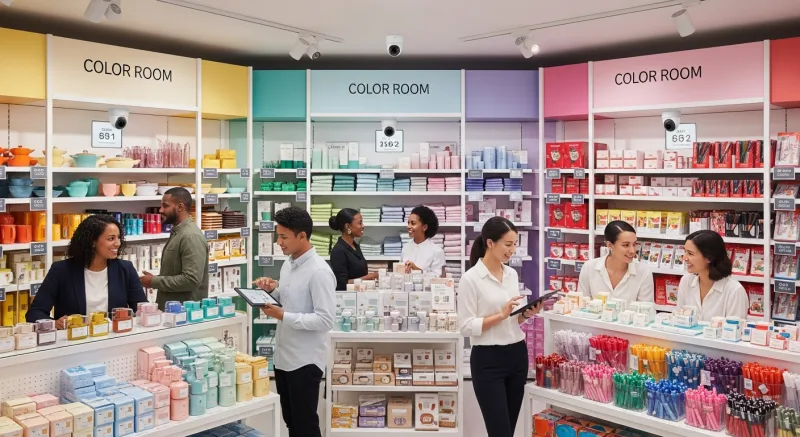
Professional product inventory correlates directly with service bookings. KwickOS AI forecasts product consumption based on upcoming appointments. Next week's schedule includes 18 color services, 12 highlight appointments, and 8 keratin treatments. The system calculates the exact quantity of each product needed: 14 tubes of Level 7 color, 6 tubes of Level 9, 3 liters of 20-volume developer, and 4 keratin treatment kits. If current inventory is insufficient, the system generates a supplier order with delivery timed before the first affected appointment.
Retail inventory follows consumer behavior patterns that the AI learns over time. It identifies that smoothing serums sell 40% faster in summer (humidity season), while volumizing products peak in winter. The system adjusts reorder quantities seasonally, preventing the common problem of overstocking summer products into fall and understocking winter products in October.
The AI also tracks retail sales by stylist, identifying which stylists are product recommendation leaders and which are leaving retail revenue on the table. A stylist who completes 25 appointments per week but sells zero retail products represents a missed opportunity that targeted coaching can address.
Loyalty and Membership Programs for Recurring Revenue
Hair salon visits are inherently recurring — every client needs a haircut or color touch-up at regular intervals. Yet most salons treat each visit as a standalone transaction, leaving the recurring relationship unmanaged and vulnerable to competitive poaching.
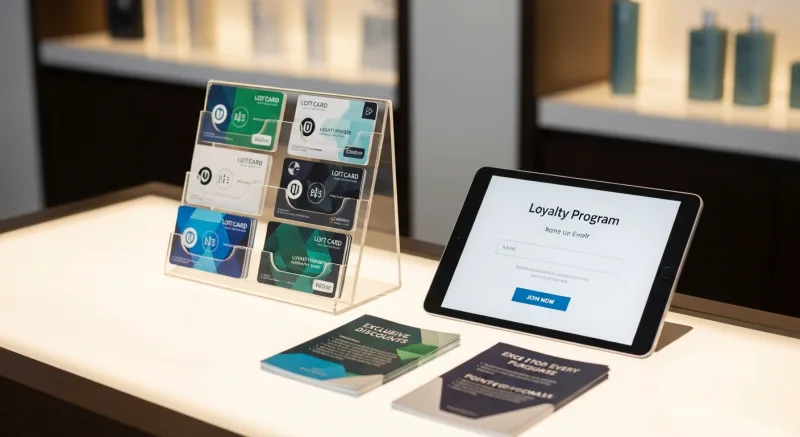
KwickOS builds loyalty programs around the salon's natural visit cadence. A client who visits every 6 weeks earns a reward every 5th visit. A client who adds retail purchases to their service appointments earns accelerated points. The AI calibrates reward timing to just before the point when a client might consider trying a competitor — the free deep conditioning treatment arrives when the client is at peak receptivity, not after they have already left.
Membership programs create predictable revenue that transforms salon economics. A $49/month "Style Club" membership that includes one blowout per month, 15% off all services, and priority booking generates $588 annually per member with guaranteed monthly revenue. KwickOS manages the membership billing, tracks usage, and alerts the owner when members are underutilizing (at risk of cancellation) or overutilizing (costing the salon money on the membership economics).
Gift cards in hair salons serve a distinct psychological function: they give the buyer permission to treat someone to self-care. KwickOS identifies that gift card purchases spike during Mother's Day (35% of annual gift card sales), Valentine's Day (15%), Christmas (30%), and birthdays (20%). The AI triggers targeted promotions before each window: "Mother's Day special: $100 gift card includes a complimentary conditioning treatment." Gift card recipients who visit for the first time are immediately enrolled in the loyalty program, converting one-time gift recipients into recurring clients.
KwickPhone: Never Miss a New Client Call Again
Hair salons lose an estimated 30% of new client inquiries because the phone rings during a service and nobody answers. A potential new client who calls and reaches voicemail does not leave a message — they call the next salon on Google. That single missed call might have been worth $2,000+ in annual recurring revenue.

KwickPhone handles salon calls with AI that understands the specific vocabulary and workflow of hair services. New client inquiries are processed with availability checking, stylist matching based on the requested service, and appointment booking. Existing client requests for rescheduling, cancellation, or modification are handled without staff involvement. Product inquiries, hours, and pricing questions are answered from the salon's actual data.
For a salon that misses 8-12 calls per day during busy hours, KwickPhone captures inquiry revenue that was previously lost to voicemail. Even converting 2 new clients per week from calls that would have been missed adds $200+ in weekly revenue and $10,000+ annually in new recurring client relationships.
Churn Prediction: Saving Clients Before They Ghost
Hair salon client churn is silent. Nobody calls to say they are switching salons. They simply stop booking. By the time you notice a regular is missing, they have already had two appointments at the competition.
KwickOS identifies at-risk clients through behavioral pattern analysis. A client who books every 6 weeks and has not booked by week 7 is flagged. A client who typically adds a retail purchase and stopped doing so may be dissatisfied. A client who switched from a senior stylist to a junior stylist for the last two visits may be price-sensitive and considering cheaper alternatives.
The AI generates segmented retention actions. The overdue booker receives an automated text with a convenient booking link. The retail-declining client receives a product sample offer at their next visit. The downgrading client receives a loyalty discount that makes the senior stylist more accessible. Each intervention costs the salon $5-15 but protects $1,500-3,000 in annual client value.
Scheduling Optimization for Maximum Chair Utilization
Hair salon scheduling is a complex puzzle. A color service takes 2.5 hours but only requires the stylist's active attention for 40 minutes — the rest is processing time. During processing time, the stylist can perform a haircut at the next chair. This "double-booking" is standard practice, but optimizing it requires understanding each service's active and passive time segments.
KwickOS AI creates optimized schedules that interleave services based on their active and passive time profiles. A color client is booked at 10:00 AM (15 minutes of active application, 30 minutes processing). A haircut client is booked at 10:20 AM (35 minutes of active cutting). The stylist applies color, moves to the haircut, and returns to the color client for rinsing and finishing — with no dead time between.
The system also predicts actual service duration based on the specific client and service, not generic time blocks. Mrs. Rodriguez's highlights take 45 minutes of active time, not the standard 35, because she has thick hair. The AI learns this from her service history and schedules accordingly, preventing the cascading delays that occur when a standard time block is insufficient for a particular client.
Why Toast and Square Are Wrong for Hair Salons
Toast is a restaurant POS. It has no concept of appointment scheduling, stylist-client relationships, color formula tracking, commission calculations, or chair utilization. Running a hair salon on Toast is like running a restaurant on a cash register — it processes the payment but misses everything else.
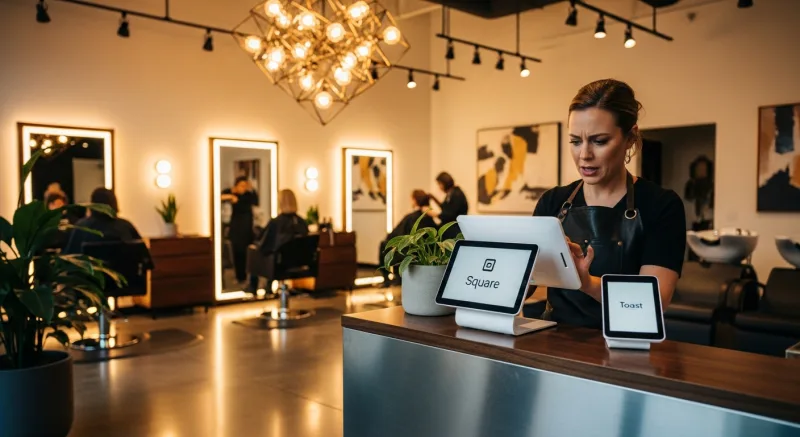
Square Appointments exists but operates as a basic calendar with payment processing. It does not capture service details at the level hair salons need. Square cannot store color formulas, track per-stylist commission with product deductions, or predict booking gaps 72 hours in advance. Its loyalty program is a points counter with no behavioral intelligence.
KwickOS operates as a salon operating system, not just a payment terminal. It manages the full lifecycle of a salon client relationship: initial inquiry, booking, service documentation, retail recommendation, loyalty management, retention monitoring, and re-engagement. For an industry where 80% of revenue comes from repeat clients, this lifecycle management is not a feature — it is the business model.
Hair salon owners: Call (888) 355-6996 or visit KwickOS.com to see how AI protects your client relationships from stylist turnover.
AI + Loyalty: Smarter Customer Retention
KwickOS combines AI insights with built-in loyalty tools to do something no other POS can: predict which customers are about to stop coming in and automatically re-engage them.
The gift card and loyalty system is not just a punch card — it is connected to AI-powered analytics that identify spending patterns, predict churn risk, and suggest targeted promotions. A customer who used to visit weekly but has not been in for 3 weeks? The system flags them and can trigger an automatic points bonus or e-gift card offer via SMS.
- Smart gift cards — AI suggests optimal gift card denominations based on your average ticket size
- Predictive loyalty — identifies at-risk customers before they leave, triggers re-engagement
- Points optimization — automatically adjusts earn rates during slow periods to drive traffic
- Membership insights — shows which VIP tiers generate the most lifetime value
All included. No add-on fees. Toast charges $75/month for basic loyalty without any AI component.
AI + Loyalty: Smarter Customer Retention
KwickOS combines AI insights with built-in loyalty tools to do something no other POS can: predict which customers are about to stop coming in and automatically re-engage them.
The gift card and loyalty system is not just a punch card — it is connected to AI-powered analytics that identify spending patterns, predict churn risk, and suggest targeted promotions. A customer who used to visit weekly but has not been in for 3 weeks? The system flags them and can trigger an automatic points bonus or e-gift card offer via SMS.
- Smart gift cards — AI suggests optimal gift card denominations based on your average ticket size
- Predictive loyalty — identifies at-risk customers before they leave, triggers re-engagement
- Points optimization — automatically adjusts earn rates during slow periods to drive traffic
- Membership insights — shows which VIP tiers generate the most lifetime value
All included. No add-on fees. Toast charges $75/month for basic loyalty without any AI component.
AI + Loyalty: Smarter Customer Retention
KwickOS combines AI insights with built-in loyalty tools to do something no other POS can: predict which customers are about to stop coming in and automatically re-engage them.
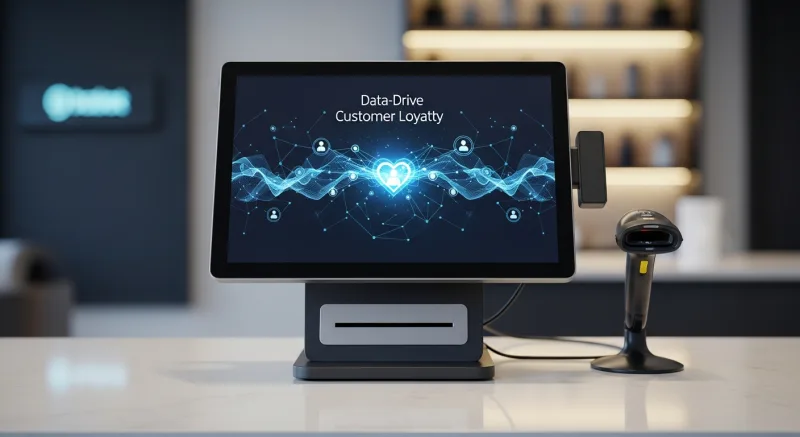
The gift card and loyalty system is not just a punch card — it is connected to AI-powered analytics that identify spending patterns, predict churn risk, and suggest targeted promotions. A customer who used to visit weekly but has not been in for 3 weeks? The system flags them and can trigger an automatic points bonus or e-gift card offer via SMS.
- Smart gift cards — AI suggests optimal gift card denominations based on your average ticket size
- Predictive loyalty — identifies at-risk customers before they leave, triggers re-engagement
- Points optimization — automatically adjusts earn rates during slow periods to drive traffic
- Membership insights — shows which VIP tiers generate the most lifetime value
All included. No add-on fees. Toast charges $75/month for basic loyalty without any AI component.

Founder & CIO of KwickOS · 30 Years IT · 20 Years Restaurant Industry
Tom built KwickOS after decades running restaurants and IT companies. Today KwickOS serves 5,000+ businesses across 50 states.