Most POS resellers are fighting the same exhausting battle: prying restaurants off Toast, Square, or Clover one painful contract buyout at a time. You spend weeks chasing a single switch, and even when you win, the merchant remembers the friction. That is the grind in 90% of American restaurant markets — selling against an entrenched installed base where every deal is a knife fight.
Now picture the opposite. A city where 8,000+ restaurants are being built from empty storefronts, where operators are choosing their first POS system, and where no vendor has locked up the market yet. That is Detroit in 2026. Detroit's story is not really about decline and recovery — it is about reinvention. The restaurant scene emerging here bears no resemblance to what existed before the city's fiscal crisis: new concepts, new buildings, new operators — many of them from other cities — building restaurants in spaces that were abandoned five years ago. They are choosing POS systems for the first time, in a market where no single vendor has established dominance. For a KwickOS reseller, that blank slate is the most valuable thing in the business: a portfolio you build once and collect on for years.
That blank-slate dynamic is extremely rare in American restaurant markets. In most cities, you are selling against an installed base — persuading restaurant owners to switch from Toast, Square, or Clover to KwickOS. In Detroit, you are often the first POS conversation a restaurant owner has. The market is being built in real time, and the reseller who gets there early builds a portfolio that compounds for years.
The Detroit Restaurant Map: Where the Action Is
Corktown: Ground Zero for Detroit's Food Renaissance
Corktown, Detroit's oldest surviving neighborhood, has become the epicenter of the city's restaurant revival. Anchored by Michigan Avenue and Trumbull, the neighborhood houses James Beard-nominated restaurants alongside casual eateries, craft cocktail bars, and coffee shops. When Ford Motor Company moved its autonomous vehicle division to the renovated Michigan Central Station in Corktown, it brought thousands of tech workers — and the restaurants followed. Monthly card volumes in Corktown restaurants average $45,000-$65,000, competitive with any major city's premium dining districts.
Midtown: The University Engine
Midtown, anchored by Wayne State University and the Detroit Medical Center, is the city's densest restaurant neighborhood. The student and hospital worker populations generate consistent weekday volume, while the Detroit Institute of Arts and the Heidelberg Project draw weekend visitors. Midtown restaurants have lower average ticket sizes but high transaction counts — the kind of operation where POS speed and reliability matter most. KwickOS's 1ms local processing outperforms cloud-based systems that add 20ms of latency to every transaction.
Eastern Market: The Food Hub
Detroit's Eastern Market is one of the largest open-air markets in America, and the surrounding neighborhood has evolved into a restaurant cluster that draws from the market's fresh produce and artisan food vendors. Saturday market days can double or triple restaurant volumes in the district. For a reseller, these volume spikes amplify processing residuals during peak periods.
Dearborn: The Middle Eastern Capital of America
Dearborn has the highest concentration of Arab-Americans in the United States, and its restaurant scene — centered on Warren Avenue and Michigan Avenue — features some of the most acclaimed Middle Eastern and Lebanese restaurants in the country. These restaurants process significant card volume and represent an underserved POS market. While KwickOS's current trilingual support covers English, Chinese, and Spanish, the visual interface and intuitive design have proven effective in multilingual operations of all types.
The Suburbs: Grosse Pointe to Royal Oak to Birmingham
Detroit's suburban restaurant market is mature and well-established. Royal Oak's Main Street, Birmingham's downtown, and Ferndale's Nine Mile Road each have dense restaurant concentrations with stable, high-volume operations. These suburbs are where you build the ballast of your portfolio — moderate card volumes ($35,000-$50,000/month) with low attrition rates.
Why Detroit's Rebuild Favors Processor-Agnostic POS
Here is what makes this market different: when a city rebuilds its restaurant infrastructure from scratch, operators are making technology choices for the first time. They do not have legacy POS contracts to escape. They are fresh prospects evaluating options. And in 2026, the options they are seeing most aggressively marketed — Toast, Square, Clover — all share the same fundamental limitation: they control the processing relationship. Want to see exactly how that stacks up? Our KwickOS vs. Toast comparison breaks down the processing lock-in side by side.
A savvy Detroit restaurant owner, getting pitches from three POS companies in the same week, hears the same pitch three times: "Use our POS, use our payments." When a KwickOS reseller walks in and says, "Use our POS, choose your own payments," it is the only differentiated message in the room. In a market full of look-alike POS pitches, processor-agnostic is the outlier that gets remembered.
Detroit operators also have a cultural bias toward self-determination. These are people who chose to open restaurants in a city that many had written off. They are not inclined to hand over control of their payment processing to a Silicon Valley POS company. The processor-freedom message resonates at a personal level in Detroit in ways it might not in more established markets.
Detroit Revenue Projections
- Average monthly card volume: $37,000
- Per-merchant monthly residual (0.15%): $55.50
- Year 1 (10 placements/month): ~$38,500 cumulative
- Year 2 monthly run-rate: $10,000+
- Year 2 annual residual: $114,000+
But here is the part that matters most: Detroit's card volumes are slightly below the national average, yet the market more than compensates with higher placement velocity (less competition) and a new-restaurant pipeline that provides a steady flow of first-time POS buyers. The metro area — including Ann Arbor, a college town with its own vibrant restaurant scene 40 miles west — pushes the total addressable market past 8,000 restaurants.
Partnership Tiers for Detroit
Referral Partner: Detroit's redevelopment ecosystem includes real estate developers, construction companies, and business incubators that interact with new restaurant operators daily. The referral tier lets you monetize these interactions — identify the POS opportunity, KwickOS handles the rest. Earn referral fees and keep your processing residuals.
Active Reseller: Run the sales cycle, demo KwickOS, close deals. KwickOS provides the 7-10 day implementation, 1-3 hour installation, 1-2 hour training, and 24/7 multilingual support. You build the portfolio. In Detroit's emerging market, an active reseller who establishes presence early builds an unassailable first-mover advantage.
Full Partner: Build a KwickOS operation covering the Detroit metro. With 8,000+ restaurants across the metro and aggressive new restaurant growth, the market supports a full partner operation. The highest residual splits, territory considerations, and enterprise support.
Proof Points for Detroit
Crafty Crab: 19 Locations, Multi-Unit Management
Detroit's restaurant recovery includes multi-location groups expanding across the city and suburbs. Crafty Crab's 19-location deployment with centralized management, one-click menu sync, and customized KDS demonstrates that KwickOS scales with growing operations. A Detroit operator opening their second location can be confident the platform grows with them.
T. Jin: Remote Monitoring Across 15 Stores
For Detroit operators managing locations in both the city and suburbs — a common pattern as successful city restaurants expand to Royal Oak or Grosse Pointe — T. Jin's real-time remote monitoring across 15 stores with 75 terminals proves the platform handles geographic dispersion effectively.
Baked Cravings: High-Traffic Kiosk Deployment
Baked Cravings' self-serve kiosk deployment at Lego Land demonstrates KwickOS's ability to handle 24-hour retail and high-traffic kiosk environments. For Detroit operators exploring kiosk or self-serve models — increasingly common in fast-casual and counter-service concepts — this deployment validates the platform's versatility.
The Sports Calendar Bonus
Detroit's four major professional sports teams (Lions, Tigers, Red Wings, Pistons) all play within a mile of each other in downtown Detroit. The combined sports calendar generates 200+ event days per year, each driving significant restaurant volume in downtown, Corktown, and Midtown. For a reseller with placements in these neighborhoods, sports-driven volume increases translate directly to higher processing residuals — without any additional sales effort.
Major events like the Detroit Grand Prix, the North American International Auto Show, and concerts at Comerica Park and Little Caesars Arena add further seasonal volume spikes. A diversified portfolio of 100+ merchants across Detroit's key neighborhoods captures these volume increases automatically.
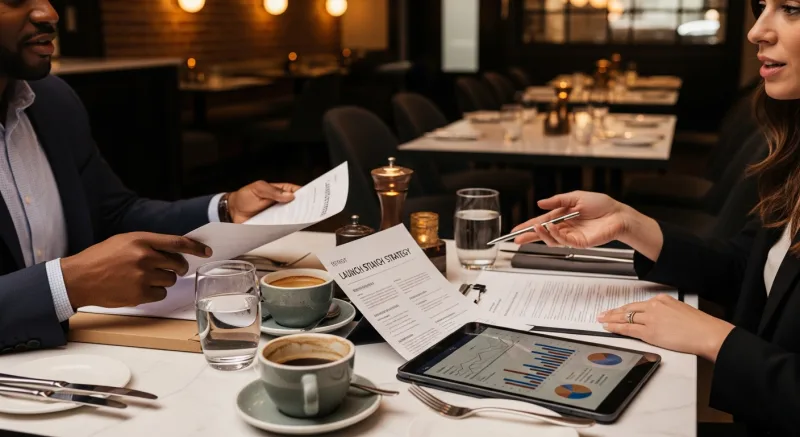
Launch Strategy for Detroit
So where do you actually start? Here is the 12-month playbook, neighborhood by neighborhood:
Weeks 1-4: Focus on Midtown and Corktown — the highest concentration of new restaurants making first-time POS decisions. Walk the neighborhoods during off-peak hours, introduce yourself, and offer processing audits to any operator already on a locked-in POS platform.
Months 2-3: Expand to Eastern Market and downtown. Begin building relationships with Detroit's restaurant development community — the organizations and developers driving new restaurant openings across the city.
Months 4-6: Push into the suburbs. Royal Oak, Ferndale, and Birmingham have established restaurant scenes with operators who may be ready for a POS upgrade. Use your city case studies to establish credibility.
Months 7-12: Expand to Dearborn and the Downriver communities. Consider adding Ann Arbor as a satellite territory — it is only 40 miles away and its university-driven restaurant scene adds significant market depth.
Detroit is rebuilding, and every rebuilt restaurant needs a POS system. The reseller who establishes presence now, while the market is still being constructed, builds a portfolio that no later entrant can easily displace. First-mover advantage in a rebuilding market is the most durable competitive position in the POS reseller business.
Explore the KwickOS Partner Program or call (888) 355-6996 to discuss the Detroit opportunity.
Your Secret Selling Weapon: Gift Cards, Loyalty & Points — Included Free
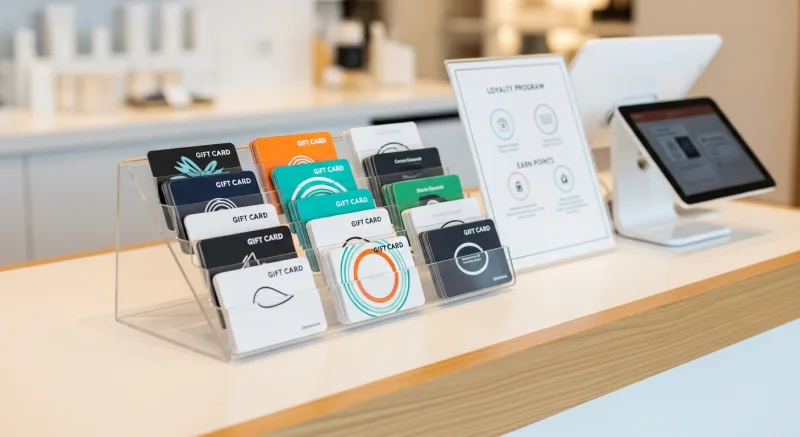
Here is what closes deals for KwickOS resellers: when a merchant asks "what about gift cards?" or "do you have a loyalty program?" — you say "It is included. No extra monthly fee." Watch their face when they realize Toast charges $75/month and Square charges $45/month for the same thing.
Why This Matters for Your Sales Pitch
Gift cards and loyalty programs are the features merchants ask about but competitors charge extra for. This is your competitive advantage in every demo:
- Gift card program — physical cards + e-gift cards, multi-location balance sync. Sell it as "your own Starbucks card" for their business
- Points system — automatic point earning on every transaction. Customers come back more often, spend more each visit
- Membership tiers — VIP programs, subscription models, exclusive pricing. Perfect upsell for restaurants, salons, and coffee shops
- CRM integration — customer purchase history, preferences, birthday tracking, SMS/email marketing all from one screen
The Math That Closes Deals
Toast loyalty add-on: $75/month = $900/year. Square loyalty: $45/month = $540/year. KwickOS: $0 extra. Over a 3-year contract, that is $1,620-2,700 your merchant saves — just on loyalty and gift cards. Add payment processing freedom savings ($6,000+/year) and you are showing $8,000+ in annual savings. That is an easy yes.
Detroit POS Reseller FAQ
How much can a POS reseller earn in the Detroit market?
At Detroit's average monthly card volume of $37,000 per merchant, you earn roughly $55.50 per merchant per month in residuals at 0.15%. At 10 placements per month, that compounds to about $38,500 in cumulative residuals by the end of Year 1 and a Year 2 run-rate above $10,000/month — roughly $114,000+ in annual residual income.
Why is Detroit a good market for selling POS systems?
Detroit is rebuilding its restaurant infrastructure from scratch across Corktown, Midtown, Eastern Market, Dearborn, and the suburbs. With 8,000+ restaurants in the metro and a steady pipeline of first-time POS buyers, no single vendor has established dominance — so you face less switching resistance and capture first-mover advantage.
What makes KwickOS different from Toast, Square, and Clover for resellers?
KwickOS is processor-agnostic: merchants keep their own payment processing instead of being locked into the POS vendor's payments. Gift cards, loyalty, points, and CRM are included at $0 extra — versus $45-$75/month on competitors — giving you a differentiated pitch worth $8,000+ in annual merchant savings. See the full KwickOS vs. Toast breakdown.
How long does KwickOS implementation take?
KwickOS provides a 7-10 day implementation, a 1-3 hour on-site installation, 1-2 hours of staff training, and 24/7 multilingual support — letting you close and onboard new Detroit restaurants quickly.