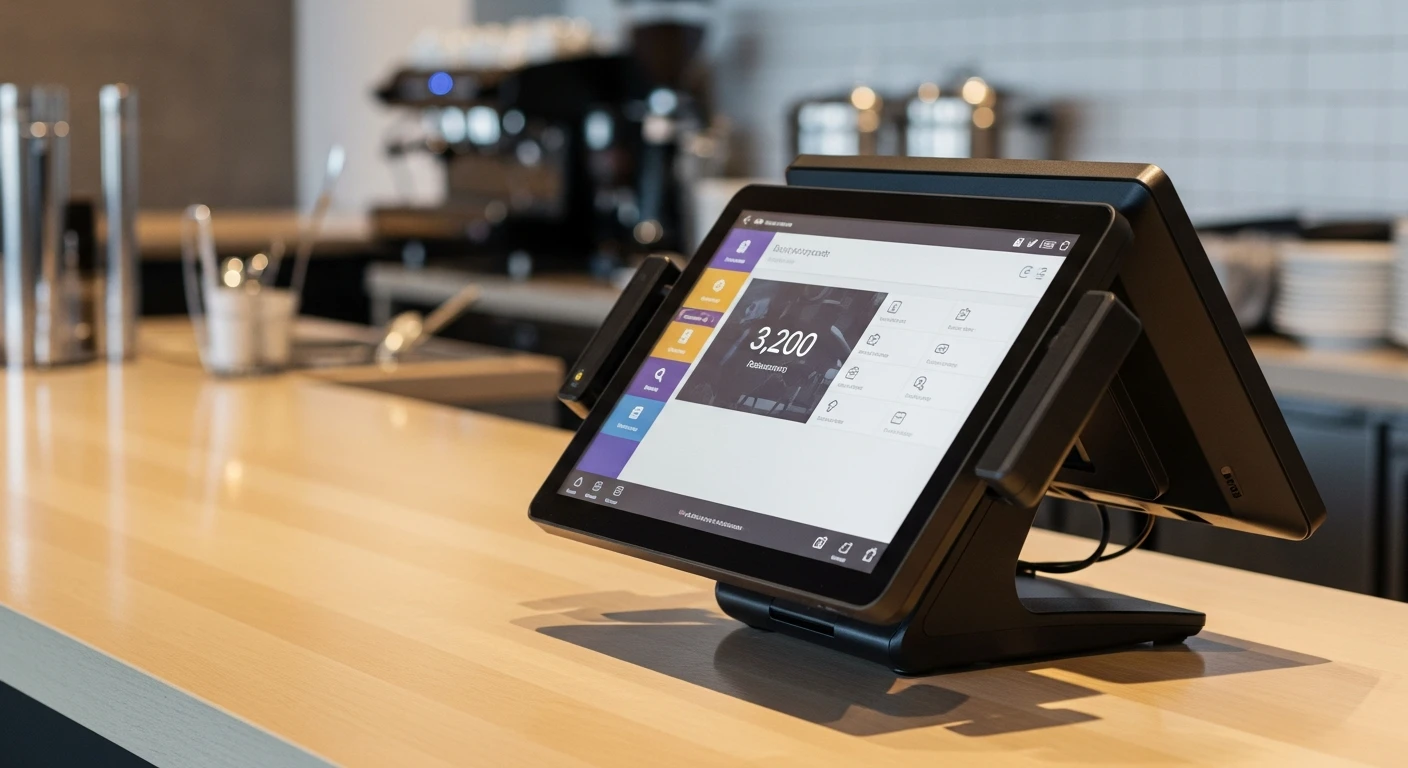
Every major restaurant chain in America has tested a concept in Columbus. Wendy's was founded here. White Castle launched its first drive-through here. Bob Evans, Max & Erma's, and Cameron Mitchell Restaurants all call Columbus home. But if you are a POS reseller looking at Columbus, the chain headquarters are background noise. Your opportunity is in the independent restaurant segment — and that segment is larger, more diverse, and more underserved than almost anyone outside of Ohio realizes.
Columbus has quietly built one of the most exciting food scenes in the Midwest. The city's population growth — it surpassed 900,000 in 2024 and the metro exceeds 2.1 million — has been accompanied by a restaurant boom that shows no signs of slowing. New neighborhoods like Franklinton (the "next Short North") are adding restaurant capacity monthly. The Morse Road corridor has become one of the most diverse international food streets in the Midwest. And the university district, anchored by Ohio State's 60,000+ students, generates enormous transaction volume for casual and quick-service restaurants.
Why Columbus Works for POS Resellers
Three characteristics make Columbus an unusually attractive POS reseller market:
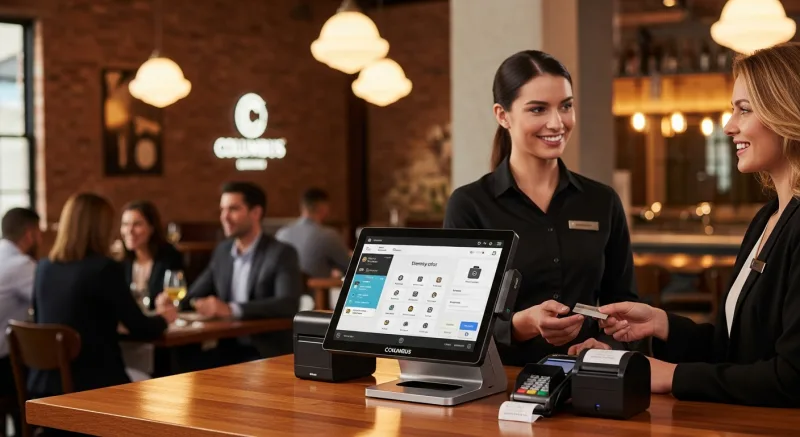
1. Low POS Competition, High Restaurant Density
Unlike coastal cities where Toast, Square, and SpotOn all have aggressive local sales teams, Columbus is not a primary market for any major POS company. Toast has penetration here, but nothing like their dominance in Boston, New York, or San Francisco. This lower competitive intensity means longer sales cycles are not necessary — you can often be the first person to show a Columbus restaurant owner a processor-agnostic POS option. Many of them have never seen one.
2. Cost-Conscious Operators Who Understand Value
Columbus has a lower cost of living than the coasts, which means restaurant operators here run tighter margins and scrutinize every expense more carefully. When you show a Columbus restaurant owner that they are overpaying $3,000-$5,000 per year on processing fees because their current POS locks them into a specific processor, that number represents a significant percentage of their annual profit. The processor-agnostic pitch has outsized impact in markets where every dollar matters more.
3. The Ohio State University Factor
OSU's campus and the surrounding High Street corridor house approximately 300 restaurants and food service operations. These range from national fast-food chains to independent ramen shops, pizza places, and coffee houses. The student market drives high transaction counts with moderate ticket sizes — perfect for a POS system optimized for speed and throughput. And because the student population turns over annually, the restaurant scene constantly reinvents itself, creating new openings and new POS opportunities every year.
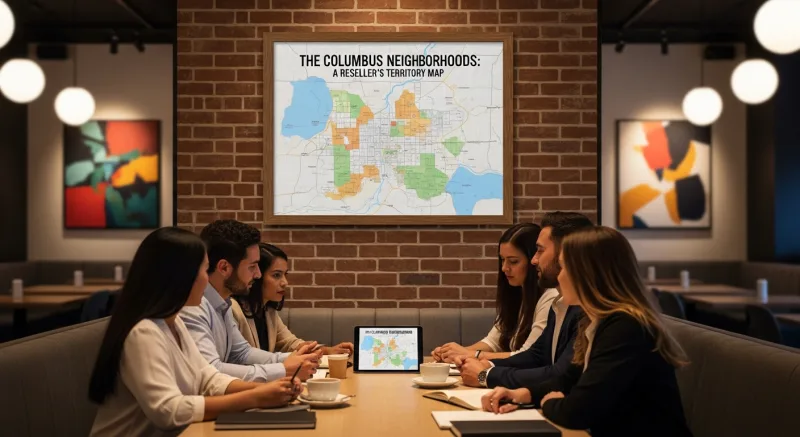
The Columbus Neighborhoods: A Reseller's Territory Map
Short North Arts District
The Short North is Columbus's premier dining corridor — a mile-long stretch of High Street between the Ohio State campus and downtown. Monthly card volumes in Short North restaurants average $50,000-$80,000, and the neighborhood's walkability means diners often visit multiple restaurants in an evening. For a reseller, the Short North offers high-value placements in a concentrated geography. You can visit five prospects in an afternoon without getting in your car.
Morse Road International Corridor
Morse Road from Cleveland Avenue to Sunbury Road has transformed into Columbus's most diverse food corridor. Somali restaurants, Ethiopian cafes, Nepali kitchens, Vietnamese pho shops, and Chinese hot pot restaurants operate within a two-mile stretch. This corridor desperately needs multilingual POS technology. Most of these restaurants are running basic cash registers or outdated systems that cannot support their multilingual operations. KwickOS's native trilingual support (English, Chinese, Spanish) gives you an immediate advantage, and for other languages, the visual interface is intuitive enough to minimize the language barrier.
German Village and Brewery District
South of downtown, German Village is one of the most charming restaurant neighborhoods in the Midwest. The neighborhood's historic character attracts diners from across the metro, and the adjacent Brewery District has added modern restaurants and taprooms. Card volumes here are moderate ($35,000-$50,000/month) but the restaurants are stable — many have operated for decades. For a reseller building a long-term residual portfolio, German Village placements have exceptionally low attrition.
Revenue Projections: Columbus Numbers
Columbus card volumes are slightly below the national average for major cities, but the lower cost of entry and lower competitive intensity compensate:

- Average monthly card volume: $38,000
- Per-merchant monthly residual (0.15%): $57
- Placement target: 10 merchants/month
- Year 1 cumulative residual: ~$40,000
- Month 24 monthly residual: $10,260+
- Year 2 annual residual: $118,000+
The real advantage in Columbus is placement velocity. Because POS competition is lower here than in coastal markets, your close rate on qualified prospects is significantly higher. If your effective placement rate is 12-13 merchants per month instead of 10, the Year 2 numbers approach the $127K+ target that coastal resellers achieve with higher card volumes but lower close rates.
The KwickOS Three-Tier Partnership
Referral Partner: Ideal for Columbus-based restaurant suppliers, accountants, commercial real estate professionals, and food industry consultants. You identify restaurants needing POS upgrades, KwickOS handles the sale, the 7-10 day implementation, and the ongoing support. You earn referral fees and maintain your processing residuals.
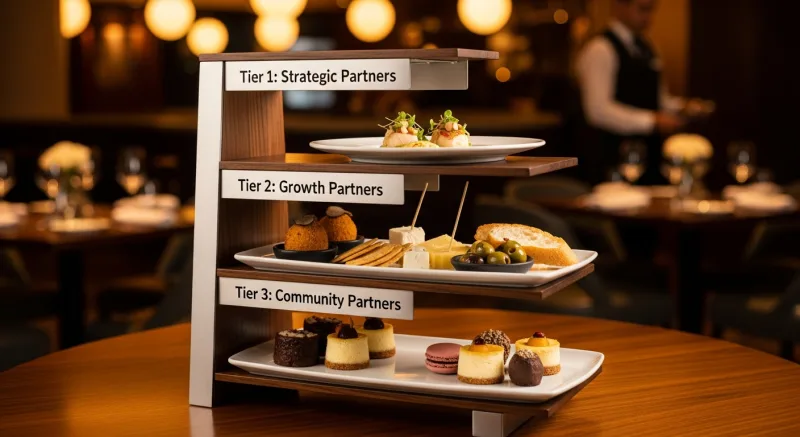
Active Reseller: You run the sales cycle, demo KwickOS, close deals, and manage relationships. KwickOS handles installation (1-3 hours on-site), staff training (1-2 hours), and 24/7 multilingual support. You earn full processing residuals. In Columbus, where the market is less saturated, an active reseller can realistically achieve 12-15 placements per month within 6 months.
Full Partner: You build a KwickOS operation covering the Columbus metro area. With 3,200+ restaurants in the city and 8,000+ in the metro, the market supports a full partner operation with multiple sales agents. You receive the highest residual structures and territory considerations.
Case Studies for Columbus Conversations
Crafty Crab Seafood: 19 Locations
Columbus has a growing seafood restaurant segment, and Crafty Crab's 19-location KwickOS deployment with 152 terminals demonstrates enterprise capability. The one-click menu sync is particularly relevant for Columbus restaurant groups expanding into new neighborhoods — a common growth pattern in this market.
T. Jin China Diner: Multi-Location Monitoring
For Columbus's Morse Road Asian restaurant corridor, T. Jin's 15-store deployment with real-time remote monitoring across 75 terminals is the proof point that KwickOS handles multilingual, multi-location Asian restaurant operations at scale.
Shogun Japanese Hibachi: Quick Training
Columbus's restaurant workforce faces the same labor shortages as the rest of the country. Shogun Japanese Hibachi's experience — achieving operator proficiency in under 5 minutes on KwickOS — addresses the training challenge directly. When a Columbus restaurant owner worries about staff learning a new system, the Shogun example demonstrates that KwickOS's interface is so intuitive that new employees become productive almost immediately.
The Game Day Advantage
Seven Saturdays each fall, Ohio State plays home football games at the Horseshoe. Each game brings 100,000+ fans to campus and the surrounding neighborhoods. The restaurant impact extends well beyond High Street — restaurants in the Short North, Arena District, Grandview, and downtown all see 50-100% volume increases on game days.
For a POS reseller, game day economics matter in two ways. First, the seasonal volume spikes increase your processing residuals on existing placements without any additional effort. Second, game days stress-test POS systems — and when a restaurant's cloud-only POS crashes during the Ohio State-Michigan game, that owner is ready to hear about a hybrid local+cloud system that never goes down.
Time your outreach to the Monday after a big game. Ask: "How did your POS handle Saturday?" For the restaurants that struggled, you have the solution.
Getting Started in Columbus
Week 1-2: Drive the Morse Road corridor and the Short North. Identify 50 target restaurants. Note which ones are running visible POS terminals you can identify — Toast and Square are easy to spot. Restaurants running generic Android tablets or old Windows terminals are your highest-probability prospects.
Week 3-4: Begin door-to-door prospecting during slow hours (2-4 PM Tuesday through Thursday). Columbus restaurant owners are generally approachable and willing to have short conversations. Lead with the processing cost question: "Do you know what effective rate you're paying on card processing?" Most do not. Offer a free processing audit.
Month 2: Close your first 8-10 placements from the initial prospecting wave. Use these as case studies for the next wave. In Columbus, restaurant owners talk to each other — especially within ethnic food communities. One successful Korean restaurant on Morse Road generates referrals to three others.
Month 3+: Expand into German Village, Grandview Heights, and the suburban corridors (Dublin, Westerville, New Albany). By this point, your Columbus reputation is established and referrals begin supplementing direct prospecting.
Columbus is a city that rewards resellers who get there first. The market is large, growing, and underserved by processor-agnostic POS technology. The operators are cost-conscious and receptive to financial arguments. And the competitive landscape is thinner than in any comparable metro.
Explore the KwickOS Partner Program or call (888) 355-6996 to learn about the Columbus opportunity.
Your Secret Selling Weapon: Gift Cards, Loyalty & Points — Included Free
Here is what closes deals for KwickOS resellers: when a merchant asks "what about gift cards?" or "do you have a loyalty program?" — you say "It is included. No extra monthly fee." Watch their face when they realize Toast charges $75/month and Square charges $45/month for the same thing.
Why This Matters for Your Sales Pitch
Gift cards and loyalty programs are the features merchants ask about but competitors charge extra for. This is your competitive advantage in every demo:
- Gift card program — physical cards + e-gift cards, multi-location balance sync. Sell it as "your own Starbucks card" for their business
- Points system — automatic point earning on every transaction. Customers come back more often, spend more each visit
- Membership tiers — VIP programs, subscription models, exclusive pricing. Perfect upsell for restaurants, salons, and coffee shops
- CRM integration — customer purchase history, preferences, birthday tracking, SMS/email marketing all from one screen
The Math That Closes Deals
Toast loyalty add-on: $75/month = $900/year. Square loyalty: $45/month = $540/year. KwickOS: $0 extra. Over a 3-year contract, that is $1,620-2,700 your merchant saves — just on loyalty and gift cards. Add payment processing freedom savings ($6,000+/year) and you are showing $8,000+ in annual savings. That is an easy yes.