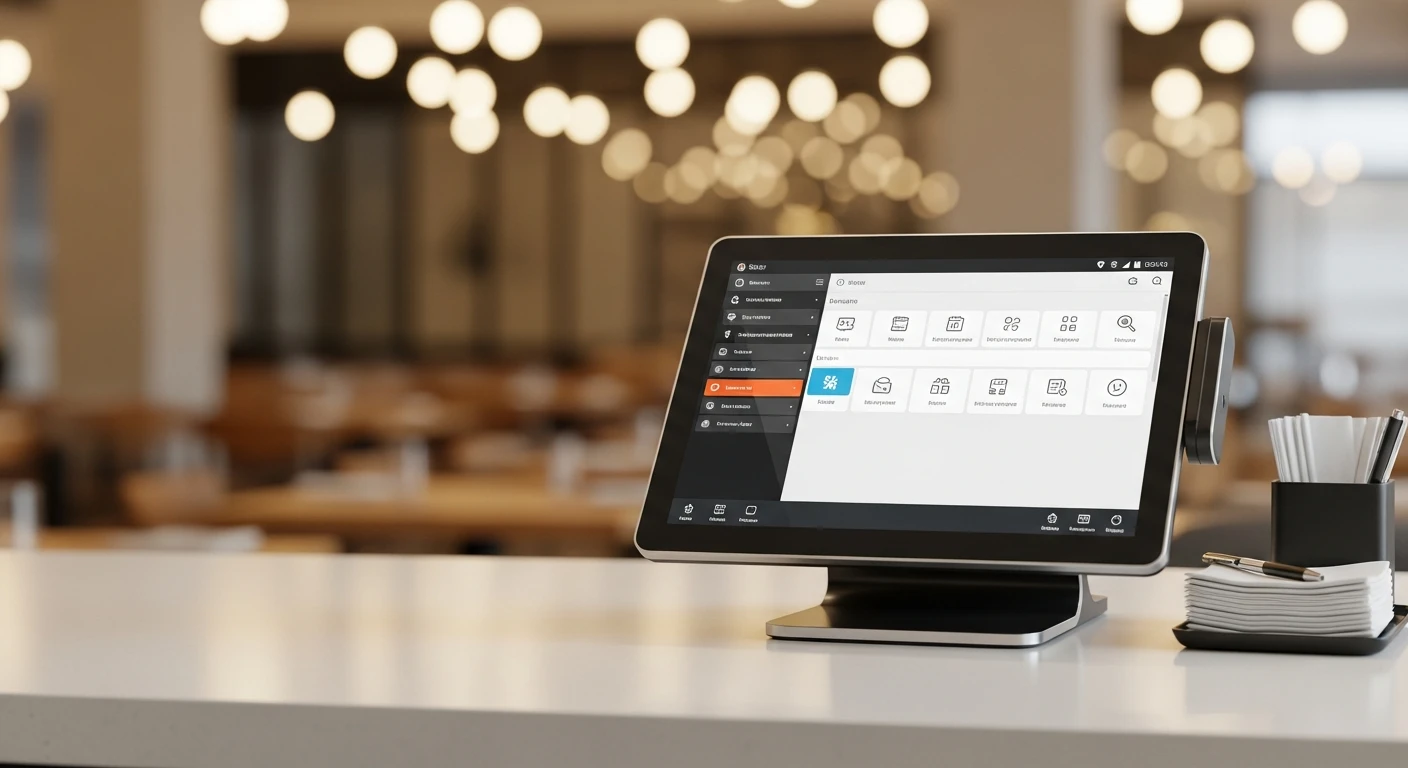
For Chicago business owners searching for $340M Chicago Restaurant Tech Market, here's what the top operators already know. Chicago is not like other restaurant cities. It is both the birthplace of the deep dish pizza and the city that currently holds more Michelin stars than any American city outside New York. It is where a hot dog stand on the South Side operates with the same pride and professionalism as a Boka Restaurant Group concept on Randolph Street. The restaurant culture here does not sort neatly into "casual" and "fine dining" — it sprawls across every price point, every cuisine, every neighborhood, and every business model.
For a POS reseller, this diversity is not a challenge. It is the opportunity. A reseller who can serve a Vietnamese sandwich shop in Argyle, a steakhouse in River North, a taqueria in Pilsen, and a bubble tea shop in Chinatown has a market that never runs out of prospects. And with 7,500+ restaurants in the city proper — and over 22,000 across the metro — the addressable opportunity in Chicago dwarfs most American cities.
The Chicago Restaurant Market by the Numbers
Let me lay out the market data that matters for a POS reseller evaluating Chicago:
- 7,500+ restaurants in the City of Chicago; 22,000+ in the metro area
- $18.4 billion in annual restaurant revenue (metro area)
- $340 million estimated annual spend on restaurant technology
- Average monthly card volume: $45,000 per restaurant
- 77 distinct neighborhoods, each with its own restaurant identity
- New restaurant openings: 400-500 per year in the city proper
That last number is crucial. Four hundred to five hundred new restaurants opening annually means there are 35-42 new POS sales opportunities every single month just from new openings — before you even count the upgrade and replacement market from existing restaurants running outdated systems.
Neighborhood-by-Neighborhood Strategy
Chicago's neighborhood structure is the reseller's best organizational tool. Rather than trying to sell across the entire city, the most effective approach is to dominate one or two neighborhoods and then expand outward. Here is how the neighborhoods stack up as reseller territories:
Chinatown and Bridgeport: The Multilingual Beachhead
Chicago's Chinatown, centered on Wentworth Avenue and Archer Avenue, is the Midwest's largest Chinese restaurant corridor. Approximately 120 restaurants operate here, ranging from dim sum palaces to bubble tea shops to late-night noodle houses. The multilingual requirement is absolute — owners speak Cantonese or Mandarin, staff speaks a mix of Chinese, English, and Spanish, and the POS must support all three.
KwickOS is the only major POS platform with native trilingual support. This is not a translatable interface — it is built-in, per-user language switching that allows a Chinese-speaking manager to review reports in Chinese while a Spanish-speaking cashier operates the terminal in Spanish and the English-speaking server enters orders in English. In Chinatown, this single capability eliminates every competitor from the conversation.
Start here. Build your Chicago reputation in Chinatown, and the word-of-mouth will carry you into other neighborhoods.
Randolph Street and the West Loop: High-Volume Fine Dining
Chicago's "Restaurant Row" along Randolph Street in the West Loop is home to some of the most celebrated restaurants in America — Girl & the Goat, Avec, Blackbird's legacy space, and dozens of other high-profile concepts. Monthly card volumes here can exceed $200,000 for a single restaurant. At 0.15% residual, one placement on Randolph Street generates $300/month in processing income. Four placements on a single street could yield $14,400/year in residual income.
The West Loop sell is different from Chinatown. These operators are not price-sensitive on the POS itself — they care about reliability, speed, and feature depth. The hybrid local+cloud architecture resonates here because these restaurants cannot afford a single minute of downtime during a $15,000 Saturday night service. The 1ms local processing latency versus Toast's 20ms cloud latency is a technical argument that fine dining operators understand and value.
Pilsen and Little Village: The Growing Latino Market
Pilsen and Little Village represent one of the largest concentrations of Mexican and Central American restaurants outside of the Southwest. These neighborhoods are experiencing a generational transition — younger operators are upgrading from legacy cash registers to modern POS systems, and they need Spanish-language capability that goes beyond a translated menu. KwickOS's native Spanish interface, combined with its bilingual receipt printing and Spanish-language customer displays, makes it the natural choice for this market.
The Suburbs: Volume Plays
Naperville, Schaumburg, Oak Brook, Downers Grove — the western suburbs alone have more restaurants than most mid-sized American cities. Suburban restaurants tend to have moderate card volumes ($30,000-$50,000/month) but higher stability and lower attrition. For a reseller building a long-term portfolio, suburban placements are the ballast that keeps your residual income predictable.
Chicago's Regulatory Landscape: The Surcharge Advantage
Illinois law permits credit card surcharging with proper disclosure, which gives KwickOS resellers an additional tool in the sales conversation. A restaurant owner running KwickOS with an independent processor can implement surcharging to offset their processing costs — effectively reducing their net cost of accepting cards to near zero. This is not possible on Toast, where the merchant has no control over their processing terms.
For a Chicago restaurant processing $45,000/month in cards, the ability to implement even a 1% surcharge (offset against their processing cost) represents a $450/month savings. When you show a restaurant owner that switching to KwickOS not only reduces their processing rate but also gives them the option to surcharge legally, the financial argument becomes overwhelming.
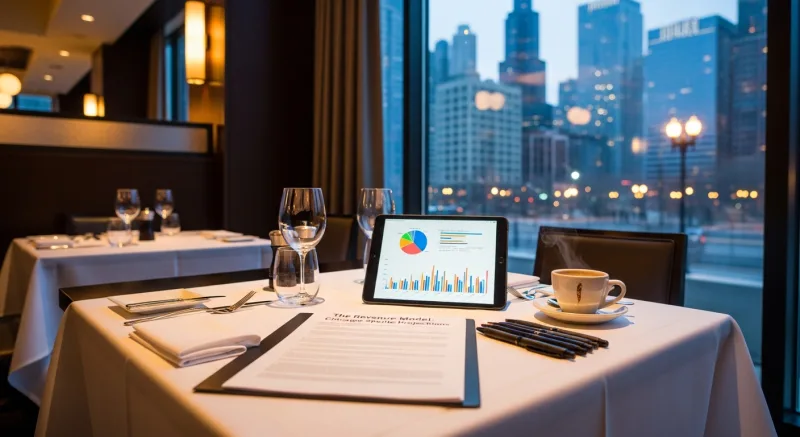
The Revenue Model: Chicago-Specific Projections
Chicago's above-average card volumes and dense restaurant market support aggressive but realistic projections:
- Average monthly card volume: $45,000
- Per-merchant monthly residual (0.15%): $67.50
- Placement rate: 10 merchants/month (conservative for a 22,000-restaurant metro)
- Year 1 cumulative residual: ~$47,000
- Month 24 monthly residual: $12,150+
- Year 2 annual residual: $138,000+
The Chicago market is large enough to support multiple KwickOS resellers without territorial conflict. A reseller focused entirely on Chinatown and the Asian restaurant community could build a six-figure residual business without ever prospecting outside that niche. A reseller focused on the suburban market could do the same. The market depth is extraordinary.
The Three Tiers of KwickOS Partnership
Referral Partner: Chicago has a dense ecosystem of restaurant industry service providers — food suppliers, commercial landlords, equipment dealers, accountants specializing in restaurants. If you already serve Chicago restaurants in a non-POS capacity, the referral tier lets you earn by making introductions. KwickOS handles the demo, sale, 7-10 day implementation, installation, and training. You maintain your processing relationship and residuals.
Active Reseller: You manage the complete sales cycle. You demo KwickOS, close deals, and maintain merchant relationships. KwickOS handles the technical implementation — 1-3 hour installation, 1-2 hour staff training, 24/7 ongoing support. You earn full processing residuals and build a sellable portfolio. This is the track for career POS professionals.
Full Partner: You build a KwickOS business in Chicago. You recruit and manage sub-agents, build a team, provide first-line support, and establish market presence. You receive the highest residual structures, territory protection, and enterprise support. This tier suits established technology companies or payment organizations entering the Chicago POS market.
Proof Points: Enterprise-Scale Deployments
Crafty Crab: 19 Locations, 152 Terminals
Chicago's restaurant market includes hundreds of multi-location operators — from the Lettuce Entertain You empire to smaller groups with 3-10 locations. Crafty Crab's 19-location KwickOS deployment demonstrates the platform's ability to manage one-click menu synchronization, customized kitchen display configurations, and centralized reporting at a scale that exceeds any Chicago group's requirements. When a Chicago restaurateur with five locations asks whether KwickOS can handle multi-unit operations, Crafty Crab is the definitive answer.
T. Jin: 15 Stores, Real-Time Remote Monitoring
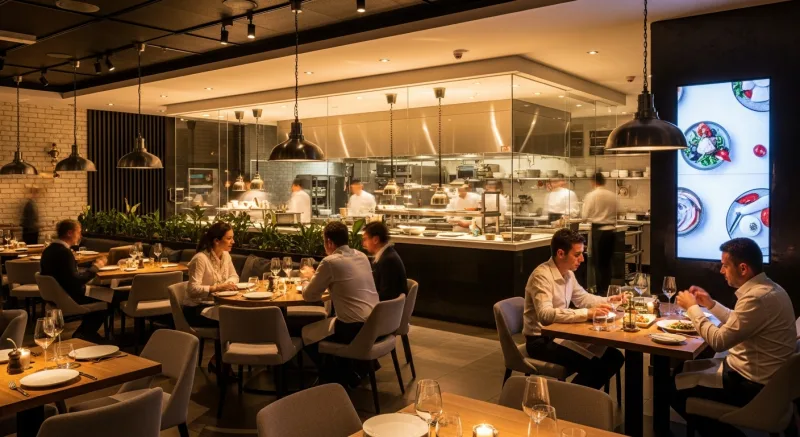
For Chicago's Asian restaurant community — which spans Chinatown, Argyle Street, and the western suburbs — T. Jin's deployment of 75 terminals across 15 locations with real-time monitoring is directly relevant. The ability to monitor sales, voids, and labor across every location from a single dashboard, in Chinese or English, addresses the exact management challenge that multi-location Asian restaurant operators face in Chicago.
Haidilao: Global Scale, Local Validation
Haidilao's Chicago location is one of their highest-profile U.S. operations. The fact that KwickOS powers their technology across 600+ locations worldwide — including the U.S. operations — is a credibility marker that resonates powerfully when selling to high-end Asian restaurant concepts in Chicago. It transforms the sales conversation from "Can this platform handle my operation?" to "This platform handles Haidilao's operation."
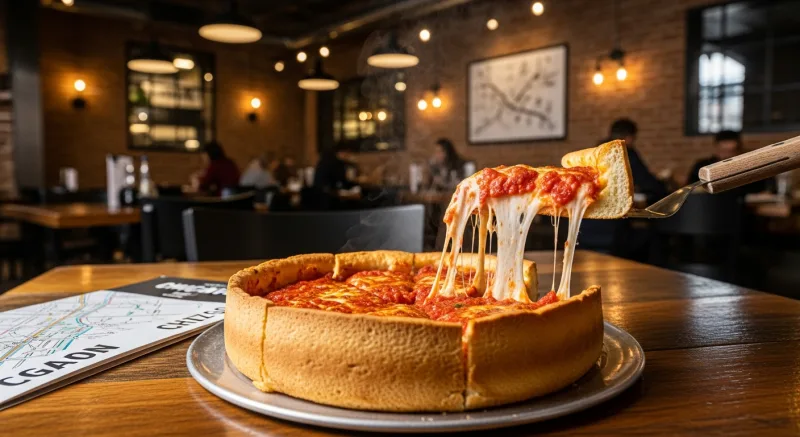
The Deep Dish Strategy: How to Enter the Chicago Market
Here is a practical market entry strategy tailored to Chicago's unique dynamics:
Phase 1 (Months 1-3): Chinatown Anchor. Begin with 15-20 restaurants in Chinatown. The multilingual advantage gives you a near-guaranteed win against every competitor. Build case studies. Collect testimonials. Use Chinatown as proof of local credibility.
Phase 2 (Months 4-6): Pilsen + Bridgeport Expansion. Leverage the Spanish-language capability to expand into Pilsen's Mexican restaurant corridor. Use Chinatown testimonials to demonstrate local track record. These two neighborhoods — Chinatown and Pilsen — share a geographic border, making logistics efficient.
Phase 3 (Months 7-12): Suburban Push. With a base of 40-60 city merchants providing monthly residual income, expand into the western and northern suburbs. Suburban selling requires more driving but less competition — most POS sales reps focus on the city and ignore the suburbs.
Phase 4 (Year 2): West Loop and River North. Use your portfolio of 100+ merchants as social proof to approach high-volume fine dining and upscale casual restaurants. These operators want to see local references before they commit, and by Year 2, you will have them.
Winter: Your Secret Weapon
Chicago's winters are brutal for restaurants — foot traffic drops, heating costs spike, and operators become acutely focused on costs. January through March is the prime selling season because restaurant owners are reviewing their prior-year financials, looking for places to cut costs, and receptive to conversations about reducing processing fees.
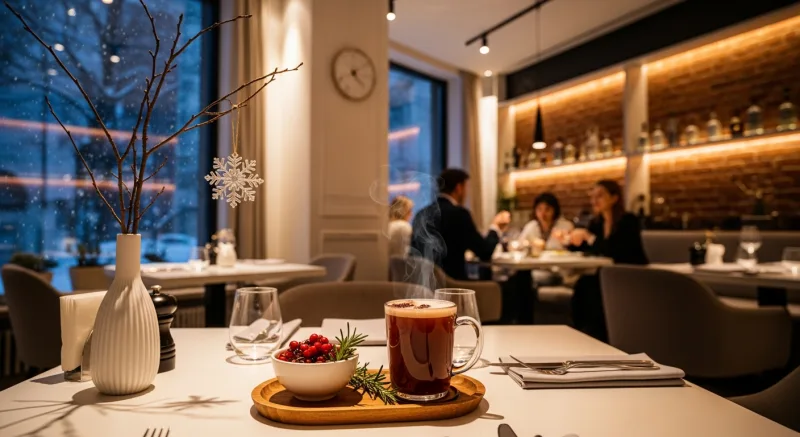
A Chicago POS reseller who spends January through March aggressively prospecting and closes 15 merchants per month during that window enters spring with a residual base that generates income through the busy summer months when selling slows down. The seasonal rhythm of the Chicago market rewards front-loaded effort.
The other winter advantage: blizzards. When a January snowstorm knocks out internet across the city — and it will — cloud-only POS systems go down. KwickOS merchants keep processing. The week after a blizzard is the best time to contact every restaurant owner in the city and ask: "Did your POS go down during the storm?" For the ones who answer yes, you have the solution.
Your Chicago Opportunity
Chicago's 22,000+ restaurant metro, its diverse neighborhoods, its above-average card volumes, and its underserved multilingual segments create one of the largest POS reseller opportunities in America. The math is clear: 10 placements per month at $45,000 average card volume at 0.15% residual builds to $138,000+ in annual residual income by Year 2. KwickOS handles installation, training, and 24/7 support. You build the relationships and the portfolio.
Explore the KwickOS Partner Program or call (888) 355-6996 to discuss the Chicago territory.
Your Secret Selling Weapon: Gift Cards, Loyalty & Points — Included Free
Here is what closes deals for KwickOS resellers: when a merchant asks "what about gift cards?" or "do you have a loyalty program?" — you say "It is included. No extra monthly fee." Watch their face when they realize Toast charges $75/month and Square charges $45/month for the same thing.
Why This Matters for Your Sales Pitch
Gift cards and loyalty programs are the features merchants ask about but competitors charge extra for. This is your competitive advantage in every demo:
- Gift card program — physical cards + e-gift cards, multi-location balance sync. Sell it as "your own Starbucks card" for their business
- Points system — automatic point earning on every transaction. Customers come back more often, spend more each visit
- Membership tiers — VIP programs, subscription models, exclusive pricing. Perfect upsell for restaurants, salons, and coffee shops
- CRM integration — customer purchase history, preferences, birthday tracking, SMS/email marketing all from one screen
The Math That Closes Deals
Toast loyalty add-on: $75/month = $900/year. Square loyalty: $45/month = $540/year. KwickOS: $0 extra. Over a 3-year contract, that is $1,620-2,700 your merchant saves — just on loyalty and gift cards. Add payment processing freedom savings ($6,000+/year) and you are showing $8,000+ in annual savings. That is an easy yes.