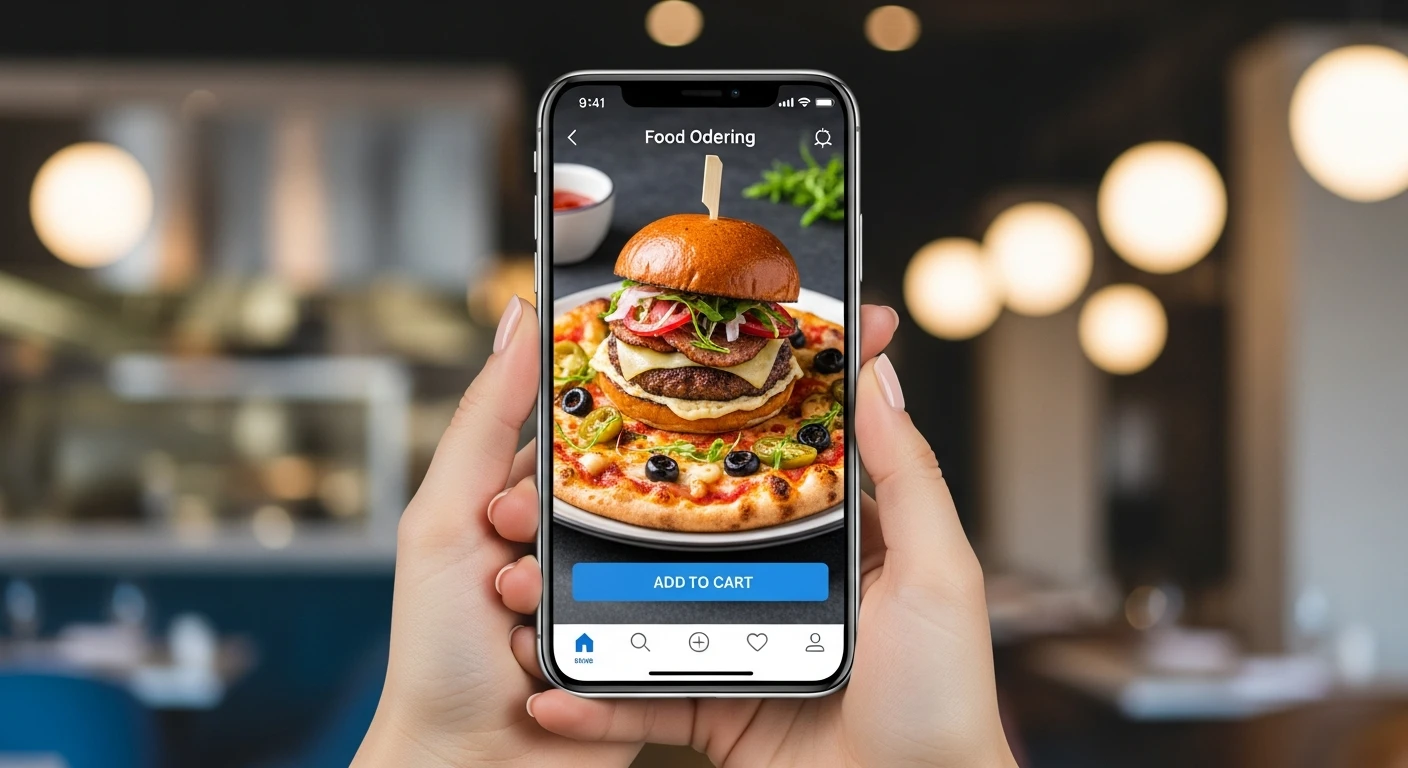
A restaurant that does not offer online ordering in 2026 is leaving money on the table — a lot of money. Industry data consistently shows that restaurants adding online ordering see revenue increases of 20 to 30 percent within the first year. Some see even more. The demand is there: consumers now expect to order food from their phones with the same ease they order everything else.
But here is the part that most articles about online ordering leave out: not all online ordering is profitable. A restaurant that relies entirely on third-party platforms like DoorDash, Uber Eats, and Grubhub can actually lose money on every delivery order after accounting for commissions. The difference between profitable online ordering and money-losing online ordering comes down to three factors: which platform you use, how much commission you pay, and whether you own the customer relationship.
This article will walk through the economics, the strategies, and the real-world results that separate restaurants that are growing through online ordering from those that are subsidizing someone else's business model.
The Revenue Opportunity, by the Numbers
Before we get into strategy, let us look at why online ordering has such a dramatic impact on revenue.
A typical full-service restaurant generates all of its revenue from customers who physically walk through the door. The capacity constraint is clear: you have a fixed number of seats, a fixed number of hours, and a fixed number of turns per shift. When the dining room is full, you are at capacity. Revenue can only grow by increasing prices or turning tables faster.
Online ordering breaks the capacity constraint. Pickup and delivery orders do not require seats. They use kitchen capacity that may already be underutilized — especially during off-peak hours like mid-afternoon and late evening. A kitchen that is staffed and operational but running at 50% capacity during the 2 PM to 5 PM window can absorb dozens of online orders with minimal incremental cost.
Here is the math for a restaurant doing $800,000 in annual dine-in revenue:
| Scenario | Online Order Revenue | Total Revenue | Growth |
|---|---|---|---|
| No online ordering | $0 | $800,000 | Baseline |
| Moderate adoption (15 orders/day, $30 avg) | $164,250 | $964,250 | +20.5% |
| Strong adoption (25 orders/day, $35 avg) | $319,375 | $1,119,375 | +39.9% |
The "strong adoption" scenario is not unusual for restaurants in urban and suburban areas that actively promote their online ordering. Twenty-five online orders per day is about three per hour during a 12-hour operating day — a very achievable number for any restaurant with a compelling menu.
The Third-Party Platform Trap
The easiest way to start accepting online orders is to sign up for DoorDash, Uber Eats, or Grubhub. They will list your restaurant on their platform, handle delivery logistics, and start sending you orders. It sounds great — until you look at the numbers.
What Third-Party Platforms Actually Charge
Third-party delivery platforms charge restaurants a commission on every order, typically structured as follows:
| Platform | Commission Rate | Cost on a $30 Order | Cost on a $50 Order |
|---|---|---|---|
| DoorDash | 15-30% | $4.50-$9.00 | $7.50-$15.00 |
| Uber Eats | 15-30% | $4.50-$9.00 | $7.50-$15.00 |
| Grubhub | 15-25% | $4.50-$7.50 | $7.50-$12.50 |
Now consider typical restaurant economics. For a restaurant with 30% food costs and 30% labor costs, the margin on a $30 order before overhead looks like this:
- Revenue: $30.00
- Food cost (30%): -$9.00
- Labor cost (30%): -$9.00
- Remaining for overhead + profit: $12.00
If DoorDash takes 25% ($7.50), you are left with $4.50 to cover rent, utilities, insurance, equipment, and profit. That is a 15% margin before overhead on a business that typically needs 10 to 15% net margin just to survive. In practice, many restaurants lose money on every third-party delivery order.
And it gets worse. Third-party platforms own the customer relationship. The customer ordered from DoorDash, not from your restaurant. They have the customer's email, phone number, and order history. You get none of that data. You cannot market to those customers, build loyalty, or encourage direct repeat orders. The platform can (and does) recommend competitors to your customers on the next order.
First-Party Ordering: The Profitable Alternative
First-party online ordering means customers order directly from your website or app. You control the experience, you own the customer data, and you pay a fraction of the commission — or no commission at all.
The economics are dramatically different:
| Channel | Commission on $30 Order | Remaining After Food + Labor | Net to Restaurant |
|---|---|---|---|
| DoorDash (25%) | $7.50 | $12.00 - $7.50 | $4.50 |
| Uber Eats (20%) | $6.00 | $12.00 - $6.00 | $6.00 |
| First-party (KwickMenu) | $0 - minimal | $12.00 - $0 | $12.00 |
On the same $30 order, first-party ordering retains $12.00 compared to $4.50 through DoorDash. That is 2.7 times more profit per order. Across 20 delivery orders per day, the annual difference is:
- DoorDash: 20 orders x $4.50 x 365 = $32,850 annual contribution
- First-party: 20 orders x $12.00 x 365 = $87,600 annual contribution
- Annual difference: $54,750
That $54,750 is not theoretical. It is the real cost of using a third-party platform instead of first-party ordering for 20 orders per day. Use our delivery fee calculator to see the numbers for your specific volume and average order size.
But What About Delivery Logistics?
The most common objection to first-party ordering is delivery logistics. "I'm a restaurant, not a delivery company." This is a valid concern, and it is the main reason third-party platforms have been able to charge such high commissions — they solve the delivery problem.
But in 2026, there are better options. Flat-fee delivery services handle the logistics without the percentage-based commission that eats your margins.
KwickDriver, KwickOS's built-in delivery management system, charges a flat $2 per order plus $6.99 per 5 miles. Compare that to percentage-based commissions:
| Order Value | DoorDash (25%) | KwickDriver (flat fee) | Savings per Order |
|---|---|---|---|
| $25 | $6.25 | $8.99 | -$2.74 (DoorDash cheaper) |
| $35 | $8.75 | $8.99 | -$0.24 (roughly equal) |
| $50 | $12.50 | $8.99 | $3.51 saved |
| $75 | $18.75 | $8.99 | $9.76 saved |
| $100 | $25.00 | $8.99 | $16.01 saved |
The crossover point is around $35 per order. For restaurants with an average delivery order above $35 — which includes most full-service restaurants, Asian restaurants with family-style dishes, and any restaurant that successfully upsells add-ons — flat-fee delivery saves significant money on every order. And for higher-value orders (catering, group orders, special occasions), the savings are dramatic.
Beyond the per-order economics, first-party delivery with a tool like KwickDriver means you control the delivery experience. You set the delivery radius, manage driver schedules, and ensure food arrives at the quality standard your restaurant demands. With third-party platforms, you have no control over the driver, the delivery time, or the customer's experience after the food leaves your restaurant.
The KwickMenu Success Story
KwickMenu, the online ordering platform built into KwickOS, currently generates over 500,000 clicks per month across its restaurant network. That is not a typo — half a million monthly clicks from consumers looking to order directly from restaurants.
This volume demonstrates a crucial point: customers want to order directly from restaurants. When given a convenient, well-designed first-party ordering experience, consumers will use it. The myth that you "need" DoorDash to get online orders is exactly that — a myth perpetuated by platforms that benefit from the belief.
What makes KwickMenu effective is that it is integrated directly into the restaurant's POS system. When a customer places an order on the restaurant's website, the order flows immediately to the kitchen display system — no middleware, no tablet on the counter running a separate app, no manual re-entry. This integration eliminates the double-entry errors and delays that plague restaurants using third-party platforms alongside their POS.
Seven Strategies to Maximize Online Ordering Revenue
Having the technology is necessary but not sufficient. Here are seven proven strategies that restaurants use to maximize their online ordering revenue:
1. Build Your Online Menu for the Screen, Not the Table
Your dine-in menu and your online menu should not be identical. An online menu needs high-quality photos of every item (customers order with their eyes), clear descriptions that answer common questions (ingredients, portion size, spice level), and a logical grouping that makes browsing easy on a phone screen.
Restaurants that add professional photos to their online menu see an average increase of 25 to 30% in conversion rate. This is one of the highest-ROI investments you can make. Spend a few hundred dollars on food photography and it will pay for itself within weeks.
2. Engineer Your Online Menu for Higher Ticket Sizes
Online ordering gives you tools that a paper menu does not. Use them:
- Smart upsells: When a customer adds an entree, suggest appetizers, sides, and drinks. AI-powered recommendation engines can increase average ticket by 12 to 18%.
- Combo deals exclusive to online: Create meal bundles (entree + side + drink) at a slight discount. Customers perceive value and spend more total than they would ordering items individually.
- Modifier prompts: "Add avocado ($2)" or "Make it a large ($3)" — these small additions compound across hundreds of orders.
- Minimum order amounts: Set a reasonable minimum for delivery (typically $15-$25) to ensure every order is profitable.
3. Own the Customer Relationship
Every first-party online order gives you the customer's name, email, phone number, and order history. This data is gold. Use it for:
- Reorder campaigns: Email customers who have not ordered in 30 days with a personalized offer based on their previous orders.
- Loyalty rewards: Offer points or discounts for repeat online orders, specifically through your direct ordering channel.
- New item announcements: When you add a new menu item, notify customers who have ordered similar items in the past.
- Birthday and anniversary offers: Automated offers tied to customer milestones drive orders during what would otherwise be random timing.
With KwickOS's built-in CRM and loyalty system, all of this data flows automatically from online orders into customer profiles — no manual work, no separate CRM subscription.
4. Promote Your Direct Ordering Channel Relentlessly
Customers default to DoorDash because it is top of mind. Your job is to make your direct ordering channel equally top of mind. Tactics that work:
- In-store signage: Table tents, receipt messages, and digital signage promoting "Order online at [your website]" convert dine-in customers into online customers.
- Google Business Profile: Add your direct ordering link to your Google Business Profile so it appears when customers search for your restaurant. This is free and captures high-intent traffic.
- Social media: Every social media post about food should include a link to your online ordering page, not to your DoorDash listing.
- Business cards with QR codes: Include a QR code linking to your online menu on business cards, flyers, and takeout bags.
- Incentivize the switch: Offer a 10% discount on the first direct online order. The lifetime value of a direct customer far exceeds the cost of the initial discount.
5. Optimize for Pickup Orders
Pickup orders are the most profitable online orders because there is no delivery cost at all. The customer places the order online, drives to your restaurant, and picks it up. Your only cost is the food and the minimal labor to assemble the order.
Make pickup easy and appealing:
- Designate a pickup area or shelf near the entrance.
- Send an automatic notification when the order is ready.
- Allow customers to specify their arrival time.
- Consider offering a small discount for pickup vs. delivery to encourage the more profitable option.
6. Use Data to Optimize Your Menu and Operations
Online ordering generates data that dine-in does not. You can see exactly which items are most popular online, which time slots have the highest demand, which menu items are frequently ordered together, and which customers are your highest-value repeat customers.
Use this data to make decisions:
- If a menu item sells well online but not in-house (or vice versa), investigate why and adjust presentation or pricing.
- If online orders spike at certain times, schedule staff accordingly and promote those time slots further.
- If certain item combinations are popular, create a bundle deal around them.
7. Do Not Abandon Third-Party Platforms Entirely
This might seem contradictory after everything we have said about commissions, but there is a strategic case for maintaining a presence on DoorDash and Uber Eats — as a customer acquisition channel, not as your primary ordering platform.
Many customers discover new restaurants on third-party platforms. The strategy is to acquire them there and convert them to direct ordering. Include a flyer or card in every third-party delivery order that says: "Next time, order direct from [website] and save 10%." Every customer you convert from third-party to first-party improves your margins on every subsequent order they place.
The goal is to shift from 80% third-party / 20% direct to 30% third-party / 70% direct over time. That shift alone, for a restaurant doing $15,000/month in online orders, saves approximately $2,000 to $3,000 per month.
Implementation: Getting Started
If you do not currently offer online ordering, here is a practical implementation plan:
- Week 1: Set up your online ordering platform. If you are on KwickOS, KwickMenu is already built in — you just need to configure your online menu, set business hours, and publish. If you are on another POS, you will need to integrate a third-party online ordering tool.
- Week 2: Add professional photos to your top 20 menu items. These drive the majority of online orders. If budget is tight, even good smartphone photos with natural lighting are far better than no photos.
- Week 3: Set up upsell suggestions, combo deals, and a minimum order amount for delivery. Configure your KDS to handle both dine-in and online orders without confusion.
- Week 4: Launch promotion. Update Google Business Profile, add QR codes to in-store materials, announce on social media, and email your existing customer list.
- Ongoing: Review online ordering data weekly. Adjust menu items, pricing, and promotions based on what the data shows. Gradually shift delivery volume from third-party to first-party using the conversion strategies above.
The Hidden Benefit: Customer Data and Lifetime Value
We have focused on per-order economics, but the long-term value of first-party online ordering is in the customer data. Every direct order adds to your customer database — a database you own, not DoorDash.
A restaurant that builds a direct ordering customer base of 2,000 active customers over two years has an incredibly valuable asset. Those customers can be reached directly through email and SMS at near-zero marginal cost. When you launch a new menu item, run a special promotion, or open a second location, you have a built-in audience that already knows and trusts your restaurant.
DoorDash will never give you this. They treat your customers as their customers — and they are right, because in the third-party model, the platform owns the relationship. The only way to own your customer relationships is to own your ordering channel.
The Bottom Line
Online ordering is no longer a "nice to have" — it is a revenue stream that can increase your top line by 20 to 30 percent. But how you implement it matters more than whether you implement it.
The restaurants that are profiting from online ordering share three characteristics: they use first-party ordering platforms that eliminate or minimize commission, they invest in their online menu experience, and they actively convert third-party customers to direct ordering.
The restaurants that are struggling with online ordering are those that rely entirely on third-party platforms, paying 15 to 25% commission on every order, losing money on delivery, and building someone else's customer base.
With platforms like KwickMenu processing 500,000+ clicks per month and flat-fee delivery through KwickDriver at $2 + $6.99/5mi, the tools exist today to build a profitable, scalable online ordering operation. The question is not whether to offer online ordering — it is whether you are going to do it in a way that actually makes money.
Start Selling Online — Profitably
KwickOS includes built-in online ordering, delivery management, and customer loyalty — no add-on fees, no third-party commissions. See how much more you could keep.
Calculate Your Delivery Savings