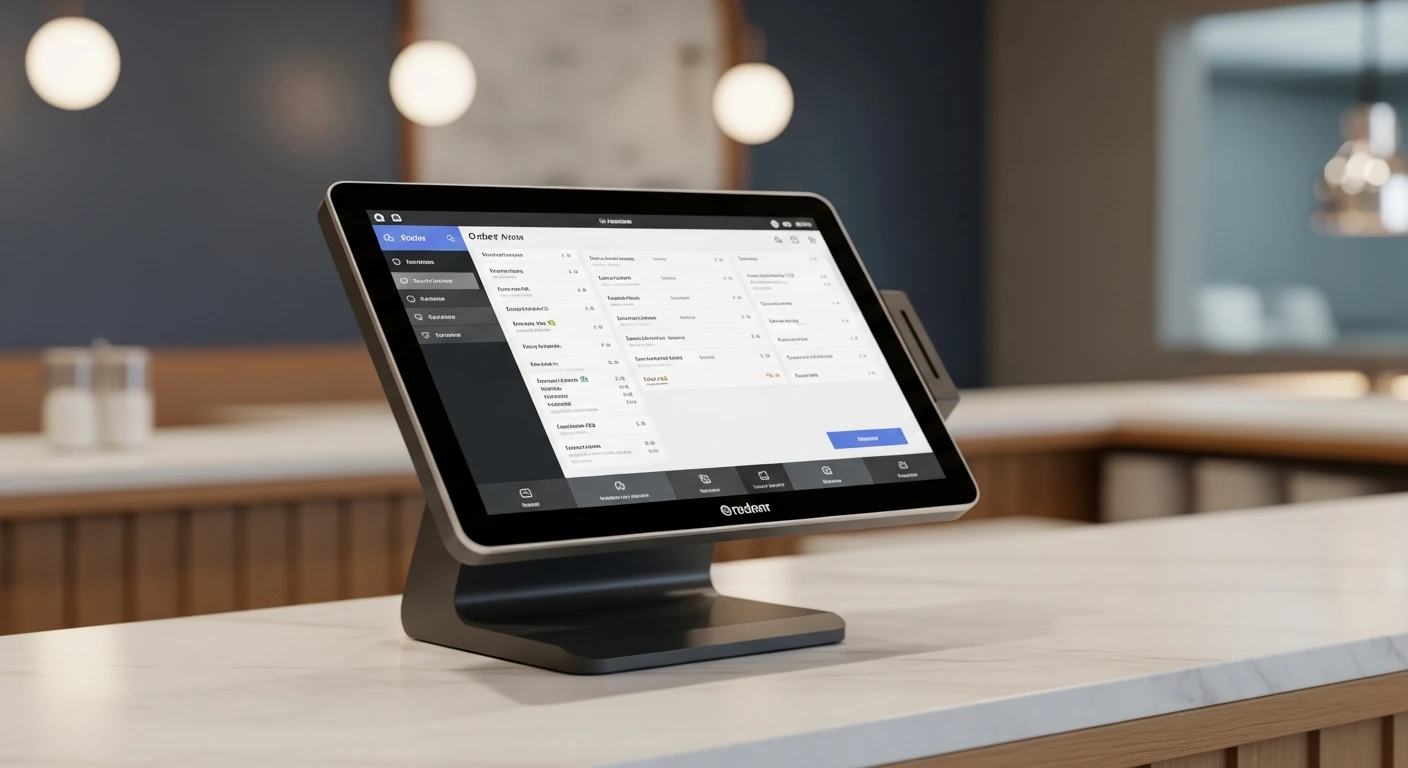
Your POS subscription is $79/month. Seems reasonable. You did the math when you signed up.
But pull up your processing statement. That same POS company is also charging you 2.99% + $0.15 on every transaction — and you cannot use anyone else. On $50,000/month in card sales, that is $1,670/month in processing fees. $20,040 per year.
Now compare: a merchant who can choose their own processor is paying interchange-plus at roughly 2.25% effective. On the same $50,000/month, that is $1,125/month. $13,500/year.
The difference? $6,540 per year. And that is not a one-time cost. It compounds every single year you stay on that locked system.
Over a 5-year period? $32,700. That is more than most restaurant owners spend on their entire POS hardware setup.
This is the hidden business model of "affordable" POS systems. The software is the lure. Processing fees are the trap. And the lock-in is the mechanism that keeps you paying.
There is a better architecture. It is called processor-agnostic, and understanding it will change how you evaluate every POS system on the market.
What "Processor-Agnostic" Actually Means
A processor-agnostic POS system works with any payment processor. You choose who handles your credit card transactions. You negotiate your own rates. And you can switch processors at any time without replacing your POS.
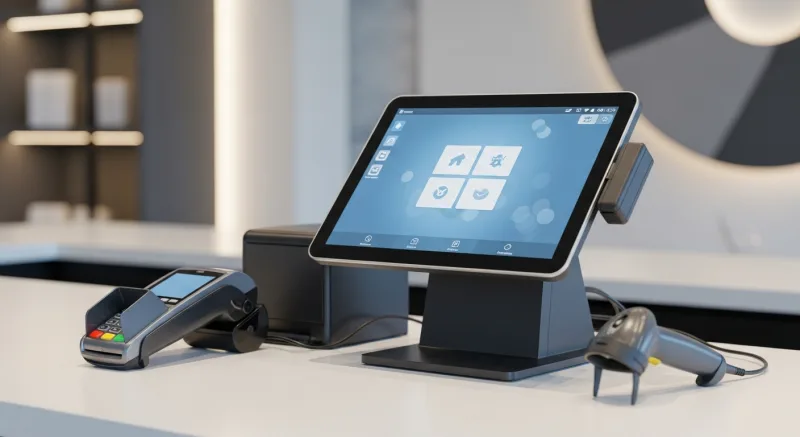
Think of it like a smartphone. Your iPhone works with AT&T, Verizon, or T-Mobile. You pick the carrier with the best rates and coverage for your needs. If a better deal comes along, you switch carriers — you do not buy a new phone.
Now imagine Apple said: "You can only use AT&T. Forever. At whatever rate we decide. And if you want to switch, you have to buy a new phone, re-download all your apps, and re-learn the interface."
That is exactly what Toast, Square, and Clover do with payment processing.
Locked-In vs. Open: The Architecture Difference
In a locked system, the POS software, the payment gateway, and the processor are all owned by the same company. They control the entire payment flow, and they set non-negotiable rates.
In a processor-agnostic system, the POS software is decoupled from payment processing. The POS handles order management, menu, reporting, and operations. Payment processing is a separate layer that connects to whichever processor you choose. The two systems communicate through standard payment protocols, not proprietary lock-in.
This is not just a philosophical difference. It is a structural one that determines how much money stays in your business.
The Real Cost of "Free" POS Systems
Several POS companies now offer their software for free — no monthly subscription, no upfront hardware cost. The catch? Mandatory processing at their rates.
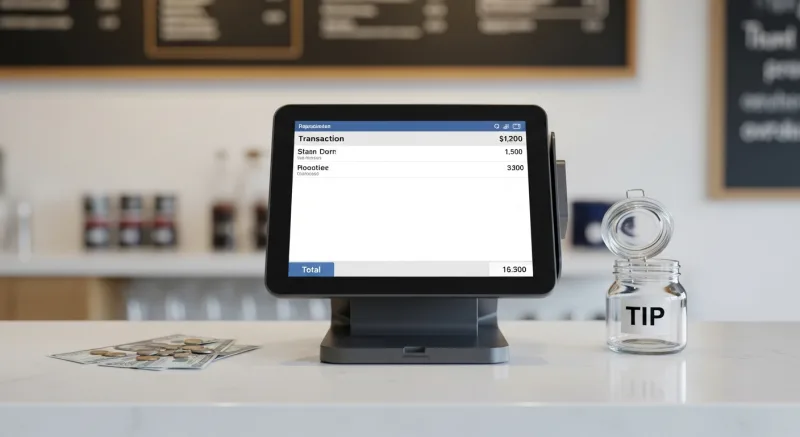
Let us do the math on what "free" actually costs.
| Scenario | "Free" POS (2.99% + $0.15) | Paid POS + Open Processing | Difference |
|---|---|---|---|
| Monthly card volume | $40,000 | $40,000 | - |
| Monthly processing fees | $1,367 | $940 | $427 |
| Monthly POS software cost | $0 | $120 | -$120 |
| Monthly net cost | $1,367 | $1,060 | $307 |
| Annual net cost | $16,404 | $12,720 | $3,684 |
| 5-year net cost | $82,020 | $63,600 | $18,420 |
The "free" POS costs $18,420 more over five years than a POS that charges $120/month but lets you choose your own processor. The free software is subsidized by inflated processing rates — and you end up paying far more than if you had just paid for the software outright.
And this is at $40,000/month. Scale up to $80,000/month and the 5-year difference exceeds $36,000.
How Interchange-Plus Pricing Works (And Why You Want It)
To understand why processor freedom saves you money, you need to understand how credit card pricing actually works.
Every card transaction has three cost components:
- Interchange: The fee set by Visa/Mastercard and paid to the card-issuing bank. This is non-negotiable and identical regardless of processor. Typically 1.15% to 2.40% depending on card type.
- Network assessment: A small fee paid to the card network (Visa, Mastercard). Also non-negotiable. Typically 0.13% to 0.15%.
- Processor markup: The only negotiable component. This is what your processor charges on top of interchange for their services.
With interchange-plus pricing, you see all three components separately on your statement. The processor's markup is transparent and fixed — typically 0.15% to 0.30% plus $0.08 to $0.12 per transaction.
With flat-rate pricing (what locked POS systems charge), all three components are bundled into a single rate — 2.6% or 2.99% or whatever the vendor decides. You cannot see the breakdown, and you cannot negotiate any component.
Here is why this matters: on a typical restaurant transaction mix, the blended interchange rate is approximately 1.80%. Add 0.14% for assessments, and the non-negotiable base cost is about 1.94%.
A competitive interchange-plus processor adds a 0.20% markup and $0.10 per transaction. Your effective rate: approximately 2.25%.
A locked POS system charges 2.99% + $0.15 flat. Your effective rate: approximately 3.15%.
That 0.90% gap is pure excess markup. On $50,000/month in card volume, it is $450/month or $5,400/year going to the POS company instead of your bottom line.
The Negotiation Power You Are Giving Up
When you are locked into a single processor, you have zero negotiating power. The POS company knows you cannot switch processors without replacing your entire system — the hardware, the software, the menu programming, the staff training, the integrations. The switching cost is so high that you will accept whatever rate they set.
But here is what happens when you operate on a processor-agnostic POS.
You call Processor A and get a quote: interchange + 0.25% + $0.10. Not bad.
You call Processor B: interchange + 0.20% + $0.12. Slightly better on the percentage, slightly worse on per-transaction.
You call Processor C: interchange + 0.22% + $0.08. The best overall rate for your transaction mix.
You go back to Processor B: "Processor C offered me 0.22% + $0.08. Can you match it?" Processor B comes back at 0.18% + $0.10. You now have a rate that none of them would have offered without competition.
This is basic market dynamics. Multiple vendors competing for your business drives prices down. A monopoly supplier sets whatever price maximizes their revenue. Locked POS processing is a monopoly by design.
And the negotiation does not stop at signing. Because switching processors on a processor-agnostic POS is a simple credential update — no hardware changes, no menu reprogramming, no staff retraining — you can renegotiate annually. Every year, you can get fresh quotes and make your current processor compete to keep your business.
Try doing that on Toast.
Volume Pricing: Where the Savings Get Serious
The more you process, the more leverage you have — and the more a locked system costs you.

| Monthly Volume | Locked Rate (2.99%+$0.15) | Negotiated IC+ Rate | Annual Savings |
|---|---|---|---|
| $25,000 | $855/mo | $600/mo | $3,060 |
| $50,000 | $1,670/mo | $1,125/mo | $6,540 |
| $100,000 | $3,290/mo | $2,100/mo | $14,280 |
| $200,000 | $6,530/mo | $3,900/mo | $31,560 |
At $200,000/month — the volume range for a multi-location group like Crafty Crab Seafood (19 stores) or T. Jin China Diner (15 stores) — the annual savings exceed $31,000. Over a 5-year period, that is more than $150,000. Enough to open another location.
And notice how the savings accelerate with volume. At $25K/month, the locked system costs roughly $255/month more. At $200K/month, it costs $2,630/month more. High-volume processors offer even better rates because your business is more valuable to them, driving the per-transaction cost lower. Locked systems offer the same rate regardless of volume because they know you cannot leave.
The Hidden Costs of Being Locked In
Processing fees are the most obvious cost of processor lock-in. But they are not the only one.
Rate Increases You Cannot Refuse
Locked POS companies can raise their processing rates at any time. And they do. Toast has increased its rates multiple times since launch. When your processor and your POS are the same company, a rate increase is not something you negotiate — it is something you absorb, because the alternative is replacing your entire system.
Equipment Lock-In
Many locked POS systems require proprietary hardware that only works with their processing. Toast terminals only work with Toast. Square terminals only work with Square. If you switch POS systems, you are buying all new hardware — terminals, printers, card readers, kitchen displays.
A processor-agnostic system runs on standard hardware. KwickOS runs on any x86 hardware with a Linux-based web interface. Your terminals, printers, and kitchen displays work with any processor because the POS and the payment system are independent.
Contract Terms That Favor the Vendor
Many locked POS processors require multi-year contracts with early termination fees of $500 to $5,000 or more. You are paying a premium rate AND locked into a contract that prevents you from leaving. The vendor has eliminated both competition and exit options.
Lack of Statement Transparency
Flat-rate processing statements are simple by design — but that simplicity hides information. You cannot see your actual interchange costs, so you cannot calculate the true markup you are paying. You cannot identify which card types cost more. You cannot audit your fees against published interchange rates. The opacity is a feature for the processor, not for you.
What to Look for in a Processor-Agnostic POS
Not every POS that claims to be "processor-agnostic" actually delivers on the promise. Here is what genuine processor freedom looks like:
- No mandatory processing. The POS vendor should never require you to use a specific processor as a condition of using their software. If there are "preferred" partners, they should be optional, and you should be free to use any other processor.
- Standard payment integration. The POS should support standard payment protocols and gateway connections, not proprietary interfaces that only work with one processor.
- No processing revenue sharing. Some POS companies claim to be "open" but have revenue-sharing agreements with specific processors. This creates a financial incentive to steer you toward partners, even if better rates exist elsewhere.
- Hardware independence. Your terminals, card readers, and printers should work with any processor. If changing processors requires new hardware, you are not truly processor-agnostic.
- Easy processor switching. Switching should be a configuration change, not a migration project. Update your merchant credentials, test a transaction, and you are done. If switching takes more than a day, the system is not genuinely agnostic.
- No contract penalties. A truly open system does not penalize you for switching processors. No termination fees, no rate locks, no contractual restrictions.
The Processor Freedom Advantage: A Complete Comparison
| Feature | Locked POS (Toast/Square/Clover) | Processor-Agnostic POS (KwickOS) |
|---|---|---|
| Choose your processor | No | Yes — any processor |
| Negotiate rates | No — take it or leave it | Yes — competitive quotes |
| Switch processors | Requires replacing entire POS | Configuration change only |
| Processing pricing model | Flat-rate (opaque) | Interchange-plus (transparent) |
| Effective rate ($50K/mo) | ~3.15% | ~2.25% |
| Annual processing cost ($50K/mo) | ~$20,040 | ~$13,500 |
| 5-year processing cost ($50K/mo) | ~$100,200 | ~$67,500 |
| Rate increase protection | None — absorb or replace everything | Full — switch processors if rates rise |
| Statement transparency | Bundled single rate | Full interchange + markup breakdown |
| Hardware lock-in | Proprietary terminals required | Standard hardware, any manufacturer |
Why This Is KwickOS's Number One Differentiator
KwickOS was built from the ground up to be processor-agnostic. It is not a feature we added — it is a foundational architectural decision that reflects a core belief: merchants should keep 100% of their processing revenue.
We make our money from software and services, not from taking a cut of your transactions. This aligns our incentives with yours — we succeed when your business succeeds, not when you swipe more cards at inflated rates.
For multi-location operators, this matters even more. T. Jin China Diner runs 15 stores with 75 terminals. Crafty Crab Seafood operates 19 stores with 152 terminals. At their combined volumes, the difference between locked processing and negotiated interchange-plus is measured in tens of thousands of dollars per year — money that stays in the business, funds expansion, and rewards owners for the risk they take.
Use our processing fee calculator to see exactly how much you could save by switching to processor-agnostic.
The Bottom Line
The POS industry has spent a decade training restaurant owners to focus on software features — table management, reporting dashboards, online ordering. Those features matter. But they are not your biggest cost.

Your biggest cost is processing fees. And the single most important factor in your processing cost is whether your POS lets you choose your own processor or locks you into a mandatory rate.
A restaurant processing $50,000/month in cards will pay approximately $6,540 more per year on a locked system than on a processor-agnostic system with negotiated interchange-plus rates. Over five years, that is $32,700 — enough to fund a renovation, a second location, or five years of a POS subscription that actually lets you keep your money.
The math is not complicated. The question is whether your POS vendor wants you to see it.
Keep 100% of Your Processing Revenue
KwickOS works with any payment processor. Choose your own rates, negotiate your own terms, switch whenever you want. Your money stays in your business.
Calculate Your Savings