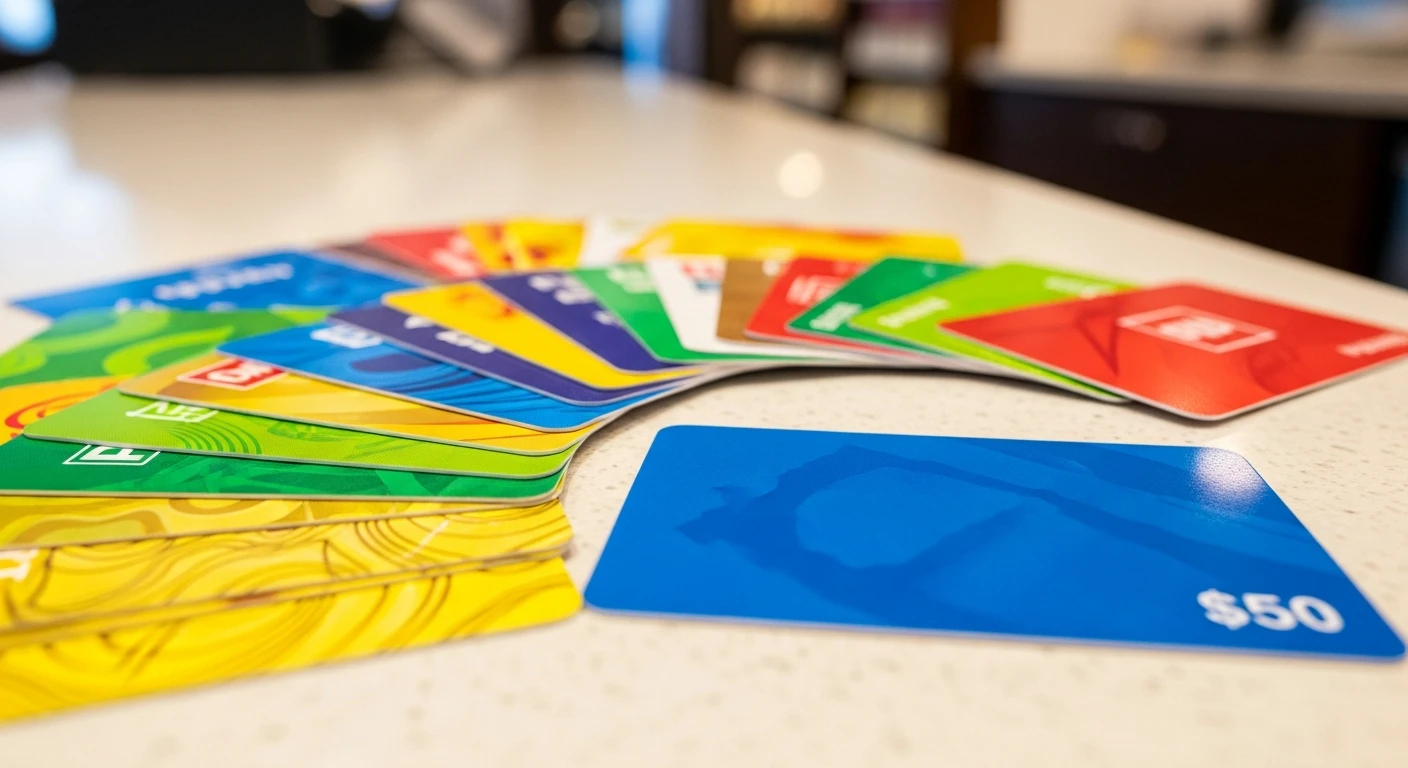
It starts with a birthday. Sarah buys a $50 gift card for her friend Marcus, who has never eaten at your restaurant. Marcus comes in to use it. He brings his girlfriend. Together they order $87 worth of food and drinks. Marcus uses his $50 gift card and pays the remaining $37 on his credit card. Two weeks later, Marcus comes back with two coworkers — no gift card this time, just a $110 tab. A month after that, his girlfriend brings her sister for lunch: $62. Marcus signs up for your loyalty program on that second visit. Over the next six months, he visits four more times, spending an average of $45 per visit.
Total revenue from that one $50 gift card: $247 in direct spending by Marcus alone, not counting the meals his girlfriend and coworkers purchased independently.
That is not a hypothetical. That is the economics of gift cards. And most new restaurant owners either do not know about it, delay setting it up, or get charged monthly fees for the privilege. Let us break down exactly how gift cards and loyalty programs work, why they are so effective, and how to launch both without overpaying.
Gift Cards 101: What They Are and Why the Math Is So Good
A gift card is prepaid credit that a customer buys for themselves or someone else. When someone purchases a $50 gift card, you receive $50 immediately. That money is in your bank account today, even though the food has not been served yet.
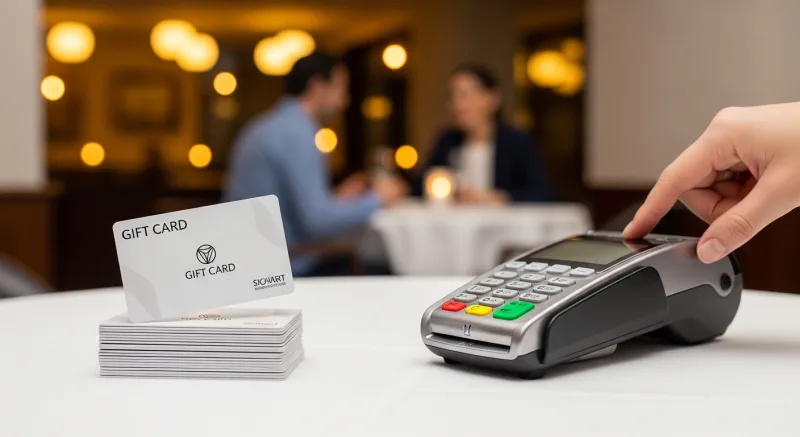
That alone makes gift cards attractive. But the real economics go much deeper.
The Five Reasons Gift Card Revenue Exceeds Face Value
Reason 1: Overspending. Gift card recipients almost always spend more than the card value. Industry data consistently shows that gift card users spend 20-40% above the card balance. A $50 card becomes a $60-70 meal, with the difference paid out of pocket. This is not accidental — it is human psychology. When someone is spending “free money,” they are more willing to order the appetizer, add a dessert, or try the premium cocktail.
Reason 2: New customer acquisition. When someone buys a gift card for a friend, they are doing your marketing for you. The friend visits your restaurant for the first time, at zero acquisition cost to you. No advertising, no discount, no promotion — just a friend saying “you should try this place” and backing it up with money. That is the most powerful form of marketing that exists.
Reason 3: Breakage. A percentage of gift cards are never fully redeemed. The customer loses the card, forgets about it, or leaves a small balance that is not worth a trip. Industry estimates put breakage at 10-19% of total gift card value. That means 10-19 cents of every dollar sold in gift cards becomes pure profit — revenue you collected but never had to fulfill with food.
Reason 4: Cash flow timing. You receive the money when the card is purchased, not when it is redeemed. During the holiday season (November and December account for roughly 50% of all gift card sales), this creates a significant cash flow boost right when many restaurants experience seasonal slowdowns in foot traffic.
Reason 5: Repeat visits. Gift card recipients who have a good experience often become regular customers. They discovered your restaurant through a gift, had a positive first impression (because they were spending “free money” and were predisposed to enjoy it), and now have a reason to come back. The lifetime value of a gift card-acquired customer is significantly higher than one acquired through advertising.
$50 gift card purchase + $37 overspend on first visit + $110 second visit + $45 average across 4 additional loyalty-driven visits = $377 in total spending. Even conservatively, accounting for the fact that some of those visits might have happened anyway, the multiplier on a gift card is typically 3x-5x face value in first-year revenue.
Physical Gift Cards vs. E-Gift Cards: What Is the Difference?
There are two types of gift cards, and a modern restaurant should offer both.
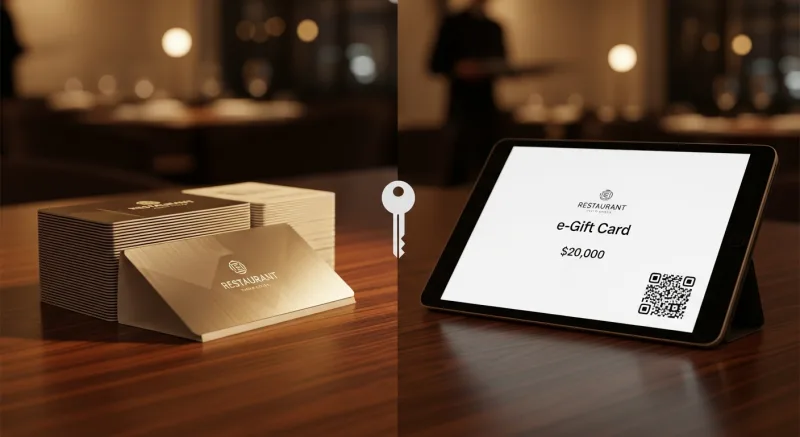
Physical Gift Cards
These are the plastic cards that look like credit cards, printed with your restaurant’s branding. Customers buy them at your register, and the cashier activates them in the POS with the desired amount. The recipient brings the card to your restaurant, and the server swipes or scans it to apply the balance.
When physical cards work best: Holiday gifting season, in-restaurant purchases, corporate gifts, local promotions. There is something tangible about handing someone a beautifully branded card in an envelope. It feels like a real gift, not an email.
What you need: Custom-printed cards (typically $0.50-$1.50 per card for orders of 500+), a POS that supports gift card activation and redemption, and a display at your register or host stand.
E-Gift Cards (Digital Gift Cards)
E-gift cards are purchased online and delivered electronically — via email, text message, or a shareable link. The buyer fills out the recipient’s name, adds a personal message, and chooses the amount. The recipient receives a digital card with a unique code that can be redeemed in-store or for online orders.
When e-gift cards work best: Last-minute gifts, long-distance gifting (the buyer is in New York and the recipient is in Houston), social media promotions, and “buy now” impulse purchases from your website or app. Tiger Sugar, a KwickOS customer with 2 locations and self-ordering kiosks, uses e-gift cards with electronic receipts and loyalty integration — the entire customer experience is seamless from purchase to redemption.
What you need: A POS with built-in e-gift card functionality and an online storefront where customers can purchase and send digital cards. The e-gift card system should integrate directly with your POS so redemption is automatic — the server does not have to manually look up codes or call a manager.
The Best Approach: Offer Both
Physical cards capture in-store impulse buyers and holiday shoppers who want something to wrap. E-gift cards capture online buyers, last-minute shoppers, and the growing segment of consumers who prefer everything digital. Running both from the same POS system means one inventory of card balances, one reporting dashboard, and zero confusion.
Loyalty Programs: Turning First-Time Visitors Into Regulars
If gift cards bring new customers in the door, loyalty programs keep them coming back. A loyalty program rewards customers for repeat visits — typically by earning points on every purchase that can be redeemed for discounts, free items, or special perks.
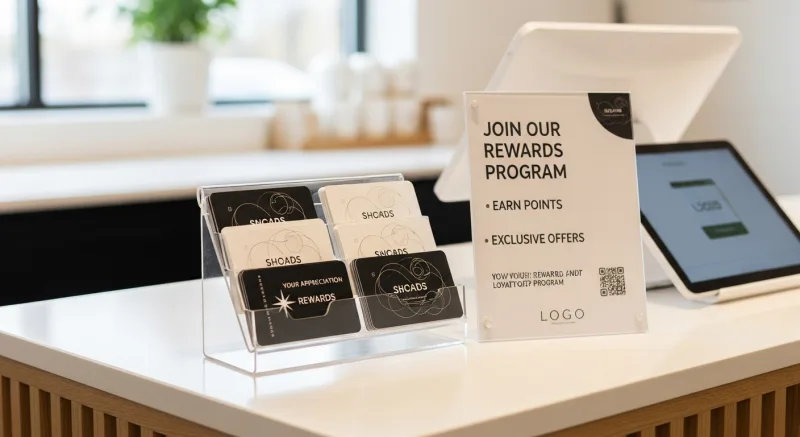
Here is why loyalty programs work so powerfully, and it comes down to a principle psychologists call the endowed progress effect.
In a famous experiment, researchers gave car wash customers a loyalty card. One group got a card requiring 8 stamps for a free wash (starting from zero). The other group got a card requiring 10 stamps, but with 2 stamps already filled in. Both groups needed 8 more washes. But the group that started with 2 stamps completed the card at nearly twice the rate.
Why? Because they felt like they had already started. They had “progress” they did not want to waste. A loyalty program does the same thing to your customers. The moment they sign up and see “50 points — only 200 more to earn a free appetizer,” they are hooked. They have progress. Walking away means losing it.
Types of Loyalty Programs
Points-based: Customers earn points on every purchase (e.g., 1 point per dollar spent). Points are redeemed for rewards (e.g., 200 points = free appetizer, 500 points = $25 off). This is the most common and most flexible model.
Visit-based: Customers earn credit for each visit (e.g., buy 9 entrees, get the 10th free). Simpler to understand but less flexible.
Tier-based: Customers progress through levels (Silver, Gold, Platinum) as they spend more, unlocking increasingly valuable perks. This works well for high-frequency businesses.
Membership: Customers pay a monthly or annual fee for ongoing benefits (e.g., $9.99/month for 10% off all orders + free delivery + birthday reward). This generates predictable recurring revenue and creates strong commitment. Diva Nail Beauty, a KwickOS customer with 4 locations, uses membership programs with automated commission tracking — the same POS that processes the membership handles stylist commission calculations, resulting in a 90% increase in operational efficiency.
The Numbers Behind Loyalty
The economics of loyalty are straightforward and compelling:
- Loyal customers spend 67% more than new customers on average
- Increasing customer retention by just 5% can increase profits by 25-95%
- The probability of selling to an existing customer is 60-70% vs. 5-20% for a new prospect
- Loyalty program members visit 35% more frequently than non-members
A restaurant averaging 200 customers per day with a 30% loyalty enrollment rate has 60 loyalty members visiting daily. If those members spend 20% more per visit and visit 35% more frequently than non-members, the annual revenue impact is substantial — often $50,000 to $150,000 or more, depending on your average ticket size.
What Most POS Companies Charge for Gift Cards and Loyalty
Here is the part that should make you angry. Gift cards and loyalty programs are not exotic features. They are table stakes for a modern restaurant. Every restaurant should have them from day one. And yet most POS companies treat them as premium add-ons and charge accordingly.
| POS Provider | Gift Card Program | Loyalty Program | Combined Annual Cost |
|---|---|---|---|
| Typical POS (add-on model) | $25 – $75/month | $45 – $100/month | $840 – $2,100/year |
| Third-party standalone provider | $30 – $60/month | $50 – $150/month | $960 – $2,520/year |
| KwickOS (all-in-one) | Included | Included | $0 additional |
Over three years, a restaurant paying $150/month for combined gift card and loyalty add-ons spends $5,400 on features that should be built into the platform. That $5,400 could fund a holiday gift card marketing campaign that generates $15,000 or more in new revenue.
And that is not even the worst part. When gift cards and loyalty are run through third-party providers that bolt onto your POS through integrations, the data is fragmented. Your POS knows what customers ordered, but the loyalty system has the points. The gift card system has the balances. Nothing talks to each other seamlessly. Customer insights are scattered across three dashboards.
With an integrated system, when Marcus redeems his $50 gift card, the POS automatically prompts the server to offer loyalty enrollment. When Marcus returns and pays with his credit card, the system recognizes him, applies his loyalty points, and updates his customer profile — all in one transaction, one screen, one system.
How to Launch Gift Cards and Loyalty at Your Restaurant
If you are starting from scratch, here is a practical launch plan.
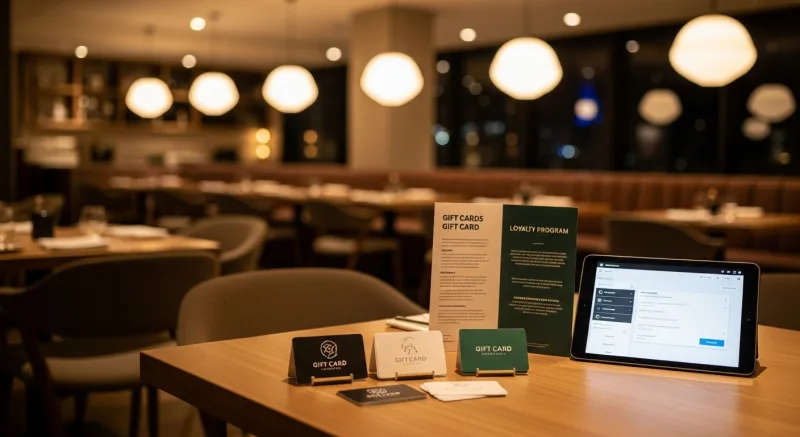
Gift Cards: Launch Checklist
- Order physical cards. Start with 500 branded plastic cards. Work with your POS provider or a card printing service. Include your restaurant name, logo, and a simple design that feels premium. Budget $250-$750 for the initial order.
- Set up e-gift cards. Configure digital gift cards in your POS with an online purchase page. Ensure the page is mobile-friendly (most e-gift cards are purchased from smartphones). Test the purchase flow yourself — buy a $5 test card, send it to your own email, and redeem it at the register to verify the entire process works.
- Display prominently. Place physical cards at the register, the host stand, and on tables. The most effective placement is right next to the payment terminal, where customers are already thinking about money. Add a sign: “Gift cards available — the perfect gift for any occasion.”
- Train staff to ask. The simplest and most effective gift card sales technique: “Would you like to add a gift card to your order today?” at checkout. During November and December, this one question can generate thousands in gift card sales.
- Promote online. Add a “Buy a Gift Card” button to your website navigation, your social media profiles, and your Google Business listing. E-gift cards should be purchasable in under 60 seconds.
Loyalty Program: Launch Checklist
- Choose your structure. For most restaurants, a points-based system is the best starting point. 1 point per dollar spent, with a clear reward threshold (e.g., 100 points = $10 off). Keep it simple enough to explain in one sentence.
- Set up in your POS. Configure point earning rates, reward thresholds, and any enrollment bonuses (e.g., “Sign up and get 25 bonus points instantly”). The enrollment bonus leverages the endowed progress effect we discussed earlier.
- Train staff to enroll. At the end of every transaction: “Would you like to join our rewards program? It is free, and you will earn points on every visit.” Set an enrollment target for staff — 10 new members per day is a reasonable starting goal for a mid-volume restaurant.
- Make progress visible. Customers should see their point balance on every receipt and every online order confirmation. The number itself is a motivator. “You have 73 points. 27 more until your next reward.” That sentence is worth a return visit.
- Launch a “double points” event. In the first month, run a double-points week to accelerate enrollment and give early members a taste of earning. This creates momentum and word of mouth.
Gift Cards + Loyalty Together: The Compounding Effect
The real magic happens when gift cards and loyalty work together. Here is the compounding sequence:
Customer A buys a gift card for Customer B. Customer B visits, redeems the card, overspends, and enrolls in loyalty. Customer B returns 3 more times (driven by loyalty points), earns a reward, and tells Customer C about the restaurant. Customer C visits, enrolls in loyalty, and eventually buys a gift card for Customer D.
Each gift card creates a potential new loyalty member. Each loyalty member generates repeat revenue and creates a potential gift card buyer. The two programs feed each other in a loop that grows your customer base and your revenue simultaneously.
This is why launching both from day one matters. Every day you operate without gift cards is a day you miss gift card sales (especially during holidays). Every day you operate without loyalty is a day first-time visitors leave without a reason to return.
A Word About the Cost of Waiting
Restaurant owners often plan to “add loyalty later” and “figure out gift cards next quarter.” That delay has a real cost.
Assume your restaurant serves 150 customers per day. Without a loyalty program, those customers leave with nothing connecting them to your restaurant except their memory of the meal. Some will come back. Many will not — not because the food was bad, but because they forgot, or a new place opened, or their routine changed.
With a loyalty program launched from day one, you capture those customers immediately. If 30% enroll (a reasonable rate with trained staff), that is 45 new loyalty members per day, or roughly 1,350 in your first month. At a 35% increase in visit frequency, those 1,350 members generate approximately 472 additional visits per month. At an average ticket of $35, that is $16,520 in monthly revenue attributable to the loyalty program.
Wait three months to launch loyalty, and you have missed roughly $49,560 in potential revenue. You have also missed 4,050 customers who visited without being captured in a loyalty system — customers you now have no way to reach, no way to incentivize, no way to bring back.
The best time to launch gift cards and loyalty was your opening day. The second best time is today.
Gift Cards, E-Gift Cards, Loyalty, and Membership — All Included
KwickOS includes physical gift cards, digital e-gift cards, loyalty points, and membership programs in every plan. No add-on fees. No third-party integrations. Launch from day one and start building your repeat customer base immediately.
See Gift Cards & Loyalty in ActionOr call us: (888) 355-6996