Lightning Capital, Cuban Sandwiches, and Waterfront Dining: Tampa Bay’s POS Reality Check
Updated March 2026 · By Tom Jin
For Tampa business owners searching for Lightning Capital, Cuban Sandwiches, and Waterfront Dining, here's what the top operators already know. Tampa Bay averages more lightning strikes per square mile than any other metropolitan area in the United States. From June through September, afternoon thunderstorms erupt with clockwork predictability between 3 PM and 6 PM, producing lightning that knocks out power transformers, trips building circuits, and disrupts internet service across neighborhoods with sudden violence. A restaurant on Bayshore Boulevard or in the Ybor City entertainment district that depends on cloud-based POS connectivity during these daily storms is a restaurant that loses dinner service revenue four months of the year.
Tampa Bay’s 4,200 restaurants serve a metro area of 3.3 million people across a geography that spans from downtown Tampa to St. Petersburg, Clearwater, and the beaches of Pinellas County. The dining culture blends Cuban culinary heritage (Ybor City is the cigar capital of America and the birthplace of the Cuban sandwich), Gulf Coast seafood, a growing international food scene, and the snowbird tourism that fills waterfront restaurants from December through April.
The Daily Lightning Test
Between June and September, Tampa Bay experiences thunderstorms on approximately 90 afternoons. These are not gentle showers. They are violent electrical storms with cloud-to-ground lightning strikes that directly affect restaurant operations: power surges that damage equipment, outages that last minutes to hours, and internet interruptions that disconnect cloud-dependent POS systems during the dinner-prep window.
KwickOS processes every transaction locally at 1-millisecond speed without internet dependency. When a 4:30 PM thunderstorm knocks out Spectrum internet for 45 minutes, the restaurant continues processing orders, displaying kitchen tickets, and collecting payments. When power surges trip the modem and require a reboot, the POS does not wait for reconnection. Cloud synchronization happens when connectivity is stable. Transaction processing never depends on it.
For Tampa restaurants, this is not a once-a-year disaster scenario. It is a four-times-per-week reality from June through September. Ninety potential service disruptions per summer. The technology that handles these disruptions without revenue loss is not a premium feature. It is baseline operational infrastructure.
Ybor City: The Cuban Sandwich and Its Technology
The Cuban sandwich was invented in Ybor City, and the restaurants that still serve the original recipe operate with the same high-volume, speed-critical counter service model that defines sandwich culture from Philadelphia to New York. A Cuban sandwich shop during lunch processes 150-250 orders per hour with average tickets of $10-$14. Speed is the product. A five-second delay per transaction costs 15-20 orders per hour during the rush.
KwickOS at 1-millisecond processing maintains the throughput that Cuban sandwich culture demands. The transaction completes before the customer finishes reaching for their wallet. The KDS shows the order to the bread station instantly. There is no cloud round-trip inserting latency into a workflow where seconds determine how many customers the line serves before they give up and walk next door.
KwickOS Spanish-language interface serves Ybor City’s kitchen workforce. The Cuban sandwich may be an American invention, but the kitchens producing them operate in Spanish. KDS tickets in Spanish, modifiers in Spanish, and management tools in Spanish — because forcing English on a Spanish-speaking kitchen creates errors that slow the line.
Waterfront Dining and the Patio Premium
Tampa Bay’s waterfront restaurants along Bayshore Boulevard, Channelside, and the St. Petersburg waterfront operate with outdoor seating that generates a significant premium. A table with a bay view commands higher prices and longer dwell times than an interior table. But waterfront dining also exposes POS technology to salt air, humidity, and the afternoon storms that sweep across the bay.
KwickOS tablets serve as portable POS stations for waterfront patio service. Servers carry tablets tableside, enter orders that route immediately to the kitchen, and process payments with the bay in the background. The tablet is the interface between the guest experience and the kitchen production — it needs to be portable, weather-tolerant, and replaceable at $250-$400 rather than $800+ for proprietary terminals that salt air corrodes equally but cost three times as much to replace.
The Snowbird Season Revenue Cycle
Tampa Bay’s snowbird season from November through April increases the metro area’s effective dining population by an estimated 200,000 seasonal residents. Clearwater Beach, St. Pete Beach, and the Gulf-side restaurants of Pinellas County see revenue increases of 40-60% during peak snowbird months. This seasonal swing creates both an opportunity and a staffing challenge that technology must address.
KwickOS analytics forecast seasonal patterns based on historical data. When the system shows that the first two weeks of March consistently produce the highest revenue of the year, operators staff, stock, and promote accordingly. Gift card promotions during snowbird season convert seasonal visitors into year-round digital customers. A snowbird who buys a digital gift card for their neighbor at home generates a new customer acquisition at zero marketing cost.
Self-ordering kiosks handle the snowbird-season volume surge without requiring temporary staff that are hard to find during Florida’s tight winter labor market. Two kiosks in a Clearwater Beach restaurant process 80-100 additional orders per hour during the lunch rush, handling the seasonal capacity increase with technology rather than labor that may not be available.
Seminole Heights and the Tampa Food Revival
Seminole Heights has emerged as Tampa’s most exciting neighborhood restaurant district, where chef-driven establishments have transformed a formerly overlooked area into a dining destination. These restaurants are independent, creative, and operating on margins where every dollar of processing cost is the owner’s personal money.
KwickOS processor independence saves Seminole Heights restaurants the margin that sustains their independence. A restaurant doing $65,000 monthly saves $6,600 annually through negotiated processing versus Toast’s locked rate. For a chef-owner whose annual take-home is $48,000, that savings represents a 14% income increase. The math is personal because the business is personal.
Loyalty programs through KwickOS build the neighborhood regular base that Seminole Heights restaurants depend upon. A customer with accumulated points returns to your restaurant rather than trying the new spot on Florida Avenue. Membership programs create community — exclusive tastings, early menu access, and the recognition that turns a customer into a regular and a regular into an advocate.
Crafty Crab and the Tampa Expansion Model
Crafty Crab Seafood operates multiple Tampa Bay area locations as part of its 19-store, 152-terminal deployment. The Tampa expansion demonstrates how KwickOS scales within a metro area: each location runs market-appropriate configurations (beach locations emphasize different items than inland locations) while corporate monitors all locations from a unified dashboard. Menu syncs push updates across all locations with one click. Pricing adjustments for higher-rent beach locations apply independently.
MacDill Air Force Base and the Military Economy
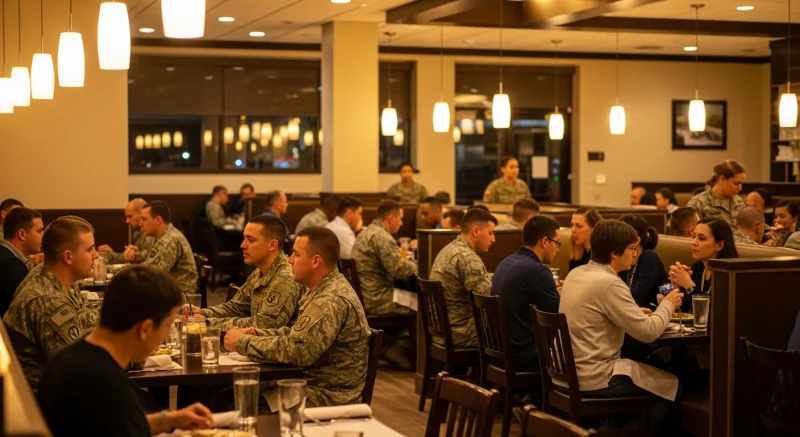
MacDill Air Force Base employs over 15,000 military and civilian personnel, creating a concentrated lunch economy south of downtown Tampa. KwickMenu pre-ordering serves the military lunch crowd with timed pickup. KwickOS loyalty programs capture military customers during their Tampa posting. The military dining economy is predictable, consistent, and loyal to restaurants that serve it well — making it an ideal base for POS-driven retention strategies.
Tampa Bay POS Priorities
- Lightning-proof offline processing — 90 summer storms need local processing that ignores connectivity loss
- Cuban sandwich speed — 1ms processing for 150-250 orders/hour counter service
- Native Spanish interface — Ybor City kitchens operate in Spanish
- Waterfront patio portability — Salt-air-tolerant tablets for bay-view tableside service
- Snowbird season analytics — 40-60% seasonal revenue swings need data-driven forecasting
- Self-ordering kiosks — Seasonal volume needs automated throughput when labor is scarce
- Processor independence — Seminole Heights margins demand negotiated rates
- Multi-location management — Tampa Bay geography needs centralized oversight with per-location flexibility
Tampa Bay brings the lightning. Your POS system should be grounded.
Tampa Bay restaurant owners: Call (888) 355-6996 or visit KwickOS.com to see POS technology that keeps processing when the storms roll in.
Turn One-Time Diners into Regulars: Built-In Gift Cards & Loyalty
Most POS companies treat gift cards and loyalty as afterthoughts — expensive add-ons that cost $50-100/month extra. KwickOS includes them at no additional charge because we believe they are essential revenue tools, not luxury features.
Gift Cards That Actually Drive Revenue
Here is what most restaurant owners do not realize: gift card buyers spend an average of 20-40% more than the card's face value. A $50 gift card typically generates $60-70 in actual spending. KwickOS supports both physical gift cards and electronic gift cards that customers can purchase, send, and redeem through their phones.
- Physical gift cards — branded plastic cards that sit on your counter and sell themselves during holidays
- E-gift cards — customers buy and send digitally via text or email, perfect for last-minute gifts
- Balance tracking — real-time balance across all your locations, no manual reconciliation
- Reload capability — customers top up their balance, creating a built-in prepayment habit
Loyalty Points That Keep Them Coming Back
KwickOS loyalty is not a punch card from 2005. It is a digital points system that tracks every dollar spent and automatically rewards your best customers:
- Earn points on every purchase — configurable ratio (e.g., $1 = 1 point, or $1 = 10 points)
- Tiered rewards — silver, gold, platinum levels to incentivize higher spending
- Birthday rewards — automated birthday offers that bring customers back during their special month
- Points-for-payment — customers redeem points directly at checkout, seamless for your staff
Membership Programs
For restaurants running VIP programs or subscription models (like monthly coffee clubs), KwickOS membership management handles recurring billing, exclusive pricing tiers, and member-only menu items — all within the same system your cashier already uses.
The bottom line: Toast charges $75/month extra for loyalty. Square's loyalty starts at $45/month. KwickOS includes gift cards, e-gift cards, loyalty points, and membership management in every plan. That is $540-900/year you keep in your pocket.

Founder & CIO of KwickOS · 30 Years IT · 20 Years Restaurant Industry
Tom built KwickOS after running restaurants and IT companies for decades. He relocated the company to a 10,000 sq ft office in 2023 and now serves 5,000+ businesses across all 50 states, processing over $2M in daily sales.