Rain, Tech Money, and Pike Place Fish: Seattle Restaurants Need POS Systems Built for the Real Northwest
Updated March 2026 · By Tom Jin
Seattle rains 152 days per year, employs 400,000 tech workers across Amazon, Microsoft, Boeing, and hundreds of startups, and operates a restaurant scene that the rest of the country consistently underestimates. The city’s 5,000+ restaurants range from Pike Place Market stalls that have sold chowder since the 1930s to Capitol Hill restaurants pushing culinary boundaries that earn national attention. The International District concentrates Chinese, Japanese, Vietnamese, and Filipino restaurants in a compact area that rivals any Chinatown in America for quality if not for size.
Seattle’s restaurant economics combine high minimum wage ($20.29 in the city, the highest in America for large employers), elevated rent in neighborhoods like Capitol Hill and Ballard, and a customer base that is technology-native and expects digital experiences to match their professional standards. A city that invented the modern tech campus and the $6 coffee also expects its restaurants to operate with technological sophistication.
The Amazon Effect on Seattle Dining
Amazon’s headquarters in South Lake Union employs over 75,000 people in a concentrated area that has reshaped Seattle’s lunch economy. The restaurants of SLU, Denny Triangle, and the surrounding blocks serve a tech workforce that orders lunch online, evaluates the experience through UX lenses, and switches restaurants the moment a competitor offers a better digital ordering flow.
KwickMenu online ordering provides the polished, mobile-first experience that Amazon employees expect. An engineer who orders at 11:50 from their desk in Day One Building expects the food ready at 12:05 — not 12:15 with an apology. KwickOS integration between online ordering and KDS production ensures this precision. The order enters the kitchen display immediately, production begins on receipt, and the food is packaged and waiting at the pickup time.
KwickOS loyalty programs compete for the Amazon lunch dollar against the employee cafeteria (subsidized) and the dozens of restaurants within walking distance. Points that accumulate toward a free meal create switching costs that keep the engineer returning to your restaurant rather than trying the new option that opened last week. In a neighborhood where restaurant competition for tech-worker lunches is fierce, loyalty is not a nice-to-have. It is the retention mechanism.
The International District: Seattle’s Culinary Heart
The Chinatown-International District is Seattle’s oldest Asian neighborhood and supports a dense concentration of Chinese, Vietnamese, Japanese, and Filipino restaurants that serve both the Asian-American community and the broader Seattle public. The dim sum houses of King Street, the pho shops of Jackson Street, and the Japanese restaurants of the Uwajimaya Village area all operate with kitchen staffs who work most efficiently in their native languages.
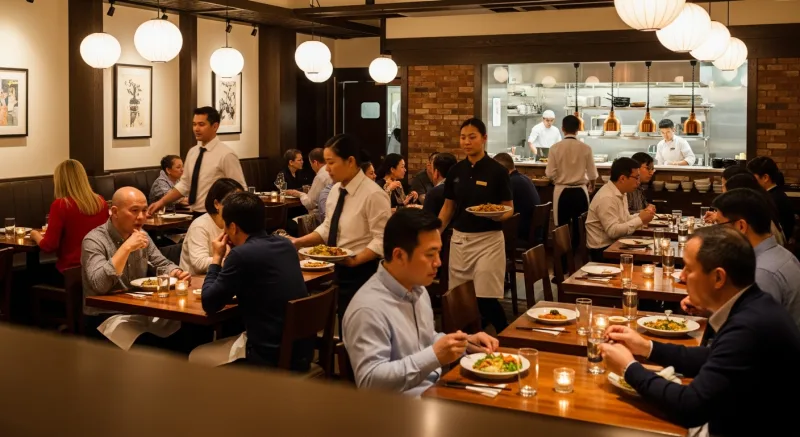
KwickOS Chinese-language KDS support serves the ID’s Chinese restaurants with native character rendering. Dim sum operations, hot pot restaurants, and Cantonese seafood houses see orders in the characters their cooks read. For the Vietnamese restaurants that share the district, visual KDS formatting with icon-based modifiers bridges the language gap. Each restaurant configures KwickOS for its specific operational language.
Pike Place Market: America’s Oldest Farmers Market
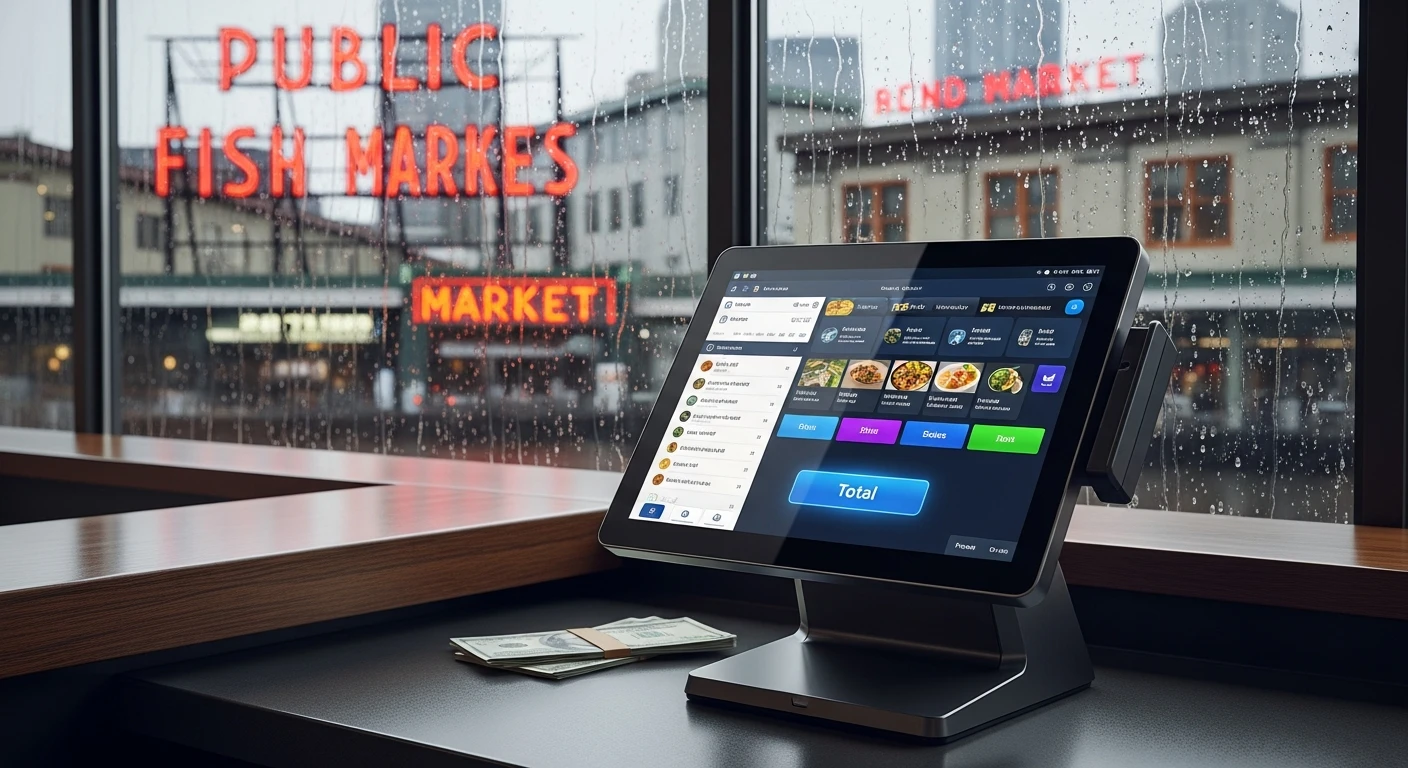
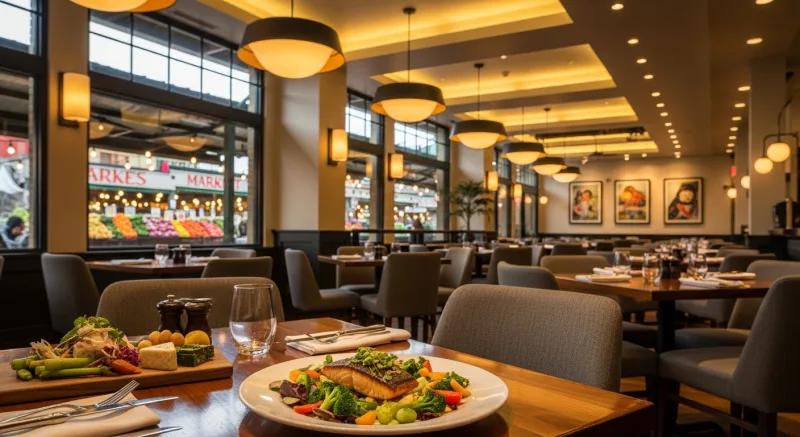
Pike Place Market’s food vendors operate in conditions that most POS systems are not designed for: counter spaces measured in inches, foot traffic of 10 million annual visitors, and a transaction speed requirement dictated by lines of tourists that can stretch 50 people deep for a popular chowder stall. KwickOS on compact tablets fits the narrow counter spaces. Self-ordering kiosks handle the tourist volume. Local 1-millisecond processing maintains throughput when 10,000 visitors in the market are consuming all available cellular bandwidth.
Gift card sales at Pike Place Market capture tourist spending for future visits. A visitor who buys a $25 gift card at a chowder stall sends their friend to Pike Place on their next Seattle trip. KwickOS processes gift cards through the same tablet that handles the lunch rush, with digital gift card options for tourists who prefer email delivery over physical cards.
Capitol Hill: Seattle’s Restaurant Innovation Lab
Capitol Hill is Seattle’s most adventurous dining neighborhood — the district where new concepts launch, where chef-driven experiments find their audience, and where the food trends that eventually reach the suburbs originate. These restaurants tend toward small footprints, creative menus, and owner-operated intensity. The margin between profitability and closure is measured in hundreds of dollars per month.
For Capitol Hill operators, KwickOS processor independence saves the margin that separates success from failure. A 40-seat restaurant doing $70,000 monthly saves $7,200 annually through negotiated processing versus Toast’s locked rate. At Capitol Hill’s margins, that $7,200 is the owner’s quarterly health insurance premium or three months of their student loan payment. The stakes are personal.
KwickOS loyalty and membership programs help small Capitol Hill restaurants build the regular customer base that sustains them between viral-Instagram moments. A membership offering exclusive tastings, early menu previews, and priority seating creates a community of committed regulars who keep coming even when the next trendy spot opens two blocks away.
The $20.29 Minimum Wage Reality
Seattle’s $20.29 minimum wage for large employers (no tip credit) is the highest in America. This labor cost creates an imperative for technology that maximizes labor productivity. Every minute an employee spends on tasks that technology could handle — entering orders at a terminal, manually calculating tips, reconciling shift reports — is a $20.29 minute wasted.
KwickOS tablets for tableside ordering eliminate the terminal walk. Self-ordering kiosks replace counter staff for high-volume service. Automated reporting replaces manual shift reconciliation. Fingerprint clock-in eliminates the buddy-punching and time-theft that plague PIN-based systems. Each of these automations reclaims labor minutes that, at $20.29 per hour, compound into significant annual savings.
Rainy Season Delivery and KwickDriver
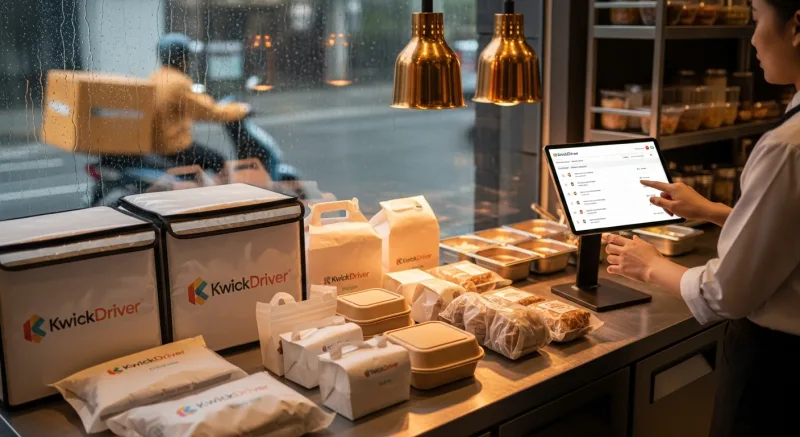
Seattle’s 152 rainy days per year create a sustained delivery demand that exceeds most American cities. The rain is not seasonal — it falls from October through June with particular intensity from November through March. DoorDash’s 25% commission on each rainy-day delivery extracts margin during the periods when delivery demand is highest. KwickDriver at $2 per delivery preserves that margin. On 40 daily deliveries at $28 average, the annual savings versus DoorDash exceeds $70,000 — more than a full-time employee’s salary at Seattle’s wage rates.
The Ballard Brewery District
Ballard has evolved into Seattle’s brewery epicenter, with over 20 breweries and taprooms in a walkable neighborhood. KwickSign digital signage synchronizes tap lists with KwickOS menu management. When a new IPA taps at 4 PM on Thursday, the display board updates instantly. When a cask runs dry during Saturday afternoon, it disappears from the digital board and the POS simultaneously. This automated synchronization saves hours of manual chalkboard updates weekly while providing a more professional visual presentation.
Seattle POS Priorities
- UX-grade online ordering — Tech workers evaluate ordering interfaces by professional standards
- Chinese language for the ID — International District kitchens need native character KDS
- Pike Place compact hardware — Market stalls need tablet POS in inches of counter space
- Processor independence — Capitol Hill margins demand negotiated rates
- $20.29 labor productivity — America’s highest minimum wage needs technology that maximizes every hour
- Year-round delivery economics — 152 rainy days need flat-fee delivery, not percentage extraction
- Brewery tap management — Ballard’s 20+ breweries need KwickSign integration
- Loyalty for tech-worker retention — Competing with subsidized campus cafeterias needs systematic loyalty
Seattle reinvented the coffee shop, the tech campus, and the grunge concert. Its restaurants deserve POS technology that matches the city’s appetite for innovation.
Seattle restaurant owners: Call (888) 355-6996 or visit KwickOS.com to see POS technology that matches Seattle standards.
Turn One-Time Diners into Regulars: Built-In Gift Cards & Loyalty
Most POS companies treat gift cards and loyalty as afterthoughts — expensive add-ons that cost $50-100/month extra. KwickOS includes them at no additional charge because we believe they are essential revenue tools, not luxury features.
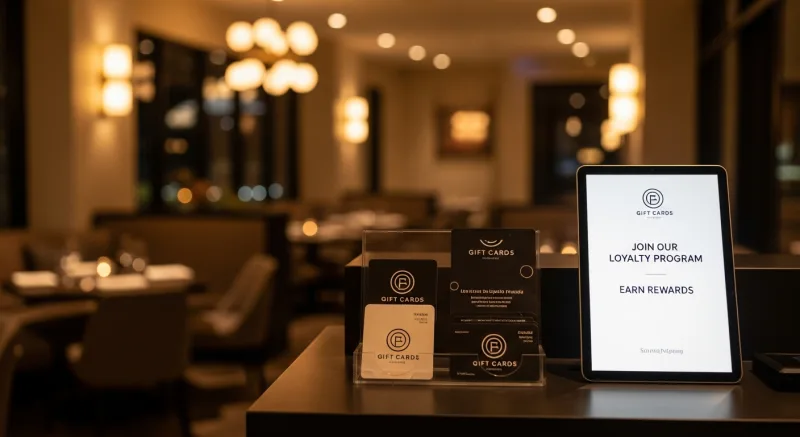
Gift Cards That Actually Drive Revenue
Here is what most restaurant owners do not realize: gift card buyers spend an average of 20-40% more than the card's face value. A $50 gift card typically generates $60-70 in actual spending. KwickOS supports both physical gift cards and electronic gift cards that customers can purchase, send, and redeem through their phones.
- Physical gift cards — branded plastic cards that sit on your counter and sell themselves during holidays
- E-gift cards — customers buy and send digitally via text or email, perfect for last-minute gifts
- Balance tracking — real-time balance across all your locations, no manual reconciliation
- Reload capability — customers top up their balance, creating a built-in prepayment habit
Loyalty Points That Keep Them Coming Back
KwickOS loyalty is not a punch card from 2005. It is a digital points system that tracks every dollar spent and automatically rewards your best customers:
- Earn points on every purchase — configurable ratio (e.g., $1 = 1 point, or $1 = 10 points)
- Tiered rewards — silver, gold, platinum levels to incentivize higher spending
- Birthday rewards — automated birthday offers that bring customers back during their special month
- Points-for-payment — customers redeem points directly at checkout, seamless for your staff
Membership Programs
For restaurants running VIP programs or subscription models (like monthly coffee clubs), KwickOS membership management handles recurring billing, exclusive pricing tiers, and member-only menu items — all within the same system your cashier already uses.
The bottom line: Toast charges $75/month extra for loyalty. Square's loyalty starts at $45/month. KwickOS includes gift cards, e-gift cards, loyalty points, and membership management in every plan. That is $540-900/year you keep in your pocket.

Founder & CIO of KwickOS · 30 Years IT · 20 Years Restaurant Industry
Tom built KwickOS after running restaurants and IT companies for decades. He relocated the company to a 10,000 sq ft office in 2023 and now serves 5,000+ businesses across all 50 states, processing over $2M in daily sales.