Portland Put Food Carts on the Map. Now It Needs POS Technology That Keeps Up.
Updated March 2026 · By Tom Jin
Portland operates over 500 food carts in organized pods that function as outdoor dining destinations — a model the city did not invent but perfected. The food cart pod is Portland’s answer to the food hall: lower overhead, more creative freedom, and a barrier to entry that lets a first-generation immigrant with a $20,000 investment compete for customers against a restaurant that spent $500,000 on buildout. Alongside the cart culture, Portland supports roughly 3,500 brick-and-mortar restaurants with a food identity rooted in local sourcing, environmental consciousness, and a defiant independence from chain culture.
Portland’s restaurant operators are not brand-loyal to POS companies. They are skeptical of corporations, protective of their margins, and willing to switch systems if the math justifies it. This makes Portland an ideal market for understanding why processor-agnostic, hardware-flexible POS technology matters — because Portland operators actually do the math.
Food Cart Economics and the Processing Percentage
A Portland food cart doing $4,000 on a good Saturday at a popular pod like Cartopia or the Alder Street pod operates on margins that make casual-dining restaurants look generous. Ingredient costs are high because Portland cart operators overwhelmingly use local, organic, and sustainable ingredients. Cart rent, commissary fees, and city permits add fixed costs. The owner works every shift. And the average transaction is $11-$15 — small enough that processing fees consume a painful percentage.
Toast’s 2.99% plus $0.15 on a $12 cart order takes $0.51 — 4.25% of the transaction. Square’s 2.6% plus $0.10 takes $0.41 — 3.4%. KwickOS with a competitive processor at 1.9% plus $0.05 takes $0.28 — 2.3%. On 200 daily transactions, the annual savings versus Toast is $16,790. For a food cart operator whose annual take-home might be $40,000, this is not incremental. It is transformational.
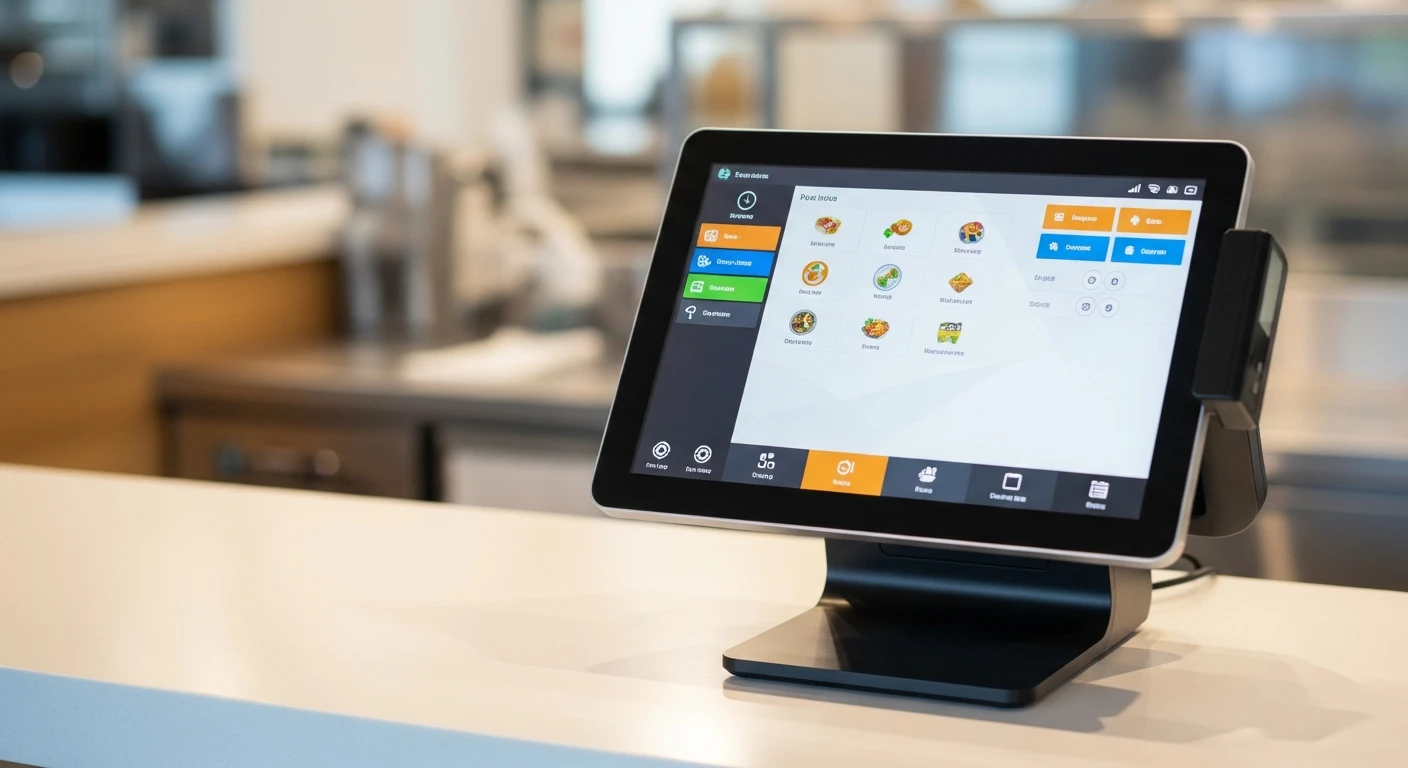
KwickOS runs on existing tablets — no proprietary hardware purchase. A cart operator who already owns an iPad can install KwickOS and start processing with zero hardware investment. Toast requires a $799+ terminal. Square requires their reader hardware. KwickOS requires whatever touchscreen you have on hand.
Rain, Rain, and More Rain: The Perpetual Drizzle Problem
Portland receives rain on approximately 155 days per year. Not heavy rain, usually — but persistent, misty drizzle that creates humidity levels that affect electronics and makes outdoor food cart service damp, cold, and unpleasant from October through May. For food carts and restaurants with outdoor service, POS hardware must tolerate moisture, and the system must handle the indoor delivery surge that Portland’s rainy months create.
KwickOS runs on weatherproofed commercial tablets that handle the humidity and occasional splash that outdoor cart operation involves. When the persistent drizzle drives customers to delivery, KwickDriver’s flat $2 per delivery fee keeps the rain-season delivery profitable. A cart that transitions from in-person sales on sunny days to delivery on rainy days needs a POS system that handles both channels seamlessly — in-person orders and KwickMenu online orders flow to the same KDS and process through the same financial reporting.
The 82nd Avenue International Corridor
82nd Avenue is Portland’s most diverse restaurant corridor, where Vietnamese, Chinese, Burmese, Mexican, Ethiopian, and Russian restaurants serve immigrant communities and the broader Portland public. The corridor represents the same multilingual kitchen challenges that international food streets face in every major American city, amplified by Portland’s particular mix of refugee communities.
KwickOS multilingual capability serves 82nd Avenue’s Chinese restaurants with native character KDS displays, its Mexican restaurants with Spanish-language interfaces, and its broader Asian restaurant community with visual KDS formatting that communicates across language barriers. Each restaurant configures the system for its specific linguistic needs without paying for language packs or translation add-ons.
The Brewery-Restaurant Fusion
Portland operates more breweries per capita than any major American city. The brewery-restaurant hybrid is Portland’s dominant dining model outside of food carts, with hundreds of establishments combining craft beer programs with food menus that have evolved far beyond pub fare. These operations need the same tap-list management, KwickSign integration, and pour-size modifier flexibility that Denver breweries require — with the added Portland twist of frequently rotating guest taps, collaboration brews, and cask-conditioned specialties.
KwickSign digital signage synchronizes with KwickOS menu management. New kegs update the board instantly. Blown kegs disappear automatically. Happy hour pricing activates across all displays at the configured time. For a Portland brewery with 20 taps and three menu changes per week, this automated signage saves hours of manual chalkboard updates while providing a more professional visual presentation.
Alberta Street and the Neighborhood Restaurant Ecosystem
Alberta Street in Northeast Portland exemplifies Portland’s neighborhood dining culture: walkable, independent, community-oriented, and resistant to chain intrusion. Restaurants on Alberta succeed through repeat local patronage rather than tourist traffic. The customer base lives within a mile, dines locally two to three times per week, and expects to be recognized.
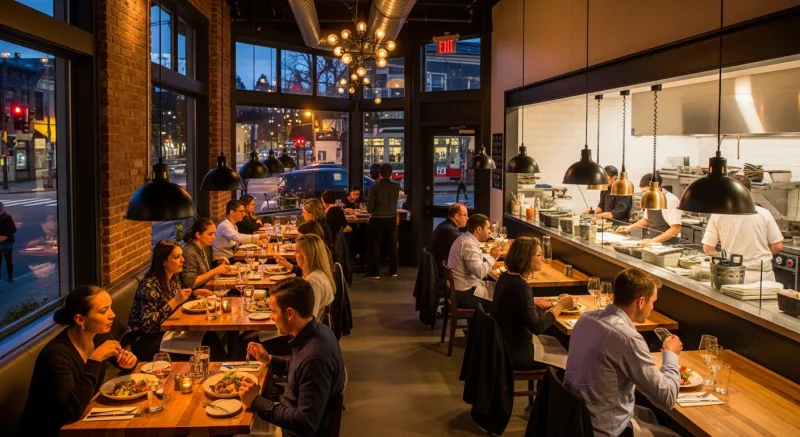
KwickOS loyalty programs build the systematic recognition that Alberta Street restaurants depend upon. Points accumulate with every visit. Membership tiers unlock benefits that reward frequency. When a regular walks in, the POS identifies them through their loyalty profile, and the server can acknowledge their status. This technology-enabled recognition supplements rather than replaces the personal relationship that neighborhood dining is built on.
Portland’s Minimum Wage and Labor Cost Reality
Oregon’s minimum wage in the Portland metro is $15.95 per hour with no tip credit — meaning tipped employees receive the full minimum wage before tips. This labor cost structure creates an imperative for technology that maximizes labor productivity. Every minute a server spends at a POS terminal entering orders is a minute they are not serving tables, upselling, or turning covers.
KwickOS tablet-based ordering at the table eliminates the terminal-trip delay. Servers enter orders tableside, and the orders appear on the KDS instantly. Payment processes at the table. The server’s time is spent with customers, not walking to and from a stationary terminal. In a labor market where every employee costs $15.95 minimum before benefits, maximizing the productivity of each labor hour is the technology’s most important function.
Self-ordering kiosks reduce the labor required for counter-service operations. A food cart pod commissary with three kiosks can process peak-hour volume with one fewer counter employee — saving $15.95+ per hour in a market where no tip credit exists to offset that cost.
Fingerprint Accountability in Portland’s Progressive Labor Market
Portland’s restaurant workforce is highly mobile and operates within a progressive labor environment where employee rights are robustly protected. KwickOS fingerprint identification serves employers and employees equally: accurate time-tracking ensures employees are paid for every minute they work, while biometric transaction logging protects the business from internal shrinkage. Both parties benefit from a system that eliminates disputes about hours worked and transactions processed.
Portland POS Essentials
- Hardware flexibility — Food carts need to use existing tablets, not buy proprietary terminals
- Lowest possible processing — Cart-level margins need sub-2% rates through processor independence
- Rain-season delivery — Flat $2 delivery through KwickDriver keeps rainy-day revenue profitable
- Multilingual for 82nd Avenue — Chinese, Spanish, and visual KDS for diverse kitchens
- Brewery tap management — KwickSign integration for rotating 20+ tap lists
- Loyalty for neighborhood restaurants — Alberta Street regulars need systematic recognition
- Labor productivity maximization — $15.95 minimum wage demands tableside ordering and kiosks
- Fingerprint time accuracy — Biometric accountability protects both employer and employee
Portland did not wait for permission to reinvent the American restaurant. It just did it. The POS technology should follow the same independent spirit.
Portland restaurant owners: Call (888) 355-6996 or visit KwickOS.com to see technology built for independent operators, not corporate chains.
Turn One-Time Diners into Regulars: Built-In Gift Cards & Loyalty
Most POS companies treat gift cards and loyalty as afterthoughts — expensive add-ons that cost $50-100/month extra. KwickOS includes them at no additional charge because we believe they are essential revenue tools, not luxury features.
Gift Cards That Actually Drive Revenue
Here is what most restaurant owners do not realize: gift card buyers spend an average of 20-40% more than the card's face value. A $50 gift card typically generates $60-70 in actual spending. KwickOS supports both physical gift cards and electronic gift cards that customers can purchase, send, and redeem through their phones.
- Physical gift cards — branded plastic cards that sit on your counter and sell themselves during holidays
- E-gift cards — customers buy and send digitally via text or email, perfect for last-minute gifts
- Balance tracking — real-time balance across all your locations, no manual reconciliation
- Reload capability — customers top up their balance, creating a built-in prepayment habit
Loyalty Points That Keep Them Coming Back
KwickOS loyalty is not a punch card from 2005. It is a digital points system that tracks every dollar spent and automatically rewards your best customers:
- Earn points on every purchase — configurable ratio (e.g., $1 = 1 point, or $1 = 10 points)
- Tiered rewards — silver, gold, platinum levels to incentivize higher spending
- Birthday rewards — automated birthday offers that bring customers back during their special month
- Points-for-payment — customers redeem points directly at checkout, seamless for your staff
Membership Programs
For restaurants running VIP programs or subscription models (like monthly coffee clubs), KwickOS membership management handles recurring billing, exclusive pricing tiers, and member-only menu items — all within the same system your cashier already uses.
The bottom line: Toast charges $75/month extra for loyalty. Square's loyalty starts at $45/month. KwickOS includes gift cards, e-gift cards, loyalty points, and membership management in every plan. That is $540-900/year you keep in your pocket.

Founder & CIO of KwickOS · 30 Years IT · 20 Years Restaurant Industry
Tom built KwickOS after running restaurants and IT companies for decades. He relocated the company to a 10,000 sq ft office in 2023 and now serves 5,000+ businesses across all 50 states, processing over $2M in daily sales.