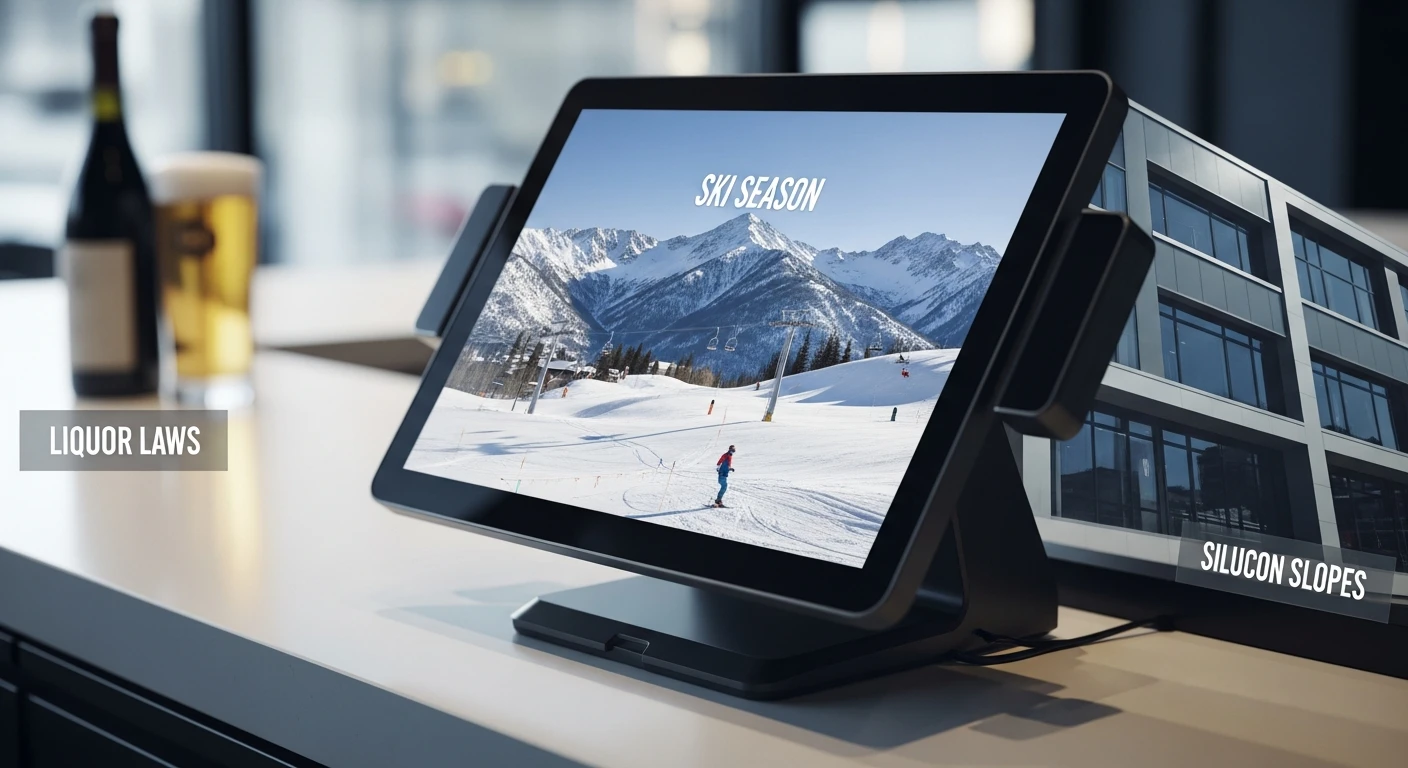
Ski Season, Liquor Laws, and Silicon Slopes: Salt Lake City’s Restaurant POS Challenge
Updated March 2026 · By Tom Jin
Salt Lake City occupies a unique position in American dining: a rapidly growing metropolitan area with a food scene that has evolved dramatically in the last decade, constrained by liquor laws that have no parallel in any other major American city. Utah’s alcohol regulations require restaurants to measure and track every pour with precision that other states do not demand. Combined with a ski-tourism economy that creates four months of peak volume and a tech sector (“Silicon Slopes”) that has brought tens of thousands of young professionals with coastal dining expectations, SLC restaurants operate under a combination of pressures that generic POS systems are not designed to address.
The city’s restaurant count has grown 40% since 2019, driven by population growth that brought 50,000 new residents to the metro area and a cultural shift that has diversified the dining landscape from family-oriented chains to chef-driven independent restaurants. Downtown SLC, the 9th and 9th neighborhood, Sugar House, and the emerging Granary District now support a restaurant ecosystem that visitors from New York and San Francisco recognize as legitimately excellent.
Utah Liquor Laws and POS Compliance
Utah requires restaurants to use metered dispensing systems for spirits and to maintain precise records of alcohol purchases, pours, and waste. The state’s Department of Alcoholic Beverage Services (DABS) conducts inspections that verify pour accuracy and inventory documentation. A POS system that tracks alcohol sales at a granular level — by drink, by pour size, by bartender, by time — provides the documentation that protects restaurants during these inspections.
KwickOS tracks beverage sales with the specificity that Utah regulations demand. Each drink order records the spirit, the pour size, the bartender (through fingerprint identification), and the timestamp. Inventory reports reconcile purchases against pours against waste, creating the paper trail that DABS inspections require. When an inspector asks how many ounces of Tito’s were poured last Tuesday versus how many ounces were purchased, the data is accessible in seconds rather than requiring manual calculation from paper records.
Fingerprint identification is particularly relevant for Utah alcohol compliance. When every pour is biometrically linked to a specific bartender, the restaurant can identify precisely who poured what and when. This accountability is not just good management — it is the documentation framework that satisfies Utah’s uniquely strict regulatory environment.
The Ski Season Revenue Roller Coaster
Park City, Alta, Snowbird, Brighton, and Solitude are all within an hour of downtown SLC. When ski season begins in November and peaks from December through March, SLC restaurants see a 30-50% revenue increase driven by ski tourists. Downtown restaurants, particularly those near the convention center and the Gateway district, capture the apres-ski dinner crowd that drives down from the mountains.
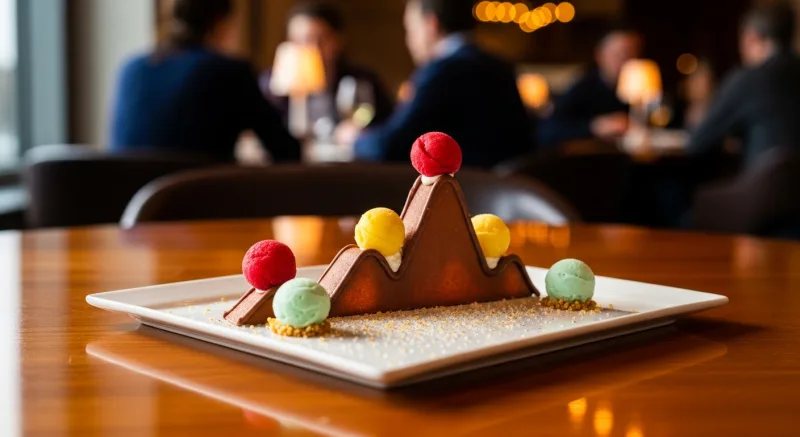
KwickOS analytics track seasonal patterns to project staffing and inventory needs. When the data shows that the second week of February consistently produces the highest revenue of the year (Presidents Day ski week), operators prepare accordingly rather than discovering the surge on Monday morning. Gift card promotions during ski season convert visiting skiers into future customers — a $50 digital gift card purchased in Park City lodging travels back to California or Texas and generates a return visit next season.
KwickOS loyalty enrollment during ski visits creates digital customer relationships. A skier who joins the loyalty program during a January trip receives targeted offers in October when they are planning their next season. The systematic retention that KwickOS provides converts the inherently transient ski-tourist customer into a predictable annual visitor.
Silicon Slopes and the Tech Lunch Economy
Utah’s tech sector — anchored by companies like Qualtrics, Pluralsight, Domo, and Lucid — has concentrated in Lehi, Draper, and South Jordan, creating a suburban lunch economy of tech workers with San Francisco food expectations and Utah price sensitivity. These workers order online, expect mobile-first experiences, and evaluate restaurants on the same UX principles they apply to software.
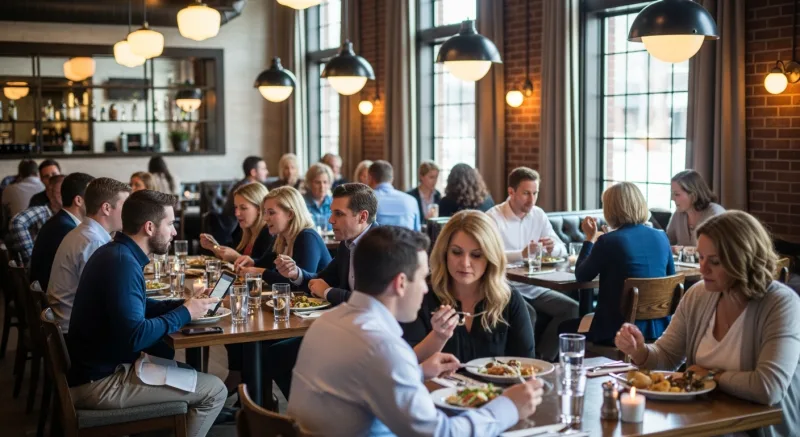
KwickMenu online ordering provides the polished digital experience that tech workers expect. Orders placed from a Lehi office at 11:45 arrive at the restaurant KDS immediately, production begins, and the food is ready for the 12:00 pickup. The ordering interface runs on mobile devices with the responsiveness that tech workers use as a baseline quality standard. A clunky online ordering experience loses the Silicon Slopes lunch customer to the competitor with a better app.
KwickDriver delivery at $2 flat fee serves the suburban tech office parks where walking to a restaurant is not feasible. A restaurant delivering lunch to a Draper office building retains $28 on a $30 order through KwickDriver versus $21-$24 through DoorDash. For restaurants building their delivery program around the Silicon Slopes lunch economy, this margin preservation determines viability.
The Growing Refugee Restaurant Community
Salt Lake City has welcomed significant refugee populations from Congo, Myanmar, Syria, and Somalia, and these communities have established restaurant businesses that are diversifying the city’s dining landscape. A Congolese restaurant on State Street, a Burmese curry house in South Salt Lake, and a Syrian bakery in the Granary District all represent culinary traditions that require flexible POS configurations.
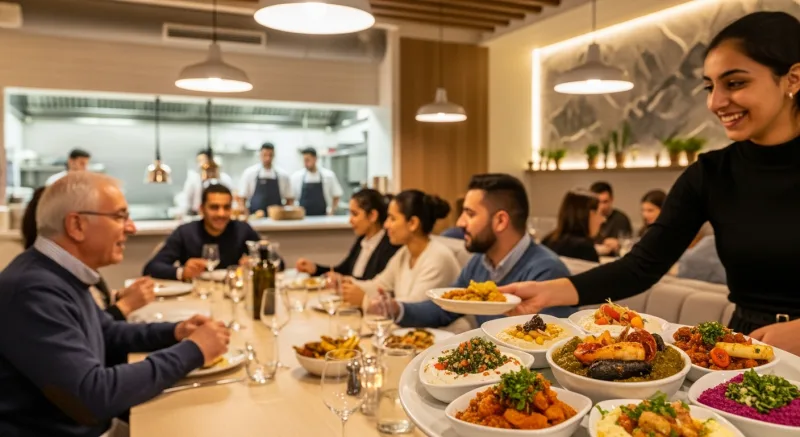
KwickOS’s configurable modifier architecture accommodates non-standard menu structures from diverse culinary traditions. A Burmese tea leaf salad with six customizable components, a Congolese cassava fufu with protein and sauce selections, or a Syrian meze platter with a dozen small-plate options all build cleanly through modifier trees that display structured, readable tickets on the KDS.
For first-generation restaurant operators, KwickOS’s intuitive interface and rapid learning curve matter. Operators achieve proficiency in minutes rather than days, spending their time cooking rather than learning software. The system follows kitchen logic, not POS-industry conventions that assume familiarity with American restaurant technology.
Inversion Season and Delivery Demand
SLC’s winter inversions trap cold air and pollution in the valley, creating air quality conditions that health authorities recommend staying indoors to avoid. During bad inversion days, outdoor activity drops and delivery orders spike as residents prefer not to venture out. KwickOS offline processing ensures that restaurants keep operating if winter weather simultaneously degrades internet connectivity, while KwickDriver’s flat fees make the inversion-driven delivery surge profitable.
Processing Economics for a Growing Market
SLC restaurant volumes are growing as the market matures. A downtown restaurant processing $80,000 monthly at Toast’s 2.99% pays $2,552 monthly — $30,624 annually. KwickOS with a negotiated processor at 2.15% costs $1,800 monthly — $21,600 annually. The $9,024 annual savings funds a seasonal marketing push or covers two months of a part-time employee’s wages. As SLC volumes continue growing, the absolute dollar impact of processor independence grows proportionally.
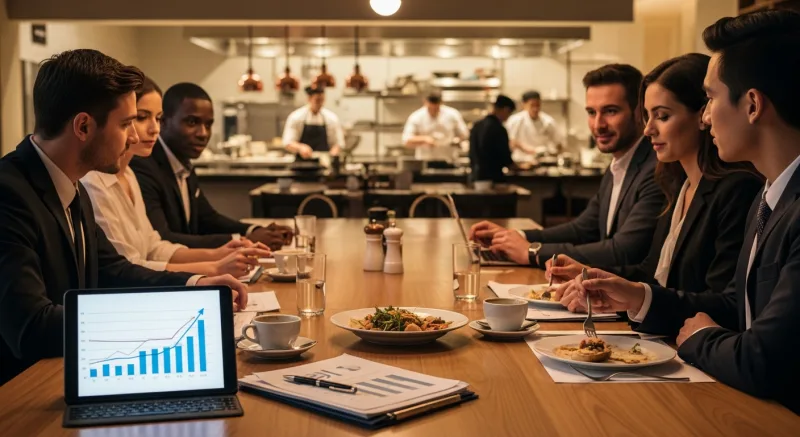
SLC POS Priorities
- Utah liquor compliance — Pour tracking, bartender identification, and inventory reconciliation for DABS
- Fingerprint pour accountability — Biometric bartender ID satisfies Utah’s regulatory uniqueness
- Ski season analytics — Tourism-driven revenue swings need historical pattern forecasting
- Gift cards for tourist conversion — Ski visitors become annual returnees through systematic capture
- Mobile-first online ordering — Silicon Slopes tech workers expect polished digital experiences
- Processor independence — Growing SLC volumes justify negotiated rates
- Flexible menu for refugee restaurants — Non-standard cuisines need configurable modifiers
- Flat-rate delivery — Inversion-season and suburban delivery need predictable costs
Salt Lake City is no longer a flyover dining destination. Its restaurant scene is nationally competitive and locally demanding. The POS technology should match that evolution.
Salt Lake City restaurant owners: Call (888) 355-6996 or visit KwickOS.com to see POS technology built for Utah’s unique operating conditions.
Turn One-Time Diners into Regulars: Built-In Gift Cards & Loyalty
Most POS companies treat gift cards and loyalty as afterthoughts — expensive add-ons that cost $50-100/month extra. KwickOS includes them at no additional charge because we believe they are essential revenue tools, not luxury features.
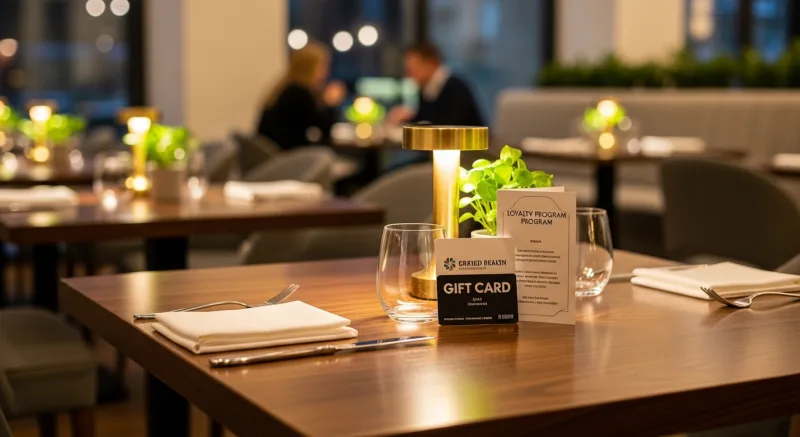
Gift Cards That Actually Drive Revenue
Here is what most restaurant owners do not realize: gift card buyers spend an average of 20-40% more than the card's face value. A $50 gift card typically generates $60-70 in actual spending. KwickOS supports both physical gift cards and electronic gift cards that customers can purchase, send, and redeem through their phones.
- Physical gift cards — branded plastic cards that sit on your counter and sell themselves during holidays
- E-gift cards — customers buy and send digitally via text or email, perfect for last-minute gifts
- Balance tracking — real-time balance across all your locations, no manual reconciliation
- Reload capability — customers top up their balance, creating a built-in prepayment habit
Loyalty Points That Keep Them Coming Back
KwickOS loyalty is not a punch card from 2005. It is a digital points system that tracks every dollar spent and automatically rewards your best customers:
- Earn points on every purchase — configurable ratio (e.g., $1 = 1 point, or $1 = 10 points)
- Tiered rewards — silver, gold, platinum levels to incentivize higher spending
- Birthday rewards — automated birthday offers that bring customers back during their special month
- Points-for-payment — customers redeem points directly at checkout, seamless for your staff
Membership Programs
For restaurants running VIP programs or subscription models (like monthly coffee clubs), KwickOS membership management handles recurring billing, exclusive pricing tiers, and member-only menu items — all within the same system your cashier already uses.
The bottom line: Toast charges $75/month extra for loyalty. Square's loyalty starts at $45/month. KwickOS includes gift cards, e-gift cards, loyalty points, and membership management in every plan. That is $540-900/year you keep in your pocket.

Founder & CIO of KwickOS · 30 Years IT · 20 Years Restaurant Industry
Tom built KwickOS after running restaurants and IT companies for decades. He relocated the company to a 10,000 sq ft office in 2023 and now serves 5,000+ businesses across all 50 states, processing over $2M in daily sales.