March 13, 2026 · 14 min read
SF Restaurants Pay $20/Hr Minimum Wage. Why Are They Also Paying a $4,200/Year Processing Tax?
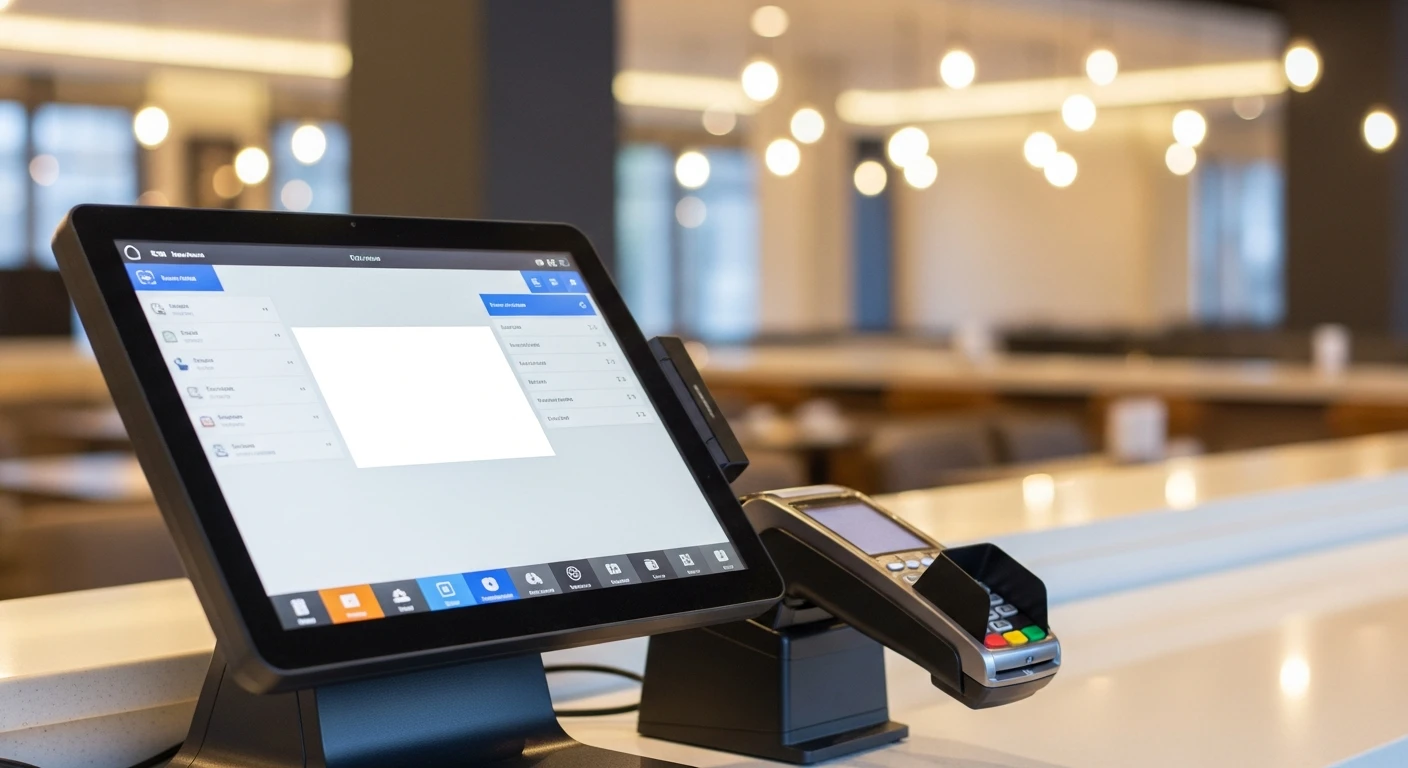
You already pay $18.67/hour minimum wage — headed toward $20. You already absorb $60–80/sqft rent in the Mission, SOMA, or Marina. You already cover $2.83–3.24/hour per employee in mandatory healthcare. Your margins are razor-thin, and every dollar matters.
But here is what stings the most: on top of all those non-negotiable costs, your POS vendor is quietly siphoning an extra $4,200 every year through an overpriced payment processor you never chose. That is $12,600 over three years — gone. In a city where 1 in 4 restaurants close each year, that amount can be the difference between surviving and shutting your doors.
The fix is straightforward: switch to a processor-agnostic POS like KwickOS, choose your own payment processor, and keep that $4,200/year in your pocket. Let us break down exactly how SF restaurant economics make this the single highest-ROI change you can make today.
The SF math: Average SF restaurant card volume: $1.05M/year (highest among U.S. cities due to premium pricing). Lock-in excess: 0.40%. Annual cost: $4,200. Over three years: $12,600. For a city where restaurants close at a 25% annual rate, $12,600 can be the difference between survival and closure.
The Irony: Tech Capital Locked by Tech Companies
San Francisco is home to some of the most innovative technology companies in the world. It is also home to the POS companies that lock restaurants into processing monopolies. Square (now Block) was founded in San Francisco. Toast has a major Bay Area presence. The irony is thick: the city that champions technological innovation allows its restaurants to be trapped by the same tech companies that are supposed to serve them.
Here is the part that should make your blood boil. SF restaurant owners are technology literate. They understand subscription pricing, platform lock-in, and vendor dependency. They know that Apple's ecosystem lock-in drives customer retention, not customer value. And yet many accept the exact same lock-in strategy from their POS vendor because nobody framed it that way during the frantic pre-opening POS selection.
San Francisco's Mandatory Cost Stack
No other city layers as many mandatory costs on restaurant operators:
- Minimum wage: $18.67/hr (2025), with automatic CPI adjustments pushing toward $20+
- Health Care Security Ordinance: $2.83-3.24/hr per employee for healthcare spending
- Paid sick leave: 72 hours of paid sick leave per employee annually
- Commuter benefits: Pre-tax transit benefit requirements
- Commercial rent: $60-80/sqft in SOMA, Mission, Marina, and Castro
Now here is where it really hurts. When your mandatory cost stack already claims 85-92% of revenue, the remaining 8-15% that constitutes your operating margin must be protected ruthlessly. Payment processing fees of 2.99% on a business with 8% net margin means processing consumes 37% of your profit. Reducing that rate by 0.40% through processor freedom returns 5% of your total profit margin.
The Mission District: Taqueria Economics
The Mission District's legendary taqueria and burrito scene represents the micro-transaction extreme. A $12 super burrito is one of the best food values in America, but it creates the same per-swipe fee problem that plagues coffee shops and boba shops. A busy Mission taqueria doing 400 transactions/day at $13 average processes $1.87M/year. The per-swipe lock-in penalty at this transaction volume: $14,400/year.
Let that number sink in. $14,400 per year. For a taqueria. That is two full-time employees at minimum wage. The per-swipe component of the processing fee, not the percentage, is what makes high-volume, low-ticket SF restaurants the most damaged by lock-in.
KwickOS with a negotiated processor reduces the per-swipe fee from $0.15 to $0.08. At 400 transactions/day, that difference saves $10,080/year in flat fees alone.
Chinatown and Sunset: The Chinese Restaurant Economy
San Francisco's Chinatown is the oldest in North America. Combined with the Sunset and Richmond district Chinese restaurants, the city has over 350 Chinese dining establishments processing roughly 40% of their transactions in a community where Chinese language support matters.
KwickOS's native Chinese language interface serves this community directly. Processor choice means working with Bay Area ISOs that specialize in Chinese restaurant processing, offering competitive rates and culturally appropriate service. Toast's English-only support creates a barrier for restaurant owners who prefer conducting business in their native language. See our detailed KwickOS vs Toast comparison to understand the full difference.
The SF Surcharge Debate
San Francisco restaurants have increasingly adopted "SF Mandates" surcharges — typically 3-5% added to checks to cover the city's employee benefit requirements. Some restaurants bundle their processing cost into this surcharge. Others add a separate credit card surcharge.
And it gets worse. The proliferation of surcharges has created customer fatigue. Diners see a $50 check become $57.50 after a 5% SF mandate surcharge, a 3% credit card surcharge, and tax. The backlash is real, and restaurants that minimize visible surcharges gain a competitive advantage.
With a negotiated processing rate through KwickOS, you can reduce or eliminate the credit card surcharge entirely. Absorbing a 2.49% processing cost is more feasible than absorbing a 2.99% cost. That 0.50% difference on a $1.05M annual volume saves $5,250 — enough to eliminate the credit card surcharge and gain a competitive edge with surcharge-fatigued customers. Learn more about how credit card surcharge laws affect your options.
Bay Area Tech Workers and Digital Payment Adoption
San Francisco has the highest digital wallet adoption rate of any U.S. city. 83% of tech workers pay with Apple Pay, Google Pay, or a linked app. Cash transactions are functionally extinct in many SF restaurants — some have gone completely cashless.
Think about what that means for your bottom line. 100% card and digital payment means 100% of your revenue flows through your processor. There is no cash buffer reducing your processing exposure. Every dollar you earn is processed, and every dollar carries the lock-in markup. The nearly cashless SF market maximizes the financial impact of processor lock-in.
The SF Restaurant Closure Crisis
San Francisco's restaurant failure rate sits at roughly 25% annually — meaning 1 in 4 restaurants will not make it to their next anniversary. The combination of extreme operating costs, regulatory burden, and post-pandemic foot traffic that remains 18% below 2019 levels has created a closure crisis. Restaurants that survive do so by optimizing every cost line.
But here is the good news. Processing lock-in is a cost line that can be optimized overnight. You do not need to renegotiate your lease (3-5 year commitment). You do not need to reduce labor (minimum wage is fixed). You do not need to lower food quality (customers will notice). You need to switch to a processor-agnostic POS and negotiate a competitive processing rate. Use our break-even calculator to see exactly how fast the switch pays for itself. The savings start immediately.
Offline Processing: When SF's Aging Infrastructure Fails
San Francisco's Muni tunnels, century-old building wiring, and overloaded neighborhood infrastructure create frequent internet disruptions. A restaurant in a converted Victorian on Valencia Street may share internet infrastructure that was installed decades ago. When it fails during Friday dinner service, a cloud-dependent POS fails with it.
KwickOS processes locally. The Victorian wiring does not matter. The Muni tunnel does not matter. Your kitchen keeps receiving orders, your servers keep processing payments, and your customers keep dining without a hint that the internet is down three blocks away.
The Three-Year Cost for a SF Restaurant
SF restaurant: $1.05M/year in card sales:
Locked processor: ~$33,645/year
Negotiated processor via KwickOS: ~$29,445/year
Annual savings: $4,200
Three-year savings: $12,600
In a city where a 25% annual restaurant closure rate means one in four restaurants will not survive the year, $12,600 in processing savings over three years is not theoretical — it is existential. Every dollar you recover from unnecessary fees is a dollar that keeps your doors open one day longer.
San Francisco deserves restaurants that survive. Processor freedom is one of the simplest ways to improve your odds.
Bay Area restaurants: reclaim your margin. Call (888) 355-6996 or visit kwickos.com for a free demo.
KwickOS · 6405 Cypresswood Dr #250, Spring TX 77379
Turn One-Time Diners into Regulars: Built-In Gift Cards & Loyalty
Most POS companies treat gift cards and loyalty as afterthoughts — expensive add-ons that cost $50-100/month extra. KwickOS includes them at no additional charge because we believe they are essential revenue tools, not luxury features.
Gift Cards That Actually Drive Revenue
Here is what most restaurant owners do not realize: gift card buyers spend an average of 20-40% more than the card's face value. A $50 gift card typically generates $60-70 in actual spending. KwickOS supports both physical gift cards and electronic gift cards that customers can purchase, send, and redeem through their phones.
- Physical gift cards — branded plastic cards that sit on your counter and sell themselves during holidays
- E-gift cards — customers buy and send digitally via text or email, perfect for last-minute gifts
- Balance tracking — real-time balance across all your locations, no manual reconciliation
- Reload capability — customers top up their balance, creating a built-in prepayment habit
Loyalty Points That Keep Them Coming Back
KwickOS loyalty is not a punch card from 2005. It is a digital points system that tracks every dollar spent and automatically rewards your best customers:
- Earn points on every purchase — configurable ratio (e.g., $1 = 1 point, or $1 = 10 points)
- Tiered rewards — silver, gold, platinum levels to incentivize higher spending
- Birthday rewards — automated birthday offers that bring customers back during their special month
- Points-for-payment — customers redeem points directly at checkout, seamless for your staff
Membership Programs
For restaurants running VIP programs or subscription models (like monthly coffee clubs), KwickOS membership management handles recurring billing, exclusive pricing tiers, and member-only menu items — all within the same system your cashier already uses.
The bottom line: Toast charges $75/month extra for loyalty. Square's loyalty starts at $45/month. KwickOS includes gift cards, e-gift cards, loyalty points, and membership management in every plan. That is $540-900/year you keep in your pocket.

Tom Jin
Founder & CIO of KwickOS · 30 Years IT · 20 Years Restaurant Industry
Tom built KwickOS because small business owners deserve control over their technology costs. With 5,000+ businesses served across 50 states, including the demanding Bay Area market, KwickOS proves that processor freedom works at every scale.