March 13, 2026 · 13 min read
300 Transactions a Day at $7 Each: Why Bubble Tea Shops Bleed Money on Processing Fees
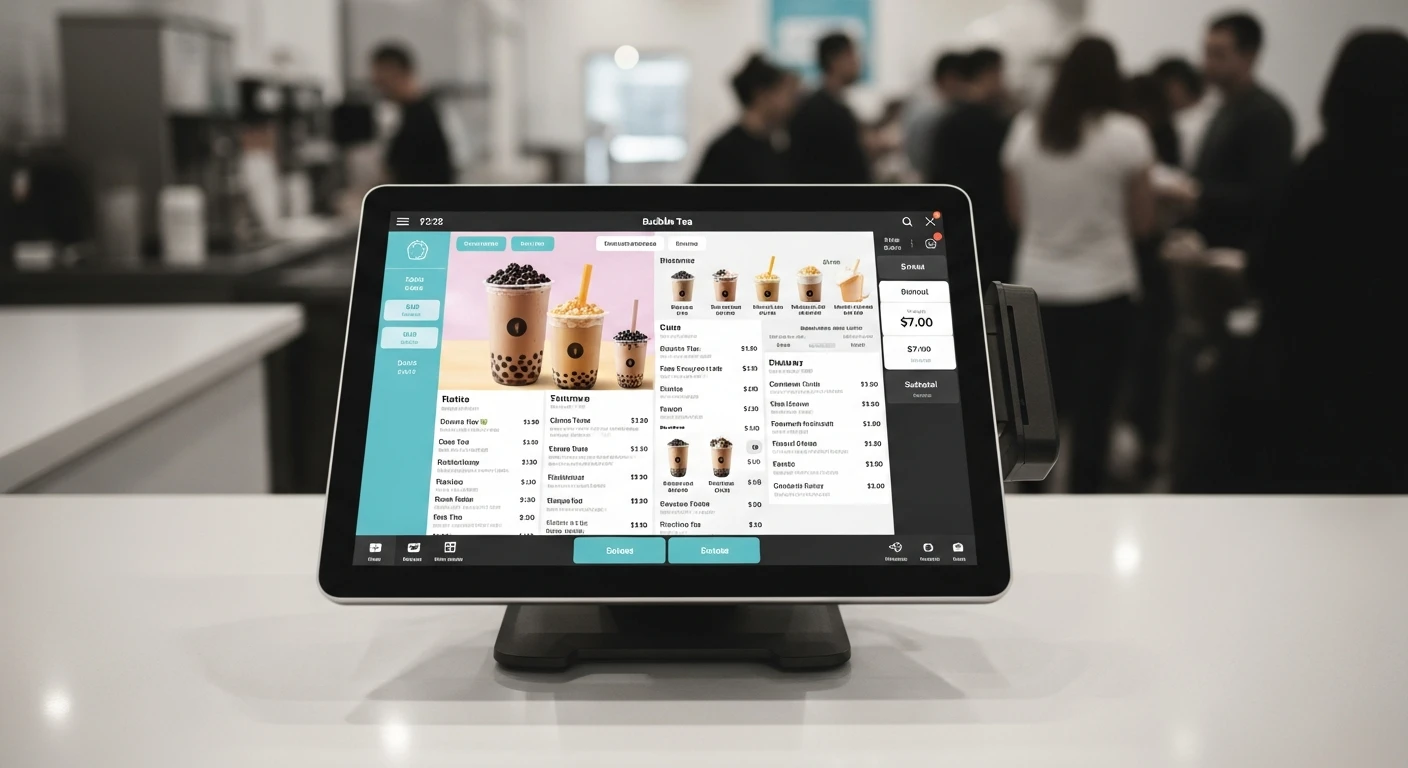
The bubble tea business model is built on volume. Hundreds of $6-8 drinks per day, each one customized with sugar levels, ice preferences, and toppings. It is a beautiful system until you realize that every single one of those micro-transactions is feeding an inflated processing fee to a POS company that locked you into their payment processor.
The boba math: A bubble tea shop doing 300 transactions/day at $7.50 average processes $675K/year in cards. The difference between a locked 2.99% + $0.15 and a negotiated 2.39% + $0.08 rate: $2,700/year. Over three years, $8,100 — enough to open a second kiosk location.
The Micro-Transaction Penalty: Why $7 Drinks Get Crushed by Per-Swipe Fees
Payment processing has two components: the percentage of the sale and a flat per-transaction fee. On a $7 bubble tea, here is how those components break down with a locked processor:
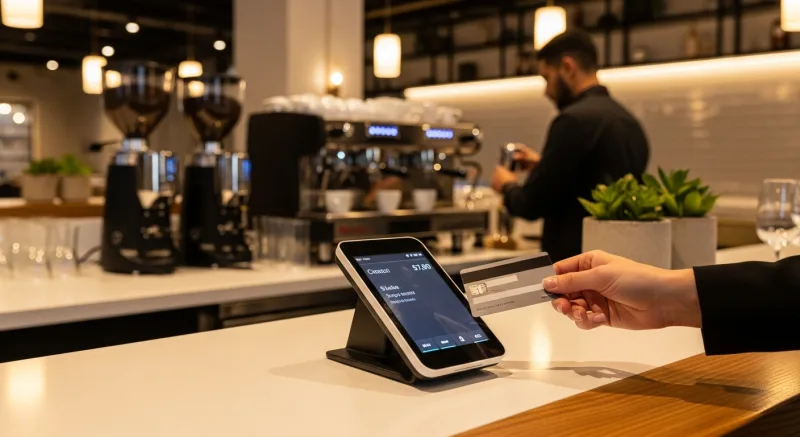
Percentage fee (2.99% of $7.00): $0.21. Per-transaction fee: $0.15. Total fee: $0.36.
That $0.36 on a $7.00 sale means your effective processing rate is actually 5.14%, not 2.99%. The per-transaction fee, which sounds insignificant on a $50 restaurant check, eats a disproportionate share of your micro-transaction revenue.
Now compare that to a negotiated rate available through a processor-agnostic POS like KwickOS:
Percentage fee (2.39% of $7.00): $0.17. Per-transaction fee: $0.08. Total fee: $0.25. Effective rate: 3.57%.
The difference is $0.11 per transaction. Multiply that by 300 transactions per day, 360 operating days per year: $11,880. That is not rounding error. That is the annual salary of a part-time barista.
Customization Complexity Meets Payment Simplicity
A bubble tea order is one of the most complex quick-service transactions in the food industry. A single drink might have six customization points: base tea (green, black, oolong, fruit), sugar level (zero, 25%, 50%, 75%, 100%), ice level (no ice, less ice, regular, extra), size (regular, large), toppings (tapioca pearls, jelly, pudding, cheese foam), and sometimes milk type (whole, oat, almond).
Tiger Sugar International Dessert, a KwickOS customer with 2 stores and 2 kiosks, processes these complex customized orders through a minimal-step interface. The customer taps through their preferences on a self-ordering kiosk, the order routes to the drink station, and the barista sees a clear ticket with every modification. The entire ordering process takes under 30 seconds.
This speed matters for processing fees because faster ordering means higher throughput. More transactions per hour means your fixed costs (rent, labor, equipment) are spread across more revenue. But if your processing fee takes a bigger bite of each transaction because your POS vendor locked you into an expensive processor, you need even more volume just to break even.
The Kiosk Factor: Self-Ordering Multiplies the Lock-In Damage
Bubble tea shops are among the fastest adopters of self-ordering kiosks. The format is perfect: visual customization menus, no language barrier for complex orders, faster throughput during rush periods. Tiger Sugar's kiosks proved that customers prefer self-ordering for customized drinks because they can see every option without holding up a line.
But kiosks increase transaction volume by 20-35%, which means the processing fee problem intensifies. A shop doing 300 transactions per day without kiosks might do 380-400 with kiosks. Every additional transaction through a locked processor adds $0.36 in fees versus $0.25 through a negotiated processor. The kiosk investment that was supposed to increase profits actually increases the processing fee drain if you are locked in.
KwickOS kiosks process payments through whichever processor offers you the best rate. The kiosk hardware is not tied to a specific payment pipeline. Install a kiosk, pick your processor, and keep the margin improvement that kiosks are supposed to deliver.
Gift Cards in Bubble Tea: The Social Currency
Bubble tea has a uniquely social customer base. Gen Z and millennial customers buy boba gift cards for birthdays, as thank-you gestures, and as casual social currency. "Here's a $15 boba card" has become the modern equivalent of buying someone a coffee.
A busy boba shop can sell $2,000-4,000/month in gift cards. That is $24,000-48,000/year in immediate cash flow, plus the overspend that comes when recipients visit and add $3-5 beyond the card value for extra toppings or a larger size.
Toast and Square gift cards are chained to their processing. If you migrate away, those outstanding gift card balances create a customer service disaster. Imagine telling a 19-year-old that the birthday gift card their friend gave them no longer works because you switched POS systems. That negative experience gets posted on social media instantly.
KwickOS gift cards travel with you. Switch processors, upgrade hardware, change locations — every gift card balance carries over because the stored-value system is independent of payment processing.
Loyalty Points: The Repeat Visit Machine
Bubble tea shops live and die by repeat customers. A loyalty program that rewards every tenth drink free, or offers bonus points on new seasonal flavors, can increase visit frequency by 40-60% among enrolled customers. The data from Bond Brand Loyalty shows that beverage-focused loyalty programs have the highest engagement rates of any food-service category.
Tiger Sugar uses electronic receipts integrated with their loyalty system. Customers scan at checkout, points accumulate, and the system automatically applies rewards. No punch cards to lose. No "I forgot my loyalty card" conversations that slow the line.
When loyalty is tied to a locked processor, your customer data and point balances become hostages. Toast has changed loyalty program pricing and features multiple times since their IPO. Each change forced merchants to either pay more or restructure their programs. A bubble tea shop that built its repeat business strategy around Toast's loyalty features had no negotiating power when Toast raised prices.
KwickOS loyalty exists independently. Your points structure, your redemption rules, your customer database — all of it stays with your business regardless of which processor handles the underlying card transactions.
Seasonal Drinks and Limited-Time Offers: Pricing Flexibility Matters
Bubble tea shops rotate seasonal and limited-edition drinks frequently. A mango sticky rice boba in summer. A taro brown sugar in fall. A strawberry matcha for Valentine's Day. These limited-time offers drive traffic and command premium pricing — $8.50-10 instead of the standard $6.50-7.50.
The pricing flexibility of your POS matters here because seasonal drinks often have higher ingredient costs and different margin profiles. You need to model the processing fee impact on each new drink's profitability. When your processing rate is locked and non-negotiable, your margin analysis is constrained. When you can shop processors and adjust rates, you have another lever to pull for profitability optimization.
The Franchise and Multi-Location Trap
Many bubble tea brands operate as franchises or multi-location chains. Kung Fu Tea, Tiger Sugar, Gong Cha — these brands have hundreds of locations. When a franchisor mandates Toast or Square and the payment processing comes locked, every franchisee inherits the inflated rate. Across 50 franchise locations each doing $500K/year in cards, the aggregate lock-in cost exceeds $100,000/year.
KwickOS serves multi-location operations with centralized management and per-location processor flexibility. Each location can negotiate its own processing rate based on local volume and market conditions, while the franchisor maintains centralized menu management, reporting, and brand control.
Crafty Crab Seafood runs 19 stores with 152 terminals on KwickOS, demonstrating that large multi-location operations thrive on the platform. One-click menu sync across all locations means a new seasonal boba drink can deploy to every store simultaneously without location-by-location manual entry.
Mobile Ordering and Delivery: Another Layer of Fees
Bubble tea shops see heavy mobile and delivery ordering. Apps like DoorDash and UberEats charge 15-25% commission, which already devastates margins on $7 drinks. Adding a locked processing fee on top of delivery commission makes third-party orders almost unprofitable.
KwickOS includes built-in online ordering through KwickMenu — the same platform that processes 500,000 clicks per month across its network. Your customers order directly from your branded page, you keep the full margin, and the order processes through your chosen processor at your negotiated rate. No 25% DoorDash commission. No locked processing markup on top.
For delivery, KwickDriver offers a $2 flat fee + $6.99/5mi rate versus the 15-25% commission from third-party platforms. On a $7 bubble tea delivery, DoorDash takes $1.05-1.75 in commission. KwickDriver takes $2 flat. The savings compound rapidly across hundreds of weekly delivery orders.
The Three-Year Cost for a Typical Boba Shop
Bubble tea shop: 300 transactions/day, $7.50 avg, $675K/year cards:
Locked processor (2.99% + $0.15): ~$36,270/year (high per-swipe impact)
Negotiated processor via KwickOS (2.39% + $0.08): ~$24,891/year
Annual savings: $11,379
Three-year savings: $34,137
$34,137 over three years. Read that number again. That is the down payment on a second location. That is a complete kitchen equipment upgrade. That is the difference between a bubble tea shop that survives and one that expands.
The per-transaction fee is what makes bubble tea shops uniquely vulnerable to lock-in. High transaction counts with small tickets mean the flat fee component dominates. The only defense is processor choice, and the only way to get processor choice is a POS that does not lock you in.
What Switching Looks Like for a Boba Shop
Bubble tea shops have simpler POS setups than full-service restaurants: typically 1-2 registers plus optional kiosks, a drink station display, and an online ordering integration. The transition is straightforward:
- Menu migration: Your drink menu with all customization modifiers imports into KwickOS. Sugar levels, ice levels, toppings, sizes — every option transfers.
- Kiosk setup: KwickOS kiosks display visual menus with customization flows that mirror what your customers expect from boba ordering.
- Staff training: The interface is intuitive enough that new baristas train in under an hour. The Shogun team reached proficiency in under 5 minutes.
- Timeline: Purchase to operational in 7-10 days. Installation in 1-3 hours.
Every day you wait is another 300 transactions at inflated rates. That is $33 per day, $231 per week, $1,000 per month walking out the door.
Stop paying $0.11 extra on every drink you sell. Call (888) 355-6996 or visit kwickos.com for a boba shop POS demo.
KwickOS · 6405 Cypresswood Dr #250, Spring TX 77379

Tom Jin
Founder & CIO of KwickOS · 30 Years IT · 20 Years Restaurant Industry
Tom built KwickOS to give small businesses control over their technology and their margins. The platform now serves 5,000+ businesses across 50 states, including bubble tea chains like Tiger Sugar.
Related Articles
Coffee Shops: Per-Swipe Fees on $5 Lattes Add Up Fast
Same micro-transaction problem, different beverage. The coffee shop processing guide.
Quick-Service Restaurants and the Processing Fee Squeeze
High-volume QSR operations lose thousands to locked processing. The escape route.
Self-Ordering Kiosks: The ROI Guide
How kiosks increase average ticket by 30% and speed up service.