March 13, 2026 · 14 min read
NYC Restaurants Process $1.2M/Year in Cards. Here Is Why Most Are Overpaying by $4,800.
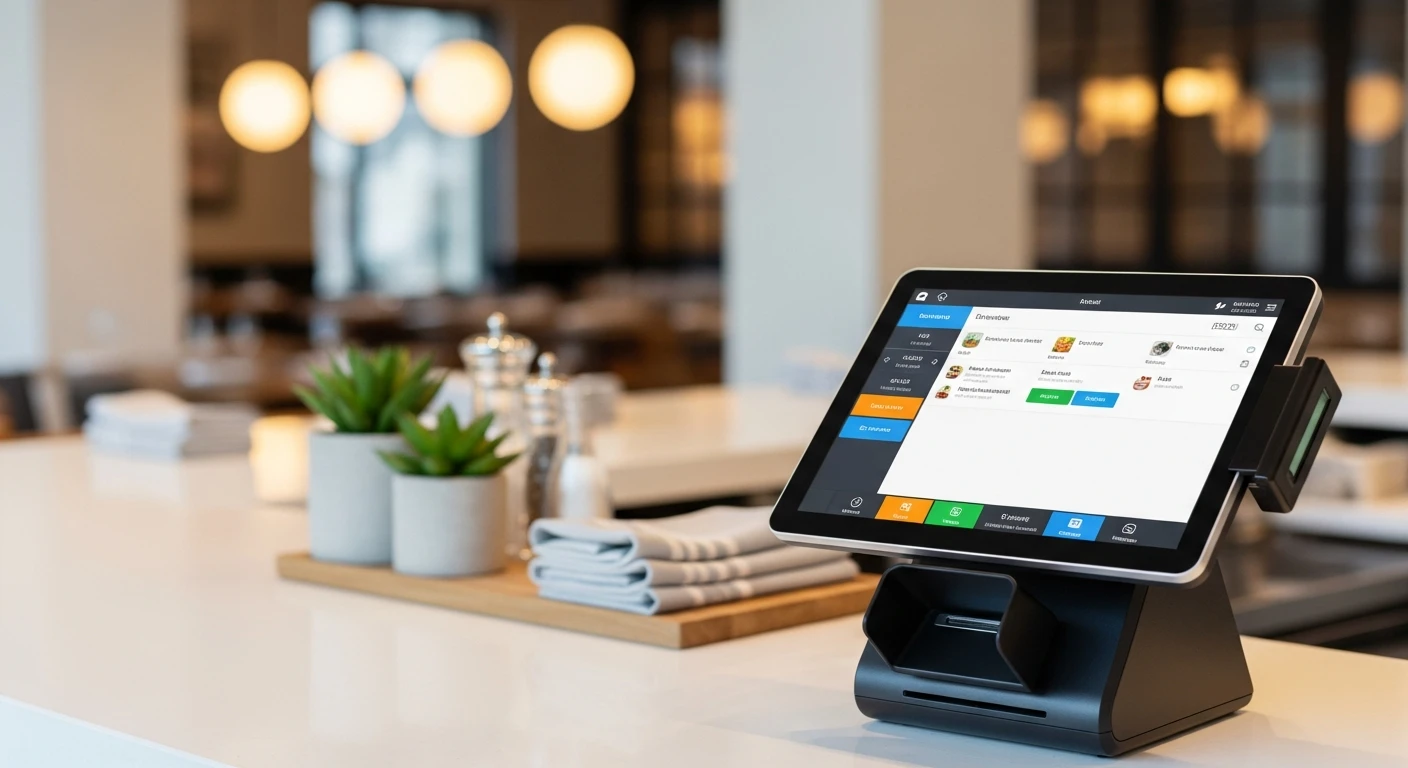
New York City has 27,000+ restaurants, the highest density of food-service businesses in the country. The average NYC restaurant processes $1.2 million in card transactions annually — significantly above the national average due to higher menu prices and near-total card adoption. That volume makes New York restaurants the single most lucrative target for locked payment processors. And most are paying a premium they do not need to pay.
The NYC math: $1.2M/year in card volume × 0.40% lock-in excess = $4,800/year. Across NYC's 27,000 restaurants, that is $129.6 million/year extracted from the city's food-service economy by locked POS processors. Over three years per restaurant: $14,400 lost.
New York's Unique Payment Processing Landscape
New York was the last major state to legalize credit card surcharging, finally allowing it after a lengthy Supreme Court battle that concluded in 2017. As of 2026, New York businesses can surcharge credit cards up to 4%, but the law requires specific disclosure: the surcharge must be posted at the entrance, at the point of sale, and on the receipt. Many NYC businesses avoid surcharging because the city's competitive dining scene makes any additional fee a customer deterrent.
This means NYC restaurants absorb the full processing cost without passing it to customers. When that cost is inflated by a locked processor, the business eats the entire excess. In a city where restaurant rent averages $80-150 per square foot and labor costs are among the highest in the nation, every dollar matters.
New York also has a strong local payment processing industry. Companies like National Processing, Dharma Merchant Services (based in nearby New Jersey), and NYC-area ISOs offer competitive rates tailored to the city's restaurant market. These processors understand NYC dining: high average tickets, tourist-heavy locations with international cards, and the specific challenges of small Manhattan footprints with limited hardware space.
But you cannot work with any of these processors if your POS vendor locks you into their own processing. Toast, which dominates the NYC restaurant POS market, requires Toast Payment Processing. Every NYC restaurant on Toast is paying Toast's rate, not the competitive rate available from a dozen local processors who would love the business.
The Manhattan Premium: Higher Tickets, Higher Processing Costs
Manhattan restaurant checks average $65-95 for dinner, significantly above the national $35-50 average. Higher checks mean higher processing fees in absolute dollars. On a $80 dinner check, the processing fee at 2.99% is $2.39. At a negotiated 2.49%, it is $1.99. The $0.40 difference on a single check becomes $58,400/year when multiplied across 400 daily covers.
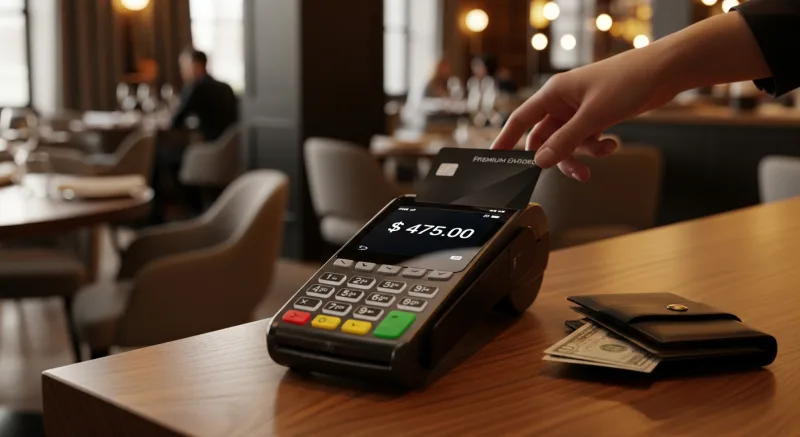
Manhattan's high-rent economics make this processing difference existential. A restaurant paying $25,000/month in rent cannot afford $4,800/year in unnecessary processing fees. That $4,800 is 1.6% of annual rent — essentially paying a month's worth of rent over three years to your POS vendor for nothing in return.
The Tourist Factor: International Card Processing
NYC welcomes 60+ million tourists annually, and international visitors carry cards with different fee structures. International card transactions carry higher interchange rates — typically 1.5-2.0% above domestic rates. A restaurant in Times Square, Midtown, or near Central Park might process 20-30% of its volume on international cards.
Locked processors pass through international card premiums without negotiation. A processor-agnostic POS lets you choose a processor experienced in international card volume that offers competitive cross-border rates. For a restaurant doing $300,000/year in international card volume, the rate difference can save $1,500-3,000/year beyond the standard lock-in savings.
Outer Borough Opportunities: Brooklyn, Queens, and the Bronx
The restaurant explosion in Brooklyn, Queens, and the Bronx over the past decade created thousands of new businesses that chose their POS during a frantic opening period. Many selected Toast or Square because they were the first salesperson through the door, not because they offered the best processing rates.
These outer borough restaurants typically process $600,000-900,000/year in cards — lower than Manhattan but still substantial. The lock-in penalty: $2,400-3,600/year per restaurant. Across Brooklyn's 5,000+ restaurants alone, the aggregate extraction exceeds $15 million annually.
Local processors serving the NYC outer boroughs often specialize in specific cuisines and communities. Chinese restaurant payment specialists, halal food-service processors, Caribbean cuisine ISOs — these niche processors offer better rates and culturally relevant service. KwickOS's multilingual support (English, Chinese, Spanish) connects directly with the communities these processors serve.
NYC Restaurant Gift Cards: The $200 Holiday Standard
New York gift card purchases skew higher than the national average. A $200 gift card to a nice Manhattan restaurant is a standard corporate gift, holiday present, or thank-you gesture. The average NYC restaurant gift card value is $75-150, compared to $30-50 nationally.
A mid-range NYC restaurant might sell $100,000-200,000 in gift cards annually, with the holiday season accounting for 60% of that volume. The outstanding gift card liability at any given time can reach $50,000-100,000.
With Toast, that $100,000 in outstanding gift cards becomes your biggest migration barrier. KwickOS gift cards are processor-independent — every dollar redeemable regardless of which company processes the underlying payment. For NYC restaurants where gift card programs are a significant revenue stream, this portability is not optional.
The NYC Delivery Economy
New York is the delivery capital of the United States. Seamless (now Grubhub/Just Eat), DoorDash, UberEats, and Caviar collectively process millions of NYC delivery orders per month. The 15-25% commission on these orders devastates restaurant margins in a city where margins are already thinner than a pizza slice.
A NYC restaurant doing $300,000/year in delivery through third-party platforms pays $45,000-75,000 in commissions. Switching to KwickDriver at a flat $2 + $6.99/5mi saves tens of thousands annually. And because delivery orders process through your own POS with your own processor, there is no fee stacking from locked processing on top of delivery commissions.
The Loyalty Race: Competing in the Densest Market
NYC customers have more restaurant choices per block than anywhere else in the country. A loyalty program is not a nice-to-have — it is a survival tool. When the Thai place, the pizza shop, and the Mexican restaurant all compete for the same lunch crowd, the one with an active loyalty program wins the repeat visit.
KwickOS loyalty runs independently of your processor. Your points, rewards, and customer database cannot be held hostage by a POS vendor. In NYC's cutthroat dining market, losing your loyalty data during a POS migration is not a technical inconvenience — it is a competitive death sentence.
Real NYC-Area Case Studies
KwickOS serves businesses throughout the New York metropolitan area and beyond:
- Haidilao Hot Pot operates locations in NYC, processing massive card volumes with processor flexibility across all locations.
- T. Jin China Diner runs 15 stores with real-time remote monitoring, demonstrating multi-location management at scale.
- Tiger Sugar International Dessert processes high-volume boba transactions through kiosks, using processor-agnostic payment routing.
NYC-Specific Processor Options
When you unlock processor choice through KwickOS, here are the types of processors competing for your NYC business:
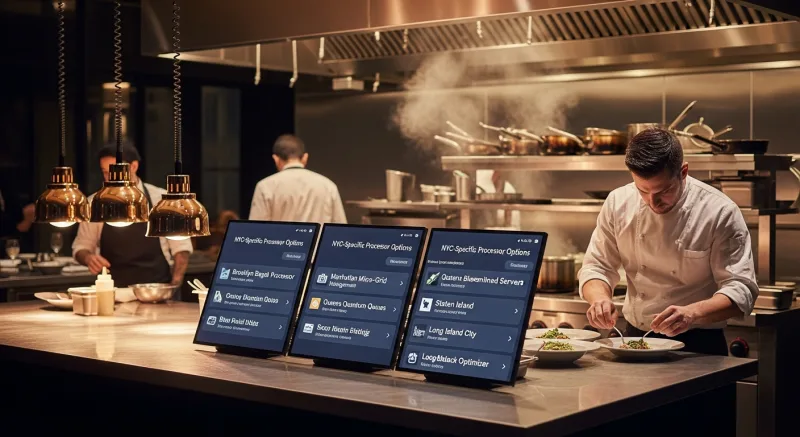
- National processors with NYC offices: Heartland (Nasdaq: GTHR), Worldpay (FIS), and TSYS (Global Payments) all have NYC-based sales teams that understand the city's restaurant market.
- Regional ISOs: Northeast-focused processing companies that specialize in NYC's diverse restaurant landscape, offering multilingual support and cuisine-specific rate structures.
- Specialty processors: Companies focused on high-volume, high-ticket Manhattan dining with international card expertise.
Get three quotes. Compare them against your current locked rate. The difference will fund your next kitchen upgrade.
The Three-Year Cost for a NYC Restaurant
NYC restaurant: $1.2M/year in card sales:
Toast locked processing: ~$37,080/year
Negotiated processor via KwickOS: ~$32,280/year
Annual savings: $4,800
Three-year savings: $14,400
In a city where restaurant failure rates exceed 60% in the first three years, $14,400 in savings is not trivial. It is the marketing budget that drives your first year of awareness. It is the equipment repair that prevents a service interruption. It is the buffer that keeps you open through a slow January.
New York demands excellence from its restaurants. Your POS should deliver that same standard — including honest, competitive payment processing.
NYC restaurant owners: stop overpaying. Call (888) 355-6996 or visit kwickos.com for a free demo.
KwickOS · 6405 Cypresswood Dr #250, Spring TX 77379
Turn One-Time Diners into Regulars: Built-In Gift Cards & Loyalty
Most POS companies treat gift cards and loyalty as afterthoughts — expensive add-ons that cost $50-100/month extra. KwickOS includes them at no additional charge because we believe they are essential revenue tools, not luxury features.
Gift Cards That Actually Drive Revenue
Here is what most restaurant owners do not realize: gift card buyers spend an average of 20-40% more than the card's face value. A $50 gift card typically generates $60-70 in actual spending. KwickOS supports both physical gift cards and electronic gift cards that customers can purchase, send, and redeem through their phones.
- Physical gift cards — branded plastic cards that sit on your counter and sell themselves during holidays
- E-gift cards — customers buy and send digitally via text or email, perfect for last-minute gifts
- Balance tracking — real-time balance across all your locations, no manual reconciliation
- Reload capability — customers top up their balance, creating a built-in prepayment habit
Loyalty Points That Keep Them Coming Back
KwickOS loyalty is not a punch card from 2005. It is a digital points system that tracks every dollar spent and automatically rewards your best customers:
- Earn points on every purchase — configurable ratio (e.g., $1 = 1 point, or $1 = 10 points)
- Tiered rewards — silver, gold, platinum levels to incentivize higher spending
- Birthday rewards — automated birthday offers that bring customers back during their special month
- Points-for-payment — customers redeem points directly at checkout, seamless for your staff
Membership Programs
For restaurants running VIP programs or subscription models (like monthly coffee clubs), KwickOS membership management handles recurring billing, exclusive pricing tiers, and member-only menu items — all within the same system your cashier already uses.
The bottom line: Toast charges $75/month extra for loyalty. Square's loyalty starts at $45/month. KwickOS includes gift cards, e-gift cards, loyalty points, and membership management in every plan. That is $540-900/year you keep in your pocket.

Tom Jin
Founder & CIO of KwickOS · 30 Years IT · 20 Years Restaurant Industry
Tom serves 5,000+ businesses across all 50 states, including the demanding New York market where margins are thin and every cost must justify itself.
Related Articles
Payment Lock-In: The $6,000/Year Tax
The definitive national guide to processor-agnostic POS.
Chicago: Processing Lock-In in the Midwest
Chicago's 7,500 restaurants face the same lock-in problem at different volumes.
LA: The West Coast Lock-In Problem
Los Angeles restaurants and California surcharging rules.