March 13, 2026 · 14 min read
Chicago's 7,500 Restaurants Are Paying $27 Million/Year in Unnecessary Processing Fees
Chicago is a restaurant city. Deep dish pizza, Italian beef, hot dogs with sport peppers, Michelin-starred tasting menus — the city's food identity runs deeper than almost anywhere else in America. But beneath the culinary excellence sits an ugly financial reality: thousands of Chicago restaurants are paying 0.40-0.60% more than necessary on every card transaction because their POS vendor locked them into a single payment processor.
Chicago by the numbers: 7,500+ restaurants, average card volume $850K/year, lock-in excess of 0.42%. City-wide annual extraction: $26.8 million. Per restaurant: $3,570/year. Over three years: $10,710 per restaurant — enough to survive a brutal Chicago January.
The Illinois Surcharging Advantage You Are Not Using
Illinois has allowed credit card surcharging since the Durbin Amendment provisions took effect. Chicago businesses can add a surcharge of up to 4% to credit card transactions (debit cards are exempt from surcharging). The surcharge must be disclosed at the point of entry and on the receipt.
Whether or not you choose to surcharge, the ability to do so requires knowing your exact processing cost. Locked POS systems bundle their processing fee with their software, making it difficult to isolate the true cost per transaction. With KwickOS and a separate processor, your costs are transparent. Your processing fee is one line item. Your POS subscription is another. If you decide to implement surcharging or a cash discount program, you know exactly what rate to pass through.
Many Chicago restaurants implement a hybrid approach: cash discount pricing where the menu price reflects a small discount for cash, with a posted notice that card transactions are at the "regular" price. This approach is legally cleaner than explicit surcharging and more customer-friendly. But it still requires transparent processing cost knowledge that locked systems obscure.
Chicago's Restaurant Geography and Processing Patterns
Chicago's restaurant market varies dramatically by neighborhood, and so do processing patterns:
The Loop and River North: Tourist-heavy, lunch-focused on weekdays, dinner-driven on weekends. Average checks: $55-85. High international card volume from business travelers and tourists. Processing costs spike on international cards. A processor experienced with Loop restaurant volume can negotiate international card rates that a locked processor ignores.
Wicker Park, Logan Square, Pilsen: Trendy dining, moderate checks ($35-55), high card-to-cash ratio among younger demographics. These neighborhoods have the highest tap-to-pay adoption in the city — over 70% of transactions are contactless. Contactless transactions should cost less to process (lower fraud risk), but locked processors charge the same flat rate regardless.
Chinatown: High-volume restaurants with significant cash usage alongside card transactions. Average checks span wide ranges ($15-80). KwickOS's Chinese language support serves this community directly, and processor choice means working with processors experienced in Chinatown's unique payment mix.
Suburban Chicagoland: Naperville, Schaumburg, Evanston, Oak Park. Family dining, casual chains, ethnic restaurants. Lower rent means processing fees represent a higher percentage of overhead. A suburban restaurant paying $4,000/month in rent and $300/month in excess processing feels that $300 more acutely than a River North restaurant paying $15,000/month.
Chicago Weather and Offline Processing
Chicago winters are brutal, and they affect your technology more than you think. Ice storms knock out internet service. Polar vortex conditions stress infrastructure. The CTA delays that strand commuters also affect the network engineers who maintain internet service to your restaurant.
A cloud-dependent POS like Toast becomes partially non-functional during internet outages. During a January blizzard that knocks out internet across several blocks, every Toast restaurant on that circuit is processing in degraded offline mode — which means delayed card authorizations, no loyalty lookups, and no online order flow.
KwickOS processes locally at 1ms. A blizzard that takes down your internet does not take down your POS. Cards authorize on-site. The KDS keeps routing orders over your local network. Your kitchen never misses a beat. When the internet comes back — whether that is 20 minutes or 4 hours later — everything syncs. No lost transactions. No reconciliation nightmares.
For a Chicago restaurant where January and February already represent the lowest revenue months, losing even one dinner service to a POS outage can cost $5,000-10,000. Local processing eliminates that risk entirely.
The Chicago Bar Scene: Volume Processing Under Pressure
Chicago has one of the densest bar concentrations in America. From River North clubs to Wrigleyville sports bars to neighborhood taverns in Bridgeport and Beverly, bar operations generate massive card processing volume at high speed.
A busy Wrigleyville bar on a Cubs game night processes 400-600 tabs. Each tab involves a pre-authorization at open and a final settlement at close, often with a tip adjustment. Locked processors that charge for both events double the transaction count — and double the per-swipe fees.
Chicago bars also face the "last call surge" problem: 100+ tabs closing within 30 minutes at 2 AM. Cloud-based systems queue these closings, creating a 15-20 minute settlement delay. Meanwhile, customers are standing at the bar waiting for their card, the bouncers want to clear the room, and your bartenders are stuck watching spinning icons instead of cleaning up.
KwickOS settles tabs locally. One hundred tab closings process in under 2 minutes because each one takes 1ms instead of 3-5 seconds. Your 2 AM closing workflow finishes before the last customer reaches the door.
Chicago Gift Card Culture
Chicago has a strong gift card culture driven by corporate gifting (the Loop's 500,000+ office workers), holiday traditions, and the city's deep restaurant loyalty. Portillo's, Lou Malnati's, and Garrett Popcorn built multi-million dollar gift card programs. Independent restaurants can tap the same demand at their scale.
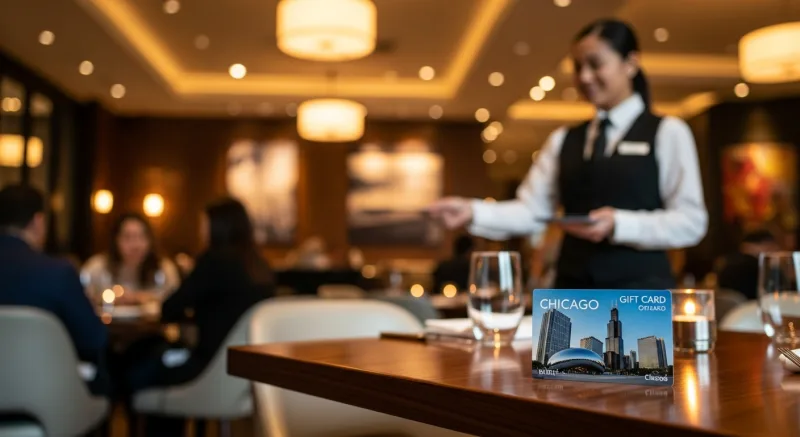
A Chicago restaurant selling $5,000/month in gift cards generates $60,000/year in immediate cash flow. With Toast or Square, those gift cards are ecosystem-locked. Switch POS, and your outstanding balances become a migration barrier. KwickOS gift cards work with any processor, preserving your gift card program through any business change.
Local Chicago Processor Options
When you break free from POS processor lock-in, Chicago's competitive payment processing market works in your favor:
- Heartland Payment Systems: Major presence in Chicago with a dedicated restaurant division. Interchange-plus pricing with transparent statements.
- Midwest-focused ISOs: Regional processors specializing in Chicagoland restaurant and retail markets, offering personalized service and competitive rates.
- Credit card processing cooperatives: Chicago has several merchant cooperatives that pool volume from multiple restaurants to negotiate group rates.
Getting three quotes from these processors against your current locked rate will reveal the true cost of lock-in. Most Chicago restaurant owners who go through this exercise discover they are overpaying by $250-500/month.
Multi-Location Chicago Operators
Chicago's restaurant groups often operate 3-8 locations across neighborhoods. A five-location group processing $4.25M/year in combined cards pays $17,850/year in lock-in excess. Over a five-year period: $89,250 — enough to open an additional location.
Crafty Crab Seafood's 19-store operation on KwickOS proves that multi-location management at scale works with processor-agnostic technology. Each Chicago location can negotiate its own processing rate while the ownership group manages menus, reporting, and brand standards from a single dashboard.
The Three-Year Cost for a Chicago Restaurant
Chicago restaurant: $850K/year in card sales:
Locked processor: ~$27,215/year
Negotiated processor via KwickOS: ~$23,645/year
Annual savings: $3,570
Three-year savings: $10,710
Chicago built its reputation on honest, no-nonsense food. Your payment processing should match that standard. Stop paying a premium for the privilege of being locked into someone else's processor.
Chicago businesses: break the lock-in. Call (888) 355-6996 or visit kwickos.com for a free demo.
KwickOS · 6405 Cypresswood Dr #250, Spring TX 77379
Turn One-Time Diners into Regulars: Built-In Gift Cards & Loyalty
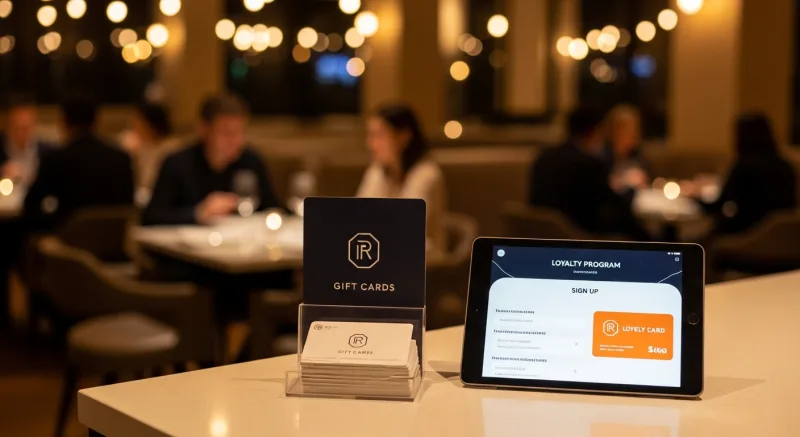
Most POS companies treat gift cards and loyalty as afterthoughts — expensive add-ons that cost $50-100/month extra. KwickOS includes them at no additional charge because we believe they are essential revenue tools, not luxury features.
Gift Cards That Actually Drive Revenue
Here is what most restaurant owners do not realize: gift card buyers spend an average of 20-40% more than the card's face value. A $50 gift card typically generates $60-70 in actual spending. KwickOS supports both physical gift cards and electronic gift cards that customers can purchase, send, and redeem through their phones.
- Physical gift cards — branded plastic cards that sit on your counter and sell themselves during holidays
- E-gift cards — customers buy and send digitally via text or email, perfect for last-minute gifts
- Balance tracking — real-time balance across all your locations, no manual reconciliation
- Reload capability — customers top up their balance, creating a built-in prepayment habit
Loyalty Points That Keep Them Coming Back
KwickOS loyalty is not a punch card from 2005. It is a digital points system that tracks every dollar spent and automatically rewards your best customers:
- Earn points on every purchase — configurable ratio (e.g., $1 = 1 point, or $1 = 10 points)
- Tiered rewards — silver, gold, platinum levels to incentivize higher spending
- Birthday rewards — automated birthday offers that bring customers back during their special month
- Points-for-payment — customers redeem points directly at checkout, seamless for your staff
Membership Programs
For restaurants running VIP programs or subscription models (like monthly coffee clubs), KwickOS membership management handles recurring billing, exclusive pricing tiers, and member-only menu items — all within the same system your cashier already uses.
The bottom line: Toast charges $75/month extra for loyalty. Square's loyalty starts at $45/month. KwickOS includes gift cards, e-gift cards, loyalty points, and membership management in every plan. That is $540-900/year you keep in your pocket.

Tom Jin
Founder & CIO of KwickOS · 30 Years IT · 20 Years Restaurant Industry
Tom serves 5,000+ businesses across 50 states, including Chicago's competitive restaurant market. KwickOS processes $2M+ in daily sales nationwide.