March 13, 2026 · 14 min read
Your Hair Salon Processes $500K in Cards. Your POS Company Pockets $2,800 of It Every Year.
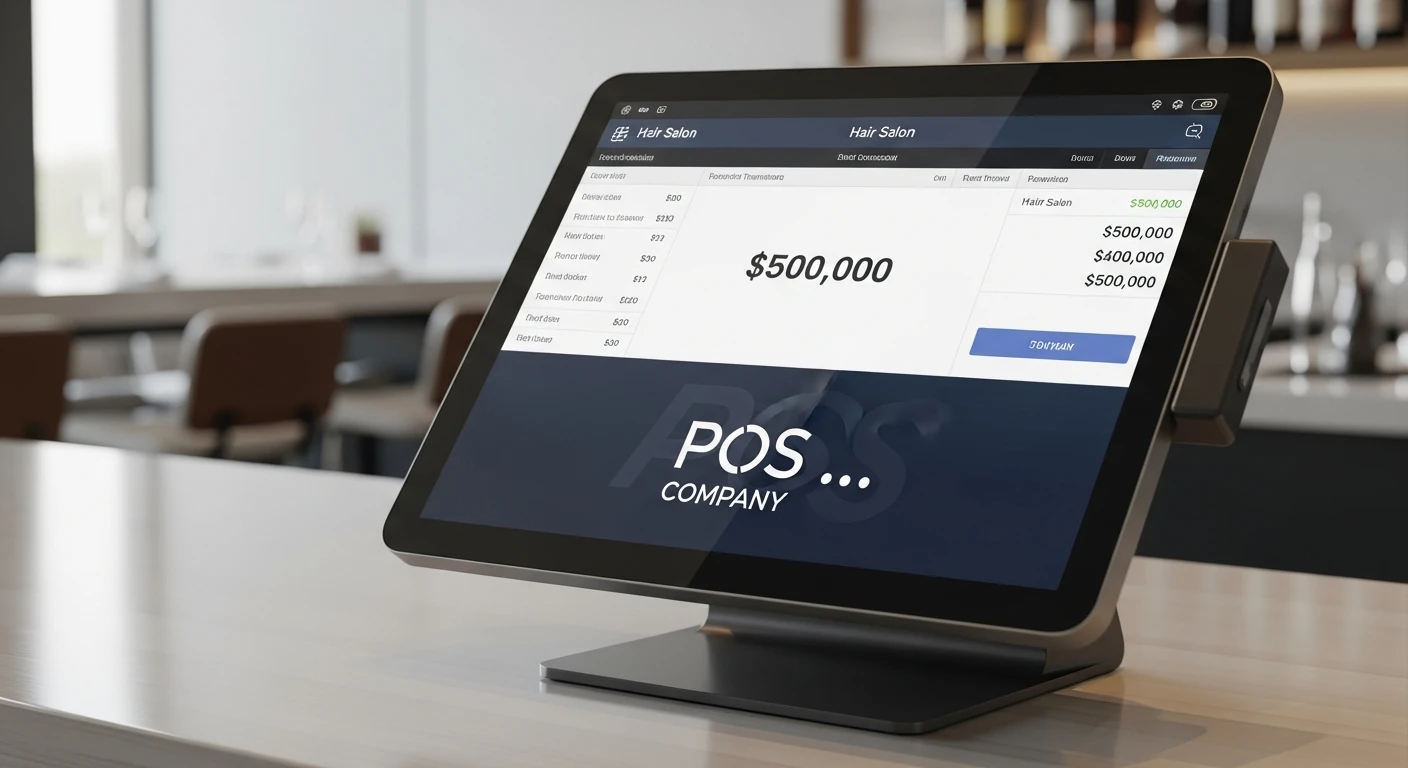
For hair salon operators, Your Hair Salon Processes $500K in Cards. Your POS Company Pockets ... isn't optional — it's the backbone of daily operations. Hair salons combine service revenue, product retail, and tip processing into one of the most complex payment environments in small business. Your stylists are artists. Your front desk is a logistics operation. And your POS vendor is quietly extracting thousands in excess processing fees because they locked you into their payment processor the day you signed up.
The salon calculation: A hair salon doing $500,000/year in card sales through a locked processor pays 0.45% more than a negotiated rate. That is $2,250/year in excess fees. Add tip processing overcharges ($750) and product sale markups ($300), and the total annual extraction reaches $3,300. Over three years: $9,900.
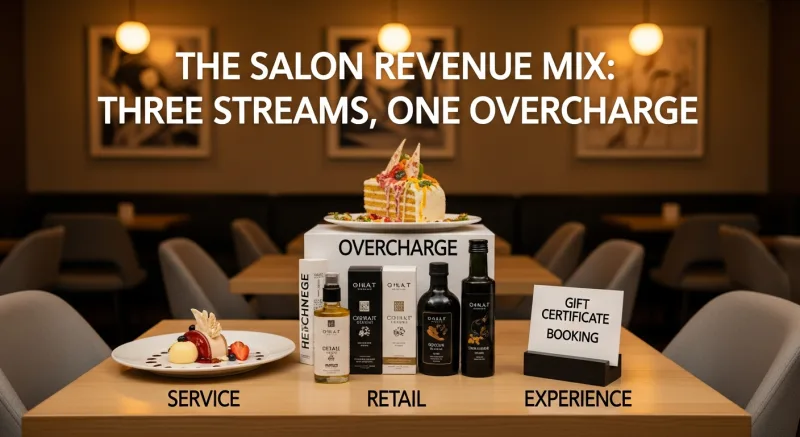
The Salon Revenue Mix: Three Streams, One Overcharge
Hair salons have a revenue structure unlike restaurants or retail. Revenue comes from three distinct categories, each with different processing characteristics:
Service revenue (70-80% of total): Haircuts, coloring, treatments, styling. Average service transaction: $65-120 for cuts and color, $150-300 for specialty services like extensions or keratin treatments. Services are pre-booked and typically paid in full at checkout.
Retail product sales (15-25% of total): Shampoo, conditioner, styling products, tools. Average product transaction: $25-45. These are impulse purchases added at checkout. Some salons see product transactions processed separately from service transactions, creating additional per-swipe fees.
Tips (20-25% of service subtotal): Salon tips run higher than restaurant tips because the service is personal and time-intensive. On a $100 color service, a $25 tip is standard. This tip is processed as part of the card transaction, and your locked processor charges its full percentage on the tip amount.
When these three streams flow through a locked processor, every stream carries the markup. A typical salon appointment generates one card authorization for the service, possibly a second for add-on products, and a tip adjustment — three processing events from a single client visit.
Commission Tracking: Where Payment Processing Meets Payroll
Most salons pay stylists on commission: 40-60% of service revenue. The commission calculation depends on accurate transaction tracking. When your POS and your processor are the same company, you lose the ability to audit processing fees independently from sales data. The processor is both the source of your revenue data and the entity taking fees from it.
Diva Nail Beauty, a KwickOS customer with 4 stores and 4 terminals, used KwickOS's automated commission tracking to achieve a 90% efficiency increase in payroll processing. The system calculates commissions based on completed services, deducts the appropriate processing fees from the business portion, and generates transparent reports for both the owner and the stylists.
With a locked processor, commission accuracy depends on trusting the processor's fee reporting. With KwickOS and an independent processor, you have two separate systems that cross-check each other: the POS tracks sales, the processor tracks fees, and discrepancies become visible immediately.
The Appointment Deposit Problem
No-shows cost hair salons an estimated $67 billion/year industry-wide. To combat this, many salons collect deposits for high-value services: $50 for a color appointment, $100 for extensions, $200 for a bridal package. These deposits are pre-authorized or charged at booking and applied against the final service total.
Each deposit creates a separate processing event. If the deposit and the final payment are treated as two transactions, you pay two per-swipe fees. On 15 deposit-requiring appointments per week, that is 780 extra transactions per year at $0.15 each: $117 in unnecessary flat fees.
More critically, deposits that are partially refunded (client cancels within the allowed window) can incur refund processing fees depending on your processor's terms. Some processors charge for the original transaction and do not refund their fee when you refund the customer. Others charge a refund processing fee on top.
With processor choice through KwickOS, you select a processor that handles deposit-and-apply workflows efficiently — one transaction fee for the full service, with the deposit applied as a credit. You cannot optimize this workflow when your POS vendor dictates the processor.
Gift Certificates: The Salon's Year-Round Revenue Driver
Salon gift cards are among the highest-value gift cards in retail. The average salon gift card is $75-150, compared to $25-50 for restaurants and $15-25 for coffee shops. Mother's Day, Valentine's Day, Christmas, and bridal party gifts drive predictable spikes.
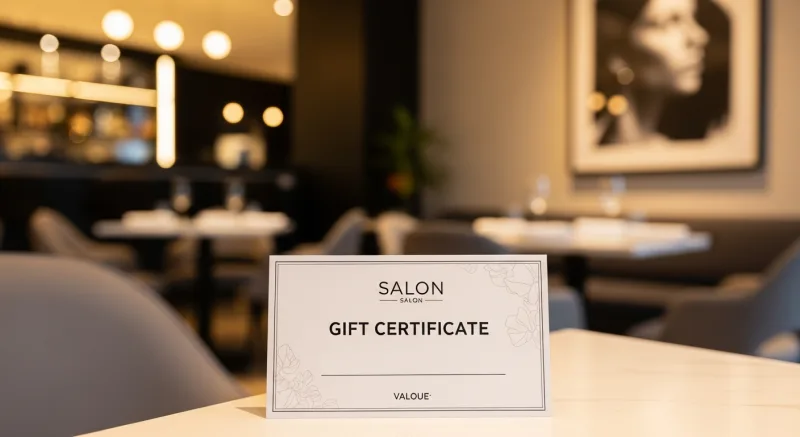
A well-promoted salon gift card program generates $40,000-80,000/year. The overspend rate is also higher: gift card recipients at salons typically add a product purchase ($30-45) and a tip (20-25% of service value) on top of the card balance. A $100 gift card generates $145-175 in total transaction value.
Toast and Square gift cards are processor-dependent. Walk away from their POS, and $20,000-40,000 in outstanding gift card balances becomes a transition liability. A client who received a $200 spa day gift certificate from her husband expects that certificate to work — indefinitely, per most state laws. Processor-locked gift cards put that obligation at risk every time you consider switching POS systems.
KwickOS gift cards are independent of payment processing. They survive processor changes, hardware upgrades, and even multi-location expansions. Your $200 spa day certificate works whether your processor is Heartland today or Worldpay next year.
Membership and Package Pricing: Recurring Revenue Under Threat
The salon membership model is growing rapidly: $99/month for one cut and a product discount. $199/month for unlimited blowouts. $149/month for a cut and color maintenance package. These memberships create predictable cash flow and increase client retention by 3x compared to non-members.
Recurring billing requires card-on-file tokenization. When that tokenization is controlled by a locked processor, your membership revenue is hostage to the processor relationship. Switch POS systems, and every member must re-enter their card information. The industry standard re-enrollment dropout rate is 15-25%. On 150 members at $120/month average, losing 20% means losing $43,200 in annual recurring revenue.
KwickOS manages recurring memberships with processor-agnostic tokenization. The token travels with you. Switch processors, and billing continues uninterrupted. Your 150 members keep getting charged. Your revenue keeps flowing. No re-enrollment emails. No lost members.
Retail Product Sales: The Margin That Processing Erodes
Professional hair products sold at salons carry 40-50% margins — among the best margins in any retail category. A $35 bottle of Olaplex costs you $18-20 wholesale. That $15-17 margin is the salon's silent profit center.
But when product sales process through a locked system at 2.99% + $0.15, every $35 product sale costs $1.20 in processing. That reduces your margin from $15 to $13.80 — an 8% reduction in profit on each bottle. Scale that across $100,000 in annual product sales and you are paying $3,140 in processing fees on product revenue alone.
With a negotiated processor at 2.39% + $0.08, the fee drops to $0.92 per $35 sale. Annual processing cost on $100K in products: $2,628. Savings: $512/year on product sales alone. Not life-changing, but combined with service processing savings and tip processing savings, it adds up to the $3,300 annual total.
Multi-Stylist Checkout: The Split-Payment Complexity
A client visits the salon for a cut with Stylist A and color with Stylist B. The total is $195. The client wants to pay once. But the commission split requires accurate attribution: $65 to Stylist A's service, $130 to Stylist B's service. The tip of $39 needs to split proportionally: $13 to A, $26 to B.
This multi-stylist split is a single card transaction but a complex internal accounting event. Your POS must handle the attribution seamlessly. When the POS and the processor are the same locked entity, you cannot verify that the processing fee was correctly allocated across the revenue split. With KwickOS and an independent processor, the POS handles the internal split while the processor handles the single card charge — clean separation of concerns.
The Booth Rental Model and Processing
Many salons operate on a booth rental model where stylists are independent contractors who rent station space. In this model, some salons run all payments through a central POS and distribute revenue, while others let each stylist handle their own payments.
When the salon runs centralized payments through a locked processor, the processing fee markup falls on the salon owner even though the revenue belongs to the stylist. The owner absorbs a 0.40-0.50% excess fee on revenue they do not keep. On $400,000 in stylist-generated revenue flowing through the central POS, that is $1,600-2,000/year in processing fees that directly reduce the salon's profitability.
With KwickOS, the salon owner negotiates their own processing rate and passes the actual cost through to stylists transparently. No hidden markup from the POS vendor. No subsidy from the owner. Clean accounting for everyone.
Walk-Ins, Cancellations, and the Cash Flow Rollercoaster
Hair salons deal with volatile daily revenue. A fully booked Tuesday can become a half-empty Tuesday if three clients cancel. Walk-ins fill some gaps, but the unpredictability makes every dollar matter more.

When your processing costs are inflated by lock-in, the impact during slow periods is proportionally worse. A day that generates only $800 in card revenue still pays $24 in processing fees at the locked rate versus $19 at a negotiated rate. Five dollars of difference per slow day does not sound significant, but 100 slow days per year (salons are closed Sundays, slower on Mondays) adds $500 in unnecessary fees during your least profitable periods.
The Three-Year Cost for a Single-Location Salon
Hair salon: $500K/year in card sales (including tips and products):
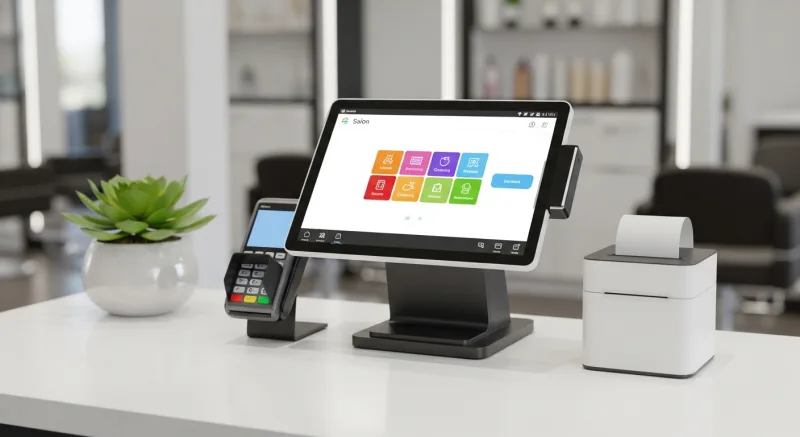
Locked processor (2.99% + $0.15): ~$16,450/year
Negotiated processor via KwickOS: ~$13,150/year
Annual savings: $3,300
Three-year savings: $9,900
$9,900 over three years. That is two high-end styling chairs. A complete backwash station upgrade. Six months of assistant wages. The money is there — it is just flowing to your POS vendor instead of back into your business.
Switching Your Salon's POS
Hair salon POS transitions are among the smoothest because the business model is appointment-driven with predictable workflows:
- Service menu: Your services, prices, duration estimates, and stylist assignments import into KwickOS. Commission structures configure per stylist.
- Client records: Service history, color formulas, preferences, and contact information migrate from your existing system.
- Appointment booking: KwickOS integrates with your booking workflow, linking appointments to the POS for seamless checkout.
- Training: Front desk staff train in 1-2 hours. Stylists who only need checkout functionality learn in minutes.
- Timeline: 7-10 days from purchase to fully operational.
Your salon exists to make clients look and feel their best. Your POS should support that mission, not extract a tax from every appointment.
Ready to keep more of every service dollar? Call (888) 355-6996 or visit kwickos.com for a salon POS demo.
KwickOS · 6405 Cypresswood Dr #250, Spring TX 77379
Turn One-Time Diners into Regulars: Built-In Gift Cards & Loyalty
Most POS companies treat gift cards and loyalty as afterthoughts — expensive add-ons that cost $50-100/month extra. KwickOS includes them at no additional charge because we believe they are essential revenue tools, not luxury features.
Gift Cards That Actually Drive Revenue
Here is what most restaurant owners do not realize: gift card buyers spend an average of 20-40% more than the card's face value. A $50 gift card typically generates $60-70 in actual spending. KwickOS supports both physical gift cards and electronic gift cards that customers can purchase, send, and redeem through their phones.
- Physical gift cards — branded plastic cards that sit on your counter and sell themselves during holidays
- E-gift cards — customers buy and send digitally via text or email, perfect for last-minute gifts
- Balance tracking — real-time balance across all your locations, no manual reconciliation
- Reload capability — customers top up their balance, creating a built-in prepayment habit
Loyalty Points That Keep Them Coming Back
KwickOS loyalty is not a punch card from 2005. It is a digital points system that tracks every dollar spent and automatically rewards your best customers:
- Earn points on every purchase — configurable ratio (e.g., $1 = 1 point, or $1 = 10 points)
- Tiered rewards — silver, gold, platinum levels to incentivize higher spending
- Birthday rewards — automated birthday offers that bring customers back during their special month
- Points-for-payment — customers redeem points directly at checkout, seamless for your staff
Membership Programs
For restaurants running VIP programs or subscription models (like monthly coffee clubs), KwickOS membership management handles recurring billing, exclusive pricing tiers, and member-only menu items — all within the same system your cashier already uses.
The bottom line: Toast charges $75/month extra for loyalty. Square's loyalty starts at $45/month. KwickOS includes gift cards, e-gift cards, loyalty points, and membership management in every plan. That is $540-900/year you keep in your pocket.

Tom Jin
Founder & CIO of KwickOS · 30 Years IT · 20 Years Restaurant Industry
Tom founded KwickOS to serve every small business vertical, from restaurants to beauty and spa. With Diva Nail Beauty among its 5,000+ customers, KwickOS understands salon operations firsthand.
Related Articles
Nail Salons: Tip Processing and the Lock-In Penalty
Nail salon-specific processing challenges and the commission tracking advantage.
Payment Lock-In: The $6,000/Year Tax Nobody Talks About
The definitive 2026 guide to processor-agnostic POS and why it matters.
Complete Nail Salon POS System Guide
Everything you need to know about POS for nail and beauty businesses.