Laissez Les Bon Temps Rouler — But Not Your POS Processing Fees
Updated March 2026 · By Tom Jin
Laissez Les Bon Temps Rouler — But Not Your POS Processing Fe... requires understanding the local market, regulations, and customer expectations in New Orleans. New Orleans is America’s most restaurant-obsessed city per capita. The Crescent City supports roughly 1,800 restaurants for a population of 380,000 — a density that means this city of under 400,000 people maintains a restaurant scene that rivals cities five times its size. Food is not an industry in New Orleans. It is the cultural infrastructure. The conversation at every table, every bar, and every second-line parade eventually turns to where you ate last night and where you are eating tonight.
This intensity creates operating conditions that reward restaurants capable of surviving the extremes: Mardi Gras volume that compresses a month of normal revenue into two weeks, hurricane seasons that can shut the city down for days, a tourist economy that generates 60% of restaurant revenue but arrives in unpredictable surges, and a kitchen culture steeped in Creole and Cajun traditions that require POS systems capable of handling the most complex menu modifiers in American dining.
Mardi Gras: Two Weeks of Maximum Capacity
Mardi Gras brings 1.4 million visitors to a city of 380,000. The mathematics are staggering: the visitor population exceeds the resident population by nearly 4:1 during peak Carnival weekends. Every restaurant in the French Quarter, Warehouse District, and Marigny operates at maximum capacity from the Friday before Mardi Gras through Fat Tuesday — roughly 11 consecutive days of peak volume with no opportunity to close, restock gently, or rest staff.
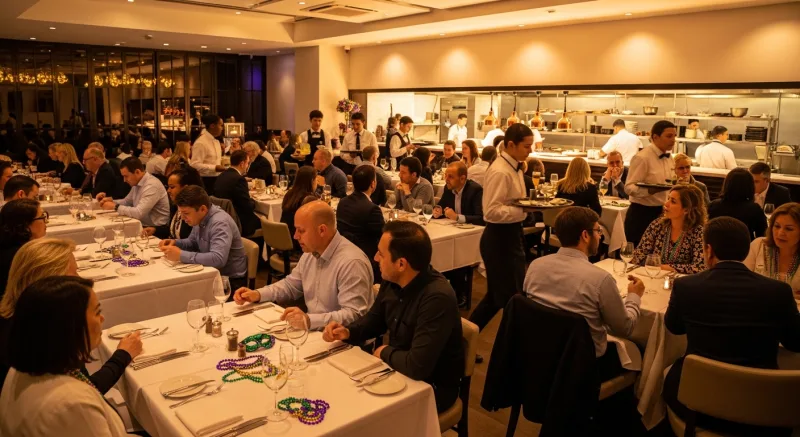
Cloud-based POS systems face two Mardi Gras challenges simultaneously: the transaction volume spike within each restaurant and the cellular network congestion from 1.4 million visitors streaming, posting, and ordering in a concentrated geographic area. KwickOS eliminates both by processing every transaction locally at 1-millisecond speed. The 500th transaction on Fat Tuesday processes as fast as the first. Cellular congestion is irrelevant because the transaction does not travel through the cellular network.
KwickOS self-ordering kiosks transform Mardi Gras capacity. A Bourbon Street restaurant that normally operates with 6 servers can add 3 kiosks during Carnival and process 120 additional orders per hour without hiring staff that are unavailable anyway — because every restaurant in the city is competing for the same limited labor pool during Carnival season.
Hurricane Resilience: Not Optional in New Orleans
Hurricane Katrina, Hurricane Ida, and the annual threat of Gulf storms have embedded disaster preparedness into New Orleans restaurant culture in a way no other American city matches. A restaurant operator who has rebuilt after a hurricane understands infrastructure vulnerability at a visceral level. They know that internet service can disappear for weeks, that power restoration prioritizes residential before commercial, and that the days immediately after a storm are when a functioning restaurant becomes the most important institution in the neighborhood.
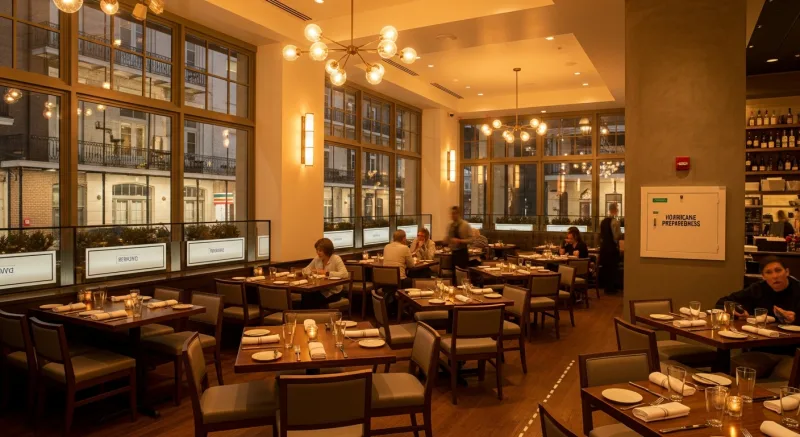
KwickOS processes every transaction on the local device without internet dependency. When a hurricane takes out Entergy power and the restaurant switches to generator, KwickOS runs on minimal tablet power. When Cox internet disappears for a week after a storm, the POS processes payments, displays kitchen orders, and tracks sales on local hardware. Cloud synchronization resumes when infrastructure returns. No data loss. No manual reconciliation.
The Roux-Based Modifier Tree
Creole and Cajun cuisine operates with a modifier complexity that POS systems designed for burger joints cannot begin to handle. A single gumbo order involves protein selection (chicken and andouille, seafood, or combination), rice style (white, brown, or dirty), serving size (cup, bowl, or family), and heat level. A po-boy involves bread choice (French or pistolette), dressing specification (dressed means lettuce, tomato, mayonnaise, and pickles, but each component can be modified), and protein with sub-modifiers for preparation (fried, grilled, or blackened).
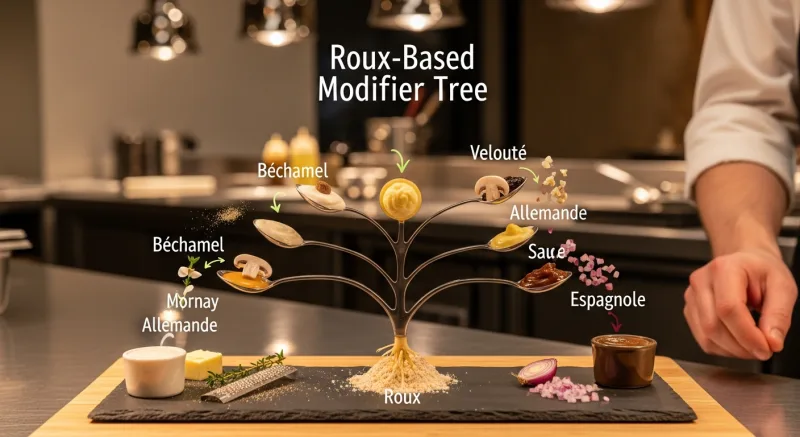
KwickOS handles this depth through structured modifier trees that present each customization step logically and display the complete build on the KDS as a scannable ticket. The fry cook sees the exact specification without interpretation. Zero ambiguity. Zero remakes. The kitchen display formats the order as instructions rather than a run-on sentence that requires parsing under time pressure.
French Quarter Antiquity and Modern POS
French Quarter buildings date to the 18th and 19th centuries. Stone walls, low ceilings, narrow staircases, and electrical systems that predate the transistor create an operating environment where modern technology must adapt to historic architecture. Wi-Fi signals attenuate through 200-year-old brick. Electrical outlets may be 15-amp residential circuits. Counter space is measured in single-digit inches.
KwickOS on compact tablets fits in spaces where traditional POS terminals do not. Wall-mounted KDS screens replace ticket printers that create paper clutter in kitchens the size of walk-in closets. Local processing means the 200-year-old brick walls that block Wi-Fi signals do not affect transaction speed. The POS works within the building constraints rather than requiring the building to accommodate the POS.
Processing Fees at French Quarter Prices
French Quarter restaurants charge tourist-market prices: $28-$45 for entrees, $15-$20 for appetizers, $14-$18 for cocktails. A busy Bourbon Street restaurant processing $180,000 monthly pays Toast $5,547 monthly in processing — $66,564 annually. KwickOS with a negotiated rate at 2.1% plus $0.08 costs $3,880 — $46,560 annually. The $20,004 annual savings covers the restaurant’s entire annual linen service, or half the salary of a sous chef.
For neighborhood restaurants in Mid-City, Bywater, and the Irish Channel where prices are lower and margins thinner, the processing savings are proportionally smaller but personally larger. A Mid-City neighborhood restaurant doing $60,000 monthly saves $5,400 annually through processor independence — meaningful money for a family operation.
Jazz Brunch and the Course-Timing Challenge
New Orleans invented jazz brunch — the three-hour Sunday morning experience where live music, Bloody Marys, and multiple courses unfold at a pace dictated by the music and the moment, not by table-turn optimization. A jazz brunch table might order drinks at 10:30, appetizers at 11:00, entrees at 11:45, and dessert at 12:30. Firing each course on the kitchen display requires server-controlled timing that respects the pace of the experience.
KwickOS course-based firing lets servers control when each course goes to the kitchen. The appetizer fires when the drinks arrive. The entree holds until the server sends it. Dessert fires when the table signals readiness. The kitchen sees what is coming and when, without the shouting and confusion that paper-ticket systems create during a 200-seat jazz brunch with a full band.
Gift Cards and the Convention Center
The Ernest N. Morial Convention Center hosts major events that bring hundreds of thousands of visitors annually. Convention attendees are prolific gift card purchasers — souvenirs of a great dining experience or gifts for colleagues who stayed home. KwickOS integrates gift card sales directly into the dinner check. The server mentions the option, the attendee adds a $50 card to the bill, and the restaurant gains a future visit commitment. Zero additional technology. Zero per-card fee.
Loyalty enrollment during convention visits converts one-time attendees into digital customers. A visitor who joins the loyalty program receives targeted promotions for their next New Orleans trip. Jazz Fest, French Quarter Fest, and Essence Festival create multiple annual reasons to return — and the loyalty system provides the reminder and incentive.
Magazine Street and Uptown Walkability
Magazine Street from the Lower Garden District through Uptown concentrates restaurants in a six-mile walkable corridor. Restaurants here compete for pedestrian traffic, and the visual presence of a dynamic digital menu display captures attention that a paper menu in the window does not. KwickSign displays facing the sidewalk promote daily specials, happy hour timing, and seasonal menu highlights to the foot traffic that is Magazine Street’s primary customer acquisition channel.
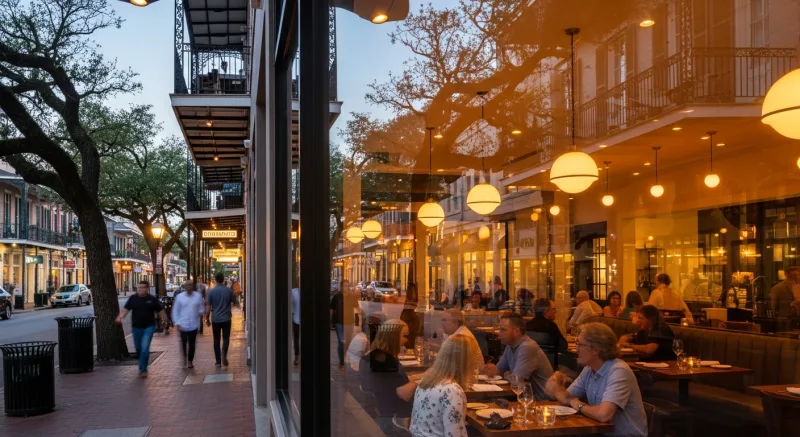
Loyalty programs matter intensely on Magazine Street because the walkable format means every restaurant competes directly with its neighbors. A customer with 400 loyalty points at your restaurant chooses you over the equally appealing option three doors down. KwickOS integrates this retention tool into every transaction without the monthly add-on fee that Toast and Square charge for their loyalty products.
The Vietnamese Community and Versailles
New Orleans East’s Vietnamese community, centered around the Versailles neighborhood, has built a restaurant scene recognized nationally for its banh mi, pho, and Vietnamese-Cajun fusion crawfish boils. These restaurants serve a community that bridges two culinary traditions — Vietnamese and Creole — and operates with kitchen staff who may speak Vietnamese, English, or a combination. KwickOS’s configurable terminal language and visual KDS interface accommodate multilingual operations where each station can display in the language that serves the person using it.
KwickDriver delivery at $2 flat fee extends Versailles restaurant reach across the metro area. A Vietnamese restaurant in New Orleans East can deliver to the French Quarter, the CBD, and Uptown at predictable costs that DoorDash’s percentage model would make unprofitable on moderate-ticket orders.
New Orleans POS Essentials
New Orleans restaurants operate under conditions that are beautiful, demanding, and occasionally catastrophic. The technology supporting them must be equally resilient, equally flexible, and significantly more affordable than what the locked-in POS companies offer.
- Hurricane-grade offline processing — Gulf storms guarantee multi-day infrastructure loss
- Mardi Gras volume handling — 1.4 million visitors need local processing that ignores cellular congestion
- Complex Creole modifiers — Po-boys, gumbo, and crawfish boils need deep, structured customization
- French Quarter compact hardware — 18th-century buildings need tablets, not bulky terminals
- Course-based jazz brunch timing — Three-hour dining experiences need server-controlled course firing
- Processor independence — French Quarter volumes justify negotiated rates saving five figures annually
- Gift cards for convention visitors — Impulse purchases convert one-time visitors to repeat customers
- Digital signage for Magazine Street — Pedestrian traffic needs dynamic visual menu boards
New Orleans has survived everything. Its restaurants have rebuilt after every storm. The technology should demonstrate the same resilience.
New Orleans restaurant owners: Call (888) 355-6996 or visit KwickOS.com to discuss POS technology built to weather whatever the Gulf sends your way.
Turn One-Time Diners into Regulars: Built-In Gift Cards & Loyalty
Most POS companies treat gift cards and loyalty as afterthoughts — expensive add-ons that cost $50-100/month extra. KwickOS includes them at no additional charge because we believe they are essential revenue tools, not luxury features.
Gift Cards That Actually Drive Revenue
Here is what most restaurant owners do not realize: gift card buyers spend an average of 20-40% more than the card's face value. A $50 gift card typically generates $60-70 in actual spending. KwickOS supports both physical gift cards and electronic gift cards that customers can purchase, send, and redeem through their phones.
- Physical gift cards — branded plastic cards that sit on your counter and sell themselves during holidays
- E-gift cards — customers buy and send digitally via text or email, perfect for last-minute gifts
- Balance tracking — real-time balance across all your locations, no manual reconciliation
- Reload capability — customers top up their balance, creating a built-in prepayment habit
Loyalty Points That Keep Them Coming Back
KwickOS loyalty is not a punch card from 2005. It is a digital points system that tracks every dollar spent and automatically rewards your best customers:
- Earn points on every purchase — configurable ratio (e.g., $1 = 1 point, or $1 = 10 points)
- Tiered rewards — silver, gold, platinum levels to incentivize higher spending
- Birthday rewards — automated birthday offers that bring customers back during their special month
- Points-for-payment — customers redeem points directly at checkout, seamless for your staff
Membership Programs
For restaurants running VIP programs or subscription models (like monthly coffee clubs), KwickOS membership management handles recurring billing, exclusive pricing tiers, and member-only menu items — all within the same system your cashier already uses.
The bottom line: Toast charges $75/month extra for loyalty. Square's loyalty starts at $45/month. KwickOS includes gift cards, e-gift cards, loyalty points, and membership management in every plan. That is $540-900/year you keep in your pocket.

Founder & CIO of KwickOS · 30 Years IT · 20 Years Restaurant Industry
Tom built KwickOS after running restaurants and IT companies for decades. He relocated the company to a 10,000 sq ft office in 2023 and now serves 5,000+ businesses across all 50 states, processing over $2M in daily sales.