Ribs, Blues, and Register Receipts: The POS Technology Powering Memphis Restaurants
Updated March 2026 · By Tom Jin
For Memphis business owners searching for Ribs, Blues, and Register Receipts, here's what the top operators already know. Memphis operates on smoke. The sweet, hickory-perfumed air that drifts from pit rooms along airways, through screen doors, and into parking lots is as much a part of the city’s identity as the Mississippi River. Over 100 dedicated barbecue restaurants operate in the Memphis metro area, alongside 2,000+ total restaurants serving a population that takes food personally, eats affordably, and judges technology by whether it helps or hinders the experience of putting plates on tables.
The POS decisions made by Memphis restaurant operators are shaped by economics that differ fundamentally from coastal markets. Average dinner tickets are lower. Profit margins on barbecue are uniquely compressed by the dual costs of premium wood and extended cook times. And the tourist economy centered on Beale Street creates dramatic volume swings between peak and off-peak periods that technology must accommodate without adding cost during the valleys.
The Pit Room Problem: Smoke, Heat, and Hardware
Memphis barbecue pits operate at temperatures between 225 and 275 degrees for 12-16 hours at a stretch. The ambient temperature in a pit room during peak production exceeds 140 degrees. Smoke permeates everything. These conditions are incompatible with most commercial electronics, particularly the proprietary POS hardware that companies like Toast ship in plastic housings with minimal thermal protection and zero smoke filtration.
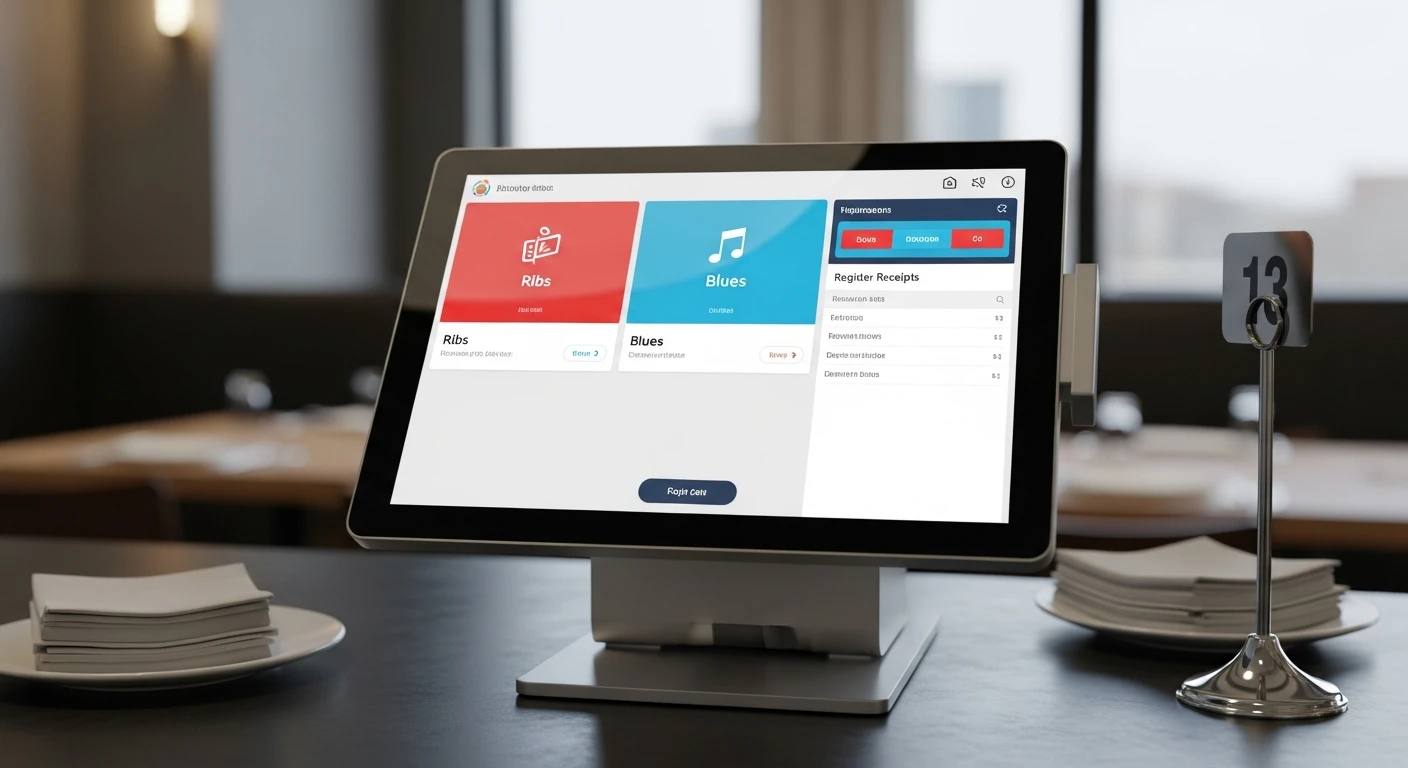
KwickOS runs on any touchscreen hardware, including industrial-rated tablets designed for harsh environments. A restaurant that positions a tablet POS station near the pit can select hardware with appropriate thermal and particulate ratings. If a device fails in the pit room environment — and eventually, all electronics near a smoker will fail — replacing a $250 commercial tablet is a minor expense. Replacing a $900 proprietary Toast terminal that must be ordered from the vendor and installed by a technician is a week of degraded operations and a four-figure expense.
Kitchen display screens positioned in the cooler prep area (rather than the pit room) show orders to the team that plates, sauces, and sides while the pit master manages the smoker independently. This workflow separation matches how Memphis barbecue kitchens actually operate: the pit is a production facility that runs on its own timeline, and the plating station assembles orders in real time as customers arrive.
Beale Street: Where Tourist Dollars Meet Thin Margins
Beale Street is Memphis’s primary tourist attraction, drawing over 4 million visitors annually to a three-block entertainment district of blues clubs, restaurants, and bars. The restaurants along Beale operate in one of the most challenging economic environments in American dining: high rents, tourist-driven pricing expectations set by comparison to Nashville and New Orleans, and a customer base that visits once and may never return.
For Beale Street restaurants, every transaction must extract maximum value because there may not be a second visit. Gift cards serve as the primary repeat-visit mechanism — a tourist who buys a $25 gift card has committed to a return visit or has given a friend a reason to visit Memphis. KwickOS integrates gift card sales into the dinner check transaction. The server mentions it, the customer adds it, and the restaurant gains a guaranteed future visit. No separate vendor. No additional per-card fee.
KwickOS loyalty programs work differently on Beale Street than in neighborhood restaurants. Rather than building long-term point accumulation, Beale Street loyalty focuses on immediate incentives: “earn 50 points tonight and get a free appetizer on your next visit before midnight.” This same-trip upselling works because tourists are in spending mode and responsive to immediate rewards. The loyalty configuration through KwickOS accommodates both long-term accumulation and same-day incentive models within the same system.
Memphis in May: 250,000 Visitors in 30 Days
Memphis in May is a month-long festival that includes the Beale Street Music Festival, the World Championship Barbecue Cooking Contest, and the Great American River Run. The World Championship alone draws 100,000 visitors to Tom Lee Park over three days. Total May festival attendance exceeds 250,000 visitors — a population-sized surge that transforms every restaurant in downtown Memphis and Midtown into a peak-volume operation.
KwickOS self-ordering kiosks deployed during festival season handle volume that would require double-staffing without them. A barbecue restaurant near Tom Lee Park that adds two kiosks during the Championship weekend processes an additional 80-100 orders per hour without hiring additional counter staff. The kitchen receives these orders through the KDS with identical formatting whether they originated from a kiosk or a server — no separate workflow, no manual re-entry.
Local processing through KwickOS is critical during festivals when cellular network congestion makes cloud-dependent systems unreliable. When 100,000 people within a half-mile radius are all streaming, posting, and ordering simultaneously, cloud POS systems that route through cellular connections experience latency and failures. KwickOS processes on the device itself at 1-millisecond speed, unaffected by network conditions outside the restaurant.
The Soul Food Tradition and Technology Adoption
Memphis’s soul food restaurants represent a culinary tradition that extends back generations. These are often family-owned establishments where the recipes come from grandmothers, the cooking techniques are passed down rather than taught in culinary school, and the technology is adopted cautiously because the operators have seen “innovations” come and go without improving what matters — the food.
For these operators, KwickOS offers something that most POS companies cannot: simplicity that does not sacrifice capability. The interface follows the logic of how restaurants actually operate rather than imposing a technology-first workflow. Shogun Japanese Hibachi, a KwickOS customer, demonstrated that new operators achieve proficiency in under 5 minutes. For a Memphis soul food restaurant where the owner has been cooking for 30 years and has zero interest in a technology learning curve, this rapid adoption means the POS starts helping on day one rather than requiring a training investment that pulls attention from the kitchen.
Fingerprint identification eliminates the PIN management that frustrates operators who did not grow up with technology. No codes to remember. No cards to track. Touch the sensor, you are logged in, and every transaction traces to you. For a soul food restaurant where the same four family members have worked the counter for a decade, this simplicity is the technology itself — it works without requiring anyone to become a technology person.
Crosstown and the Memphis Revitalization
Crosstown Concourse, the massive Sears building repurposed into a mixed-use development, has become a symbol of Memphis’s urban revitalization and a restaurant cluster that draws from across the city. The food hall and restaurant spaces within Crosstown represent the new Memphis dining — chef-driven, culturally diverse, and technologically connected — while the surrounding neighborhoods maintain the traditional restaurants that define Memphis identity.
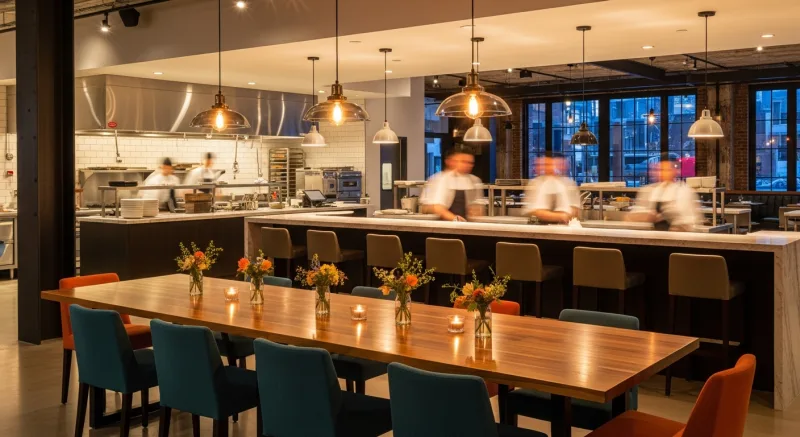
Digital signage through KwickSign serves Crosstown food hall vendors by creating visual presence in a multi-vendor environment. A vendor with a bright, rotating menu display stands out among competitors in ways that a handwritten board does not. Menu changes update instantly — when the lunch special sells out at 1:30 PM, it disappears from the display, preventing customer frustration and reducing kitchen interruptions from orders for unavailable items.
Online ordering through KwickMenu extends Crosstown restaurants’ reach beyond the physical building. A Crosstown restaurant that offers online ordering and delivery through KwickDriver at $2 per delivery serves the entire Midtown and East Memphis market from a single location. The online ordering page captures customer data for loyalty enrollment, building a digital relationship that converts first-time delivery customers into repeat visitors.
FedEx and the Overnight Workforce
Memphis is the global hub for FedEx, operating the world’s largest cargo airport. The FedEx hub employs tens of thousands of workers on overnight shifts, creating a late-night dining economy that most cities do not have. Restaurants near the airport and along the freight corridor serve workers who eat dinner at midnight and breakfast at 6 AM. These restaurants need POS systems that run reliably during hours when most software was designed to perform maintenance operations.
KwickOS on Linux does not require scheduled restarts, does not run background updates that degrade performance at 3 AM, and does not slow down after 18 hours of continuous operation. A restaurant serving the FedEx overnight workforce from 10 PM to 6 AM runs KwickOS with the same performance at 5:30 AM that it had at 10:30 PM. For these operators, system reliability during non-traditional hours is not a nice-to-have feature. It is the core requirement.
Processing Economics at Memphis Price Points
Memphis restaurant prices are among the most affordable in any major American city. Average lunch tickets of $10-$14 and dinner tickets of $18-$26 mean that processing costs consume a higher percentage of revenue than in cities with higher pricing. Toast’s 2.99% plus $0.15 on a $12 barbecue lunch takes $0.51 — over 4.2% of the transaction. Every barbecue plate, every order of ribs, every sweet tea gives up 4.2 cents of every dollar to a locked-in processing rate.
KwickOS with a competitive processor at 1.95% plus $0.06 takes $0.29 on that same $12 transaction — 2.4%. The difference of $0.22 per transaction, across 350 daily transactions, is $77 per day — $28,105 per year. For a Memphis barbecue restaurant where the owner makes $50,000 annually, that processing savings represents a 56% increase in personal income. The math at Memphis price points is not abstract. It is life-changing.
Memphis POS Priorities
Memphis restaurants run on tradition, passion, and margins thinner than a slice of white bread on a pulled pork sandwich. The technology supporting these operations should protect those margins rather than consuming them.
- Rugged hardware flexibility — Pit room conditions destroy proprietary hardware; replaceable tablets survive
- Processor independence — Memphis price points amplify the impact of every basis point in processing costs
- Gift cards for tourist conversion — Beale Street visitors are one-time unless you capture their commitment
- Festival-grade kiosks — Memphis in May surges need automated ordering capacity
- Local processing — Festival cellular congestion and regular infrastructure inconsistency demand offline capability
- Simple adoption — Traditional operators need 5-minute proficiency, not a technology learning curve
- Digital signage — Food hall and high-traffic environments need dynamic visual merchandising
- 24-hour Linux reliability — FedEx overnight economy needs systems that perform at 3 AM
Memphis built its food reputation on patience — slow-smoked ribs do not rush. But your POS system should not test that patience with slow processing, locked-in fees, and features that cost extra.
Memphis restaurant owners: Call (888) 355-6996 or visit KwickOS.com to see technology that respects the tradition and protects the margin.
Turn One-Time Diners into Regulars: Built-In Gift Cards & Loyalty
Most POS companies treat gift cards and loyalty as afterthoughts — expensive add-ons that cost $50-100/month extra. KwickOS includes them at no additional charge because we believe they are essential revenue tools, not luxury features.
Gift Cards That Actually Drive Revenue
Here is what most restaurant owners do not realize: gift card buyers spend an average of 20-40% more than the card's face value. A $50 gift card typically generates $60-70 in actual spending. KwickOS supports both physical gift cards and electronic gift cards that customers can purchase, send, and redeem through their phones.
- Physical gift cards — branded plastic cards that sit on your counter and sell themselves during holidays
- E-gift cards — customers buy and send digitally via text or email, perfect for last-minute gifts
- Balance tracking — real-time balance across all your locations, no manual reconciliation
- Reload capability — customers top up their balance, creating a built-in prepayment habit
Loyalty Points That Keep Them Coming Back
KwickOS loyalty is not a punch card from 2005. It is a digital points system that tracks every dollar spent and automatically rewards your best customers:
- Earn points on every purchase — configurable ratio (e.g., $1 = 1 point, or $1 = 10 points)
- Tiered rewards — silver, gold, platinum levels to incentivize higher spending
- Birthday rewards — automated birthday offers that bring customers back during their special month
- Points-for-payment — customers redeem points directly at checkout, seamless for your staff
Membership Programs
For restaurants running VIP programs or subscription models (like monthly coffee clubs), KwickOS membership management handles recurring billing, exclusive pricing tiers, and member-only menu items — all within the same system your cashier already uses.
The bottom line: Toast charges $75/month extra for loyalty. Square's loyalty starts at $45/month. KwickOS includes gift cards, e-gift cards, loyalty points, and membership management in every plan. That is $540-900/year you keep in your pocket.

Founder & CIO of KwickOS · 30 Years IT · 20 Years Restaurant Industry
Tom built KwickOS after running restaurants and IT companies for decades. He relocated the company to a 10,000 sq ft office in 2023 and now serves 5,000+ businesses across all 50 states, processing over $2M in daily sales.