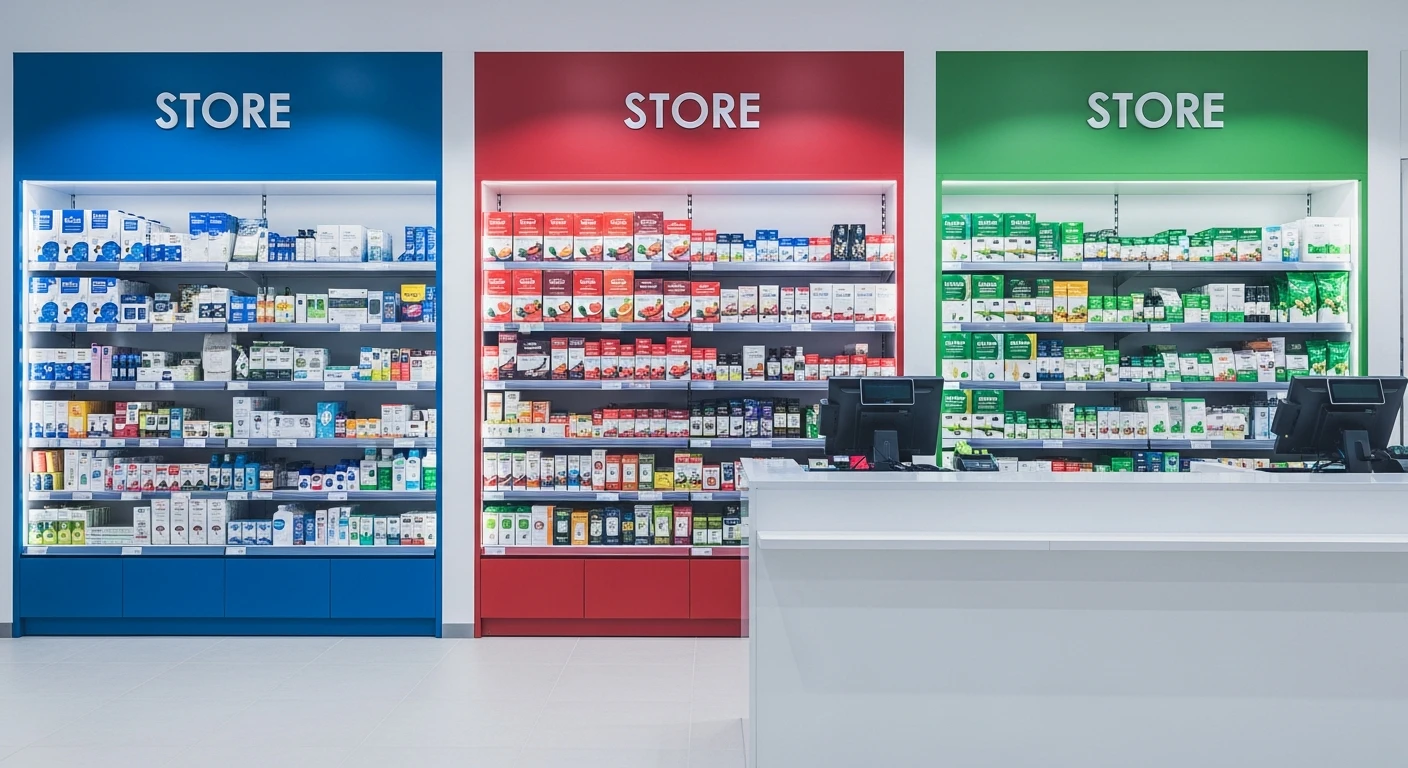
Retail multi-location management is fundamentally an inventory problem. Unlike restaurants, where the "inventory" is consumed during production, retail inventory sits on shelves waiting to be sold. The right product at the right store at the right time generates a sale. The wrong product at the wrong store generates either dead stock (capital tied up in unsold inventory) or stockouts (lost sales and disappointed customers).
For a 3-location retail operation carrying 2,000 SKUs per store, inventory management across locations determines whether the business generates healthy margins or drowns in stock imbalances. And the POS system is the foundation of that inventory management — if it cannot show you real-time stock levels across all stores, you are flying blind.
The Inventory Visibility Problem
On separate POS systems, each store's inventory lives in a separate database. The owner or manager who wants to know "how much of Product X do we have across all stores?" must check three separate systems — or, more commonly, call three store managers and ask them to look. This process takes 5-10 minutes per product inquiry. For a weekly inventory review of 50 key products, that is 4-8 hours of phone calls and spreadsheet compilation.
The real cost is not the manager's time — it is the decisions that do not get made because the data is too hard to obtain. The store manager at Location B does not know that Location A has surplus inventory of the item she just ran out of. Instead of requesting a transfer (which would take a day), she places a rush order from the supplier (which takes a week and costs more per unit due to small order quantities). The customer who wanted the product leaves empty-handed. The surplus at Location A becomes clearance-priced end-of-season dead stock.
KwickOS shows real-time inventory for every SKU at every location on one dashboard. Product X: Location A has 45 units, Location B has 0, Location C has 12. The imbalance is visible instantly. The manager initiates a transfer of 15 units from A to B, and the inventory records update to reflect the in-transit stock. No phone calls. No spreadsheets. No guessing.
Inter-Store Transfers: The Profit Recovery System
Retail businesses lose 3-5% of annual revenue to inventory misallocation — products sitting in the wrong store. For a 3-location retail operation doing $1.5 million/year, that is $45,000-75,000 in lost revenue from stockouts at one location while surplus exists at another.
KwickOS facilitates inter-store transfers with full tracking. When Location A transfers 15 units to Location B, the system creates a transfer record, decrements A's inventory, shows the units as "in transit," and increments B's inventory when the transfer is received and confirmed. Every unit is accounted for. Shrinkage during transfer (if 15 were sent but only 14 arrived) is flagged automatically.
The transfer decision itself is data-driven. KwickOS shows sell-through rates per product per location. Product X sells 3 units/day at Location B and 1 unit/day at Location A. Location A has a 45-day supply; Location B is out of stock. The system does not just show the imbalance — it shows the velocity difference that makes the transfer decision obvious.
Pricing Consistency Across Stores
Retail customers who visit multiple locations notice price differences immediately. If a product is $24.99 at your downtown store and $22.99 at your mall store because someone entered the clearance price at one location but not the other, you have a customer trust problem. In the age of social media, one customer posting "Store A charges more than Store B for the same thing" can damage your brand faster than any competitor.
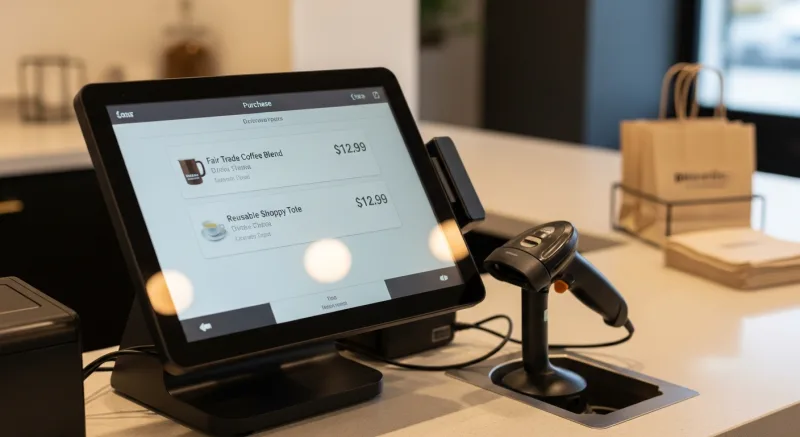
KwickOS one-click sync pushes pricing changes to all locations simultaneously. Mark down 50 products for a seasonal sale: one update, all stores aligned. Adjust retail prices to reflect a supplier cost increase: one change, consistent pricing everywhere. The system supports location-specific price overrides when needed (airport locations with premium pricing, outlet locations with permanent discounts), but the default is consistency from a single source of truth.
Gift Cards: Retail's Highest-Margin Product
Retail gift cards are a standalone profit center. The margin on gift card sales is effectively 100% at the point of sale (you receive cash for a future obligation), with 10-15% of balances never redeemed (breakage = pure profit), and redeemers typically overspend by 20-40% beyond the card value (incremental revenue).
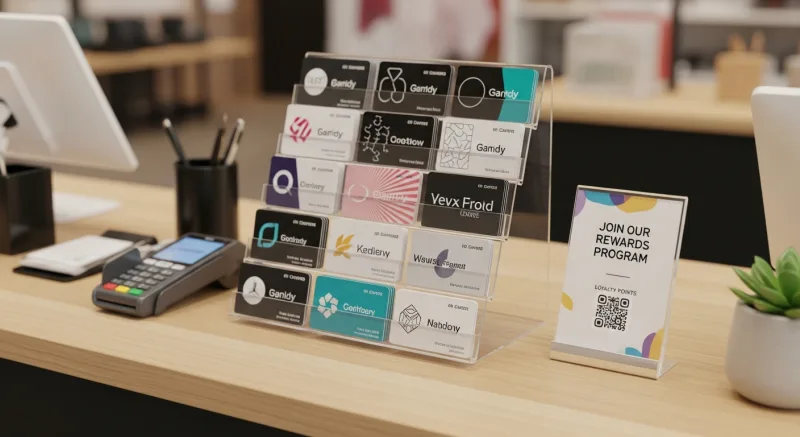
For a 3-location retail operation selling $120,000 in gift cards annually, breakage alone generates $12,000-18,000 in margin. The overspend effect adds another $24,000-48,000 in incremental revenue. Total gift card program value: $36,000-66,000/year in margin and incremental revenue.
But this only works if gift cards work everywhere. A gift card purchased at your downtown store that cannot be redeemed at your mall store frustrates the recipient and suppresses future gift card purchases. The gifter thinks twice before buying another card from your store if the recipient had a bad experience.
KwickOS gift cards work at every location from the moment of purchase. Physical cards, e-gift cards through your website, and store-credit cards (for returns) all share one centralized balance system. A $75 gift card purchased at Location A is immediately available at B and C. Balance updates in real time. No activation delays. No per-location restrictions.
Loyalty Programs for Multi-Location Retail
Retail loyalty programs have a unique dynamic compared to food service: the purchase frequency is lower (weekly or monthly vs. daily), but the average transaction value is higher ($30-100 vs. $8-20). This means loyalty rewards need to be value-proportional and achievable within a reasonable timeframe.
A fragmented loyalty program where points earned at Location A do not appear at Location B creates two problems. First, the customer's progress toward a reward is artificially slowed, reducing engagement. Second, the customer's purchase history is split, making personalized marketing impossible. You cannot send a targeted promotion for Product Y to customers who bought Product X if the purchase data is scattered across three separate databases.
KwickOS loyalty unifies purchases across all locations into one profile. The customer's total spend, purchase history, and reward balance are visible at every store. Shared loyalty points mean a customer who spends $200/month across three locations reaches reward thresholds based on their total patronage, not a fragmented fraction. Membership tiers managed from headquarters let you create VIP programs where your top cross-location customers receive early access to new products, exclusive discounts, or priority service.
Baked Cravings: Multi-Location Retail in Action
Baked Cravings operates a self-serve kiosk at Lego Land alongside their other retail presence, running on KwickOS with PaxA35 terminals. Their model — 24-hour retail with self-service technology — demonstrates how KwickOS supports non-traditional retail formats across locations. The kiosk at Lego Land operates independently (hybrid local processing means no dependency on venue WiFi reliability) while reporting into the same centralized dashboard as their other locations.
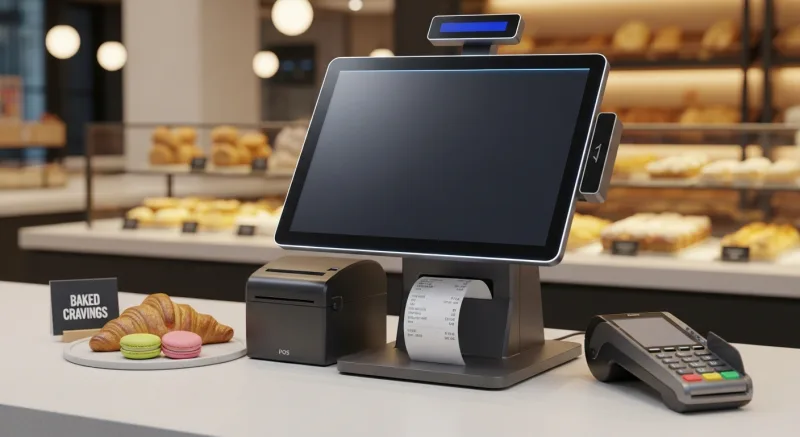
This is the architecture that makes multi-location retail work: each store runs independently with local processing speed and offline capability, while the centralized layer provides inventory visibility, reporting, and customer data unification.
Centralized Reporting for Retail Operators
Retail reporting needs differ from food service. Key metrics include sell-through rate per category, inventory turnover, gross margin per location, shrinkage rate, and revenue per square foot. At a single store, these metrics help optimize merchandising. At multiple stores, they enable benchmarking that identifies which location merchandises best, which has shrinkage problems, and which categories perform differently by location (informing location-specific assortment decisions).
KwickOS's multi-location dashboard shows all of these metrics side-by-side. Location A's accessory category has 2x the sell-through rate of Location C — investigate whether A's display placement, staff knowledge, or customer demographics explain the difference and apply the learnings to C. Location B's shrinkage rate is 3% vs. 1% at the other stores — focus loss prevention efforts at B.
T. Jin China Diner monitors 15 locations through this same dashboard architecture. For retail, where inventory investment is the largest cost after rent and labor, real-time multi-location visibility into sell-through and shrinkage is the difference between profitable expansion and cash-flow crisis.
Payment Processing for Multi-Location Retail
Retail transactions have moderate ticket sizes ($20-80) and moderate frequency (100-300/day per location). A 3-location retail operation processing $200,000/month total on Toast (2.99% + $0.15) pays approximately $6,280/month in processing. At a negotiated rate of 2.2% + $0.08, the same volume costs $4,560/month.
Annual savings: $20,640.
KwickOS is processor-agnostic. Negotiate one rate based on aggregate volume across all stores. Switch processors without changing your POS. Keep 100% of your processing revenue — no revenue sharing with a POS company that locked you into their processor.
Digital Signage for Retail Stores
Retail digital signage promotes sales, highlights new arrivals, and drives impulse purchases. Across multiple locations, signage content needs to be consistent (same brand messaging, same promotional pricing) while allowing location-specific customization (local events, location-specific clearance).
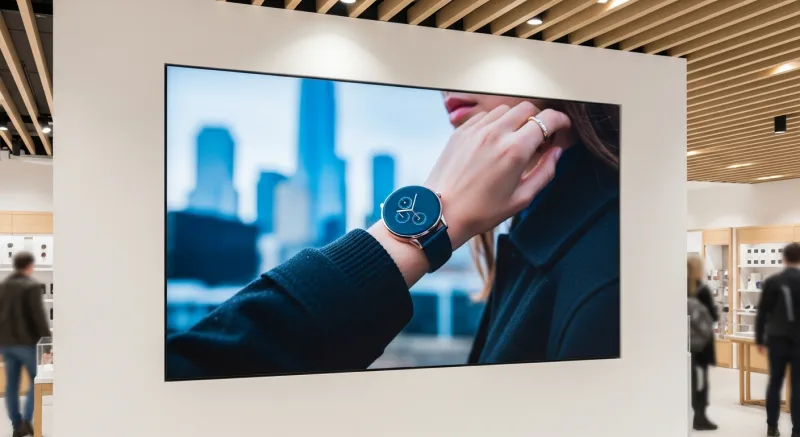
KwickOS digital signage manages content centrally with location overrides. Push a chain-wide holiday promotion to all screens at all stores, then add a location-specific clearance slide at Store C only. One management interface, consistent brand presentation, flexible per-location customization.
Employee Management for Retail Groups
Retail employees frequently float between locations. A cashier might work at the mall location on weekends and the downtown location on weekdays. A visual merchandiser might rotate between all three stores. A loss prevention associate might visit different locations on different days.
KwickOS fingerprint authentication (1:N — touch the sensor, no ID needed) works at every location. One employee record, one clock-in system, one payroll export. Permissions are role-based and location-aware — a cashier has register access at all assigned locations, while a manager has reporting and override access at the locations they supervise.
Why Toast, Square, and Clover Fail Multi-Location Retail
Toast is a restaurant system. It has no concept of SKU-level inventory management, inter-store transfers, or retail-specific reporting (sell-through rates, inventory turns, revenue per square foot). Using Toast for multi-location retail is a category mismatch.
Square has retail capabilities but limited multi-location inventory management. Each location's inventory is semi-independent. Inter-store transfers require manual workarounds. The loyalty program works across locations but with limitations in customer data unification.
Clover requires separate merchant accounts per location. Separate inventories, separate customer databases, separate reporting. For a retail group where inventory visibility across stores is the most critical operational requirement, Clover's architecture is fundamentally wrong.
The Multi-Location Retail Checklist
- Can you see real-time inventory for every SKU at every location on one screen?
- Does the system support inter-store transfers with tracking and reconciliation?
- Can you push pricing changes and markdowns to all locations simultaneously?
- Do gift cards work at every location in real time?
- Does the loyalty program unify customer profiles across all stores?
- Can you benchmark location performance on sell-through, shrinkage, and margins?
- Can you use one payment processor at one rate for all stores?
- Do employees use the same authentication at every location?
KwickOS handles all eight with hybrid local+cloud architecture that keeps each store running independently while connecting to centralized management.
Expanding Your Retail Operation?
Schedule a demo and we will show you centralized inventory management, inter-store transfers, cross-location gift cards and loyalty, and multi-location benchmarking — configured for your specific retail operation.
Get Your Free DemoOr call us directly: (888) 355-6996
Turn One-Time Diners into Regulars: Built-In Gift Cards & Loyalty
Most POS companies treat gift cards and loyalty as afterthoughts — expensive add-ons that cost $50-100/month extra. KwickOS includes them at no additional charge because we believe they are essential revenue tools, not luxury features.
Gift Cards That Actually Drive Revenue
Here is what most restaurant owners do not realize: gift card buyers spend an average of 20-40% more than the card's face value. A $50 gift card typically generates $60-70 in actual spending. KwickOS supports both physical gift cards and electronic gift cards that customers can purchase, send, and redeem through their phones.
- Physical gift cards — branded plastic cards that sit on your counter and sell themselves during holidays
- E-gift cards — customers buy and send digitally via text or email, perfect for last-minute gifts
- Balance tracking — real-time balance across all your locations, no manual reconciliation
- Reload capability — customers top up their balance, creating a built-in prepayment habit
Loyalty Points That Keep Them Coming Back
KwickOS loyalty is not a punch card from 2005. It is a digital points system that tracks every dollar spent and automatically rewards your best customers:
- Earn points on every purchase — configurable ratio (e.g., $1 = 1 point, or $1 = 10 points)
- Tiered rewards — silver, gold, platinum levels to incentivize higher spending
- Birthday rewards — automated birthday offers that bring customers back during their special month
- Points-for-payment — customers redeem points directly at checkout, seamless for your staff
Membership Programs
For restaurants running VIP programs or subscription models (like monthly coffee clubs), KwickOS membership management handles recurring billing, exclusive pricing tiers, and member-only menu items — all within the same system your cashier already uses.
The bottom line: Toast charges $75/month extra for loyalty. Square's loyalty starts at $45/month. KwickOS includes gift cards, e-gift cards, loyalty points, and membership management in every plan. That is $540-900/year you keep in your pocket.