The Phoenix metropolitan area — the Valley — spans over 14,000 square miles and includes Phoenix, Scottsdale, Tempe, Chandler, Gilbert, Mesa, Glendale, and dozens of other communities. With nearly 5 million residents and population growth exceeding 100,000 per year, the restaurant demand is enormous and geographically dispersed. New restaurants are opening in Queen Creek, Buckeye, and Goodyear faster than established operators can expand to meet the demand.
For multi-location restaurant groups, Phoenix offers aggressive expansion opportunity — but only if your technology scales as fast as your ambition.
The Snowbird Effect: Seasonal Traffic That Demands Real-Time Visibility
Phoenix has the most extreme dining seasonality in America, driven not by weather preferences but by population fluctuation. From October through April, hundreds of thousands of snowbirds — winter residents from the Midwest, Canada, and the Northeast — move to the Valley. Restaurant traffic in snowbird-heavy areas (Scottsdale, Sun City, Mesa) can increase 30-50% during peak season.
This seasonal surge is not uniform across locations. Your Scottsdale restaurant might see a 45% traffic increase in February while your Tempe location (college-town demographic) barely changes. Your Chandler location might see a moderate 20% increase. Without real-time data from all locations, you are guessing at staffing, inventory, and prep quantities — and guessing during your highest-revenue months means leaving money on the table.
KwickOS's multi-location dashboard shows every location's current and trending performance. In January, the owner sees Scottsdale running at 140% of summer baseline, Chandler at 120%, and Tempe at 102%. Staffing decisions, food ordering, and promotional spending adjust by location based on actual data, not seasonal assumptions.
T. Jin China Diner monitors 15 locations through this dashboard. For Phoenix groups navigating the snowbird cycle, location-specific real-time data is the difference between capturing the seasonal opportunity and being overwhelmed by it.
Extreme Heat and Infrastructure Resilience
Phoenix summers routinely exceed 115F. Air conditioning systems strain. Power grids face peak demand. Internet equipment in outdoor utility boxes overheats. These conditions create technology stress that does not exist in moderate climates.
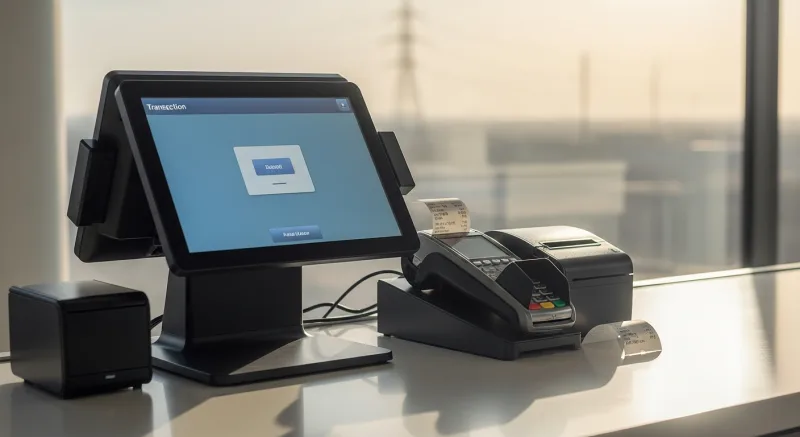
Cloud-dependent POS systems fail when their lifeline — the internet connection — fails. In Phoenix, that connection is more vulnerable than in most cities because the physical infrastructure (cables, junction boxes, routers) endures temperature extremes that accelerate failure rates.
KwickOS processes every transaction locally at 1ms speed. Internet connectivity is used for cloud sync, not core operations. When the internet drops at your Glendale location because a junction box overheated on a 118F afternoon, the POS continues operating at full capability. Transactions process. Kitchen displays work. Payments complete. When the ISP resolves the issue (typically within a few hours), data syncs automatically.
Gift Cards Across the Valley
Phoenix-area residents drive everywhere. A customer at your Scottsdale restaurant might live in Gilbert (20 miles south), work in Phoenix (15 miles west), and socialize in Tempe (10 miles east). Gift cards purchased at any location need to work at every other location because the probability of cross-location redemption in the sprawling Valley is very high.
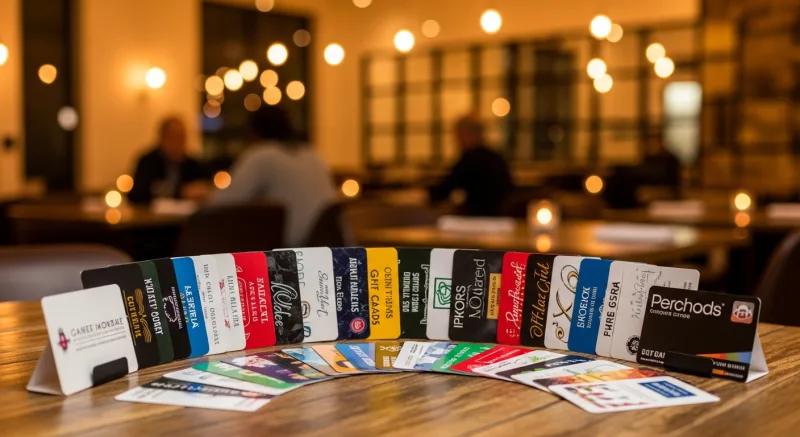
KwickOS gift cards sync across all locations in real time. A Scottsdale-purchased gift card works instantly in Chandler. An e-gift card bought online works at every store. The balance updates in real time with every transaction at any location.
Unified Loyalty for Valley Commuters
Valley residents routinely commute 20-30 miles. Loyalty programs that fragment by location punish the cross-Valley customers who might be your most valuable patrons. KwickOS loyalty pools all visits and spend into one account across all locations. A customer who visits Scottsdale on Saturday, Tempe on Tuesday, and Chandler on Thursday accumulates points from all three visits — not three separate trickles in three separate accounts.
Membership management from headquarters creates tiered programs where your top cross-Valley customers receive VIP recognition at every location. Haidilao's 600+ locations demonstrate this principle at global scale. Your Phoenix group implements it at Valley scale.
Rapid Expansion: The East Valley Opportunity
The East Valley — Gilbert, Chandler, Queen Creek, San Tan Valley — is adding population at a rate that creates restaurant demand faster than supply can meet it. A restaurant group that can deploy new locations quickly captures first-mover advantage in communities of 50,000+ residents that had 10,000 a decade ago.
KwickOS makes new location deployment straightforward: clone the master menu, install hardware (1-3 hours), train staff (1-2 hours), go live. The new location appears on the centralized dashboard, gift cards work from day one, and loyalty is active immediately. The 7-10 day timeline from purchase to operation means you can respond to East Valley growth opportunities in weeks, not months.
Crafty Crab Seafood expanded to 19 locations using this deployment model. Each new store launched with menu consistency, gift card interoperability, and unified loyalty from the first day of operation.
Processing Savings in a Growth Market
Phoenix restaurant groups expanding rapidly need capital for build-outs, equipment, and marketing. Processing savings fund that growth. A 4-location Valley group processing $380,000/month on Toast (2.99% + $0.15) pays approximately $11,900/month. At a negotiated rate of 2.2% + $0.10, the cost is $8,760/month.
Annual savings: $37,680. That funds the equipment package for a new East Valley location.
KwickOS is processor-agnostic. Negotiate aggregate volume. Keep the savings. Use the capital for growth.
One-Click Menu Sync for Seasonal Menus
Phoenix restaurant menus shift seasonally. Patio-friendly items and lighter fare dominate the cooler months (when patio dining is glorious). Summer menus might shift toward delivery-friendly items and indoor-only dining concepts. Seasonal menu rotations across 4+ locations need to happen simultaneously and consistently.
KwickOS one-click sync pushes seasonal menu changes to every terminal at every location in seconds. The October patio menu launches everywhere at once. The June summer shift happens with one click. No per-location updates, no inconsistency risk, no manager coordination calls.
The Phoenix Multi-Location Checklist
- Can you manage seasonal traffic variability with real-time per-location data?
- Can each location operate during heat-related internet outages?
- Do gift cards work across all Valley locations instantly?
- Does loyalty unify across all stores for cross-Valley customers?
- Can you deploy new locations in the growing East Valley in days, not months?
- Can you push seasonal menu changes to all locations simultaneously?
- Can you use one processor at one rate for all locations?
- Do employees use fingerprint authentication across all stores?
KwickOS handles all eight — built for the growth pace and infrastructure challenges of the Phoenix metro.
Growing Across the Phoenix Valley?
Schedule a demo and we will show you rapid-deployment capabilities, cross-Valley gift cards and loyalty, real-time seasonal dashboards, and processing savings for your Phoenix restaurant group.
Get Your Free DemoOr call us directly: (888) 355-6996
Turn One-Time Diners into Regulars: Built-In Gift Cards & Loyalty
Most POS companies treat gift cards and loyalty as afterthoughts — expensive add-ons that cost $50-100/month extra. KwickOS includes them at no additional charge because we believe they are essential revenue tools, not luxury features.
Gift Cards That Actually Drive Revenue
Here is what most restaurant owners do not realize: gift card buyers spend an average of 20-40% more than the card's face value. A $50 gift card typically generates $60-70 in actual spending. KwickOS supports both physical gift cards and electronic gift cards that customers can purchase, send, and redeem through their phones.
- Physical gift cards — branded plastic cards that sit on your counter and sell themselves during holidays
- E-gift cards — customers buy and send digitally via text or email, perfect for last-minute gifts
- Balance tracking — real-time balance across all your locations, no manual reconciliation
- Reload capability — customers top up their balance, creating a built-in prepayment habit
Loyalty Points That Keep Them Coming Back
KwickOS loyalty is not a punch card from 2005. It is a digital points system that tracks every dollar spent and automatically rewards your best customers:
- Earn points on every purchase — configurable ratio (e.g., $1 = 1 point, or $1 = 10 points)
- Tiered rewards — silver, gold, platinum levels to incentivize higher spending
- Birthday rewards — automated birthday offers that bring customers back during their special month
- Points-for-payment — customers redeem points directly at checkout, seamless for your staff
Membership Programs
For restaurants running VIP programs or subscription models (like monthly coffee clubs), KwickOS membership management handles recurring billing, exclusive pricing tiers, and member-only menu items — all within the same system your cashier already uses.
The bottom line: Toast charges $75/month extra for loyalty. Square's loyalty starts at $45/month. KwickOS includes gift cards, e-gift cards, loyalty points, and membership management in every plan. That is $540-900/year you keep in your pocket.