Best All-in-One POS System for Phoenix Restaurants
Published March 2026 · 10 min read
Operating a restaurant in Phoenix means accepting a paradox: your city is the fifth largest in the United States with 1.65 million residents and a metro area exceeding 5 million, yet for nearly four months of the year, the sidewalks are empty because stepping outside feels like walking into an oven set to broil. Then, from November through March, the population effectively doubles as snowbirds migrate south, and suddenly your 40-seat restaurant has a 90-minute wait every night. No other major American city swings this dramatically between feast and famine, and the POS system you choose needs to handle both extremes without requiring a different operational mode for each.
The Extreme Heat Equation: June Through September
Phoenix averages 110 days per year above 100 degrees Fahrenheit. In July 2025, the city recorded 31 consecutive days above 110 degrees. This isn't a weather inconvenience. It's a structural economic force that reshapes every restaurant's business model for one-third of the calendar year.
Dine-in traffic drops 30-40% during summer afternoons. Patio seating, which accounts for significant capacity at many Phoenix restaurants, becomes literally unusable from 11am to 7pm without industrial misting systems that cost $200-400 per month to operate. The restaurants that maintain summer revenue have mastered the channel shift: pushing volume through delivery, curbside pickup, and catering rather than relying on walk-in traffic that physically cannot walk in.
Your POS system needs to facilitate this shift seamlessly. During winter months, the system's primary interface should prioritize dine-in table management, server sections, and course pacing. During summer, the same system needs to foreground delivery queue management, pickup order tracking with SMS notifications, and catering workflows. If toggling between these modes requires IT support or a system reconfiguration, the transition costs eat into the very margins you're trying to protect.
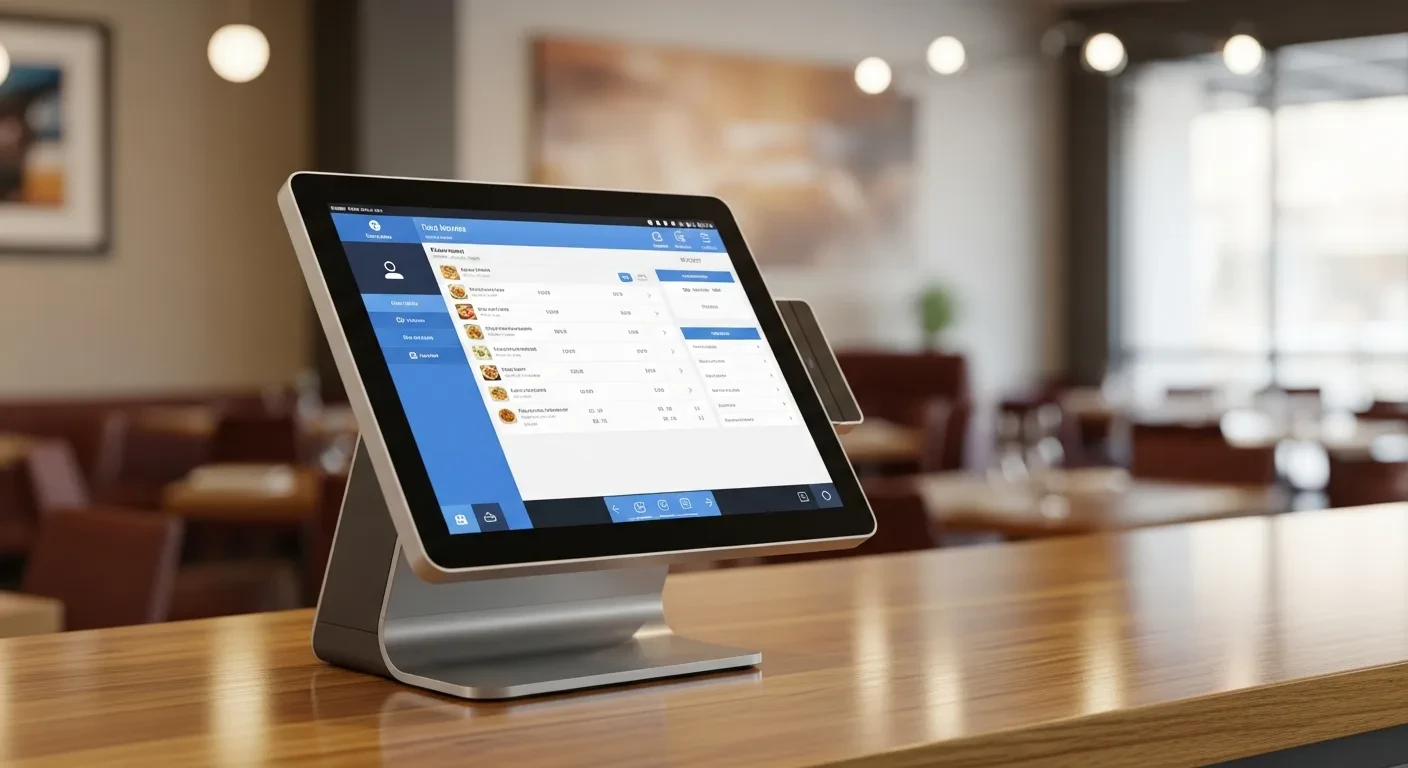
KwickOS allows operators to configure multiple interface layouts and switch between them by time of year or even time of day. The delivery integration through KwickDriver becomes the primary revenue channel in summer, and its flat $2 base fee plus $6.99 per five miles keeps delivery profitable even on smaller orders that would lose money at third-party commission rates of 15-25%.
Snowbird Season: Scaling Up Without Breaking
The Maricopa County population swells by an estimated 300,000 to 500,000 during snowbird season as retirees from the Midwest, Northeast, and Canada settle into winter homes and extended-stay resorts. Scottsdale, Fountain Hills, Sun City, and Mesa absorb most of this influx, and restaurants in these areas experience a revenue surge that requires careful technology planning.
Consider a restaurant in Old Town Scottsdale that does $45,000 per week in January versus $22,000 per week in July. That's a 100% revenue swing that affects staffing, inventory, and technology capacity. During peak snowbird months, you might need four terminals running simultaneously instead of two. Your kitchen display system needs to handle twice the ticket volume. Your online ordering system needs to accommodate guests who aren't local and discover you through Yelp or Google Maps rather than regular habit.
POS platforms that charge per-terminal monthly fees punish seasonal scaling. Adding two terminals for four peak months at $69 per terminal per month costs $552 annually for capacity you need less than half the year. A system with flexible terminal licensing that allows seasonal adjustment without penalty aligns with Phoenix's economic reality rather than fighting against it.
The snowbird demographic also skews older, which has practical POS implications. Font sizes on customer-facing screens need to be adjustable. Receipt readability matters more. Kiosk interfaces need to be navigable by someone who didn't grow up with touchscreens. These aren't accessibility afterthoughts. In Scottsdale during January, they're your primary customer interface requirements.
Golf Resort Dining: A World Within a World
Metropolitan Phoenix has over 200 golf courses, more than any other US metro area. The major resort courses, including Troon North, Grayhawk, TPC Scottsdale, and We-Ko-Pa, each operate multiple dining venues that range from casual clubhouse grills to upscale dining rooms that rival any standalone fine dining restaurant.
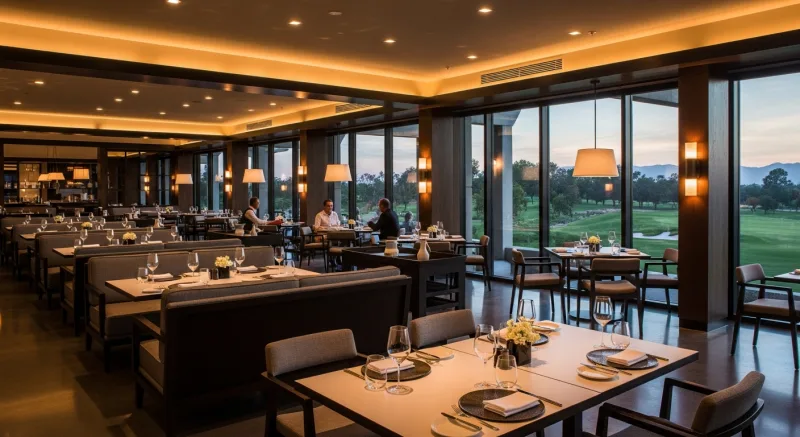
Golf resort dining presents POS challenges that sit at the intersection of hospitality, retail, and food service. A single guest might charge a round of golf, a pro shop purchase, a lunch at the turn, drinks at the 19th hole, and dinner that evening, all expecting these charges to consolidate on their room folio or member account. The POS needs to communicate with the resort's property management system, the pro shop's retail system, and the beverage cart's mobile terminal, ideally through a unified platform rather than a patchwork of integrations that break every time one vendor updates their API.
Beverage cart operations on golf courses create a mobile POS scenario that's uniquely demanding. The cart covers 18 holes across five miles of course in direct desert sun, where temperatures inside the cart can exceed 130 degrees. The POS hardware needs to survive that heat, maintain cellular or WiFi connectivity across a sprawling property, and process transactions quickly because golfers on the course have even less patience than golfers in general.
KwickOS's Linux-based terminal architecture uses less power and generates less heat than Windows-based systems, which extends hardware life in extreme temperature environments. The hybrid processing means a momentary connectivity drop on hole 14 doesn't strand a $35 drink order in limbo.
Scottsdale Luxury Versus Mesa Family: Two Markets, Two Approaches
The difference between running a restaurant on Scottsdale Road and running one on Main Street in Mesa is essentially the difference between operating in Manhattan and operating in a Midwest suburb, except they're 20 minutes apart. A Scottsdale restaurant might target a $75 average check with craft cocktails and locally-sourced ingredients. A Mesa family restaurant competes on $12.99 dinner specials and kids-eat-free Tuesdays.
The POS requirements differ correspondingly. Scottsdale fine dining needs wine inventory management by bin number, integration with OpenTable or Resy for reservation data, and the ability to handle complex split-check scenarios where a table of eight divides a $900 check across five credit cards with different tip amounts. The system needs to look elegant on a tableside payment device because the technology is part of the dining experience at this price point.
Mesa family restaurants need speed, simplicity, and coupon management. Kids-eat-free promotions, early bird specials, senior discounts, birthday dessert comps, and loyalty punch cards (physical or digital) are the daily workflow. The POS needs to apply multiple overlapping discounts correctly: a senior couple with a loyalty reward using a newspaper coupon during early bird hours shouldn't require a manager override to process.
KwickOS serves both ends of this spectrum because the interface is configurable per location. A restaurant group operating a Scottsdale concept and a Mesa concept can run both on the same platform with different screen layouts, pricing structures, and workflow configurations, while consolidated reporting gives ownership a single view across all locations.
Authentic Mexican Cuisine and Border Proximity
Phoenix's proximity to the Mexican border, approximately three hours from Nogales, means the city's Mexican food scene goes far beyond the Tex-Mex that dominates in Texas. Sonoran-style Mexican cuisine features flour tortillas, carne asada, and regional specialties like Sonoran hot dogs that aren't found on most American-Mexican restaurant menus. The authenticity of the cuisine comes with operational nuances that affect POS requirements.
Many Phoenix Mexican restaurants operate a dual model: traditional sit-down dining plus a separate takeaway window or counter that serves a different, faster menu. The tortilleria might be its own profit center, selling fresh tortillas by the dozen to go. The carniceria counter sells marinated meats by the pound. Each of these is a separate revenue stream with different pricing models (per item, per pound, per dozen) running simultaneously in the same building, needing to flow through one POS system with clear reporting separation.
Bilingual operation is essential. Kitchen communication in Spanish, customer-facing interfaces in English, and the ability to print customer receipts in either language depending on preference. With 42% of Phoenix's population identifying as Hispanic or Latino, this isn't an edge case. It's the norm. KwickOS native Spanish and English support across all terminals, kitchen displays, and customer receipts addresses this without requiring third-party translation add-ons.
Desert Infrastructure and the Reliability Question
Phoenix's infrastructure deals with unique stressors that affect POS reliability in ways that coastal cities don't experience. Summer monsoon season from June through September brings intense dust storms (haboobs) that can knock out power and internet across entire neighborhoods for hours. The extreme heat causes more frequent power fluctuations as the electrical grid strains under massive air conditioning loads. In August 2024, a single monsoon storm left 200,000 APS customers without power across the Valley.
A POS system that requires constant internet connectivity puts your restaurant at the mercy of Cox Communications' ability to keep their infrastructure running during a haboob. Cloud-only platforms that offer "offline mode" typically provide degraded functionality: you can process cash transactions and maybe some cards, but inventory doesn't update, online orders stop, and you're essentially running blind until connectivity returns.
KwickOS's hybrid architecture means the local terminal has full functionality regardless of internet status. Every menu item, every price, every modifier, every employee login is stored locally. Transactions process against local data and sync to the cloud when connectivity is restored. For a Phoenix restaurant, this isn't a theoretical benefit. It's the difference between staying open during monsoon season and putting a "cash only, limited menu" sign on the door.
Hardware durability in the heat deserves mention. Restaurant kitchens are already hot, but a Phoenix kitchen in July can reach 130 degrees near the grill. POS hardware rated for standard commercial use may fail or throttle performance at these temperatures. Linux-based systems like KwickOS generate less thermal load than Windows systems because they require less processing power for the same tasks, extending hardware lifespan in environments where every device is fighting the heat.
The Numbers That Matter for Phoenix Operators
Consider the financial picture for a Phoenix restaurant doing $50,000 monthly in sales with 70% paid by card. Annual card processing volume is $420,000.
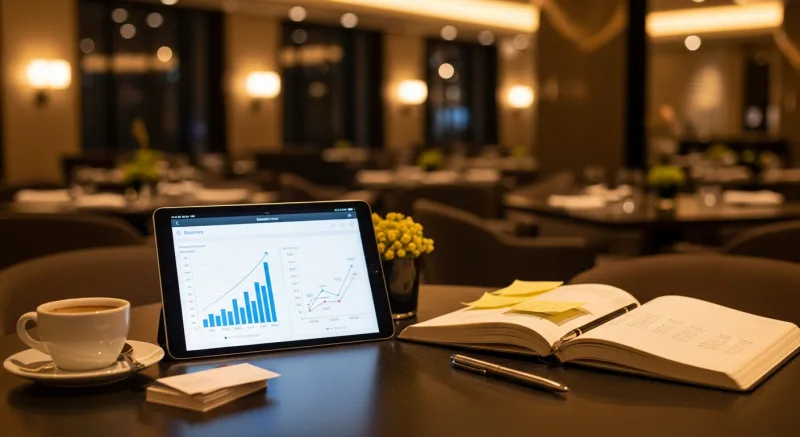
With a processor-locked POS at an effective rate of 3.1%, annual processing fees reach $13,020. With KwickOS's processor-agnostic model allowing negotiation to a 2.3% effective rate, that drops to $9,660. Annual savings: $3,360. Over a five-year POS lifecycle, that's $16,800 in processing savings alone, likely exceeding the total cost of the POS system itself.
Add the seasonal staffing factor. A system that reduces training time from a full day to two hours (KwickOS's typical training window) saves approximately $150 per seasonal employee in training labor costs. A restaurant hiring 8 seasonal workers for snowbird season saves $1,200 annually just in training efficiency, not counting the reduction in new-employee errors during the critical high-revenue months.
Phoenix-Specific POS Priorities
Seasonal channel flexibility: The system must shift gracefully between dine-in-heavy winter operations and delivery-heavy summer operations without reconfiguration hassle.
Scalable terminal licensing: Adding terminals for snowbird season and removing them for summer should not incur year-round costs for seasonal capacity.
Heat-resistant architecture: Linux-based systems with lower thermal profiles outlast Windows terminals in Phoenix's extreme kitchen temperatures.
Full offline capability: Monsoon season demands a POS that works without internet, not a degraded offline mode, but full operational capability.
Multi-format pricing: Per-item, per-pound, per-dozen, and per-hour pricing handles the diversity of Phoenix restaurant concepts from taco windows to all-you-can-eat buffets to golf course dining.
Bilingual by default: English and Spanish across every screen, every receipt, every kitchen ticket. Forty-two percent of the market isn't an afterthought.
Phoenix restaurants face challenges that no other major US city combines in quite the same way. The right POS system turns those challenges into operational advantages. Reach out at (888) 355-6996 or KwickOS.com for a consultation built around your Phoenix operation's specific needs.
The Revenue Features Most "All-in-One" Systems Charge Extra For
When POS companies say "all-in-one," they rarely mean gift cards and loyalty are included. Toast charges $75/month for their loyalty add-on. Square Loyalty starts at $45/month. Clover requires third-party apps. KwickOS includes all of these natively — zero extra cost.
Physical & Electronic Gift Cards
Sell branded physical cards at the register. Send e-gift cards via text or email. Track balances across every location in real time. Gift card holders spend 20-40% more than face value — this is not a nice-to-have, it is a revenue multiplier.
Points-Based Loyalty System
Every transaction earns points. Customers see their balance on receipts and can redeem at checkout. Configurable earn ratios, tiered VIP levels, and automatic birthday rewards. No separate app required — it runs inside the POS your cashier already knows.
Membership & Subscription Management
Run coffee clubs, wine memberships, or VIP dining programs. Recurring billing, exclusive member pricing, and member-only items — managed from the same dashboard as your daily operations. Your customers feel special. Your revenue becomes predictable.
Real impact: businesses using KwickOS loyalty features see repeat visit rates increase by up to 35%. Gift card programs generate an average of 15% additional revenue during holiday seasons.

Tom Jin
Founder & CIO of KwickOS · 30 Years IT · 20 Years Restaurant Industry
Tom built KwickOS after decades running restaurants and IT companies. Today KwickOS serves 5,000+ businesses across 50 states.