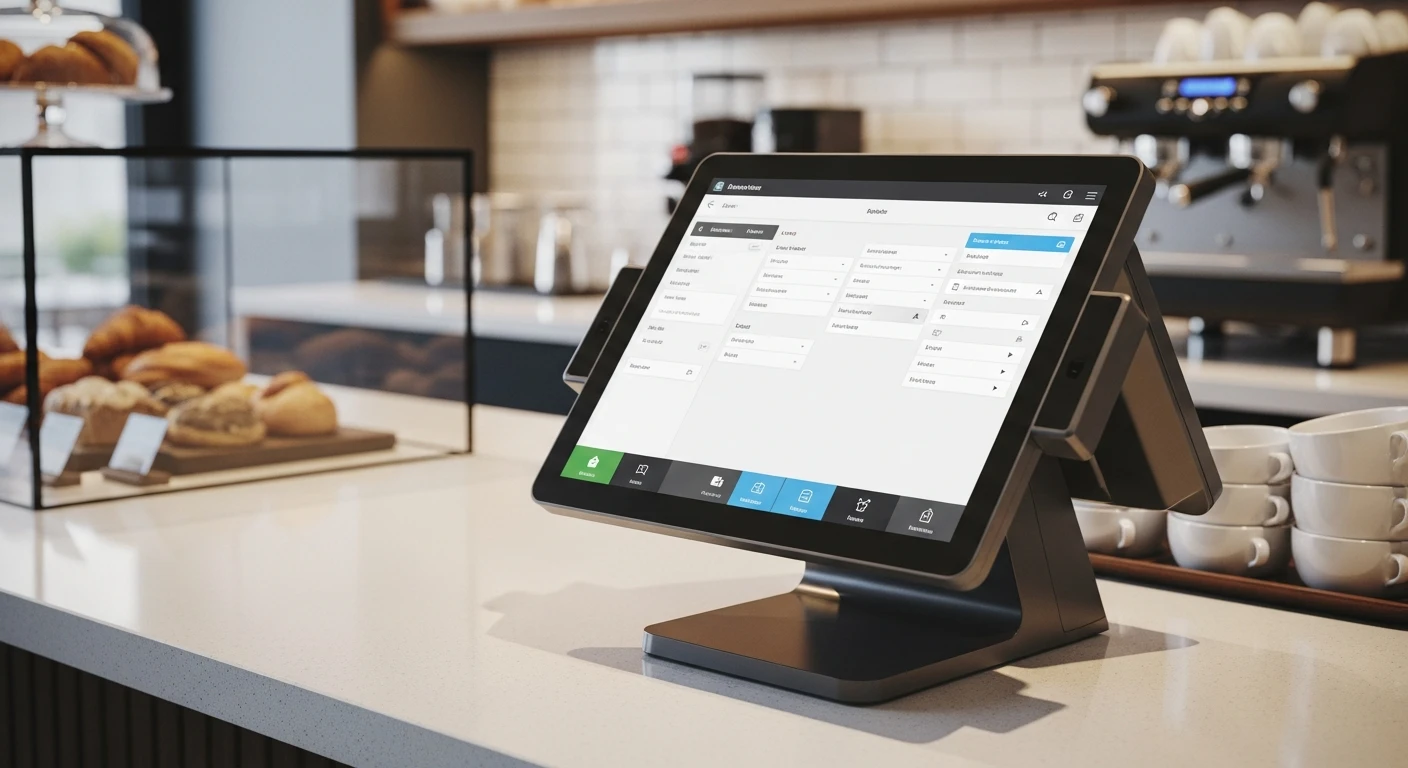
Opening a second bakery feels like the natural next step. Your first location is profitable. Customers keep asking for a closer spot. The wholesale orders are growing. So you sign a lease, buy more ovens, and assume the technology part will be easy — just copy the setup from location one.
That assumption will cost you somewhere between $18,000 and $45,000 in the first year. I know because I have deployed POS systems for bakery operators ranging from 2-location cupcake shops to multi-state bread companies, and the pattern of failure is remarkably consistent. The POS that handles a single bakery perfectly becomes an operational bottleneck the moment you add a second production facility.
Here is exactly why that happens and how to prevent it.
The Recipe-Based Inventory Problem
Bakeries are fundamentally different from restaurants in how they consume inventory. A restaurant sells individual dishes. A bakery produces batches. One batch of croissant dough yields 48 croissants and consumes 5 lbs flour, 3 lbs butter, 12 eggs, and various other ingredients. When you sell one croissant, your inventory system needs to understand that it should decrement 1/48th of each ingredient — not count finished croissants like retail units.
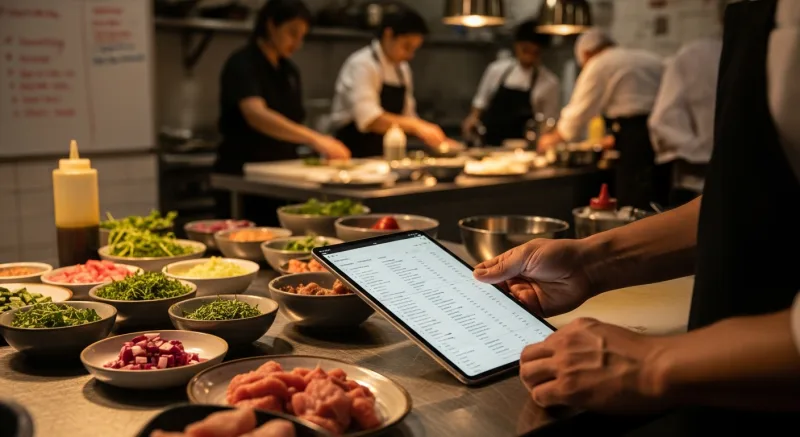
At a single location, you can manage this with spreadsheets or a basic recipe costing tool. At two locations, you now have two separate ingredient inventories that need to reflect two separate production schedules. If Location A bakes all the bread and Location B bakes all the pastries, ingredient consumption is split across facilities. If both locations bake the full menu, you need to track identical ingredients in two separate stockrooms.
Most POS systems treat inventory as simple unit counts: you had 200 cookies, you sold 40, now you have 160. They do not understand recipes, yields, or batch production. This means your inventory tracking at multiple locations is either manual (error-prone, time-consuming) or nonexistent (costly waste).
KwickOS tracks inventory at the ingredient level, tied to recipes. When a barista at Location B sells a chocolate croissant, the system decrements butter, flour, chocolate, and eggs from Location B's inventory based on the recipe yield ratio. When the production manager at Location A batches 200 baguettes at 5 AM, the system decrements Location A's flour, yeast, and salt accordingly. Both locations report into one centralized inventory dashboard, so the owner sees total flour consumption, total butter usage, and waste rates across all sites.
Production Scheduling Across Multiple Bakeries
A bakery is a production facility first and a retail shop second. The production schedule — what gets baked, in what quantity, at what time — determines whether you have enough product for the morning rush or too much product at closing (waste). Getting production right at one bakery is hard enough. Coordinating production across multiple bakeries is a logistics challenge that most POS systems completely ignore.
Consider the common scenario: you have a central production kitchen (Location A) that bakes bread and base pastries, plus two retail locations (B and C) that do finishing work and sell to customers. Location A needs to know how much to produce based on projected demand at B and C. B and C need to place internal orders to A by a cutoff time so the bakers can plan overnight production.
Without an integrated system, this coordination happens over text messages, phone calls, and shared Google Sheets. The production manager at A guesses wrong, Location B runs out of sourdough by 11 AM, and Location C throws away 30 baguettes at closing. The cost of this guesswork across three locations easily reaches $800-1,200/month in waste and lost sales from stockouts.
With KwickOS, sales data from every location feeds into production planning. The system shows that Location B sold 85 sourdough loaves on Monday, 92 on Tuesday, and 78 on Wednesday. It shows that Location C's croissant sales spike 40% on weekends. The production manager at Location A uses actual sales data — not guesses — to plan tomorrow's bake. And because the data is real-time, they can adjust mid-day production if one location is selling faster than projected.
The Custom Cake Order Nightmare
Custom cakes are where multi-location bakeries truly fall apart without proper systems. A customer visits Location B to order a birthday cake for Saturday pickup. They describe the design, choose the flavors, and pay a deposit. But the cake decorator works at Location A. How does the order get to the decorator? How does the decorator confirm the details are correct? How does Location B know when the cake is ready?
On separate POS systems, this involves a phone call, a hand-written order form photographed and texted to the decorator, and a callback to confirm completion. At each step, information can be lost or garbled. "Light blue frosting" becomes "blue frosting." "Writes Happy Birthday Sophia" becomes "Writes Happy Birthday Sofia." One misspelling on a $75 cake costs you a remake ($35 in materials and labor) plus a frustrated customer who tells ten friends about the mistake.
On KwickOS, the custom order is entered once with all specifications, attached to the customer profile, and visible to every location. The decorator at Location A sees the order in the system with all details, photos of reference designs, and the deposit payment recorded. When the cake is completed, they mark it ready. Location B's staff sees the status update and calls the customer for pickup. One system, one source of truth, zero telephone-game errors.
Gift Cards: The Cross-Location Bakery Essential
Bakery gift cards have an outsized role compared to restaurant gift cards. They are a top-selling retail item during holidays — Mother's Day, Christmas, Valentine's Day, Teacher Appreciation Week. A bakery with three locations might sell $15,000-25,000 in gift cards during the November-December holiday season alone.
If those gift cards only work at the location where they were purchased, you lose sales every time a customer walks into a different store. They bought the card at your downtown location as a gift. The recipient lives near your suburban location. They walk in, present the card, and the cashier says, "Sorry, this card was purchased at our other store. It won't work here."
That moment destroys the gifting experience. The recipient does not feel welcome. The gift giver feels embarrassed. And your bakery looks disorganized — which, at that moment, it is.
KwickOS gift cards work at every location from the moment of purchase. Physical cards, e-gift cards ordered through your website, even gift cards purchased through your KwickMenu online ordering page — all balances are centralized and sync in real time. A customer with a $50 gift card can spend $22 at Location A, $15 at Location B, and $13 at Location C. No friction, no apologies, no lost sales.
Loyalty Programs That Actually Drive Repeat Bakery Visits
Bakery loyalty works differently than restaurant loyalty. Customers visit bakeries more frequently (often 3-5 times per week for their morning coffee and pastry) but spend less per visit ($6-12 average ticket). The loyalty math needs to account for this pattern: frequent small purchases accumulating toward meaningful rewards.
At a single bakery, a punch card works fine. Buy 10 coffees, get one free. But at multiple locations, physical punch cards create the same fragmentation problem as disconnected gift cards. A customer who visits Location A three times and Location B twice has two separate punch cards with incomplete progress on each. They never feel close to a reward, so the program loses its pull.
KwickOS loyalty pools points across all locations automatically. That customer's five visits — three at A and two at B — add up to 50 points in one account. If the reward threshold is 100 points, they are halfway there and can see their progress. This unified tracking is what turns multi-location bakery customers from casual visitors into committed regulars who choose your bakery over competitors because their loyalty actually accumulates.
Real-Time Dashboard: Know Every Oven's Output
Bakery operations have tighter timing windows than most food businesses. Bread that is ready at 6 AM sells. Bread that is ready at 9 AM competes with a full bakery case and often becomes day-old inventory by closing. Knowing what is selling at each location — in real time — lets you adjust production, redirect surplus from a slow location to a busy one, or discount strategically before waste occurs.
KwickOS's multi-location dashboard shows every location's sales in real time. At 10 AM, you can see that Location A has sold 80% of its morning pastry production while Location B has only sold 55%. That data lets you make a decision: discount Location B's pastries for a lunch push, or note the pattern for tomorrow's production planning. Without the dashboard, you find out about Location B's slow morning at end-of-day when you reconcile — after 45% of those pastries became waste.
T. Jin China Diner uses this same dashboard across 15 locations and 75 terminals. The principle is identical for bakeries: centralized visibility enables faster decisions and less waste.
One Menu Change, Every Location Updated
Bakeries change their offerings constantly. Seasonal items rotate monthly. Daily specials change daily (hence the name). New bread varieties test at one location before rolling out to all. Prices adjust as ingredient costs fluctuate — and in 2026, ingredient costs fluctuate constantly.
On separate POS systems, each menu change requires manual updates at each location. A new pumpkin spice muffin for October means adding the item, setting the price, configuring modifiers (with or without cream cheese frosting, gluten-free option), and uploading a photo — at every single location. For a 4-location bakery making 10 menu changes per month, that is 40 separate update sessions. At 15 minutes each, that is 10 hours of manager time per month on menu admin alone.
KwickOS one-click menu sync pushes changes to all locations simultaneously. Add the pumpkin spice muffin once, set the price, configure the modifiers, and sync. Every terminal at every location has the new item in seconds. Crafty Crab Seafood uses this system across 19 locations and 152 terminals — their menu includes seafood boils with dozens of sauce and spice combinations, and a new modifier reaches all 152 terminals with a single click.
Why Toast, Square, and Clover Fail Multi-Location Bakeries
Toast charges per-location fees that compound as you grow. Their "Restaurant Suite" plan at $69+/month per location means a 4-location bakery pays $276+/month in software fees before processing. Add Toast's locked processing rate (2.99% + $0.15 per transaction), and a bakery with high transaction counts (200-400 small transactions per day per location) pays significantly more than the same volume at a negotiated rate through an independent processor.
Square's multi-location management is limited. You can create "locations" in Square Dashboard, but the gift card system, loyalty system, and inventory are not truly unified — they are parallel instances that share a login but not a seamless customer experience. A customer earning loyalty at one Square location does not automatically accumulate at another without manual configuration that still has gaps.
Clover requires separate merchant accounts for each location. Separate accounts, separate processors, separate everything. For a multi-location bakery, Clover is essentially running multiple independent businesses that happen to share a name.
KwickOS is processor-agnostic (you choose your own processor and negotiate based on your total volume across all locations), charges a single platform fee for multi-location management, and provides true unification — one dashboard, one loyalty program, one gift card system, one menu management tool, one employee database with fingerprint authentication that works at every store.
The Multi-Location Bakery Technology Checklist
Before you sign a lease on your second location, verify that your POS can handle these bakery-specific multi-location requirements:
- Recipe-level inventory tracking — Does the system understand that selling a croissant decrements butter, flour, and eggs, not just "1 croissant"?
- Cross-location gift cards in real time — Can a gift card purchased at any location be used at any other location instantly?
- Unified loyalty — Do points earned at Location A appear in the customer's account at Location B?
- One-click menu sync — Can you add a new seasonal item once and push it to every location simultaneously?
- Centralized reporting — Can you see all locations' sales, waste, and labor on one screen?
- Processor freedom — Can you use one processor across all locations and negotiate a single aggregate rate?
- Custom order visibility — Can a custom cake ordered at one location be produced at another with all details intact?
- Offline operation — If one location's internet drops during the morning rush, does the POS keep working?
KwickOS handles all eight. With hybrid local+cloud architecture, each location processes transactions locally at 1ms speed and syncs to the cloud for centralized management. If the internet drops at Location B during Saturday morning rush, every register keeps working. When connectivity returns, data syncs automatically.
The Bottom Line
A single bakery can survive with a basic POS and manual processes. A multi-location bakery cannot. The operational complexity of coordinating production, inventory, custom orders, gift cards, and loyalty across multiple sites demands a system that was designed for exactly this challenge.
The bakeries that scale successfully are the ones that solve the technology problem before signing the second lease — not after discovering that their POS was never built for the job.
Planning a Second Bakery Location?
Schedule a demo and we will show you multi-location menu sync, cross-location gift cards, unified loyalty, and real-time production visibility — configured for bakery operations.
Get Your Free Demo
Or call us directly: (888) 355-6996
Turn One-Time Diners into Regulars: Built-In Gift Cards & Loyalty
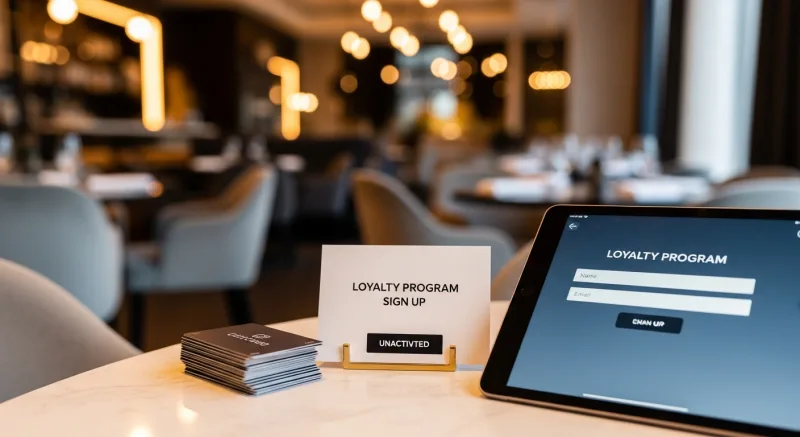
Most POS companies treat gift cards and loyalty as afterthoughts — expensive add-ons that cost $50-100/month extra. KwickOS includes them at no additional charge because we believe they are essential revenue tools, not luxury features.
Gift Cards That Actually Drive Revenue
Here is what most restaurant owners do not realize: gift card buyers spend an average of 20-40% more than the card's face value. A $50 gift card typically generates $60-70 in actual spending. KwickOS supports both physical gift cards and electronic gift cards that customers can purchase, send, and redeem through their phones.
- Physical gift cards — branded plastic cards that sit on your counter and sell themselves during holidays
- E-gift cards — customers buy and send digitally via text or email, perfect for last-minute gifts
- Balance tracking — real-time balance across all your locations, no manual reconciliation
- Reload capability — customers top up their balance, creating a built-in prepayment habit
Loyalty Points That Keep Them Coming Back
KwickOS loyalty is not a punch card from 2005. It is a digital points system that tracks every dollar spent and automatically rewards your best customers:
- Earn points on every purchase — configurable ratio (e.g., $1 = 1 point, or $1 = 10 points)
- Tiered rewards — silver, gold, platinum levels to incentivize higher spending
- Birthday rewards — automated birthday offers that bring customers back during their special month
- Points-for-payment — customers redeem points directly at checkout, seamless for your staff
Membership Programs
For restaurants running VIP programs or subscription models (like monthly coffee clubs), KwickOS membership management handles recurring billing, exclusive pricing tiers, and member-only menu items — all within the same system your cashier already uses.
The bottom line: Toast charges $75/month extra for loyalty. Square's loyalty starts at $45/month. KwickOS includes gift cards, e-gift cards, loyalty points, and membership management in every plan. That is $540-900/year you keep in your pocket.