From Hot Chicken to Honky Tonks: Nashville’s Restaurant Scene Demands More Than a Basic POS
Updated March 2026 · By Tom Jin
Nashville grew faster than any major American city between 2020 and 2025. Over 100 people moved to Middle Tennessee every single day during that stretch, and they all needed to eat. The restaurant count in Davidson County crossed 3,200 — a 35% increase in five years — and the dining landscape shifted from Southern meat-and-threes and honky tonk bars to a nationally recognized culinary scene that includes James Beard nominees, celebrity chef outposts, and the hot chicken phenomenon that went from a single family recipe to a global food trend.
The technology infrastructure did not keep pace. Nashville’s restaurant boom happened so fast that many operators installed whatever POS system the first sales rep offered. The result: thousands of restaurants locked into Toast or Square contracts that were signed under pressure, with processing rates that were never negotiated and feature sets that were never evaluated against Nashville’s specific operational demands.
Lower Broadway: The Bachelorette Economy
Nashville’s Lower Broadway has become America’s premier bachelorette party destination, generating an estimated $1 billion annually in visitor spending. On any given weekend, thousands of bachelorette groups in matching outfits move from honky tonk to restaurant to bar in a three-day spending spree. The restaurants that capture this revenue operate under extreme conditions: 300% weekend volume spikes, tourist-oriented pricing, and a customer base that arrives ready to spend and will not tolerate technology-induced delays.
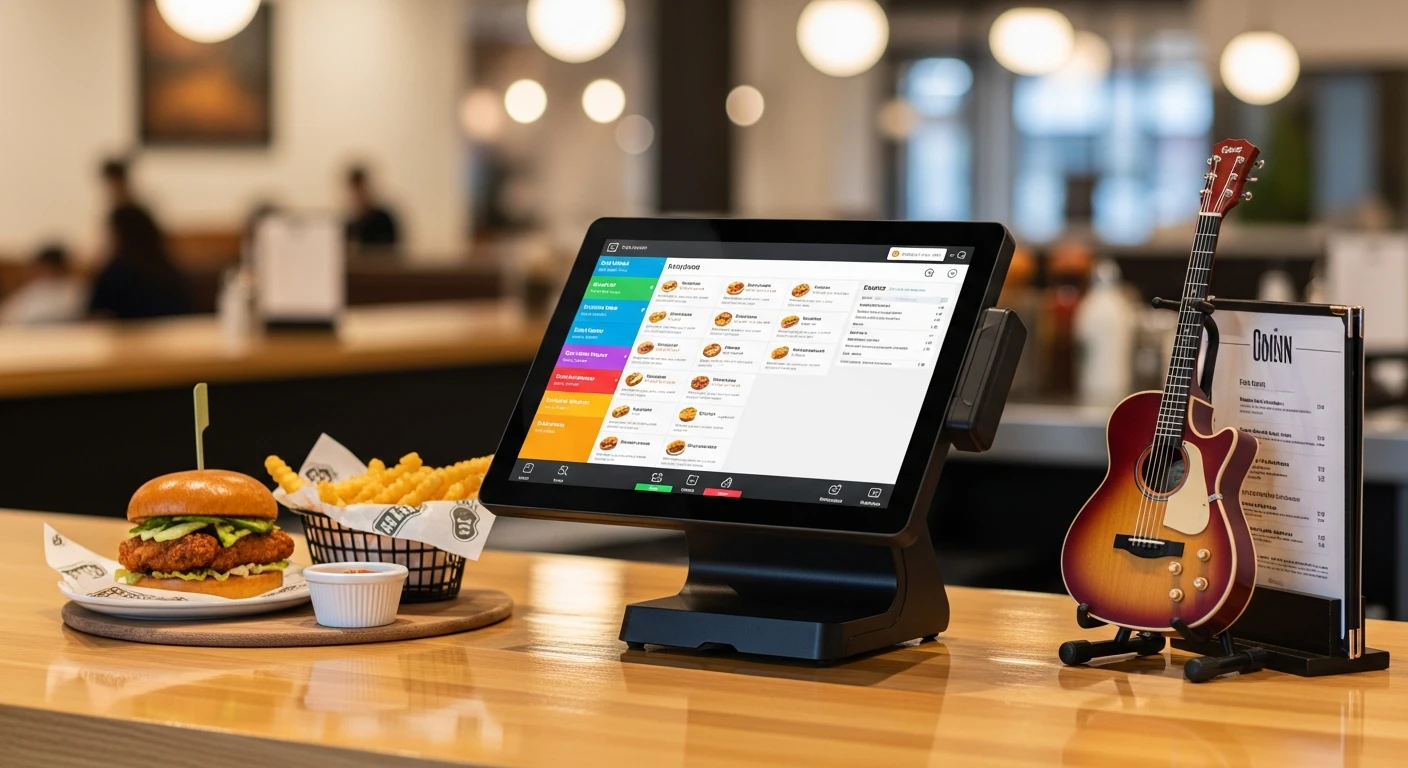
Self-ordering kiosks through KwickOS handle the Broadway crush by removing the ordering bottleneck from overworked servers. A bachelorette group of twelve does not want to spend 15 minutes giving their order to a server who is managing six other tables. They want to browse a visual menu, customize their orders, and pay in three minutes. A kiosk with KwickOS processes the entire group in the time it takes a server to greet the table.
KwickOS fingerprint identification is essential for Broadway operations where weekend staff turnover is extraordinary. Temporary bartenders hired for a Friday-Saturday shift register a fingerprint, process transactions under their biometric identity, and lose access the moment they are no longer employed. No shared PINs floating around Lower Broadway. No departed weekend workers with active credentials.
The Hot Chicken Heat Scale Problem
Nashville hot chicken operates with a heat-level customization model that POS systems built for standard restaurants handle poorly. A single chicken order may involve five to seven heat levels (plain, mild, medium, hot, extra hot, shut-the-cluck-up), three to four piece counts, bone-in versus boneless, and side selections. The modifier permutations for a seemingly simple fried chicken order exceed 200 combinations.
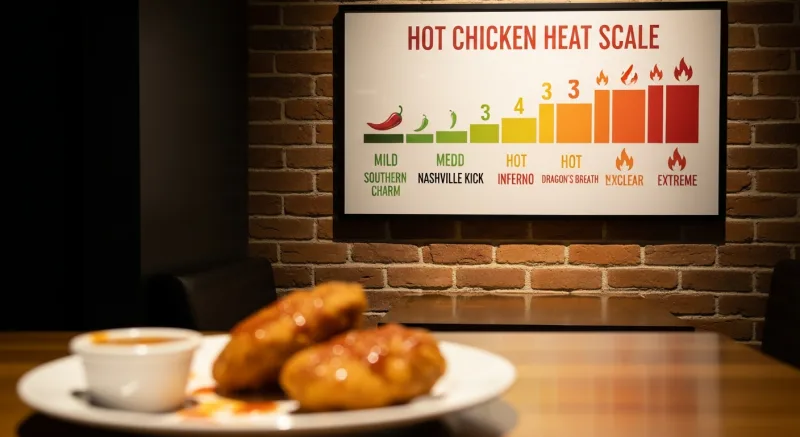
KwickOS modifier trees handle this depth with a structured, visual ordering interface. Each customization step presents clearly, and the resulting KDS ticket shows the complete build in a format the fry cook reads instantly: “3pc bone-in, extra hot, white bread, beans, slaw.” No ambiguity. No server shorthand that the cook has to decode during a 200-order lunch rush. The kitchen display presents the order exactly as the fryer needs to see it.
For hot chicken restaurants that have expanded beyond Nashville — which many have — KwickOS multi-location management maintains heat-level consistency across locations while allowing per-location menu adjustments. If the East Nashville location adds a seasonal side that the Midtown location does not carry, each location’s menu reflects the difference while corporate sees both on a unified dashboard.
Music Row and the Entertainment-Dining Hybrid
Nashville’s entertainment-dining hybrid is not limited to Broadway honky tonks. Restaurants across the city incorporate live music as a core part of the dining experience — from songwriters-in-the-round at the Bluebird Cafe model to full bands playing during dinner service in Germantown. This hybrid model creates scheduling, tipping, and revenue-tracking complications that standard POS systems ignore.
KwickOS accommodates entertainment-integrated operations with flexible payment configurations. Cover charges, drink minimums, and performance-specific pricing (premium seating, VIP packages) all process through the same system that handles food and beverage. The manager does not reconcile between a ticketing system and a POS system at closing. Everything runs through KwickOS, providing a unified revenue picture that separates food, beverage, and entertainment income for financial reporting.
Digital signage through KwickSign displays tonight’s performer, set times, and special drink promotions on screens visible from the street. When a songwriting showcase starts at 8 PM, the KwickSign display at 7 PM promotes the show alongside the dinner special. Foot traffic on the sidewalk sees the evening’s entertainment offering without entering the restaurant — converting walk-by traffic into walk-in customers.
The East Nashville Evolution
East Nashville has transformed from an overlooked neighborhood into Nashville’s most creative restaurant corridor. The restaurants here tend toward chef-driven, locally sourced, and intensely personal — 30-seat spaces where the owner works the line and the profit margin lives or dies on the difference between processing rates. These are the restaurants that define Nashville’s culinary identity beyond the tourist economy.
For these operators, KwickOS’s processor independence is the most financially significant feature. A 30-seat East Nashville restaurant doing $55,000 monthly in card transactions pays Toast $1,789 per month in processing. Through KwickOS with a negotiated rate at 2.15% plus $0.08, the cost drops to $1,263. Monthly savings of $526 total $6,312 annually — real money for an operator whose annual personal income may be $45,000.
Loyalty programs through KwickOS help these small restaurants compete with the tourist-oriented establishments that have marketing budgets. A customer who earns points at a Five Points restaurant has an economic incentive to return rather than exploring the new spot that opened two blocks away. Membership tiers create a sense of belonging — the regular who feels like part of the community returns because the restaurant recognizes them, literally, through the loyalty data attached to their transactions.
The Germantown Food Hall Model
Germantown’s food halls and market-style dining have given Nashville a concentration of fast-casual and specialty food vendors operating in shared spaces. These multi-vendor environments require POS systems that are compact, visually clean, and capable of operating independently while sharing a customer flow with adjacent vendors.
KwickOS runs on tablets that occupy minimal counter space. In a food hall stall with 8 feet of counter, the POS consumes 10 inches rather than the 18-inch footprint of a traditional terminal. Digital signage through KwickSign mounted above the stall creates visual merchandising that attracts customers from across the hall. The visual menu board is the vendor’s most important sales tool in a food hall environment, and KwickSign updates it from the POS in seconds.
CMA Fest, NFL Draft, and the Event Surge Calendar
Nashville’s event calendar is relentless. CMA Fest (80,000 visitors), the NFL Draft (600,000 visitors when Nashville hosted), New Year’s Eve on Broadway (200,000+), and the constant stream of concerts at Bridgestone Arena and Nissan Stadium create volume surges that downtown restaurants must be prepared to handle at any time.
KwickOS local processing at 1-millisecond speed ensures that event-driven cellular congestion does not degrade POS performance. When 80,000 CMA Fest attendees are streaming, posting, and ordering simultaneously within a half-mile radius, cloud-dependent POS systems that route through overwhelmed cellular networks experience the latency and failures that cost restaurants thousands in lost transactions. KwickOS processes on the device. The crowd’s bandwidth consumption is irrelevant.
Nashville’s Growing International Food Scene
Nolensville Pike is Nashville’s international food corridor, where Kurdish, Mexican, Somali, and Vietnamese restaurants have established a dining scene that contrasts sharply with the tourist economy downtown. Kitchen staffs along Nolensville Pike operate in multiple languages, and the POS system serving these restaurants must accommodate this linguistic diversity.
KwickOS Spanish-language support serves the significant Mexican restaurant community along the pike. Each terminal and KDS station runs independently in whatever language serves the operator. A taqueria where the front counter speaks English to customers and the kitchen operates in Spanish runs both configurations simultaneously. The order enters in English and displays in Spanish on the kitchen screen.
Nashville POS Evaluation
Nashville’s restaurant scene has outgrown the technology decisions that were made during the boom. The operators who chose their POS in a rush five years ago are now paying for that haste in processing fees, feature limitations, and performance failures during the events that should generate their highest revenue.
- Event-proof local processing — CMA Fest and Broadway weekends create cellular congestion that crashes cloud systems
- Deep modifier support — Hot chicken heat scales and customization need structured, visual ordering
- Processor independence — East Nashville margins cannot absorb locked-in rates
- Self-ordering kiosks — Bachelorette-group volume needs automated throughput
- Digital signage — Entertainment-dining hybrids need dynamic show and menu promotion
- Fingerprint security — Weekend temp staff on Broadway needs biometric accountability
- Spanish-language support — Nolensville Pike kitchens operate in Spanish
- Loyalty for neighborhood restaurants — Small operators need built-in retention without add-on fees
Nashville’s music plays all night. Its restaurants serve all day. The technology should keep up with both.
Nashville restaurant owners: Call (888) 355-6996 or visit KwickOS.com to hear what POS freedom sounds like.
Turn One-Time Diners into Regulars: Built-In Gift Cards & Loyalty
Most POS companies treat gift cards and loyalty as afterthoughts — expensive add-ons that cost $50-100/month extra. KwickOS includes them at no additional charge because we believe they are essential revenue tools, not luxury features.
Gift Cards That Actually Drive Revenue
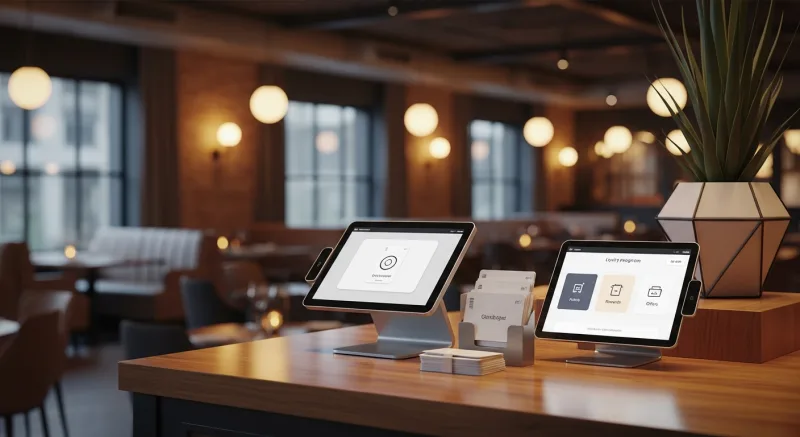
Here is what most restaurant owners do not realize: gift card buyers spend an average of 20-40% more than the card's face value. A $50 gift card typically generates $60-70 in actual spending. KwickOS supports both physical gift cards and electronic gift cards that customers can purchase, send, and redeem through their phones.
- Physical gift cards — branded plastic cards that sit on your counter and sell themselves during holidays
- E-gift cards — customers buy and send digitally via text or email, perfect for last-minute gifts
- Balance tracking — real-time balance across all your locations, no manual reconciliation
- Reload capability — customers top up their balance, creating a built-in prepayment habit
Loyalty Points That Keep Them Coming Back
KwickOS loyalty is not a punch card from 2005. It is a digital points system that tracks every dollar spent and automatically rewards your best customers:
- Earn points on every purchase — configurable ratio (e.g., $1 = 1 point, or $1 = 10 points)
- Tiered rewards — silver, gold, platinum levels to incentivize higher spending
- Birthday rewards — automated birthday offers that bring customers back during their special month
- Points-for-payment — customers redeem points directly at checkout, seamless for your staff
Membership Programs
For restaurants running VIP programs or subscription models (like monthly coffee clubs), KwickOS membership management handles recurring billing, exclusive pricing tiers, and member-only menu items — all within the same system your cashier already uses.
The bottom line: Toast charges $75/month extra for loyalty. Square's loyalty starts at $45/month. KwickOS includes gift cards, e-gift cards, loyalty points, and membership management in every plan. That is $540-900/year you keep in your pocket.

Founder & CIO of KwickOS · 30 Years IT · 20 Years Restaurant Industry
Tom built KwickOS after running restaurants and IT companies for decades. He relocated the company to a 10,000 sq ft office in 2023 and now serves 5,000+ businesses across all 50 states, processing over $2M in daily sales.